
The best golf courses share one thing in common—clear, reliable communication. From the pro shop to the greens crew, keeping your team in sync is what separates a smooth operation from a chaotic one.
But pick the wrong radio and you'll know it fast. Static on Hole 12. A dead battery by noon. A grounds crew member who can't hear a thing over the wind. Poor communication doesn't just frustrate your staff—it affects the guest experience, and that's bad for business.
That's why we put this guide together. We've sold thousands of radios to golf courses across the country, and we know exactly what works and what doesn't. By the end of this post, you'll know which radio is the right fit for your course—and why.
What's the Best Two-Way Radio for Golf Courses?
The best two-way radio for golf courses in 2025 is the Motorola TLK100. Courses across the country love it for its durability, discreet design, GPS tracking, and ability to make direct calls to individuals or groups. And unlike many commercial radios, it doesn't require an FCC license.
That said, no single radio is right for every course. The best choice depends on your course size, team structure, and communication needs. Let's walk through what matters most.
Real Problems That the Right Radio Can Solve
Picture a busy Saturday morning at your course. Hole 7 is backed up—four carts are waiting to tee off and pace of play has slowed to a crawl. The grounds crew is still working near Hole 9 and no one warned the starter.
Meanwhile, a guest at Hole 3 calls the clubhouse—her cart just died and she's stranded on the fairway. The beverage cart ran out of drinks an hour ago and no one's restocked it yet.
These aren't unusual scenarios. They happen every weekend at courses that don't have a solid communication system in place. The right radio fixes all of this—quickly, reliably, and without the chaos.
What to Look for in a Golf Course Two-Way Radio
Coverage That Matches Your Course
One of the most common mistakes golf courses make is buying a radio that's either too weak or unnecessarily overpowered for their layout.
A radio with insufficient coverage will drop signal on far holes, leaving staff in the dark. One that's overpowered for your needs means you're spending more than you have to.
Here's a simple way to think about it:
- Mid-size courses can typically get by with radios in the 3–4 watt range (analog) or 1 watt (digital), which provide strong coverage across most layouts.
- Large courses spanning up to 3 miles need radios that can push through distance, terrain, and interference without losing clarity.
- Multi-location operations should consider LTE/Wi-Fi-enabled radios like the Motorola WAVE PTX series, which provide unlimited coverage with no distance ceiling.
Channel Capacity
Channels let you separate team conversations so staff only hear what's relevant to them. For a golf course, a well-organized channel setup might look like this:
- Pro Shop / Front Desk – Tee times, guest check-ins, general inquiries
- Course Marshals – Pace of play, rules enforcement, course flow
- Grounds Crew / Maintenance – Mowing, irrigation, on-course repairs
- Clubhouse / Event Staff – Banquets, private events, guest services
- Beverage Cart Attendants – Restock needs, location updates, guest requests
- Starter / First Tee – Cart assignments and player flow
- Emergency / Security – Weather alerts, medical issues, urgent situations
Easy breezy. That's concise and direct communication. Channels can also be used to set up private conversations: "Sarah, call Tom on channel two." Sarah and Tom can then have an in-depth conversation over the radio without bothering the rest of the staff.
Key Features to Prioritize
Not all radios are built the same. Here are the features that matter most for a golf course environment:
- Long battery life – Radios should last an entire shift without needing a recharge
- Clear audio quality – Noise-canceling microphones and strong speakers cut through wind and background noise
- Weather resistance – Outdoor conditions include rain, humidity, and dust; your radio needs to handle all of it
- Compact and lightweight design – Staff carry these all day; heavy or bulky radios become a burden fast
- Long-range coverage – Signal must reach from the pro shop to the farthest hole
- Emergency features – Priority override and emergency alert buttons for fast response to medical or safety situations
- Hands-free capability – VOX (voice-activated) options or compatible earpieces make multitasking easier
Brand Quality Matters
A cheap radio might save you money upfront, but it'll cost you more in replacements, frustration, and downtime. Motorola and Kenwood are the most trusted names in the industry—and for good reason.
Both brands build radios that are purpose-built for durability and reliable performance. They're intuitive to use, eliminate the need for monthly cell phone plans, and are tested for up to five years of field use. Most models also include a manufacturer warranty ranging from one to three years depending on the model.
Our Top Radio Picks for Golf Courses
These recommendations come from our own experience working with thousands of radios across hundreds of courses. Each one has a proven track record.
Motorola DTR700 — Best for Mid-Size Courses

The DTR700 is a digital radio that punches well above its weight class.
- Channels: 50
- Power: 1 watt digital (equivalent to 4 watts analog)
- Coverage: Up to 350,000 sq ft
- Highlights: Flexible call options including call-all and private reply, no FCC license required
This radio is ideal for courses that want professional-grade communication without the licensing hassle. The digital signal is clean, clear, and interference-resistant—perfect for outdoor environments.
Motorola CP100d — Best for Larger Courses

The CP100d is a rugged, reliable workhorse built for demanding outdoor use.
- Channels: 16-160
- Power: 4-5 watts, UHF VHF and digital
- IP Rating: IP54 (dust and water resistant)
- Highlights: Pre-programmed text messages, voice announcements, rugged construction
If your course covers a lot of ground and your team is constantly moving between far-apart locations, the CP100d delivers the power and durability to keep up.
Motorola WAVE PTX Series — Best for Unlimited Coverage
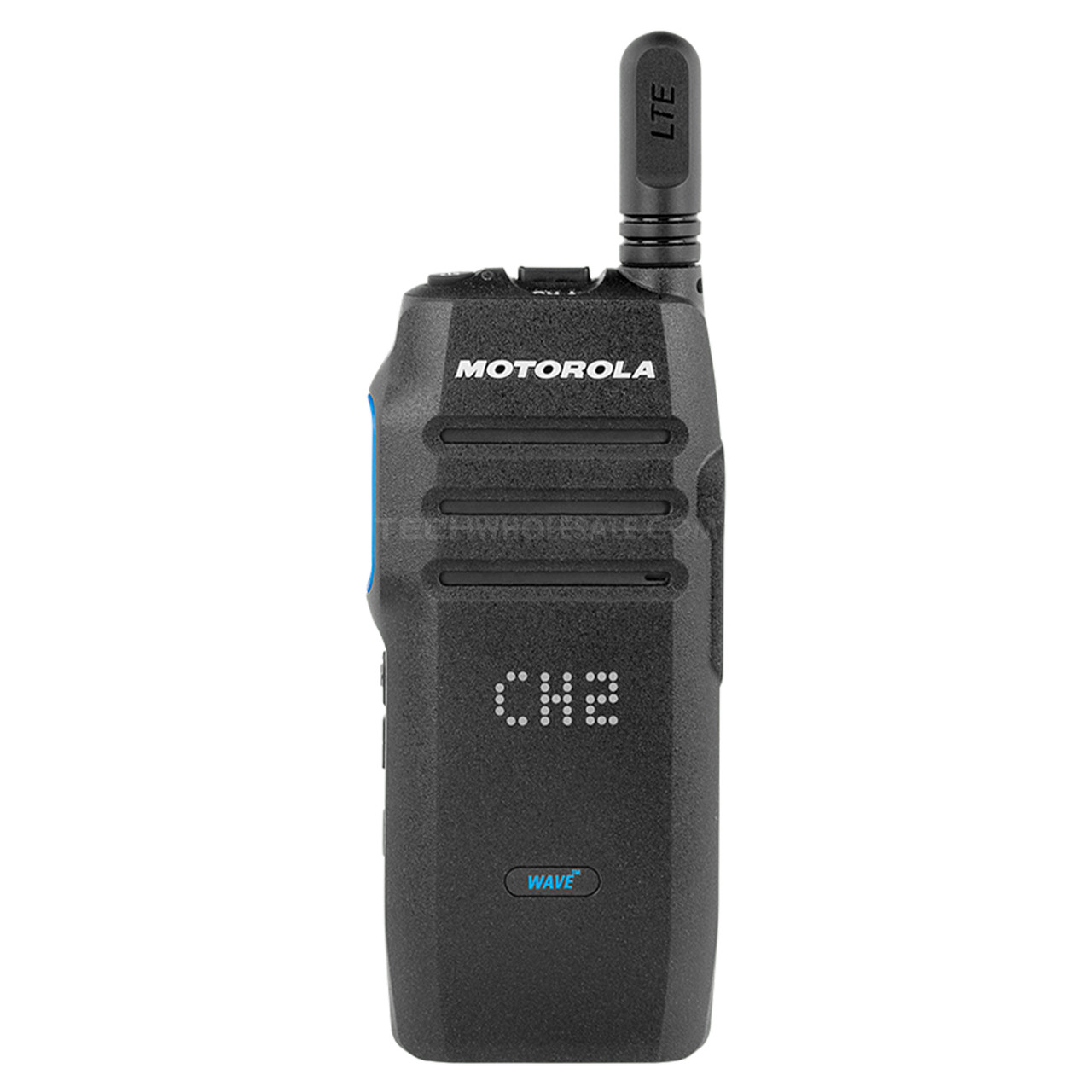
For courses that operate across multiple locations—or that simply can't afford dead zones anywhere—the WAVE PTX series is in a league of its own.
- Coverage: Unlimited via LTE and Wi-Fi
- Highlights: GPS staff tracking, emergency button, talk-to-radio-from-your-phone capability, failsafe antenna-to-antenna mode (up to 350,000 sq ft) when cell service drops
- Note: Requires a monthly subscription per device; lease-to-own options are available to help manage upfront costs
This radio is perfect for large resort-style courses, multi-course operations, or any facility where communication needs to stretch beyond what traditional radio frequencies can handle.
Frequently Asked Questions
Do I need an FCC license to use a two-way radio on my golf course?
How many radios does a typical golf course need?
That depends on your team size and structure. A standard 18-hole course might need anywhere from 10 to 25 radios, covering roles like the pro shop, marshals, grounds crew, beverage cart, and starter. We recommend doing a role-by-role count before ordering.
Can two-way radios work in bad weather?
Yes—if you choose the right model. Look for radios with an IP54 rating or higher, which means they're tested to resist dust and water. Golf courses deal with morning dew, rain showers, and high humidity, so weather resistance isn't optional—it's essential.
What's the difference between analog and digital radios?
Analog radios are the traditional standard and work well for most short-to-mid-range communication needs.
Digital radios offer cleaner audio, better range efficiency, and additional features like text messaging and private calling. For most golf courses, digital is the better long-term investment.
Is it worth switching from cell phones to two-way radios?
For most golf courses, yes.
Cell phones introduce distractions, depend on cell service, and rack up monthly costs per employee. Radios are instant, subscription-free (on most models), and purpose-built for team communication. The efficiency gains are noticeable from day one.
Ready to Equip Your Team?
The right radio keeps your course running the way it should—smoothly, safely, and with every team member on the same page. Whether you're managing a compact 9-hole layout or a sprawling resort course, there's a radio built for your needs.
At Tech Wholesale, we've spent over 25 years helping businesses find the right communication solution. We'll help you make an educated decision—not just a fast one.
Request a quote today for our best possible pricing, and take advantage of our lifetime tech support. From the moment you purchase to years down the road, we're here to help.