

Your park covers miles of roads and habitats, with animals and guests sharing the same space. Business-grade two-way radios give rangers, keepers, and guest services instant contact everywhere, so every animal and every visitor stays safe.
Everything you need to decide is right here! We’ve supplied hundreds of zoo parks across the country since 1997. Here’s how to pick the right radio for your business.
What Makes a Great Safari Park Radio?
Not every two-way radio is built for the demands of a busy outdoor park. Before jumping to specific models, here's what to prioritize:
- Long Battery Life — Staff need radios that last through long shifts without constant recharging.
- Clear Audio Quality — Animal sounds, guest chatter, and equipment noise shouldn't interfere with communication.
- Durability — Devices should withstand drops, spills, and daily wear-and-tear.
- Weather Resistance — Essential for outdoor staff like groundskeepers, animal attendants, and vets.
- Private Channels & Privacy Codes — Reduces crosstalk and keeps conversations within each team.
- Compact & Lightweight Design — Easy to carry and clip onto uniforms without bulk.
- Good Range Coverage — Must work across large properties, including inside buildings and outdoor areas.
- Emergency Alert Function — Enables rapid response to medical or security incidents.
Get these right, and you've got a communication system your whole team can rely on.
Coverage: Match the Radio to the Park
Coverage is probably the most important factor to get right — and the most commonly misunderstood.
Choose a radio that's too weak, and you'll end up with dead zones across the property. Choose one that's too powerful for your needs, and you're simply overpaying. The goal is to match the radio's output to your park's size and layout.
For parks covering up to 3–5 miles, you'll want radios in the 3–4 watt range on analog (or 1 watt on digital, which delivers equivalent power). These can transmit clearly through open terrain, across buildings, and over long distances.
One more factor: obstructions. Thick concrete walls, dense vegetation, and metal structures all reduce signal strength. If your park has heavy-duty infrastructure, consider stepping up by one watt to compensate.
For operations that span multiple locations — or even multiple cities — radios with LTE and Wi-Fi connectivity (like the Motorola WAVE PTX series) remove range limitations entirely.
Channels: Keep Your Team Organized
Channels let you segment communication across your team. Animal care staff on channel one, guest services on channel two, security on channel three — and so on.
This reduces unnecessary chatter and keeps each department focused. It also allows private conversations: "Steve, call Reagan on channel two." Steve and Reagan can then handle a detailed conversation without interrupting the rest of the staff.
The more departments and roles your park has, the more channels you'll need.
Why Brand Quality Matters
A radio that fails after eight months isn't a bargain — it's a liability.
Motorola and Kenwood are the two brands we recommend without hesitation. Both are purpose-built for professional use, with durable construction and intuitive design. Their radios are tested for five years of real-world field use, come with manufacturer warranties (1–3 years depending on the model), and eliminate the need for monthly cell phone plans.
You're not just buying a device — you're investing in long-term reliability.
Our Top Radio Picks for Safari Parks
These recommendations come from years of hands-on experience working with parks and outdoor venues. Every model below has a proven track record.
Smaller Parks
Motorola RMU2040
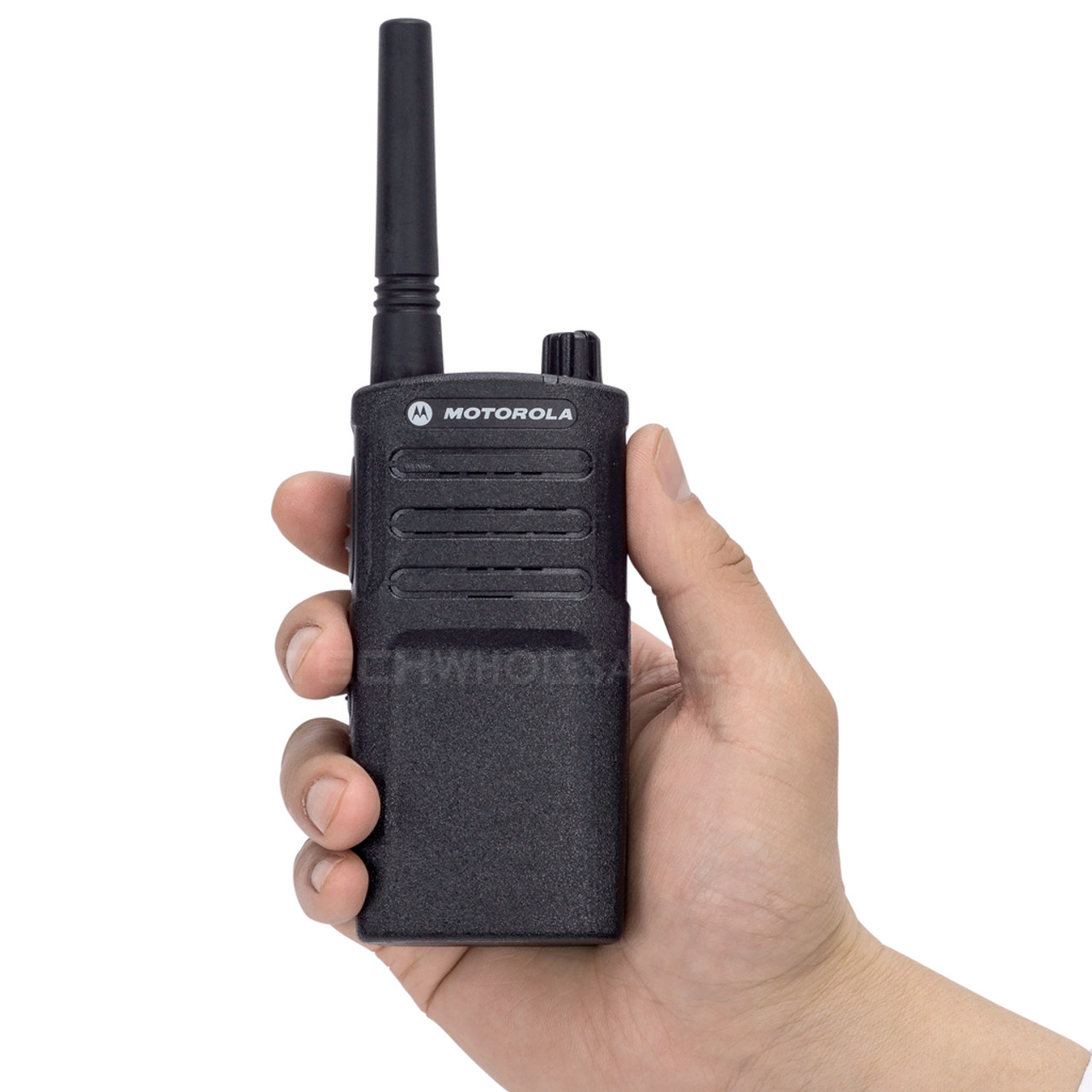
Best for: Compact parks needing a tough, high-powered UHF device
| Spec | Detail |
|---|---|
| Channels | 4 |
| Power | 2 watts (UHF) |
| Coverage | Up to 2 miles outdoors; 250,000 sq ft indoors |
The RMU2040 is one of the most durable radios on the market. It's built to military standards and handles dust, wind, shock, and vibration without skipping a beat. An antimicrobial coating adds an extra layer of protection in high-traffic environments.
Despite weighing nine ounces — slightly heavier than others on this list — it punches well above its weight. It operates across 99 UHF business-exclusive channels with 219 PL/DPL privacy codes, so your communications stay protected from outside interference. The included display makes it easy to navigate, and it's simple to clone across multiple devices.
For a smaller park that needs reliable, no-fuss communication, this is a strong starting point.
Motorola CP100d-VA

Best for: Parks looking for digital clarity for large spaces
| Spec | Detail |
|---|---|
| Channels | 16 |
| Power | 5 watt VHF |
| Coverage | Up to 3-4 miles outdoors; Limited obstructions |
The Motorola CP100d delivers great VHF coverage at a competitive price point. The whip antenna gives extended coverage through VHF frequencies. 16 channels gives plent of room for department segmentation so a maintenance call doesn't go over a tour guide call. Rugged build that can withstand kicked up dust from trucks and accidental drops.
Think the Motorola CP100d-VA is right for your park? Contact us today for a free personalized quote.
Larger Parks & Multiple Buildings
Motorola CP100d-UD

Best for: Large parks spanning multiple buildings and zones
| Spec | Detail |
|---|---|
| Channels | 160 |
| Power | 4 watts (UHF) |
| Coverage | Up to 4–5 miles; 350,000 sq ft / 40 floors |
When your park sprawls across multiple zones, the CP100d-UD delivers the signal strength to match. With 160 channels, you can segment your entire operation — animal care, guest services, security, maintenance — without any overlap or confusion.
Both the CP100d-UA and CP100d-UD are repeater-ready, which means you can extend coverage even further if you encounter dead spots on the property. The radio is user-programmable via PC using Motorola's free Customer Programming Software (CPS) and supports cloning for quick, easy setup across large teams.
Clear audio, rugged build, and serious range — this is the workhorse of larger park operations.
Motorola DTR700

Best for: Parks wanting cell phone-level features without the monthly bill
| Spec | Detail |
|---|---|
| Channels | 50 |
| Power | 1 watt digital (equivalent to 4 watts analog) |
| Coverage | Up to 3–5 miles; 350,000 sq ft |
The DTR700 is the closest thing to a cell phone without the subscription. It runs on a 900 MHz ISM band, which means better audio quality and privacy.
With up to 200 contacts and 50 groups, it offers exceptional flexibility for large and complex teams. The long whip antenna supports wide coverage, making it well-suited for parks with both indoor facilities and expansive outdoor areas.
Best Unlimited Coverage
Motorola WAVE PTX Series
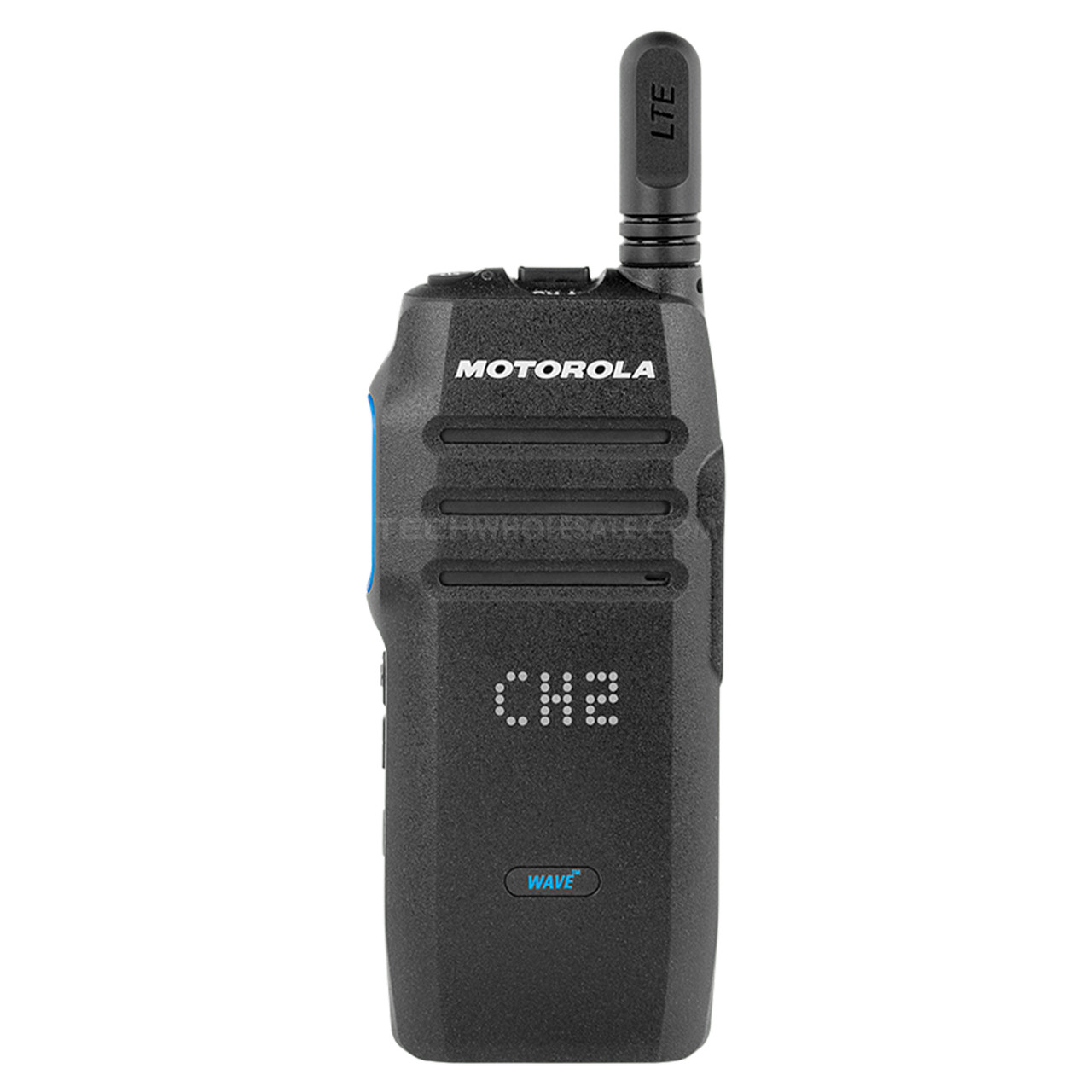
Best for: Parks operating across multiple locations, cities, or states
| Spec | Detail |
|---|---|
| Coverage | Unlimited via LTE and Wi-Fi |
| Additional Features | GPS tracking, emergency button, smartphone compatibility |
| Fallback Coverage | 350,000 sq ft antenna-to-antenna (when cell/Wi-Fi is unavailable) |
The WAVE PTX series removes range from the equation entirely. Using LTE and Wi-Fi connectivity, these radios work across unlimited distances — whether your team is spread across one large property or coordinating between sites in different cities.
GPS tracking lets management monitor staff locations in real time, and the built-in emergency button enables rapid response when seconds count. Staff can even communicate with radios directly from a smartphone.
One important note: the WAVE PTX requires a monthly subscription per device. Lease-to-own payment options are available to spread the upfront cost and get your team up and running quickly. And as a failsafe, the radios fall back to antenna-to-antenna communication if LTE or Wi-Fi goes down — giving you up to 350,000 sq ft of coverage even offline.
The Right Radio Makes All the Difference
A safari park is one of the most communication-intensive environments there is. Coordinating staff across large outdoor spaces, responding to animal incidents, managing guest emergencies — all of it depends on instant, clear, reliable communication.
The radios in this guide are trusted by parks across the country. Whether you're running a compact reserve or a sprawling multi-site operation, there's a model here that fits your needs and your budget.
Ready to equip your team? Request a bulk quote today for our best possible pricing, or reach out to our support team with any questions. With over 25 years of experience in the two-way radio industry and lifetime tech support included with every purchase, we're here to make sure you get the right radio — and that it keeps working long after the sale.