

Your park is loud, spread out, and full of families. Business-grade UHF or 900 MHz radios give every attraction instant contact with the front desk and managers, so lost kids, ride issues, and party schedules are handled before guests notice.
Let’s take the guesswork out of it! Since 1997, we’ve kept hundreds of fun parks nationwide connected. Here’s how to pick the right radio for your business.
What to Look for in an Amusement Park Radio
Not all radios are built for the demands of a theme park. Before jumping to model recommendations, here's what actually matters when you're comparing options.
Coverage That Matches Your Property
Matching radio power to your park's size is essential. Too little power and you'll have dead zones. Too much and you're simply overpaying.
- Small fun parks (100,000–200,000 sq ft): 1–2 watts of power is sufficient.
- Larger amusement parks or multi-building operations (up to 350,000 sq ft): Look for 3–4 watts on analog, or 1 watt on digital, which is equivalent in reach.
- Thick concrete or steel structures? Consider going 1 watt stronger to compensate for signal loss through building materials.
- Multiple locations or unlimited range? LTE/Wi-Fi-enabled radios like the Motorola WAVE PTX series remove distance limitations entirely.
The Right Number of Channels
Channels keep team conversations organized and prevent cross-talk. For a typical amusement park, we recommend setting up dedicated channels for:
- Operations — Ride attendants coordinating loading, safety checks, and downtime
- Security — Responding to lost children, guest disturbances, and emergencies
- Maintenance — Handling ride malfunctions, electrical issues, and plumbing problems
- Custodial — Managing spills, restroom cleanups, and high-traffic areas
- Guest Services — Ticketing, crowd control, and guest assistance
- Food & Beverage — Stock issues, equipment problems, and wait time coordination
Easy breezy. That's concise and direct communication. Channels can also be used to set up private conversations: "Sarah, call Tom on channel two." Sarah and Tom can then have a focused conversation without interrupting the rest of the team.
Key Features Worth Prioritizing
Clear Audio in Loud Environments
Between screaming roller coasters and crowd noise, noise-canceling microphones and high-volume speakers aren't optional—they're essential. Staff need to hear every word, even in the chaos.
Long Battery Life
Radios should outlast a full shift. No one has time to hunt down a charger at 2pm on a Saturday when the park is at capacity.
Durable and Weather-Resistant Build
Dropped on the pavement. Caught in a sudden downpour. Bumped into a railing. Amusement park radios take a beating. Look for IP54-rated devices or higher to ensure water and dust resistance.
Hands-Free Operation
Ride operators and food service staff can't hold a radio. Headsets and earpieces keep communication flowing without slowing down the job.
GPS Tracking (Optional)
For larger parks, GPS gives supervisors real-time visibility into where team members are located—critical when dispatching help quickly.
Brand Quality Matters
Cheap radios fall apart. It's that simple. Motorola and Kenwood are the two most trusted names in the industry because their devices are purpose-built for commercial use—durable, intuitive, and tested for up to five years of field use. Both brands eliminate monthly cell phone plan costs and include manufacturer warranties ranging from one to three years depending on the model.
Our Top Radio Picks for Amusement Parks
These recommendations come from our direct experience working with thousands of these radios. Each one has a rock-solid history and a strong reputation in the field.
Small Fun Parks
For smaller parks, you want a compact, lightweight radio that's easy to carry and discreet enough not to distract from the guest experience. The following two models offer strong performance without overshooting your needs.
Motorola CLS1410
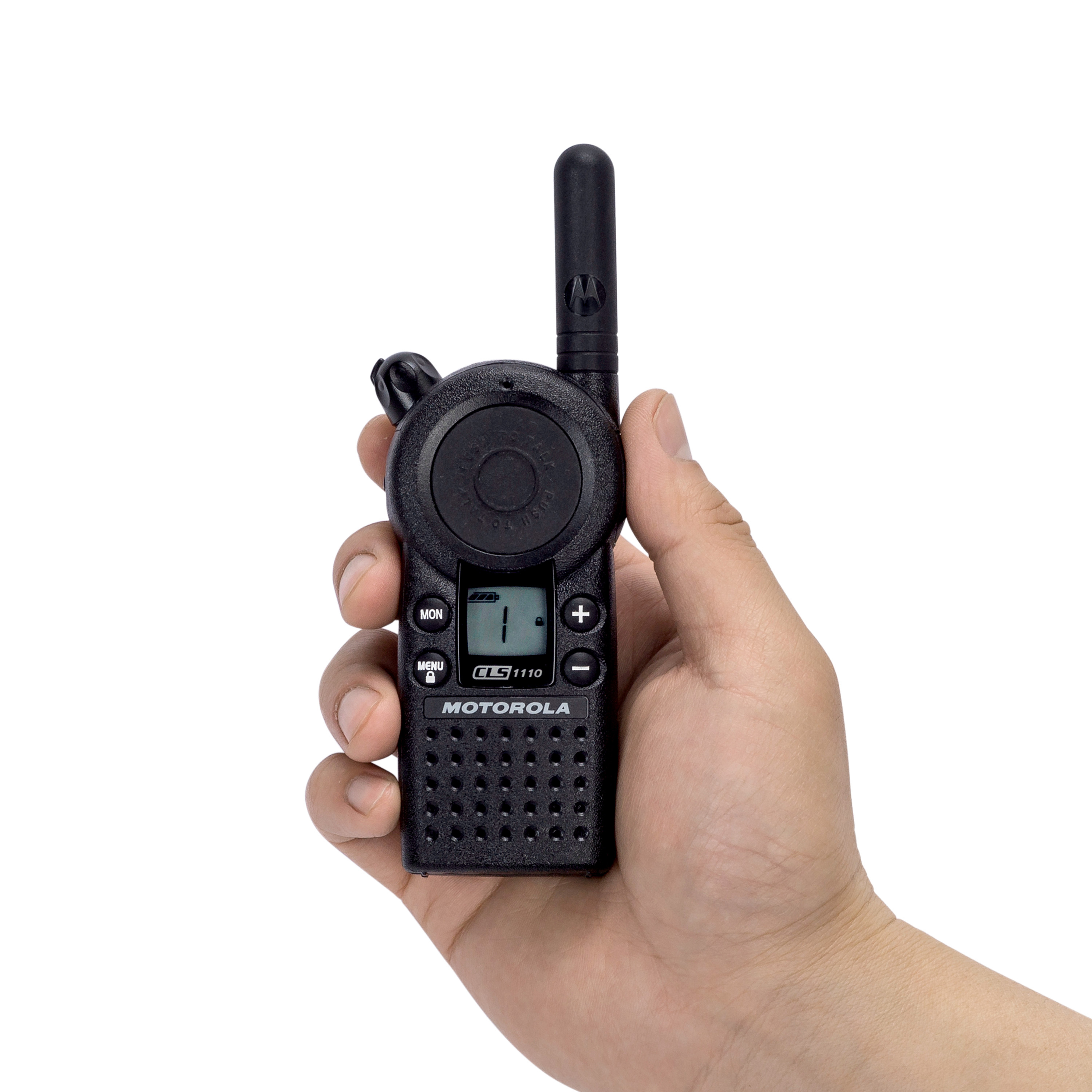
| Spec | Details |
|---|---|
| Channels | 4 |
| Power | 1 watt, UHF |
| Coverage | Up to 200,000 sq ft |
CLS stands for Clear, Light, and Simple—and that's exactly what you get with this device. The CLS1410 is a UHF radio with four channels, giving you enough separation for key teams plus a private channel for management.
It delivers up to 15 floors of indoor range and two miles of clear outdoor communication. Audible Call Alerts and Vibracall technology mean staff won't miss important messages, even in a noisy environment. Setup is quick thanks to simplified cloning, and the long battery life keeps it running through even the busiest days.
Motorola RMU2080d

| Spec | Details |
|---|---|
| Channels | 8 |
| Power | 2 watts, UHF |
| Coverage | Up to 250,000 sq ft / 25 floors |
If you need more power and more channel capacity, the RMU2080d delivers. With eight channels and two watts of power, this radio handles a larger staff without communication overlap.
It operates on 99 UHF business-exclusive channels and 219 PL/DPL codes, meaning your conversations stay protected. The rechargeable lithium-ion battery handles extended shifts, and the rugged military-standard build handles everything else—dust, wind, shock, vibration, and more. An antimicrobial coating adds an extra layer of hygiene for shared devices. The onboard display makes navigation straightforward for staff of any experience level.
Larger Amusement Parks and Multi-Building Operations
Bigger parks require more powerful, flexible communication systems. These models are built to perform across larger footprints and higher staff volumes.
Motorola DTR700 ⭐ Top Pick

| Spec | Details |
|---|---|
| Channels | 50 |
| Power | 1 watt digital (equivalent to 4 watt analog) |
| Coverage | Up to 350,000 sq ft / 3 miles |
The DTR700 is our top recommendation for larger parks—and it's easy to see why. Running on the 900 MHz ISM band, this radio gives better audio clarity and privacy.
It supports up to 200 contacts and 50 groups, giving you all the flexibility you need for a large, segmented team. The long whip antenna pushes coverage to 350,000 square feet, and call-all plus private reply options keep communication targeted and efficient. It's the closest thing to a cell phone without the monthly bill.
Honorable Mention: Mag One BPR50d-V

| Spec | Details |
|---|---|
| Channels | 64 |
| Power | 4 watts |
| Coverage | 350,000–500,000 sq ft |
For parks pushing the upper end of coverage needs, the BPR50d-V is worth considering. Digital mode extends coverage further and improves audio quality, and the 64-channel capacity gives large teams plenty of room to organize.
Best for Nationwide or Multi-Site Coverage
Motorola WAVE PTX Series
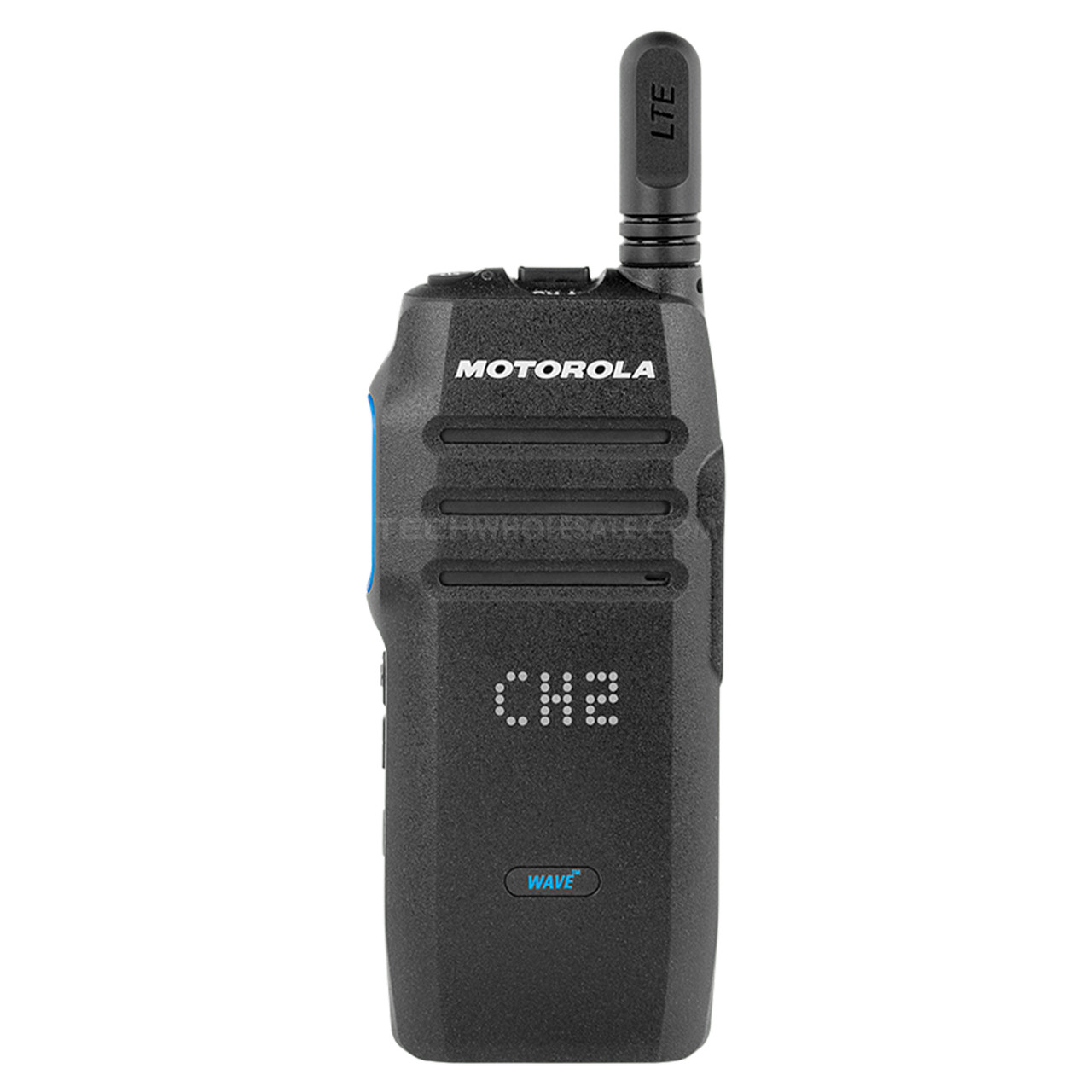
| Spec | Details |
|---|---|
| Coverage | Unlimited (LTE & Wi-Fi) |
| GPS Tracking | Yes |
| Emergency Button | Yes |
| Phone Compatibility | Yes — talk to radios from your phone |
| Cost | Monthly subscription per device; lease-to-own available |
If your operation spans multiple parks, cities, or states, traditional radio range becomes a hard ceiling. The WAVE PTX series removes that limitation entirely. Using LTE and Wi-Fi, these devices communicate across any distance, making them the go-to choice for enterprise-level operations.
GPS tracking helps supervisors dispatch help faster, and the built-in emergency button adds a direct layer of staff safety. The monthly subscription model is offset by lease-to-own options that reduce upfront costs and get your team up and running quickly.
Frequently Asked Questions
How many radios does my park need?
A good rule of thumb is one radio per team member on shift, plus a few spares for supervisors and backup. The number of channels matters more than the raw count—make sure each department has its own dedicated channel.
Can radios work across multiple buildings on the same property?
Yes. Models in the 3–4 watt range, or 1-watt digital equivalents, handle multi-building environments well. For very large or heavily obstructed properties, consider bumping up wattage or moving to a digital solution like the DTR700.
What's the difference between analog and digital radios?
Digital radios offer clearer audio at distance, better resistance to interference, and more efficient use of available channels. The Motorola DTR700, for example, operates at 1 watt digitally but delivers the coverage equivalent of a 4-watt analog radio.
Are there hands-free options available?
Yes. Most commercial-grade radios are compatible with earpieces and headsets, which is especially useful for ride operators, food service staff, and anyone working with both hands.
Get the Right Radio for Your Park
The right two-way radio keeps your staff connected, your guests safe, and your operations running without interruption. The wrong one costs you time, money, and potentially much more.
For most parks, the Motorola DTR700 is the clear frontrunner—reliable coverage and enough channel capacity to run a large team efficiently. Smaller parks will find everything they need in the CLS1410 or RMU2080d.
Still not sure which model fits your operation? Request a quote from Tech Wholesale and our team will match you with the right solution at the best price. With over 25 years of experience in the two-way radio industry—and lifetime tech support included with every purchase—we're here to help long after the sale.