

The best two-way radios for laboratories are business-grade UHF or 900 MHz radios with a rugged build to protect your investment. The right walkie talkie depends on your lab layout and team size.
Which Walkie Talkie Fits Your Lab?
The best two-way radios for laboratories are the Motorola CLS1410, the Kenwood ProTalk PKT-300, and the Motorola Curve. Each model solves a different lab communication challenge: the CLS1410 is the proven workhorse for small to mid-size labs needing clean team segmentation and antimicrobial housing; the Kenwood PKT-300 adds hands-free VOX and six-channel capacity for labs with multiple active departments; and the Motorola Curve delivers digital-grade audio clarity and 10-channel capacity for large research facilities, multi-floor labs, and multi-building campuses.
This guide covers what laboratory environments actually need from a two-way radio, how the leading models compare, what compliance standards apply, and how to match a radio to your facility's size and structure.
Why Laboratories Need Purpose-Built Two-Way Radios
Consumer walkie-talkies and smartphones fail in laboratory environments for reasons that are structural, not incidental. They cannot be reliably disinfected, they interrupt workflows that require both hands, and they introduce RF interference risks near sensitive analytical instruments. Professional two-way radios purpose-built for commercial use eliminate each of these problems.
Labs face a specific combination of communication pain points that other commercial environments do not share:
Sterile surface requirements. Laboratories operating under ISO cleanroom standards, CLIA-certified clinical environments, or pharmaceutical GMP protocols require equipment that can be wiped down with isopropyl alcohol, bleach solution, or EPA-registered disinfectants without degrading housing or seals. Most consumer electronics are not designed for repeated chemical disinfection. Professional radios like the Motorola CLS1410 incorporate antimicrobial housing treated to resist bacterial growth between cleaning cycles.
Thick RF-blocking construction. Research facilities, hospital labs, and pharmaceutical manufacturing buildings frequently use concrete, steel-reinforced walls, and lead-lined rooms that attenuate radio signals significantly. A radio rated for 200,000 sq ft in open-plan commercial space may cover substantially less in a heavily constructed lab building. UHF frequencies (450–470 MHz) penetrate building materials more effectively than VHF; digital 900 MHz radios like the Motorola Curve provide further improvement by encoding signal digitally, maintaining audio quality up to the edge of coverage rather than degrading into static.
Multi-department segmentation. A typical laboratory operation includes sample processing, chemistry, microbiology, facilities, inventory, and management—each with distinct communication needs. Without dedicated channels, all staff share the same transmission space, producing the kind of cross-talk that delays responses and obscures urgent messages. Most professional lab radios support four to ten discrete channels, enough to segment even a complex multi-department operation.
Hands-free operation during critical procedures. A technician handling an open sample, operating a centrifuge, or pipetting a reagent cannot reach for a radio without breaking protocol or risking contamination. VOX (voice-activated transmission) allows staff to transmit by speaking at a set audio threshold, keeping both hands on the work. This feature is standard on the Kenwood PKT-300 and available on the Motorola CLS1410.
Emergency response and lone worker safety. Labs where staff work in isolated spaces—cold storage, chemical storage, equipment rooms—benefit from radios with emergency alert buttons that broadcast a distress signal to all receiving units simultaneously. OSHA's General Duty Clause (Section 5(a)(1) of the Occupational Safety and Health Act) requires employers to provide a workplace free from recognized hazards. For lone workers in hazardous areas, reliable two-way communication is a recognized risk control measure.
Equipment interference concerns. Analytical instruments including mass spectrometers, NMR machines, and electron microscopes are sensitive to electromagnetic interference. Frequency-hopping spread spectrum (FHSS) digital radios like the Motorola Curve and Motorola DTR series operate across a spread of frequencies rather than a fixed channel, significantly reducing sustained interference to adjacent equipment. Labs with sensitive instruments should consult their equipment manufacturer's EMI specifications before deploying any radio system.
What to Look for in a Laboratory Two-Way Radio
Disinfectable or Antimicrobial Housing
Look specifically for radios with antimicrobial housing treatments or IP-rated seals that prevent disinfectant from entering the device. This is not a feature found on consumer-grade radios. For clinical labs operating under CLIA (Clinical Laboratory Improvement Amendments) standards, equipment disinfection protocols are a regulatory requirement, not a preference.
Frequency and Signal Penetration
UHF (ultra-high frequency, 450–470 MHz) is the correct frequency band for indoor laboratory use. UHF waves are shorter and penetrate walls, floors, and dense building materials more effectively than VHF (very high frequency, 136–174 MHz). For laboratories with exceptionally heavy construction or Faraday-shielded rooms, digital radios operating at 900 MHz provide further penetration and maintain audio quality across the entire coverage area rather than degrading at range edges.
Battery Life
A full laboratory shift typically runs 8 to 12 hours. Radios should carry at minimum a 10-hour rated battery life under typical transmission loads. All three radios recommended on this page meet or exceed this standard. Multi-unit charging cradles allow overnight charging and shift-change hot-swapping without service interruption.
Channel Capacity
For small labs with two to three functional groups, four channels is sufficient. Labs with five or more distinct departments should start at six channels. Large research facilities or multi-building campuses benefit from 10 channels, which allows full team segmentation including a dedicated management channel and an emergency-only channel reserved for critical alerts.
VOX (Hands-Free Transmission)
VOX allows the radio to transmit automatically when the user speaks above a set threshold, without pressing a button. For any lab role that requires constant manual engagement—sample handling, instrument operation, sterile technique—VOX is a meaningful operational feature, not a convenience add-on.
Durability and Water Resistance
Look for radios that carry at minimum an IP54 ingress protection rating, which indicates resistance to dust and water splash from any direction. Labs where spills are common, or where radios may be exposed to chemical vapors, benefit from IP55 or higher. MIL-STD-810 compliance indicates the radio has been tested to military-grade standards for shock, vibration, humidity, and temperature—useful for labs with demanding physical environments.
Recommended Two-Way Radios for Laboratories
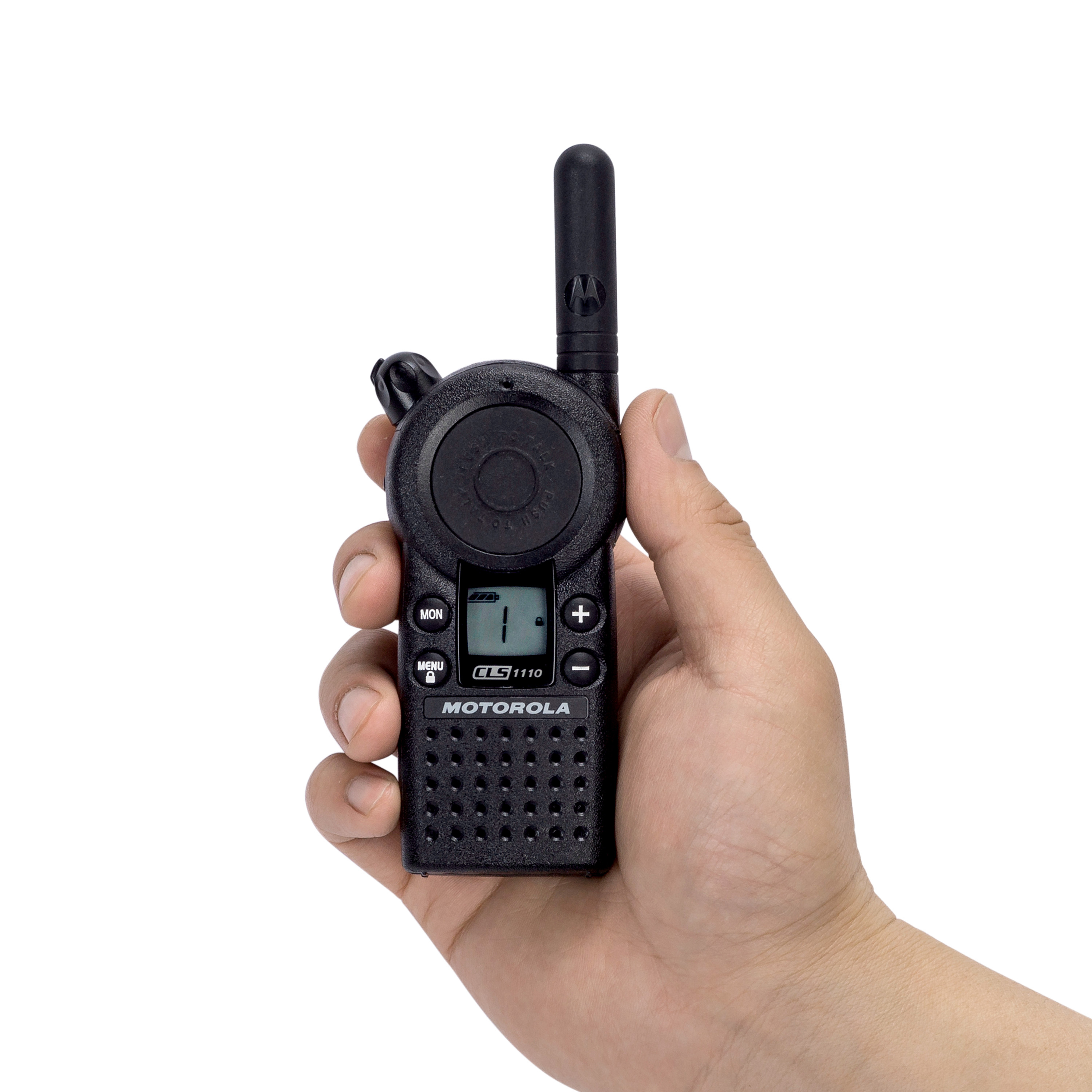
1. Motorola CLS1410 — Best for Small to Mid-Size Labs
| Specification | Detail |
|---|---|
| Frequency | UHF (460–469 MHz) |
| Power | 1 watt |
| Channels | 4 |
| Indoor Coverage | 200,000 sq ft / up to 15 floors |
| Battery Life | ~10 hours |
| Antimicrobial Housing | Yes |
The CLS1410 has been deployed in clinical, pharmaceutical, and research laboratory settings for over 15 years. Its antimicrobial housing is the feature that distinguishes it from otherwise comparable radios—most UHF business radios do not include this treatment. For labs where disinfection is a recurring protocol, this is a meaningful difference.
Why it fits laboratories specifically
- Antimicrobial housing inhibits bacterial growth on radio surfaces between cleaning cycles
- UHF frequency provides reliable penetration through concrete lab walls, shielded rooms, and multi-floor construction
- VOX hands-free transmission supports sterile technique and instrument operation without breaking radio contact
- Audible Call Alerts with Vibracall technology ensure staff receive messages without interrupting a procedure
- Simplified cloning feature allows fast configuration across a lab fleet without per-device programming
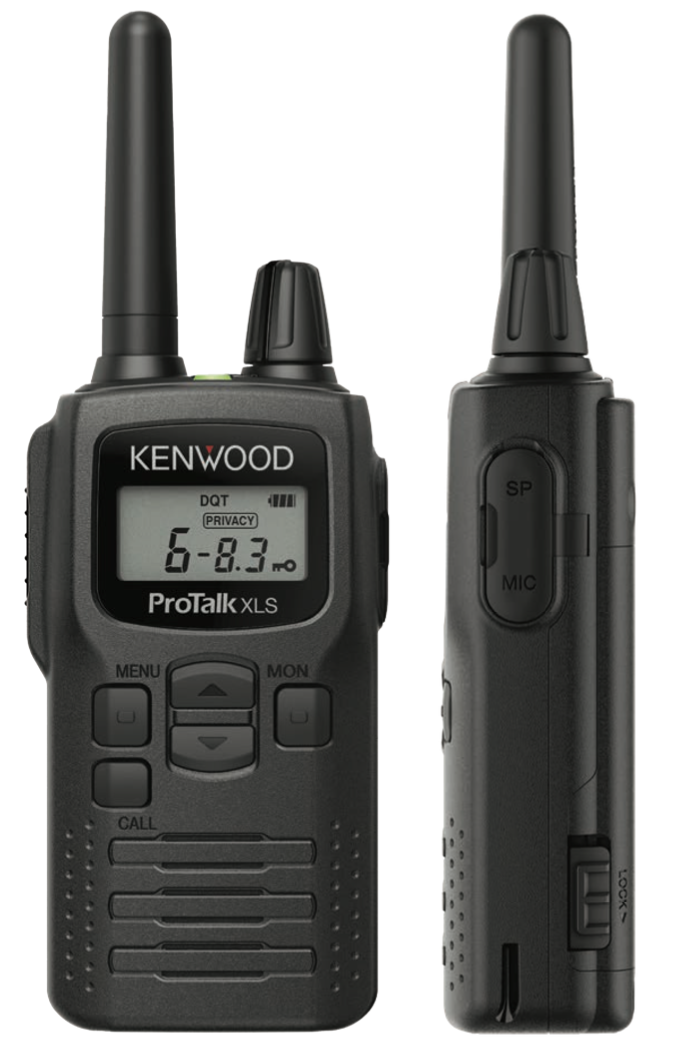
2. Kenwood ProTalk PKT-300 — Best for Multi-Department Labs
| Specification | Detail |
|---|---|
| Frequency | UHF (450–470 MHz) |
| Power | 2 watts |
| Channels | 6 |
| Indoor Coverage | Up to 275,000 sq ft |
| Battery Life | ~10 hours |
| VOX | Yes |
The Kenwood PKT-300 steps up in both power and channel capacity relative to the CLS1410, making it the right choice for labs with five or more functional groups that require dedicated channel assignments. At 2 watts UHF, it extends coverage to 275,000 sq ft—useful for mid-size facilities or labs with heavy wall construction that reduces effective range.
Why it fits multi-department laboratories specifically
- Six channels support clean segmentation for labs with multiple active departments (sample processing, chemistry, microbiology, facilities, inventory, management)
- 2 watts provides additional signal margin for heavily constructed buildings or labs with shielded rooms
- Built-in VOX supports hands-free operation during instrument operation or sterile procedures
- Built-in flashlight is useful in low-light storage areas or equipment rooms
- Channel scan allows a designated manager or safety officer to monitor multiple channels simultaneously
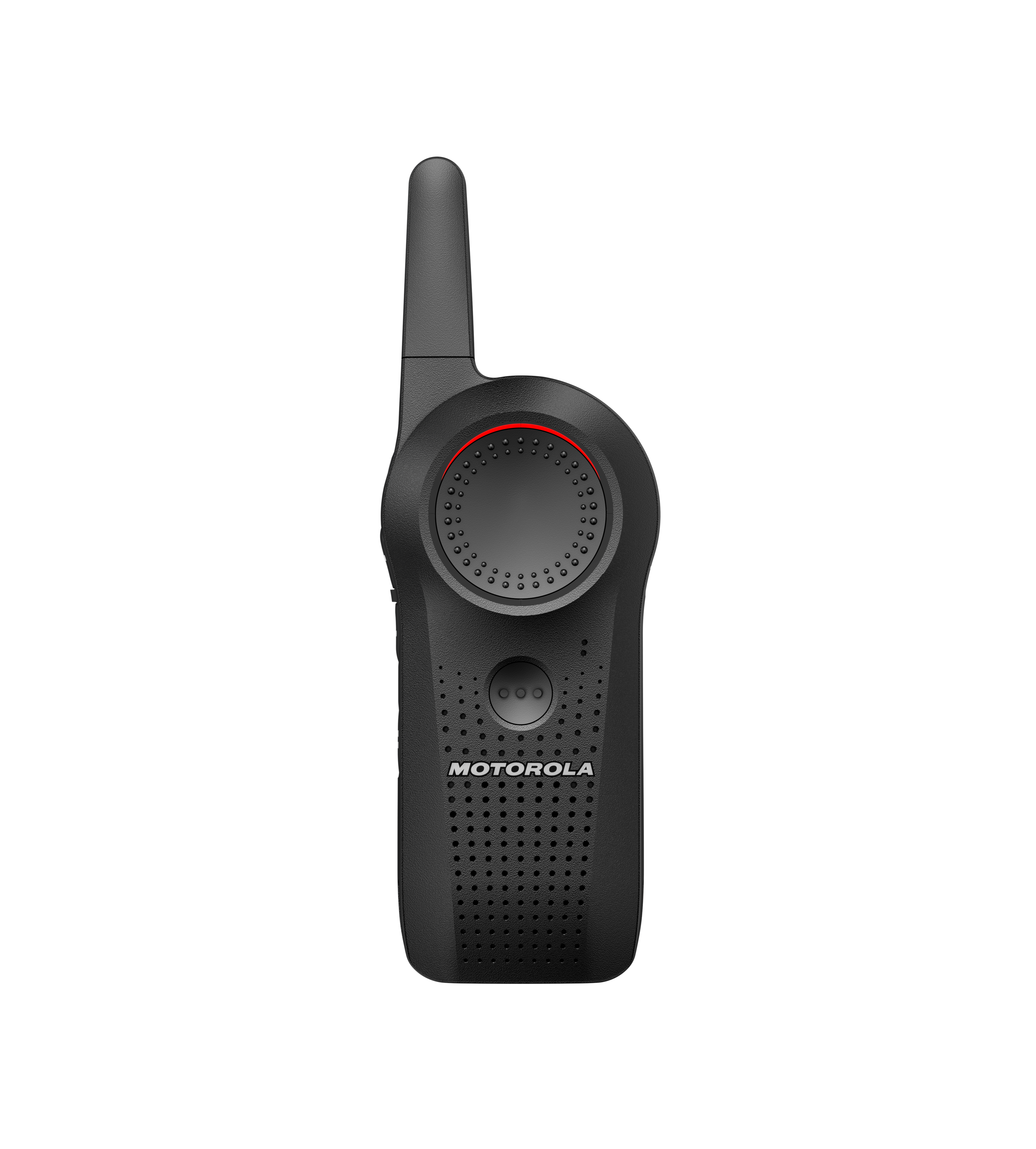
3. Motorola Curve — Best for Large Labs and Multi-Building Facilities
| Specification | Detail |
|---|---|
| Frequency | Digital 900 MHz (902–928 MHz) |
| Power | 1 watt digital (equivalent to ~4 watts analog) |
| Channels | 10 |
| Indoor Coverage | 300,000 sq ft / up to 20 floors |
| Battery Life | ~10–12 hours |
| Durability | MIL-STD-810 compliant, water-resistant |
The Motorola Curve is the appropriate choice when a lab's square footage, floor count, or wall construction exceeds what UHF analog can reliably serve. Its 900 MHz digital signal penetrates dense building materials more effectively than UHF analog at comparable wattage. The equivalent analog output of approximately 4 watts means it covers nearly three times the floor area of the CLS1410 while producing cleaner audio with less signal degradation at range edges.
The Curve also operates on the 902–928 MHz ISM band, which allows for secure conversations and clear audio.
Because the Curve uses frequency-hopping spread spectrum (FHSS) digital technology, it transmits across a range of frequencies rather than dwelling on a fixed channel. This characteristic significantly reduces the risk of sustained electromagnetic interference with sensitive laboratory instruments compared to fixed-frequency analog radios. For labs operating analytical equipment with documented EMI sensitivity, this is a relevant consideration. Review your instrument manufacturer's EMI specifications before finalizing any radio deployment.
Why it fits large laboratories specifically
- 10 channels support full team segmentation including dedicated safety, management, and emergency-only channels
- Digital technology produces consistent audio quality across the entire coverage area, not just at close range
- FHSS digital operation reduces sustained interference risk to sensitive analytical instruments
- MIL-STD-810 compliant construction handles physical demands of industrial research environments
- 20-floor indoor coverage supports multi-story research buildings and hospital labs
Also Worth Considering
Motorola DTR700 — 1 watt digital (FHSS), 30 channels, indoor coverage up to 350,000 sq ft. The highest-channel-count option for large research complexes requiring maximum team segmentation. FHSS digital operation provides strong EMI mitigation for labs with sensitive instruments.
Motorola SL300-U — 3 watts, dual analog/digital mode, UHF (403–470 MHz), indoor coverage up to 300,000 sq ft. Ultra-slim profile designed for discreet wear; active noise cancellation supports clear audio in labs with loud ventilation systems or mechanical equipment.
Coverage by Facility Size: Matching Radio to Lab
| Facility Type | Recommended Radio | Coverage Capacity |
|---|---|---|
| Small lab / single floor under 10,000 sq ft | Motorola CLS1410 | 200,000 sq ft / 15 floors |
| Mid-size lab / multiple departments | Kenwood PKT-300 | 275,000 sq ft |
| Large lab / multi-floor research facility | Motorola Curve | 300,000 sq ft / 20 floors |
| Large multi-building campus | Motorola DTR700 | 350,000 sq ft |
| Multi-site or unlimited range | Motorola WAVE PTX | Unlimited (LTE/Wi-Fi) |
For facilities with lead-lined rooms, Faraday-shielded spaces, or poured concrete construction throughout, reduce effective coverage estimates by 20–40% and select a radio rated one tier above your square footage would suggest. A 5,000 sq ft lab housed in a dense masonry building may perform like a 10,000 sq ft space for RF penetration purposes.
OSHA and Regulatory Compliance Considerations
Two-way radio use in laboratory environments intersects with several federal and industry-specific standards.
OSHA General Duty Clause (Section 5(a)(1), OSH Act of 1970). Employers must provide a workplace free from recognized serious hazards. For laboratory workers who work alone in chemical storage, cold rooms, or hazardous material areas, the absence of reliable two-way communication is a recognized isolation risk. Professional radios with emergency alert functionality support compliance with this obligation. OSHA's Laboratory Safety Guidance references communication systems as part of a comprehensive lab safety program.
OSHA Hazard Communication Standard (29 CFR 1910.1200). Labs handling hazardous chemicals must maintain procedures for emergency response. Reliable internal communication is a component of emergency response capability. Radios support rapid notification of spills, exposures, or equipment failures without requiring staff to leave the area or handle a contaminated personal device.
CLIA (Clinical Laboratory Improvement Amendments, 42 CFR Part 493). Clinical laboratories certified under CLIA are required to maintain quality systems that include personnel communication and emergency response protocols. Two-way radios are a standard tool supporting these requirements in hospital and reference laboratory settings.
EMI and Laboratory Instrument Compatibility. No universal federal standard governs radio use near laboratory instruments; however, individual instrument manufacturers specify electromagnetic compatibility (EMC) requirements. The FDA's guidance on electromagnetic compatibility for medical devices references IEC 61326-1 as the applicable standard for measuring instruments used in laboratory environments. Labs using FDA-regulated analytical equipment should verify radio EMC compatibility with their instrument vendor before deployment. FHSS digital radios generally present a lower interference risk than fixed-frequency analog radios due to their distributed transmission pattern.
Frequently Asked Questions
What is the best two-way radio for a laboratory?
For most small to mid-size labs, the Motorola CLS1410 is the strongest all-around choice: antimicrobial housing, four channels, 200,000 sq ft indoor coverage, VOX capability, and a 15-year track record in clinical and research laboratory settings. For labs with five or more functional departments, the Kenwood PKT-300 adds six channels and 2 watts of UHF power. For large research facilities, multi-floor buildings, or campuses with sensitive instruments, the Motorola Curve provides digital-grade clarity, 10 channels and 300,000 sq ft coverage.
Do laboratory radios need to be disinfectable?
Yes, in any laboratory operating under sterile protocols, CLIA certification, pharmaceutical GMP guidelines, or ISO cleanroom standards. The key specs to verify are antimicrobial housing treatment and IP-rated seals that prevent disinfectant from entering the device. The Motorola CLS1410 includes antimicrobial housing. For other models, confirm disinfection compatibility with the manufacturer before using chemical wipes or spray disinfectants. Consumer-grade radios are generally not rated for repeated chemical disinfection and are not appropriate for sterile lab environments.
How much range do I need for a lab?
For a single-floor lab under 10,000 sq ft with standard commercial wall construction, a 1-watt UHF radio provides adequate coverage. For multi-floor facilities, labs with concrete or masonry construction, or buildings with shielded rooms, plan for 2 watts UHF (Kenwood PKT-300) or a digital radio equivalent. The Motorola Curve delivers the equivalent of approximately 4 watts analog via its 900 MHz digital signal, covering up to 300,000 sq ft and 20 floors. When in doubt, size up: the cost difference between radio tiers is small relative to the cost of deploying a system that doesn't cover your building.
How long does the battery last on a lab radio?
All three radios recommended on this page carry rated battery lives of 10 to 12 hours under normal transmission loads, sufficient for a standard 8- to 12-hour laboratory shift. Motorola and Kenwood commercial-grade batteries are tested to five years of regular field use. For labs running double shifts or 24-hour operations, multi-unit charging cradles allow hot-swapping batteries at shift change without service interruption.
Do two-way radios interfere with laboratory instruments?
Fixed-frequency analog radios can produce sustained electromagnetic interference with sensitive instruments including mass spectrometers, NMR machines, and electron microscopes. Frequency-hopping spread spectrum (FHSS) digital radios like the Motorola Curve and DTR700 distribute transmissions across a range of frequencies, significantly reducing sustained interference risk. However, no universal clearance applies: each instrument has its own EMC specification. Consult your instrument manufacturer's documentation and verify compatibility before deploying any radio system near sensitive analytical equipment. The FDA references IEC 61326-1 as the applicable EMC standard for measuring instruments used in laboratory environments.
How many channels does a laboratory need?
A practical channel structure for a typical lab: one channel per major functional group, plus a management channel and an emergency-only channel. For a lab with sample processing, chemistry, microbiology, and facilities, four dedicated channels plus a management channel totals five. The CLS1410 covers this at four channels; the PKT-300 at six; the Curve at ten. Labs with more than five distinct departments, a large security or safety team, or multi-building operations benefit from starting at ten channels. Avoid assigning staff to a single shared channel if your team exceeds three people—cross-talk from multiple simultaneous transmissions degrades communication quality and delays response time.
Can radios be used for emergency response and lone worker safety in labs?
Yes. This is one of the primary safety applications for professional radios in laboratory environments. Staff working alone in chemical storage, cold rooms, or hazardous material handling areas should carry a radio with emergency alert capability at all times. OSHA's General Duty Clause requires employers to address recognized isolation hazards; reliable two-way communication is a standard control measure for lone worker safety. Designate a supervisor or safety officer to monitor an emergency channel during all occupied shifts. For labs using the Motorola Curve or DTR series, the emergency alert button broadcasts a priority signal to all receiving units simultaneously.
What is the difference between analog and digital radios for labs?
Analog radios transmit on a fixed frequency; audio quality degrades progressively as the signal approaches the edge of coverage range, producing static before dropping out entirely. Digital radios encode audio as a data signal; they maintain consistent audio quality across the full coverage area and drop out cleanly rather than degrading. For labs where clear, intelligible communication is critical—reporting instrument readings, conveying sample identification numbers, coordinating chemical handling—the audio consistency of digital is a meaningful operational improvement. Digital radios also typically offer greater effective indoor range at equivalent wattage and better EMI characteristics. The trade-off is cost: digital radios carry a higher unit price than comparable analog models.
Why Buy from TechWholesale.com
Tech Wholesale has been selling professional two-way radios to laboratories, healthcare facilities, and research institutions since 1997. We are an authorized dealer for Motorola and Kenwood, which means every radio we sell carries the full manufacturer warranty—typically two years on commercial-grade models—and qualifies for manufacturer service and repair. Gray market inventory voids manufacturer warranties; authorized dealer status means that risk does not apply to purchases from Tech Wholesale.
What sets us apart for lab buyers
- Lifetime technical support included with every purchase — call or email our team for the life of your radio fleet, not just through the warranty period
- Free quotes for large teams — request a custom quote
- No-pressure consultation — we will recommend the less expensive radio when it is the right fit for your lab's size and structure
- Free shipping on qualifying orders
- Authorized dealer status — full manufacturer warranty, no gray market inventory
If you're not sure which radio is right for your facility, use our Find My Radio tool or request a quote. We'll ask a few questions about your building and team structure and come back with a specific recommendation.
1-888-925-5982 • Service@TechWholesale.com
Related Reading
From TechWholesale.com
- FCC Licensing for Two-Way Radios — A Complete Guide
- HIPAA Compliance and Two-Way Radio Usage
- Frequency Hopping Spread Spectrum (FHSS) Explained
- VOX Hands-Free Operation Explained
- UHF vs. VHF — Frequencies Explained
- Privacy Codes — Eliminate Outside Interference
- Lone Worker / Man Down Functionality
- Intrinsically Safe Radios for Hazardous Environments
External Resources
- OSHA Laboratory Safety — osha.gov
- CLIA Overview — Centers for Medicare & Medicaid Services
- FCC Part 90 Private Land Mobile Radio Services — ecfr.gov
- FCC Universal Licensing System (ULS) — fcc.gov
Article by Kristin Wood, a two-way radio consultant @ Tech Wholesale | Authorized Motorola & Kenwood Dealer Since 1997 | Last Updated: May 2026