

When a storm takes out the cell towers, the phones in your team’s pockets stop working at the moment you need them most. Business-grade two-way radios talk directly radio-to-radio, with no towers, no network, and no power grid required, so your command post, shelters, and field teams stay connected when everything else goes down.
You’re in the right spot to compare your options! We’ve helped hundreds of emergency response and relief teams nationwide stay connected since 1997. Here’s how to choose the best radio for your team.
What Happens Without Reliable Communication
Picture a disaster scenario where the search and rescue team in Sector C hasn't checked in for over an hour. The crew at the medical tent is running low on supplies with no ETA on resupply. Evacuation buses are sitting idle at the south gate because no one passed along that the roads were cleared.
Everyone is working. Nobody knows what anyone else is doing.
This is one of the most common breakdowns in disaster response—not a shortage of manpower or resources, but a failure of coordination. Clear, reliable two-way radio communication solves this. The right radio keeps teams synchronized across shifting conditions, changing locations, and high-pressure moments where every second counts.
What to Look for in a Disaster Management Radio
Not all radios are built for the field. Here's what separates a reliable emergency radio from one that'll let you down.
Coverage and Power
Match your radio's power output to the size of your operating area. More watts doesn't always mean better—overpowering for a small site means overpaying, while underpowering means dead zones.
- 1–2 watts: Suitable for small areas up to 200,000 sq ft indoors or 1–2 miles outdoors
- 3–4 watts (analog) or 1 watt (digital): Handles up to 350,000 sq ft indoors or up to 5 miles outdoors
- VHF frequencies: Excellent for open outdoor terrain with minimal obstructions—performs poorly indoors
- UHF frequencies: Better suited for buildings, urban environments, and areas with physical barriers
- LTE/Wi-Fi radios (e.g., Motorola WAVE PTX): Unlimited coverage across multiple sites, cities, or states
If your team is working through thick concrete walls or densely built structures, go one watt stronger than you think you need.
Number of Channels
Channels let you segment your team's communication so the right people hear the right information. A logistics crew doesn't need to be on the same channel as the medical team. Separating teams reduces chatter, speeds up coordination, and keeps critical communications from getting buried.
Channels also allow for private conversations. "Sarah, call Tom on channel two." Simple. Clean. No one else is pulled into the loop. Easy breezy—that's concise and direct communication.
Build Quality and Reliability
In disaster management, radios get dropped, exposed to rain, covered in dust, and used around the clock. A radio that isn't built for that won't last long.
Motorola and Kenwood are the most trusted names in the industry for a reason. Their radios are purpose-built for demanding environments, tested for up to five years of field use, and backed by manufacturer warranties of one to three years depending on the model. They're also designed to be intuitive—no steep learning curve for new team members.
Key Features to Prioritize
When evaluating radios for disaster response, look for:
- Rugged, weatherproof design: Dustproof, waterproof, and shock-resistant housing
- Long battery life: Extended shifts demand extended power—look for backup or swappable battery options
- Noise cancellation: Clear audio in loud, chaotic environments
- Emergency alert button: Instant SOS or distress signal capability
- GPS tracking: Real-time location monitoring for field teams
- Multi-channel support: Enough channels to segment your entire operation
- Encrypted communication: Secure, private channels for sensitive coordination
- Hands-free compatibility: VOX activation or headset support for active field work
- Glove-friendly controls: Large, simple buttons that work under pressure
Our Top Two-Way Radio Picks for Disaster Management
These recommendations come from direct experience working with disaster response organizations. Each model has a proven track record and a reputation for reliability in the field.
Best for Small Teams: Mag One BPR50dX

The Mag One BPR50dX is our top pick for small disaster management teams. It's the most requested radio among response crews, and for good reason.
- Channels: 64
- Power: 4 watts UHF / Digital
- Coverage: 350,000–500,000 sq ft indoors
- Battery life: Up to 23 hours
- Digital mode: Extended coverage and enhanced audio clarity
Operating on both UHF and digital frequencies, the BPR50dX delivers clear audio even through building walls and across open terrain. The rugged housing holds up to drops and dust, and the 23-hour battery means your team stays connected through extended operations without scrambling for a charger.
Honorable Mention: Motorola CP100d
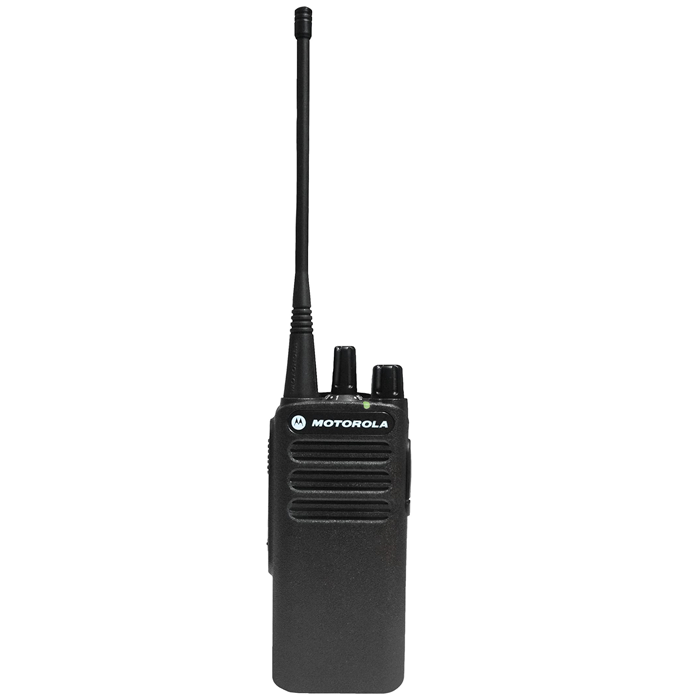
A solid, no-frills option for teams operating primarily outdoors.
- Channels: 16
- Power: 5 watts VHF (outdoor use only)
- IP54 rated
- 3-year manufacturer warranty
The CP100d's 5-watt VHF output gives it excellent range in open terrain. Keep in mind that VHF is not suited for indoor environments—this one belongs in the field, not in a building.
Best for Larger Teams: Motorola R2

For larger operations with multiple units and team segments, the Motorola R2 scales well without sacrificing performance.
- Channels: 64
- Power: 4 watts UHF / Digital
- IP54 rated
- 2 programmable buttons
- Transmit Interrupt: Override ongoing transmissions for urgent communications
The Transmit Interrupt feature is particularly valuable in large operations—it lets team leaders cut through ongoing channel traffic when urgent communication can't wait.
Best for Nationwide or Multi-Site Operations: Motorola WAVE PTX Series
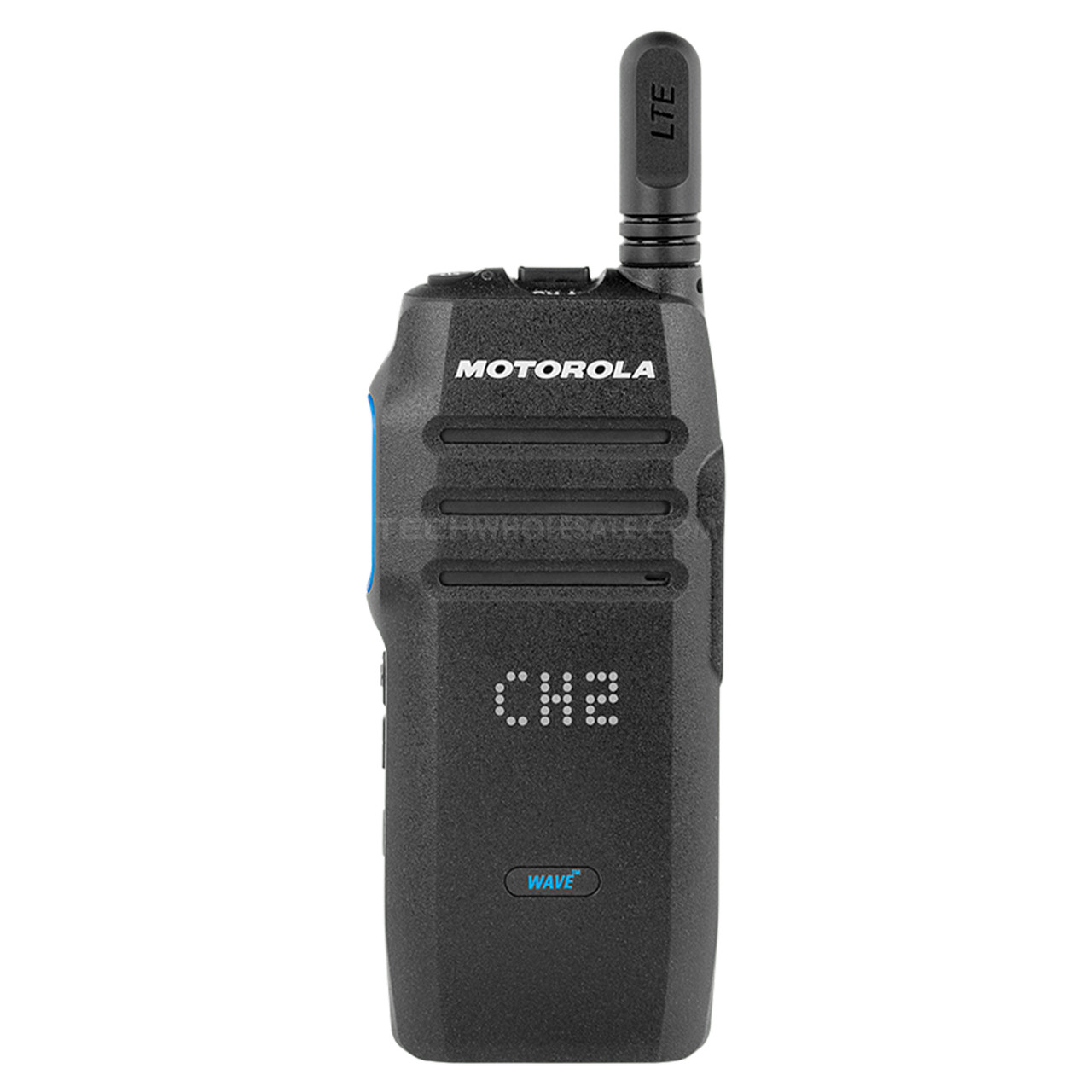
When your operation spans multiple locations, cities, or states, traditional radio frequencies hit a hard limit. The WAVE PTX series removes that ceiling entirely.
- Coverage: Unlimited via LTE and Wi-Fi
- GPS tracking: Monitor team locations in real time
- Emergency button: Immediate distress signaling
- Cross-platform: Talk to radios directly from your smartphone
The WAVE PTX requires a monthly subscription per device, but lease-to-own options are available to manage upfront costs. For organizations coordinating across large geographic areas, the coverage capability is unmatched.
Which Radio Is Right for Your Team?
Here's a quick summary to guide your decision:
| Team Size / Use Case | Recommended Radio | Key Strength |
|---|---|---|
| Small teams, indoor/outdoor | Mag One BPR50dX | 23-hr battery, digital clarity |
| Small teams, outdoor only | Motorola CP100d | 5W VHF, 3-yr warranty |
| Large teams, mixed terrain | Motorola R2 | Transmit Interrupt, scalable |
| Multi-site or nationwide ops | Motorola WAVE PTX | LTE/Wi-Fi, GPS, unlimited range |
Request a Quote for Bulk Purchases
Equipping an entire team? Pricing changes at scale, and we want to make sure you get the best value for your budget. Request a quote and our team will come back with our best possible pricing for bulk orders.
Your Radio, Backed by 25 Years of Experience
Our support team has over 25 years of experience in the two-way radio industry. If you're not sure which model fits your operation, reach out—we'll walk you through it based on your team size, terrain, and communication needs.
Every purchase also includes lifetime technical support. We're not done after the sale. If something comes up in the field, we're a call away.
Clear communication saves lives. Make sure your team has the tools to make it happen.