

When you multiply lost minutes by dozens of patients each week, the time (and revenue) adds up fast. Radios close the communication gap—and they do it without disturbing your patients' experience.
This guide covers what to look for in a two-way radio for pain institutes, and the specific models we recommend based on years of experience in the industry.
Why Pain Clinics Need Two-Way Radios
As many as 50 million people in the U.S. live with chronic pain. Pain clinics and institutes serve these patients with a wide range of advanced, individualized treatments—which means multiple specialists, technicians, and support staff are working simultaneously across different areas of the facility.
Coordinating care across departments is a real challenge. A front desk team member may need to notify a treatment specialist that a patient is ready. A doctor may need to quickly relay updated instructions to a technician in another room. Without a reliable communication system in place, staff end up chasing each other down hallways—wasting time that could be spent with patients.
Equip every team member with a pain clinic walkie-talkie, and that problem disappears. Staff can reach the right person instantly, relay patient information to specific groups, and respond to emergencies without delay. The result is a smoother operation, better-coordinated care, and a more positive experience for every patient who walks through your doors.
What to Look for in a Walkie-Talkie for Pain Institutes
Not all two-way radios are built for healthcare environments. Here's what matters most when choosing a radio for your pain clinic or institute:
- Compact, discreet design: Staff need to move freely and communicate without drawing attention. A small, lightweight radio that can be worn on a uniform or clipped to a belt is essential.
- Clear audio quality: Pain clinics are typically quiet environments. Radios with interference eliminator codes and business-exclusive frequencies ensure crisp, private communication that won't bleed into patient areas.
- Ease of use: Medical staff are busy. Radios should be intuitive enough to use without any technical training—simple channel switching, straightforward controls, and reliable push-to-talk functionality.
- Hands-free capability: Doctors and technicians often have their hands full during treatments. Hands-free operation via an earpiece and inline PTT microphone keeps communication seamless without interrupting procedures.
- Group and individual messaging: Whether you need to address the whole team or reach one specific person, your radio system should support both.
Our Top Radio Recommendations for Pain Institutes
Tech Wholesale is an Authorized Motorola Dealer with over 15 years of experience in the two-way radio industry. We don't want you to buy any radio just because you like the name or the price. We want you to make an educated decision and purchase the perfect radio that is discreet, easy to use, and gets reliable coverage within your building.
For pain institutes and pain clinics, we recommend the following four models: the Motorola CLP1010e, CLS1410, and Curve.
Motorola CLP1010e — Best for Discreet Communication
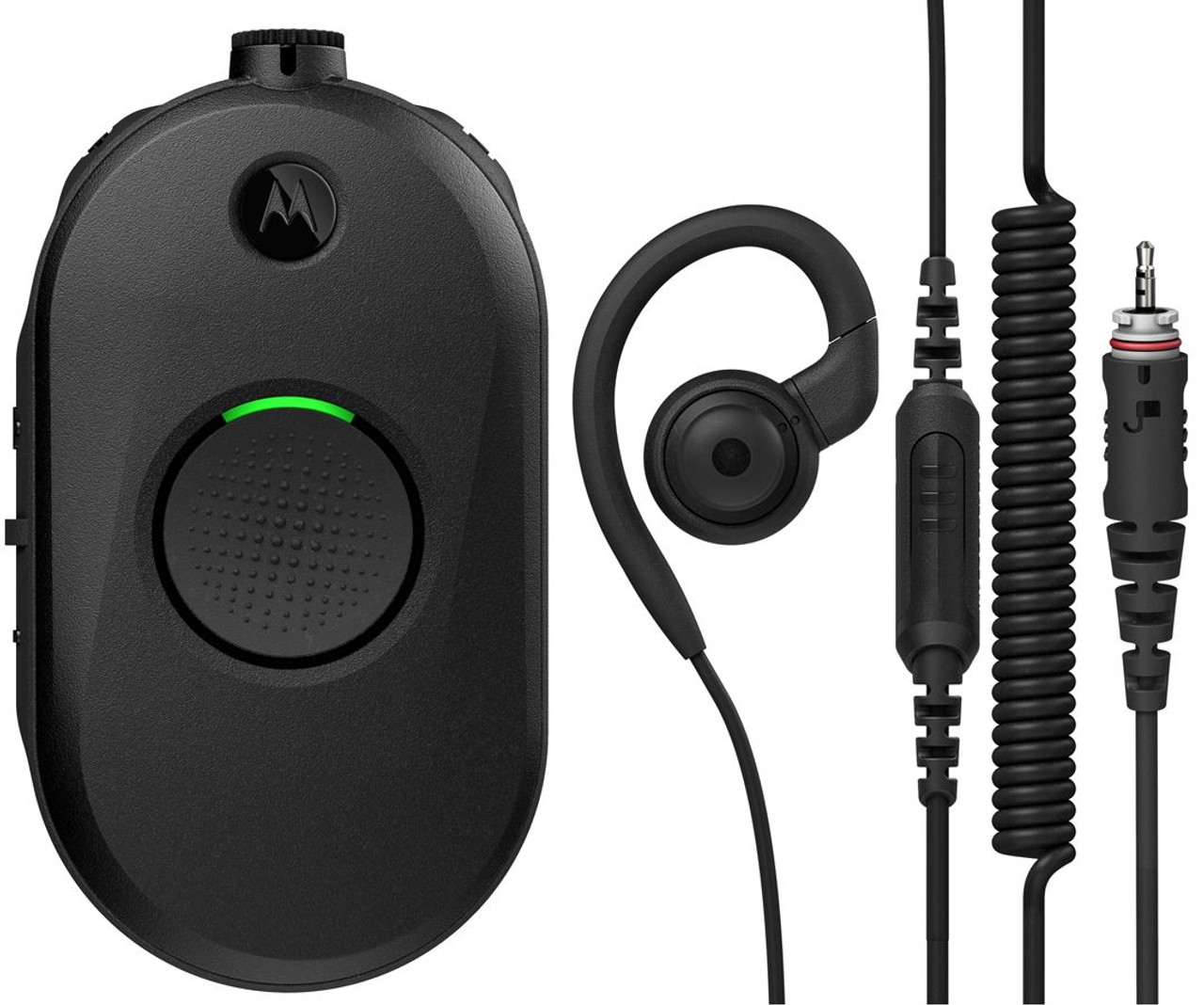
If discretion is your top priority, the Motorola CLP1010e is the radio for you. Weighing just 2.38 ounces and measuring 3.5 x 2 x 0.75 inches, it's one of the smallest business-grade radios on the market. It's small enough to be worn discreetly on a uniform without being noticeable to patients.
The CLP1010e includes:
- A belt clip for easy carrying
- An adjustable earpiece and inline PTT microphone for hands-free use
- Business-exclusive frequencies for clear, private communication
This model is ideal for front desk staff, treatment coordinators, and anyone moving between patient-facing and back-of-house areas throughout the day.
Motorola CLS1110 & CLS1410 — Best for Simplicity and Reliability
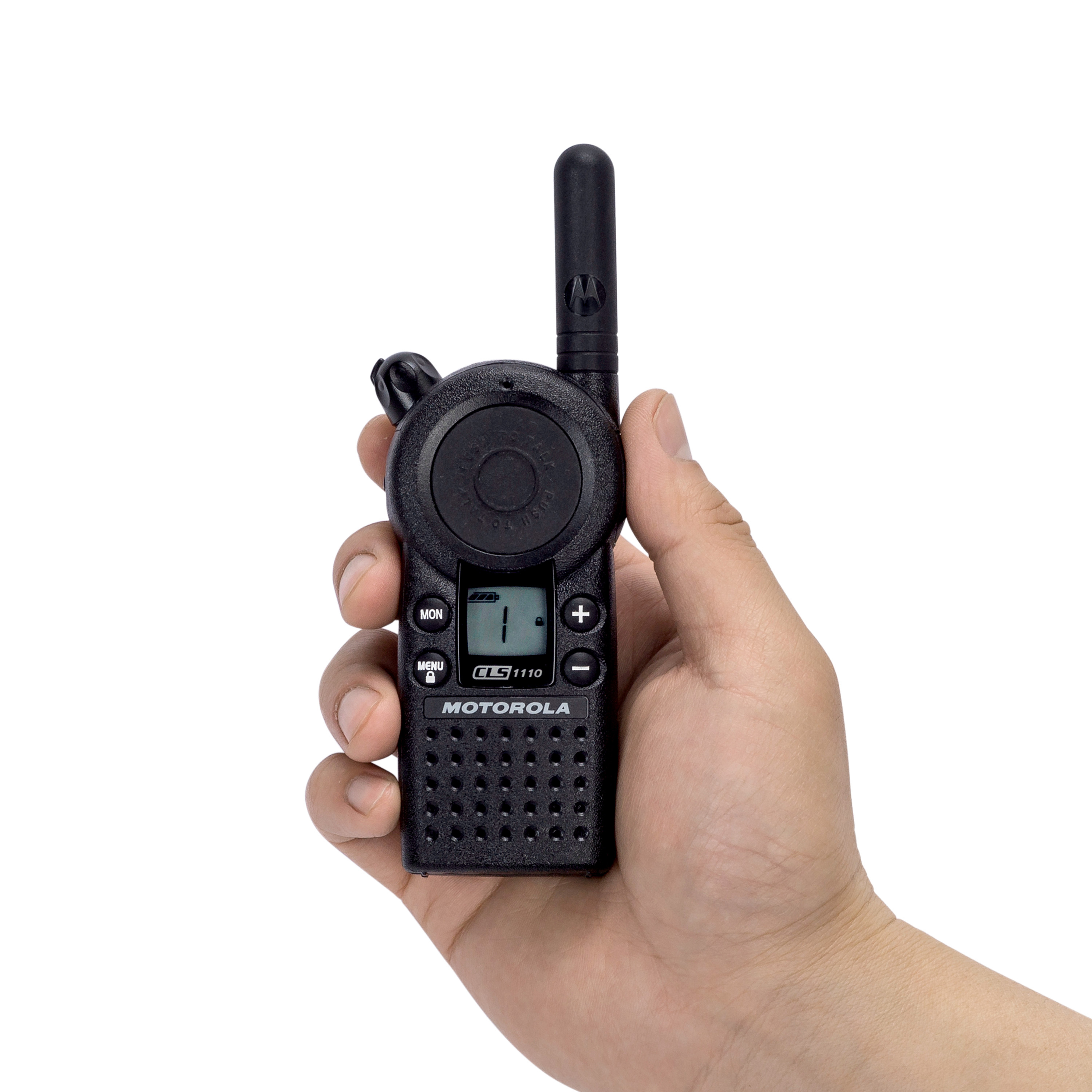
The Motorola CLS Series radios are slightly larger than the CLP1080e but still compact, lightweight, and very easy to use—no technical background required. They're available in two configurations:
- CLS1110: 1-channel model, ideal for smaller clinics with straightforward communication needs
- CLS1410: 4-channel model, better suited for larger institutes where different departments need dedicated channels
Both models feature business-exclusive frequencies and interference eliminator codes, delivering the clear, crisp audio quality that healthcare environments demand. Easy breezy—that's concise and direct communication. Channels can also be used to set up private conversations: "Sarah, connect with Tom on channel two." Sarah and Tom can then have an in-depth conversation without involving the rest of the staff.
Motorola Curve — Best Digital Radio for Pain Clinics
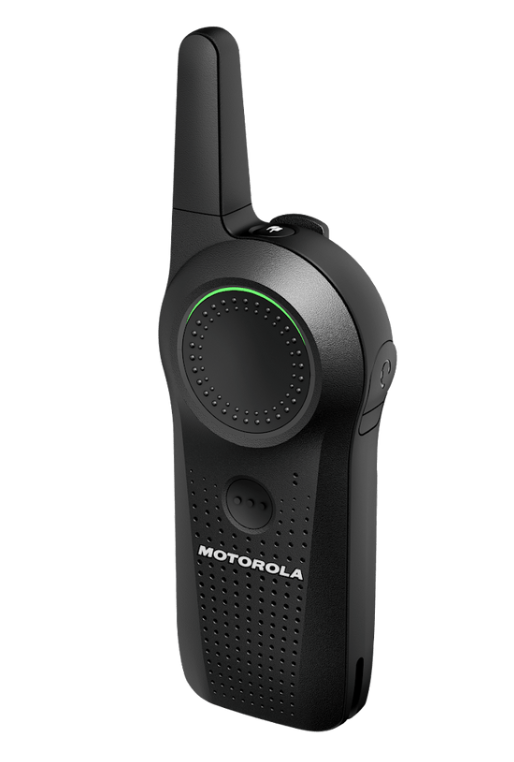
For clinics that want the latest technology and the clearest possible audio, the Motorola Curve is the standout choice. This digital two-way radio is built to military standards for exceptional durability, making it a long-term investment for any healthcare facility.
Key features include:
- Crystal-clear digital audio with no static—ideal for quiet clinical environments
- Individual and group messaging so you can reach one person or broadcast to the whole team
- 900 MHz frequency band operation—better audio quality and privacy
- Compact, durable design built to handle daily use across a busy facility
The Curve bridges the gap between a traditional walkie-talkie and a smartphone-level communication device, without the monthly subscription fees or distraction of a mobile phone.
Analog vs. Digital: Which Is Right for Your Pain Clinic?
Both analog and digital radios have a place in healthcare settings. Here's a quick breakdown to help you decide:
| Feature | Analog (CLS Series, CLP1080e) | Digital (DLR1060) |
|---|---|---|
| Audio Quality | Clear with interference codes | Superior, no static |
| Ease of Use | Very simple | Simple, with more features |
| FCC License | May be required | Not required (900 MHz) |
| Best For | Smaller clinics, basic needs | Larger institutes, advanced use |
| Durability | Business-grade | Military-grade |
For smaller pain clinics, the CLS or CLP series will cover your needs effectively and affordably. For larger institutes or multi-department facilities, the DLR1060's digital clarity and individual messaging capability make it worth the upgrade.
Ready to Equip Your Team?
Choosing the right communication system is one of the most impactful decisions you can make for your pain clinic's day-to-day operations. The right radio keeps your team connected, your patients well-cared for, and your staff focused on what they do best.
Tech Wholesale's team has over 15 years of hands-on experience helping healthcare facilities find the right fit. Every purchase includes lifetime tech support —because we're here for you long after the sale.
Request a quote today for bulk pricing, or reach out to our support team with any questions. We'll help you find the perfect radio for your pain institute, every time.