

The best two-way radios for janitorial teams are UHF business-grade radios with signal built to penetrate thick concrete and multiple floors for dependable coverage. The right radio model depends on your building layout and team size.
Buy the wrong radio and you're dealing with static, dead zones, and radios that die halfway through a shift. Buy the right one and your team operates like a well-oiled machine.
We've sold thousands of radios and worked with teams across every type of facility. In this guide, we break down exactly what to look for—and which specific models are worth your money.
What to Look for in a Janitorial Two-Way Radio
Before jumping into product recommendations, it's worth understanding what separates a great radio from a frustrating one. Here are the key factors to evaluate.
Coverage and Power
Matching your radio's power output to your building size is critical. Too little power means dead zones and dropped communication. Too much means you're overpaying for coverage you don't need.
Here's a simple breakdown:
- Small buildings (up to 200,000–250,000 sq ft): 1–2 watts of power is sufficient.
- Large or multi-building facilities (up to 350,000 sq ft): Look for 3–4 watts on analog, or 1 watt on digital.
- Multiple locations across cities or states: Consider LTE/Wi-Fi-enabled radios like the Motorola WAVE PTX series for truly unlimited coverage.
One more thing to factor in: building materials. Thick concrete walls can significantly reduce range, so if your facility has heavy construction, bump up your wattage by one level to compensate.
Number of Channels
Channels let you segment conversations by team, task, or location. Instead of everyone hearing everything, you can assign specific groups to their own channel. If a supervisor needs to pull two staff members into a private conversation, they can move to a separate channel without cluttering the main line.
For most janitorial teams, 4–6 channels is plenty. Larger operations with multiple departments or floors may benefit from 16 channels.
Build Quality and Durability
Janitorial work is physical. Radios get dropped, bumped, and exposed to moisture. A cheaply made radio won't survive a full year of that kind of use.
Look for radios that meet MIL-STD 810 standards—this is the military-grade durability certification that ensures a radio can handle drops, dust, humidity, and temperature extremes. IP ratings (like IP54 or IP55) indicate protection against dust and water spray.
Motorola and Kenwood are the two most trusted brands in this space. Both build radios specifically for professional use, with durability and reliability baked into every model.
Key Features for Janitorial Use
Beyond power and build, these features make day-to-day use significantly easier:
- Long battery life – Radios need to last a full shift without recharging. Lithium-ion batteries are the gold standard.
- Clear audio quality – Background noise from vacuums and machinery can make communication difficult. Prioritize radios with strong audio output.
- Lightweight and compact design – Staff carry radios all day. Heavy or bulky units become a burden fast.
- VOX (hands-free) capability – Allows communication without stopping a task or putting down equipment.
- Emergency alert button – A quick way to flag urgent situations like spills, accidents, or safety concerns.
- Multiple channels – For separating teams by floor, task, or location.
Our Top Two-Way Radio Picks for Janitorial Teams
Every recommendation below comes from direct experience working with thousands of facilities. Each model has a strong track record and a reputation that holds up over time.
Best for Small Buildings
Motorola RMU2040
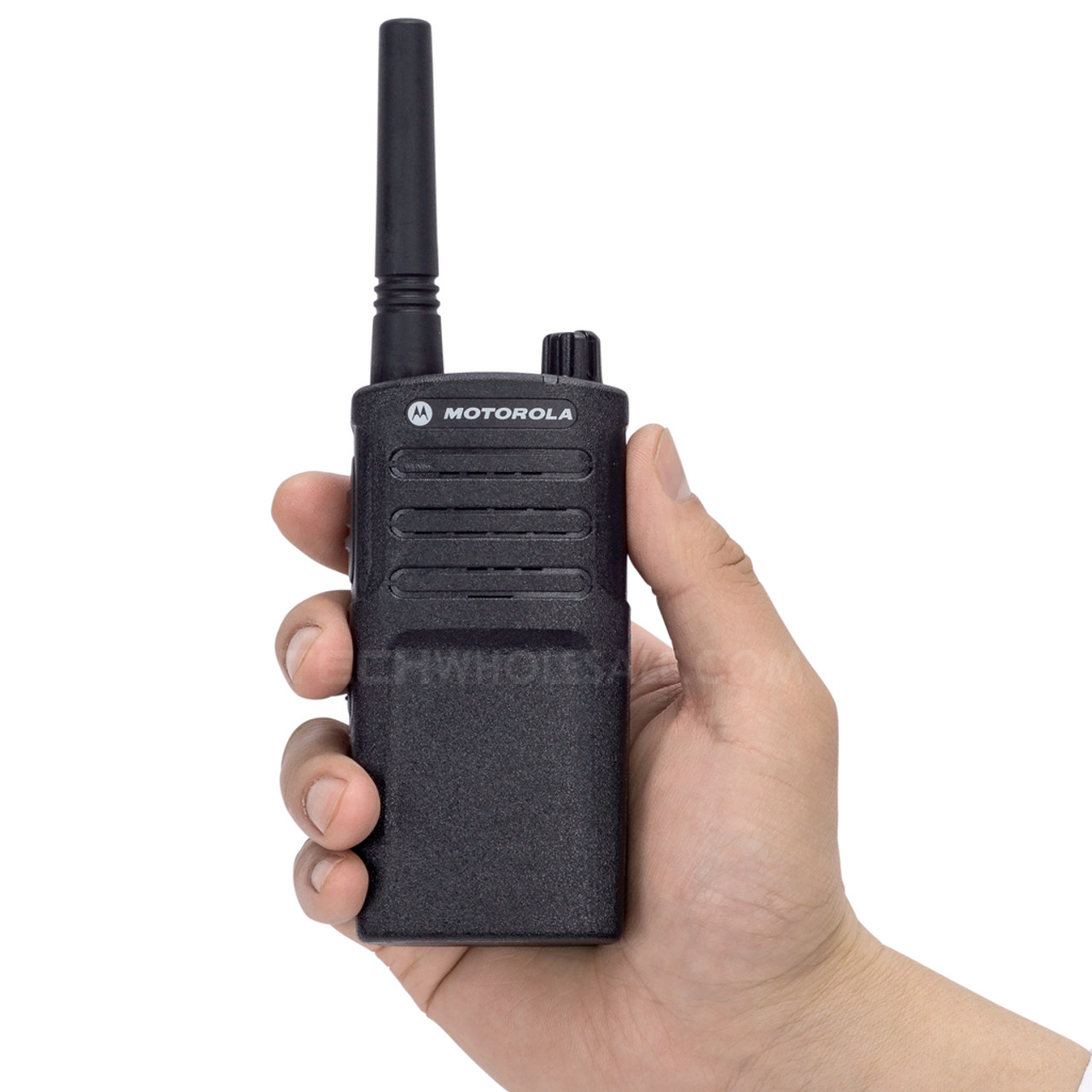
Specs: 4 channels | 2 watts | UHF (450–470 MHz) | Up to 250,000 sq ft indoors | Up to 2 miles outdoors
The RMU2040 is a workhorse for small to mid-size facilities. Two watts of UHF power cuts through concrete and steel without issue, and with four channels you can easily segment your team by floor or task.
Battery life is handled by a lithium-ion pack, so you're covered for full shifts. It ships with a standing charging tray, a wall charger, and a belt clip. The radio also includes 219 privacy codes to block interference from outside signals—no static from nearby hobbyists or competing businesses.
Durability-wise, it meets both MIL-STD 810 and IP55 standards. That's a radio built to take a hit. The hands-free channel announcement feature is a nice bonus for staff who are always on the move.
Kenwood PKT-300
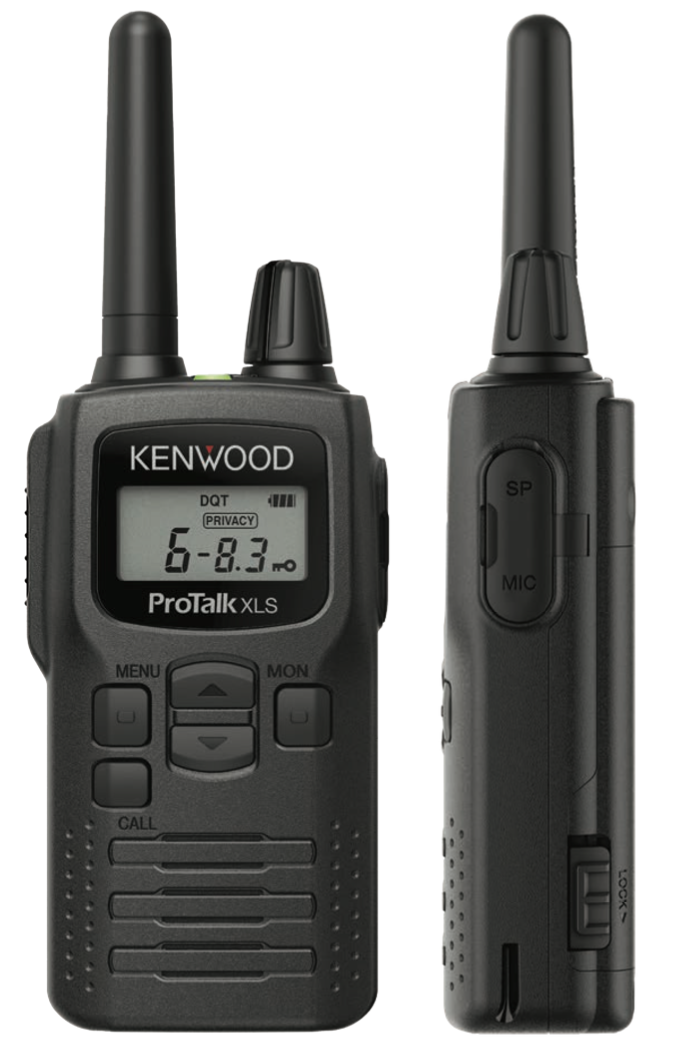
Specs: 6 channels | 2 watts | UHF | Up to 275,000 sq ft indoors | Up to 2 miles outdoors
The Kenwood PKT300 is compact, powerful, and incredibly easy to use. Six channels give you slightly more segmentation flexibility than the RMU2040, making it a strong option for facilities with distinct teams or departments.
It features a built-in display and VOX capability for hands-free operation—ideal for janitors who need to stay moving. Battery life is solid throughout a full day's shift, and like the RMU2040, it comes ready to use straight out of the box.
Best for Larger or Multi-Building Facilities
Motorola CP100d

Specs: 16-64 channels | 4 watts | UHF | Up to 350,000+ sq ft indoors | Up to 2–3 miles outdoors
When you need serious coverage, the CP100d delivers. Four watts of power means this radio doesn't struggle—it pushes signal through walls, across floors, and over long distances with ease.
Sixteen channels gives large operations the flexibility to manage multiple teams simultaneously without cross-communication. The rugged build features a metal die-cast chassis covered in polycarbonate, meeting MIL-STD 810 C-F standards. It can withstand being dropped from height, submerged in mud, or hit with a blast from a firehose.
Pre-programmed text messages and voice announcements add an extra layer of communication efficiency for larger teams.
Best for Unlimited Coverage
Motorola WAVE PTX Series
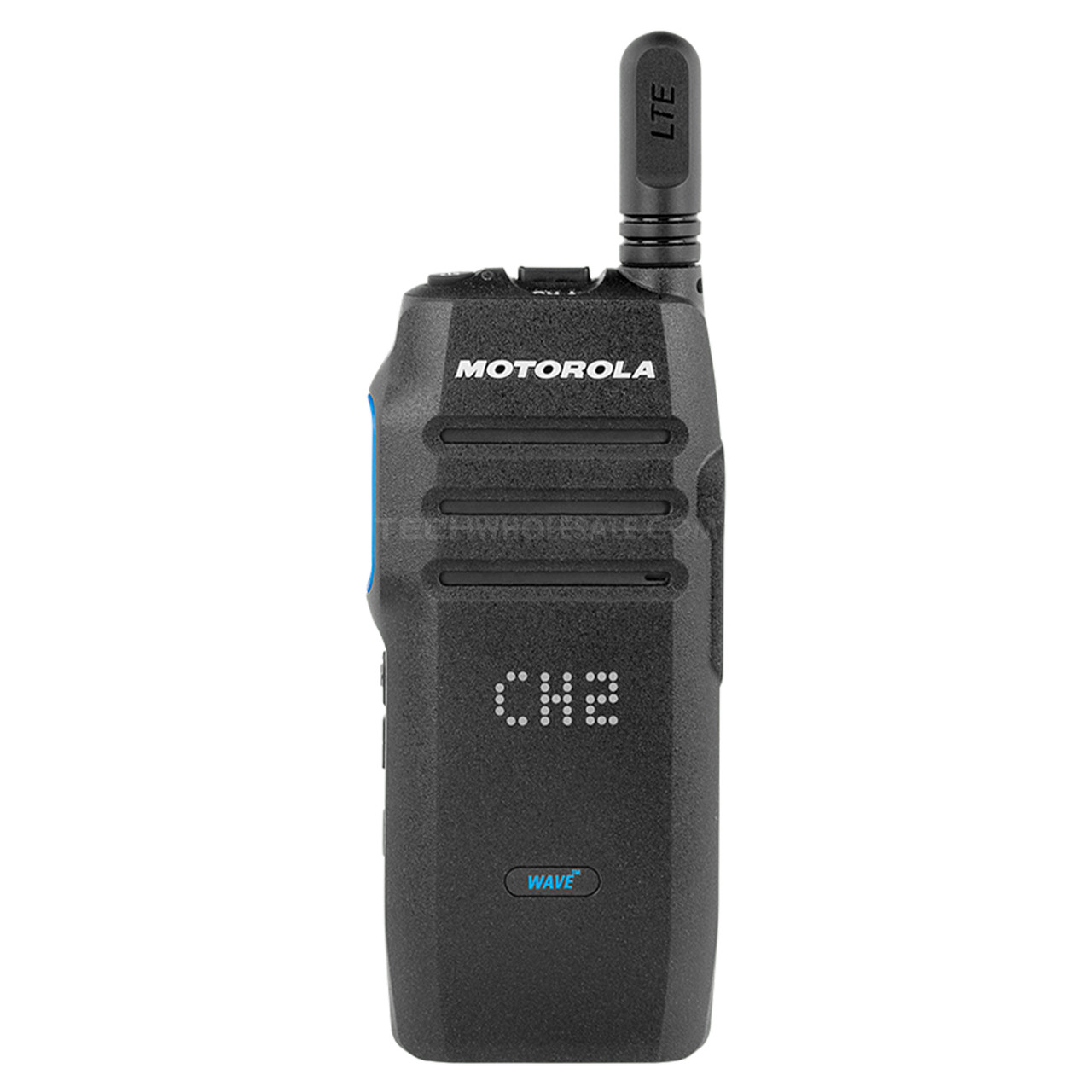
Specs: Unlimited coverage via LTE & Wi-Fi | GPS tracking | Emergency button | Smartphone-compatible
For operations spanning multiple locations, cities, or states, traditional radio range simply isn't enough. The WAVE PTX series solves this by using LTE and Wi-Fi instead of standard antenna-to-antenna transmission.
That means your team in Building A can communicate instantly with your team across town. GPS tracking lets supervisors locate staff in real time, and the emergency alert button ensures safety regardless of where someone is located. You can even communicate from your smartphone to a radio in the field.
One important note: the WAVE PTX requires a monthly subscription per device. 'Lease-to-Own' payment options are available to help manage upfront costs. As a failsafe, if cell service or Wi-Fi goes down, the radio falls back to antenna-to-antenna mode with coverage up to 350,000 sq ft.
Frequently Asked Questions
How many radios do I need for my team?
A simple rule of thumb: one radio per staff member on shift. If your team operates across multiple floors or locations simultaneously, also consider a dedicated radio for supervisors or a dispatch point.
Can these radios be used in wet environments?
Radios with IP54 or IP55 ratings handle water spray and splashing without issue. For heavy moisture exposure—like facilities with frequent floor washing—look specifically for IP-rated models. The CP100d's IP54 rating makes it a strong choice here.
What's the difference between analog and digital radios?
Analog radios are simpler, more affordable, and widely compatible. Digital radios offer better audio clarity at longer ranges and more efficient channel use. For most janitorial teams, a quality analog radio is more than sufficient.
Do these radios replace cell phones?
Two-way radios complement phones rather than replace them. Radios are faster for team communication—no dialing, no waiting—and they don't require a monthly cell plan per device. For facilities where speed and reliability matter, radios win.
Ready to Equip Your Team?
The right two-way radio removes the guesswork from team coordination. Spills get handled faster. Supply issues get flagged immediately. Staff know where backup is needed—without anyone having to leave their post or track down a supervisor.
For small facilities, the Motorola RMU2040 or Kenwood PKT300 will serve you well. For larger operations, the Motorola CP100d has the range and durability to match. And if your team spans multiple locations, the Motorola WAVE PTX is built for exactly that.
Not sure which model fits your team? Our support staff has over 25 years of experience in the two-way radio industry and can walk you through your options. Every purchase also includes lifetime tech support—we're here after the sale, not just before it.