

The best two-way radios for country clubs are business-grade UHF or 900 MHz radios. The right radio model depends on your club layout and team size.
Which Walkie Talkie Fits Your Country Club?
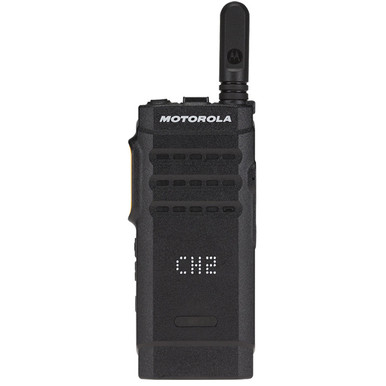
- Clubhouse staff working in front of members → Motorola SL300-UD. A slim profile that sits under a jacket instead of reading as equipment, with 99 channels.
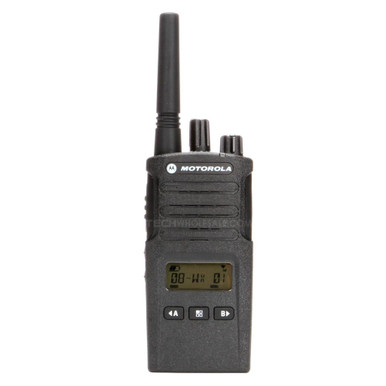
- Grounds crew and golf operations on the course → Motorola RMU2080d. Two watts, eight channels. Built-in NOAA weather alerts.
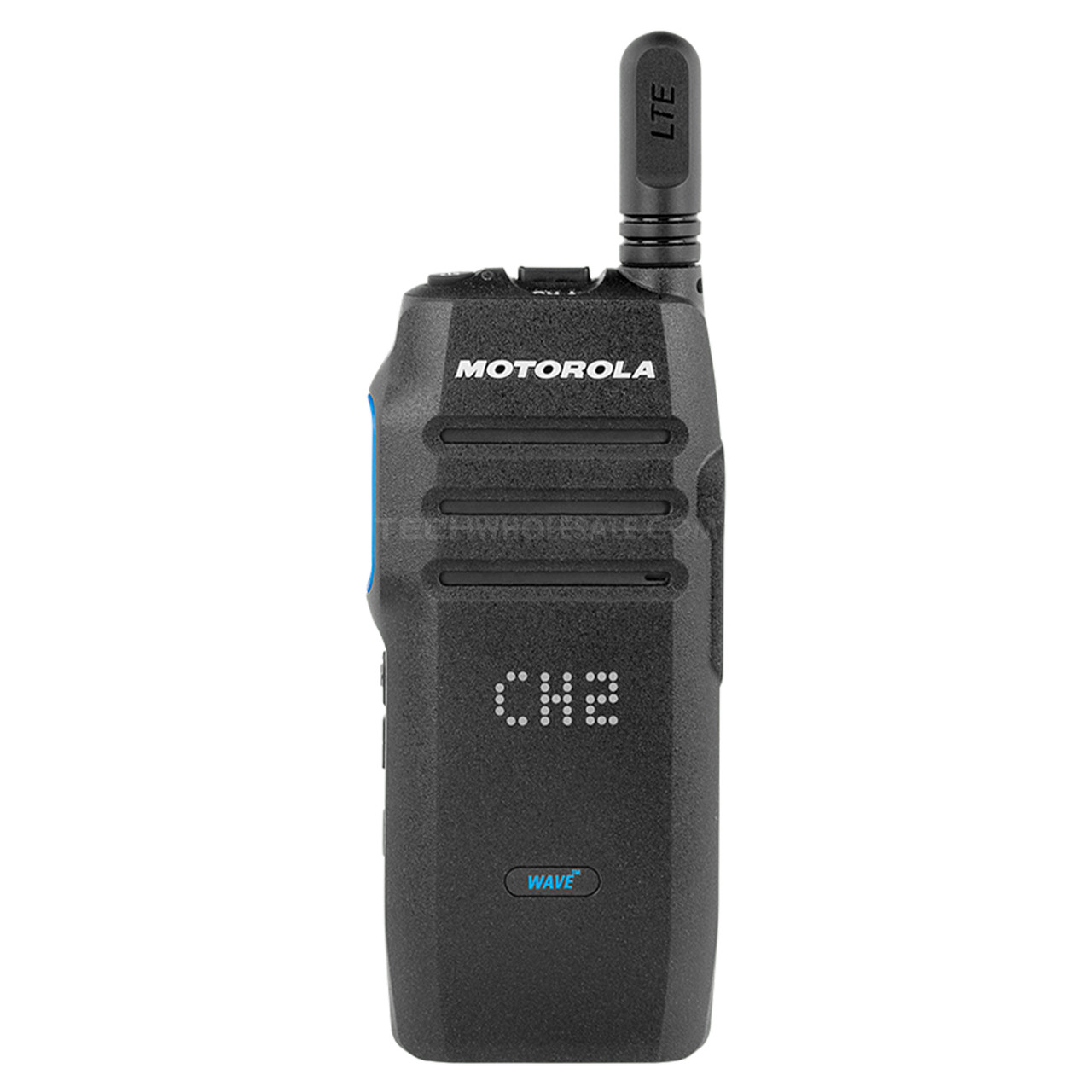
- A property that spans more than a radio can reach → Motorola WAVE PTX (TLK 110). Runs over LTE and Wi-Fi, so you get virtually unlimited coverage. GPS location on every unit, plus a dedicated emergency button for staff working alone at the far end of the property.
We have sold hundreds of radios to country clubs across the country since 1997. We know what works for country clubs of every size.
Why Country Clubs Have Unique Communication Requirements
Country clubs operate across more square footage, more departments, and more simultaneous activity than almost any other single facility. On a given Saturday, the same property may be managing a member shotgun tournament, a wedding reception in the ballroom, pool season opening, and routine grounds maintenance—all at once.
Cell phones and consumer walkie-talkies cannot coordinate that kind of operation reliably. Professional two-way radios can.
Large, Mixed-Terrain Coverage Area
An 18-hole golf course typically spans 100 to 200 acres. Even a compact 9-hole layout covers 50 to 75 acres. Add the main clubhouse, parking areas, a pool complex, practice facilities, and maintenance buildings, and the communication footprint can extend well beyond what a standard 1-watt radio covers reliably.
Unlike a warehouse or hotel—where coverage is a matter of floor count and wall density—country club coverage must account for wide-open outdoor terrain, tree lines, cart path topography, and the significant distance between the furthest maintenance crew and the pro shop. Standard UHF radios rated for 300,000 sq ft of indoor coverage may perform at 2–3 miles line-of-sight outdoors, but heavy tree coverage, hills, and buildings reduce that in practice.
Multi-Department Operations Running Simultaneously
A typical country club employs staff across at least six separate functions on any operating day: golf operations, food and beverage, maintenance and grounds, housekeeping, security, and front-of-house member services. Without dedicated communication channels per department, every transmission crowds a single channel, creating radio fatigue and missed messages.
Member Experience Expectations
Country club members have high service expectations and low tolerance for visible operational friction. A server reaching for a large, black utility radio mid-service is inconsistent with the experience the club is delivering. Front-of-house staff at private clubs benefit from slim, low-profile radios that can be carried discreetly or used with a discreet earpiece.
Weather Exposure on the Course
Golf operations staff, marshals, starters, and grounds crews work outdoors in all weather conditions. Radios assigned to outdoor roles must handle rain, humidity, and temperature swings that would quickly damage electronics without proper ingress protection ratings. The minimum appropriate rating for outdoor country club use is IP54 (dust-protected, splash-resistant from any direction). Radios intended for direct rain exposure should carry IP55 or higher.
Event Coordination at Scale
Member-guest tournaments, wedding receptions, corporate outings, and charity galas place sudden peak demand on a club's communication system. An event with 300 guests and a full banquet service may require coordinated simultaneous communication between the pro shop, kitchen, banquet floor, valet, security, and management—all on different channels, with instant access between department leads. Radios with limited channel counts fail this test.
Seasonal and Temporary Staff
Country clubs typically bring on seasonal staff for peak months. Radios assigned to temporary employees need to be intuitive to operate without extended training. Push-to-talk (PTT) operation on a designated channel requires no learning curve. Models with labeled, physical channel knobs reduce errors versus touchscreen or menu-driven interfaces.
What to Look for in a Country Club Radio
Coverage and Output Power
For most country club clubhouses and immediate grounds, a 3-watt UHF analog radio provides reliable coverage. Digital radios operating at 1 watt deliver performance equivalent to approximately 4 watts analog, making them well-suited for buildings with thick masonry or multi-story layouts.
For outdoor course coverage beyond 2–3 miles, or for properties with significant terrain obstruction, consider LTE-enabled radios like the Motorola WAVE PTX series, which eliminate range limits by transmitting over cellular and Wi-Fi networks.
Channel Count
A functional country club channel plan typically requires a minimum of six dedicated channels: golf operations, food and beverage, maintenance, housekeeping, security/events, and management. A radio with fewer than eight channels will force departments to share, which degrades efficiency and increases crosstalk. Models with 16–99 channels provide room to grow as the operation expands or event complexity increases.
Durability and Weather Resistance
Radios assigned to course operations and maintenance should carry at minimum an IP54 rating for dust and splash resistance. Motorola commercial-grade radios in the RM and SL series meet this standard. MIL-STD-810 compliance for shock resistance is an additional indicator of a radio built for field use rather than light commercial environments.
Battery Life
Full-service days at a country club commonly run 10 to 12 hours from morning operations setup to post-event close. Radios should be rated for at minimum 10 hours of battery life under typical transmission loads. For events or double-shift operations, multi-unit charging cradles allow battery swapping without purchasing additional radios.
Form Factor and Weight
Front-of-house staff, servers, and concierge personnel benefit from slim, lightweight radios that can be clipped to a waistband or jacket pocket without creating a visible bulk. The Motorola SL300-UD at approximately 5.3 oz is among the slimmest commercial-grade radios available and is specifically designed for hospitality and professional service environments.
Noise Cancellation
Kitchen environments, events with live music, outdoor course noise, and equipment operation all generate background noise that can make standard radio audio unintelligible. Look for radios with dedicated noise-canceling microphone technology. The Motorola SL300 and RMU2080d both include noise-canceling microphones rated for commercial environments.
Hands-Free Operation
Grounds crews operating equipment, servers carrying trays, and maintenance staff working with tools cannot pause to press a PTT button. VOX (voice-activated transmission) and compatibility with earpiece/headset accessories allow hands-free communication. See VOX Explained on the Tech Wholesale resource center for full setup guidance.
Recommended Two-Way Radios for Country Clubs
1. Motorola SL300-UD — Best Overall for Country Clubs
| Specification | Detail |
|---|---|
| Frequency | UHF (403–470 MHz) |
| Power | 3 watts |
| Channels | 99 |
| Indoor Coverage | Up to 300,000 sq ft / 35 floors |
| Mode | Analog & Digital |
| Battery Life | ~10 hours |
| Form Factor | Ultra-slim, ~5.8 oz |
| Model # | AAH88QCP9JA2AN |
The SL300-UD is the most versatile radio for country club operations because it balances three competing demands that most clubs face: coverage adequate for a full clubhouse complex, a profile slim enough for front-of-house staff to carry without disrupting the member experience, and 99-channel capacity that accommodates full departmental segmentation with room to assign private management channels.
Why it fits country clubs specifically
- Ultra-slim profile (less than 15 mm thick) is the thinnest commercial-grade radio in the Motorola lineup, suitable for service staff in formal or semi-formal environments.
- 99 channels support full department segmentation across golf operations, food and beverage, maintenance, housekeeping, security, and management—plus event-specific temporary channel assignments.
- Dual analog and digital mode operation allows the radio to function in both legacy analog environments and digital-only channel configurations.
- Noise-canceling microphone maintains audio clarity in kitchens, outdoor course environments, and event spaces with live music.
- Compatible with earpiece accessories for discreet use by front desk, concierge, and event management staff.
2. Motorola RMU2080d — Best for Golf Operations and Grounds Crews
| Specification | Detail |
|---|---|
| Frequency | UHF (450–470 MHz) |
| Power | 2 watts |
| Channels | 8 |
| Indoor Coverage | Up to 250,000 sq ft / 20 floors |
| Mode | Analog |
| Battery Life | ~13 hours |
| Durability | Commercial-grade, water-resistant |
| Display | Yes (channel display) |
The RMU2080d is purpose-built for outdoor commercial use. Its 2-watt UHF output, 13-hour battery rating, and rugged construction make it well-suited for the roles that take the most physical punishment at a country club: groundskeepers, marshals, starters, equipment operators, and maintenance crews who are on the course in all weather conditions for full operating days.
Why it fits golf operations and outdoor crews specifically
- 13-hour battery life outlasts a full operating day, including early-morning course prep through evening close.
- Channel display allows crew members to confirm their active channel without relying on radio position or color coding.
- NOAA weather alerts notify outdoor staff of incoming severe weather—a practical safety feature for crews working on exposed fairways and cart paths during tournament days.
- Rugged, commercial-grade build handles the drops, vibration, and moisture exposure common in maintenance and grounds roles.
- Business-exclusive UHF frequencies reduce interference from consumer radios that may be in use by members or guests on the property.
3. Motorola WAVE PTX TLK 110 — Best for Multi-Property and Large Estate Clubs
| Specification | Detail |
|---|---|
| Coverage | Unlimited (LTE / Wi-Fi) |
| Channels | 96 |
| Power | 1 watt (antenna-to-antenna, up to 350,000 sq ft) |
| GPS Tracking | Yes |
| Emergency Button | Yes |
| Smartphone Integration | Talk-to-radio via WAVE app |
| Subscription Required | Yes (monthly per device) |
Clubs managing multiple properties, facilities separated by significant distances, or operations where management personnel move between off-site offices and the club will benefit from the WAVE PTX's unlimited-range architecture. Unlike traditional radios limited by RF output and terrain, the TLK 110 transmits over the cellular network and Wi-Fi, enabling real-time communication between any two radios regardless of distance.
Why it fits multi-property and large estate clubs specifically
- No range ceiling—staff at a satellite facility, remote parking area, or second property location remain on the same radio network as the main club.
- GPS tracking allows operations managers to locate staff across large or multi-site properties in real time.
- Emergency button enables lone workers in remote areas to immediately alert management or security.
- WAVE PTX app allows management to communicate from a smartphone directly to any radio on the network without carrying a radio themselves.
- Falls back to antenna-to-antenna operation (up to 350,000 sq ft) in the event of cellular or Wi-Fi outage.
Note: The WAVE PTX TLK 110 requires an active monthly subscription per device through Motorola's WAVE PTX platform. Lease-to-own options are available. Request a quote for current subscription pricing.
Model Comparison
| Model | Best For | Coverage | Channels | Battery |
|---|---|---|---|---|
| Motorola SL300-UD | Front-of-house, full club | 300,000 sq ft / 35 floors | 99 | ~10 hours |
| Motorola RMU2080d | Golf ops, grounds crews | 250,000 sq ft / 20 floors | 8 | ~13 hours |
| WAVE PTX TLK 110 | Multi-property, large estates | Unlimited (LTE / Wi-Fi) | 96 | ~10 hours |
Suggested Country Club Channel Plan
A functional channel assignment for a full-service country club. Adjust based on department size and operational overlap.
| Channel | Department | Primary Users |
|---|---|---|
| 1 | Golf Operations | Pro shop, starters, marshals, cart staff |
| 2 | Food & Beverage | Dining room, bar, halfway house, banquet floor |
| 3 | Maintenance & Grounds | Course crew, equipment operators, irrigation |
| 4 | Housekeeping & Facilities | Locker rooms, pool, common areas |
| 5 | Security / Events | Security staff, valet, event coordinators |
| 6 | Management | General Manager, department heads, private channel |
For event-heavy clubs, assign temporary event channels (e.g., Channel 7 for a specific tournament, Channel 8 for a wedding reception) to keep event radio traffic from disrupting regular operations. See our resource on Privacy Codes – Eliminating Interference for guidance on reducing cross-channel interference on shared properties.
Frequently Asked Questions
What range do two-way radios need to cover a golf course?
An 18-hole golf course typically spans 100 to 200 acres. Standard 3-watt UHF radios rated for 300,000 sq ft of indoor coverage perform at approximately 2 to 3 miles outdoors under open conditions. Heavy tree coverage, hills, and cart barn structures reduce effective range. For courses with significant terrain obstruction or layouts exceeding 2 miles in length, repeater infrastructure or LTE-based radios like the Motorola WAVE PTX TLK 110 are the practical solution. Repeaters extend the range of standard UHF radios by re-broadcasting signals from an elevated central point.
How long does radio battery life last during a full club operating day?
The radios recommended on this page are rated for 10 to 13 hours of battery life under typical transmission loads. A 10-hour rating (SL300-UD, TLK 110) covers standard single-shift operations. A 13-hour rating (RMU2080d) covers early-morning course prep through late-afternoon round completion without charging. For event days or double shifts, multi-unit charging cradles allow battery hot-swapping between staff without purchasing additional radios. Motorola commercial-grade batteries are tested to five years of regular field use.
Are these radios waterproof enough for outdoor course use?
The Motorola RMU2080d and SL300-UD both carry commercial-grade water resistance suitable for outdoor country club use, including rain exposure and humidity near pool and cart washing areas. The minimum appropriate rating for outdoor course roles is IP54 (protected against dust and splash water from any direction). For roles with direct rain exposure during tournament operations, confirm the specific IP rating for the model being purchased. None of the radios on this page are rated for submersion.
How many channels does a country club need?
A full-service country club typically requires a minimum of six dedicated channels: golf operations, food and beverage, maintenance and grounds, housekeeping, security and events, and management. Clubs hosting frequent events or tournaments benefit from additional temporary event channels. The Motorola SL300-UD supports 99 channels, which provides sufficient capacity for full departmental segmentation plus event-specific channel assignments. The RMU2080d supports 8 channels—appropriate for operations where golf and grounds functions are the primary radio users.
Can management communicate from a smartphone to staff radios?
Yes, with the Motorola WAVE PTX platform. The WAVE PTX app allows a manager to talk directly from a smartphone to any radio on the WAVE PTX network. This is useful for club managers who move between an off-site administrative office and the property, or for department heads who do not carry a radio but need to reach course or maintenance staff instantly. Standard UHF radios do not support smartphone-to-radio communication.
What is the best radio for front-of-house and dining room staff at a country club?
The Motorola SL300-UD is the most appropriate radio for front-of-house roles at a country club. At approximately 5.3 oz and less than 15 mm thick, it is the slimmest commercial-grade radio in the Motorola lineup and can be carried clipped to a waistband or jacket pocket without visible bulk. For roles where even a small radio would be inappropriate in view of members (sommeliers, private dining captains), the SL300 is compatible with earpiece accessories that allow completely concealed radio carry.
How many radios does a country club typically need?
A practical starting point is one radio per key operational role per shift, per department: one per active food and beverage supervisor, one per pro shop staff member on course or starter duty, one per grounds crew lead, one per housekeeping supervisor, one per security post, and one per manager on duty. Most clubs operate on 10 to 30 radios for daily operations, with additional radios available for events. Tech Wholesale offers volume pricing on multi-radio orders. Request a quote with your estimated quantity for current pricing.
Why Buy from TechWholesale.com
Tech Wholesale has been an authorized dealer of Motorola and Kenwood two-way radios since 1997. Every radio purchased through Tech Wholesale carries the full manufacturer warranty—typically two years on commercial-grade models—and qualifies for manufacturer service and repair. Authorized dealer status means no gray market inventory and no voided warranties.
What sets us apart
- Lifetime technical support included with every purchase—call or email our team for the life of your radio fleet, not just through the warranty period.
- Volume pricing for bulk orders—request a custom quote with your quantity for current pricing.
- Pre-purchase consultation—our team will match you to the right radio for your specific property, department structure, and budget. We will tell you when a less expensive model fits your needs.
- Free shipping on qualifying orders.
- Special quantity discounts—see our quantity discount program for details on savings on orders of 5+ radios.
- Find My Radio tool—not sure which model is right for your club? Use our guided radio selector to narrow down the options by property size, department count, and use type.
If you're ready to spec out a radio system for your club, request a quote or call us directly. We'll ask a few questions about your property and come back with a specific recommendation.
1-888-925-5982 | Service@TechWholesale.com
Related Reading
On TechWholesale.com
- Privacy Codes – Eliminate Outside Interference
- VOX Explained – Hands-Free Radio Operation
- UHF vs. VHF – Frequencies Explained
- Frequency Hopping Spread Spectrum (FHSS)
- Lone Worker / Man Down Functionality
- Frequently Asked Questions About Walkie-Talkies
- Radio Repeaters – Extending Your Coverage Area
- All Motorola Two-Way Radios
External Resources
- National Golf Course Owners Association (NGCOA)
- OSHA 29 CFR 1910.95 – Occupational Noise Exposure Standard
Article by Kristin Wood, a two-way radio consultant @ Tech Wholesale | Authorized Motorola & Kenwood Dealer Since 1997 | Last Updated: May 2026