

Many rehab centers rely on phone calls and overhead pages to move patients between rooms and therapy, which disturbs patients and still leaves therapists waiting. Consumer radios don’t hold up to constant disinfectant wipes or being passed between shifts either.
Business-grade UHF radios with earpieces keep every call quiet, and their rugged, antimicrobial housings stand up to daily use, protecting your investment for years.
You’re closer than you think to the perfect radio! We’ve helped hundreds of rehabs across the country stay connected since 1997. Here’s how to pick yours.
What Makes a Great Two-Way Radio for Rehabilitation?
Rehabilitation centers run on coordination.
A nurse needs backup with a transfer. The transport team is waiting on clearance. A therapist needs to confirm room availability before bringing a patient down. When communication breaks down, patients wait longer, and staff scramble harder.
The right two-way radio solves this. But not every radio is built for a rehab environment. You need something durable enough to survive daily drops and disinfectant wipes, clear enough to be heard over a busy hallway, and simple enough that any staff member can pick it up and use it without training.
Before jumping into specific models, it's worth knowing what to look for. Rehab centers have unique demands that differ from a warehouse or hotel. Here's what matters most:
Clear Audio Quality
Rehab hallways are noisy. Radios need to cut through background noise so staff can hear every word—especially during emergencies.
Long Battery Life
Shifts run 8 to 12 hours or longer. A radio that dies at hour six isn't doing anyone any favors. Look for batteries rated for at least 12 hours of use.
Lightweight and Comfortable
Staff are constantly moving—between patient rooms, therapy areas, and nursing stations. A heavy, bulky radio becomes a nuisance fast. Compact and clip-friendly is the standard.
Emergency Alert Button
A panic or emergency button that sends an instant alert to a supervisor or security team can be critical in patient-related incidents.
Hands-Free (VOX) Capability
When a therapist's hands are occupied during a session, the last thing they should need to do is reach for a button. Voice-activated communication keeps things moving.
Durability
Radios in rehab environments get dropped, exposed to spills, and regularly wiped down with disinfectants. They need to handle all of it without skipping a beat.
Privacy Codes or Encryption
Patient conversations are sensitive. HIPAA compliance isn't optional, and your radios shouldn't be the weak link. Look for models with privacy codes or encryption built in.
Range and Coverage
Your radios need to cover every floor, wing, and outdoor space—courtyards, parking lots, loading areas. A radio that works in the break room but drops out near the therapy gym isn't good enough.
Earpiece Compatibility
Discreet communication matters in patient areas. A compatible earpiece lets staff talk privately without disturbing the room.
Coverage: Match the Radio to Your Facility
One of the most common buying mistakes is mismatching radio power to building size. Too much power means overspending. Too little means dead zones.
Here's a straightforward breakdown:
- Small facilities (up to 200,000 sqft): 1–2 watts is sufficient. These radios are compact, cost-effective, and more than capable of reaching across single-story or multi-wing buildings.
- Larger facilities or multiple buildings (up to 350,000 sqft): Step up to 3–4 watts on analog, or 1 watt on digital (which punches well above its weight in coverage). These transmit clearly through thick walls and across greater distances.
- Thick concrete walls: Add roughly 1 watt to whatever your baseline calculation suggests.
- Multiple locations, unlimited range: Consider LTE/Wi-Fi-enabled radios like the Motorola WAVE PTX series, which aren't limited by RF range at all.
When in doubt, request a quote and describe your layout. We'll help you match the right radio to your space.
How Many Channels Do You Need?
Channels let you segment conversations by team, so staff only hear what's relevant to them. For a rehabilitation center, here's a practical breakdown:
- Nursing Staff: Coordinate patient care, respond to call buttons, report vitals
- Therapy Team: Manage patient schedules, room availability, and equipment needs
- Facilities & Maintenance: Handle room cleanings, repairs, and temperature issues
- Patient Transport: Coordinate patient movement to and from therapy sessions and appointments
- Administration & Security: Handle emergencies, visitor management, and decisions from leadership
That's five dedicated channels—which covers most mid-to-large rehab centers cleanly. Easy breezy. Concise and direct communication.
Channels can also be used for private conversations. "Sarah, call Tom on channel two." Sarah and Tom can then have an in-depth conversation over the radio without bothering the rest of the staff.
Our Top Radio Picks for Rehabilitation Facilities
These recommendations come from our hands-on experience working with thousands of radios across healthcare settings. Each model has a proven track record.
Small Rehabilitation Centers
Motorola CLP1080e
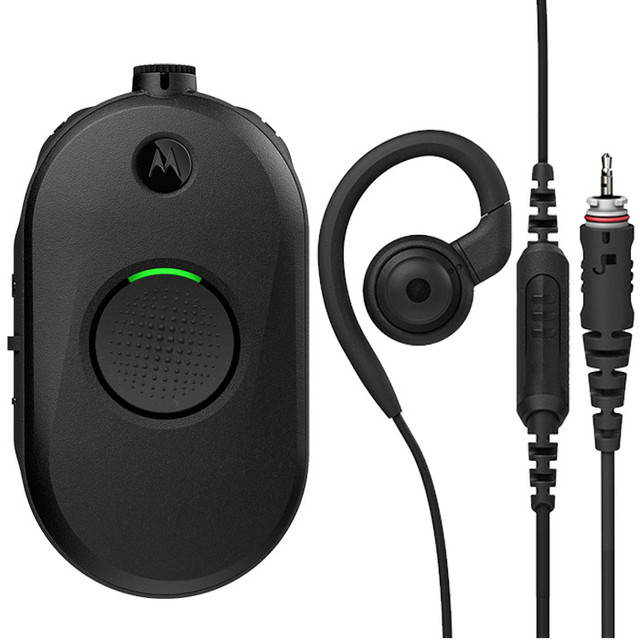
Best for: Compact, discreet communication in smaller facilities
- Channels: 8
- Power: 1 watt, UHF
- Coverage: Up to 100,000 sqft / 10 floors indoors
- Weight: 2.38 oz (the lightest on this list)
The CLP1080e is one of the smallest and most discreet radios available. At just 2.38 ounces, staff barely notice they're wearing it. It comes with a discreet earpiece and belt holster that fits most uniforms.
Audio is excellent, the central PTT button is easy to operate, and the 12-hour battery handles full shifts without issue. The casing includes antimicrobial properties to prevent the spread of germs—a meaningful feature in any clinical environment. It's also repeater-capable if you need to extend its range down the line.
Motorola CLS1410
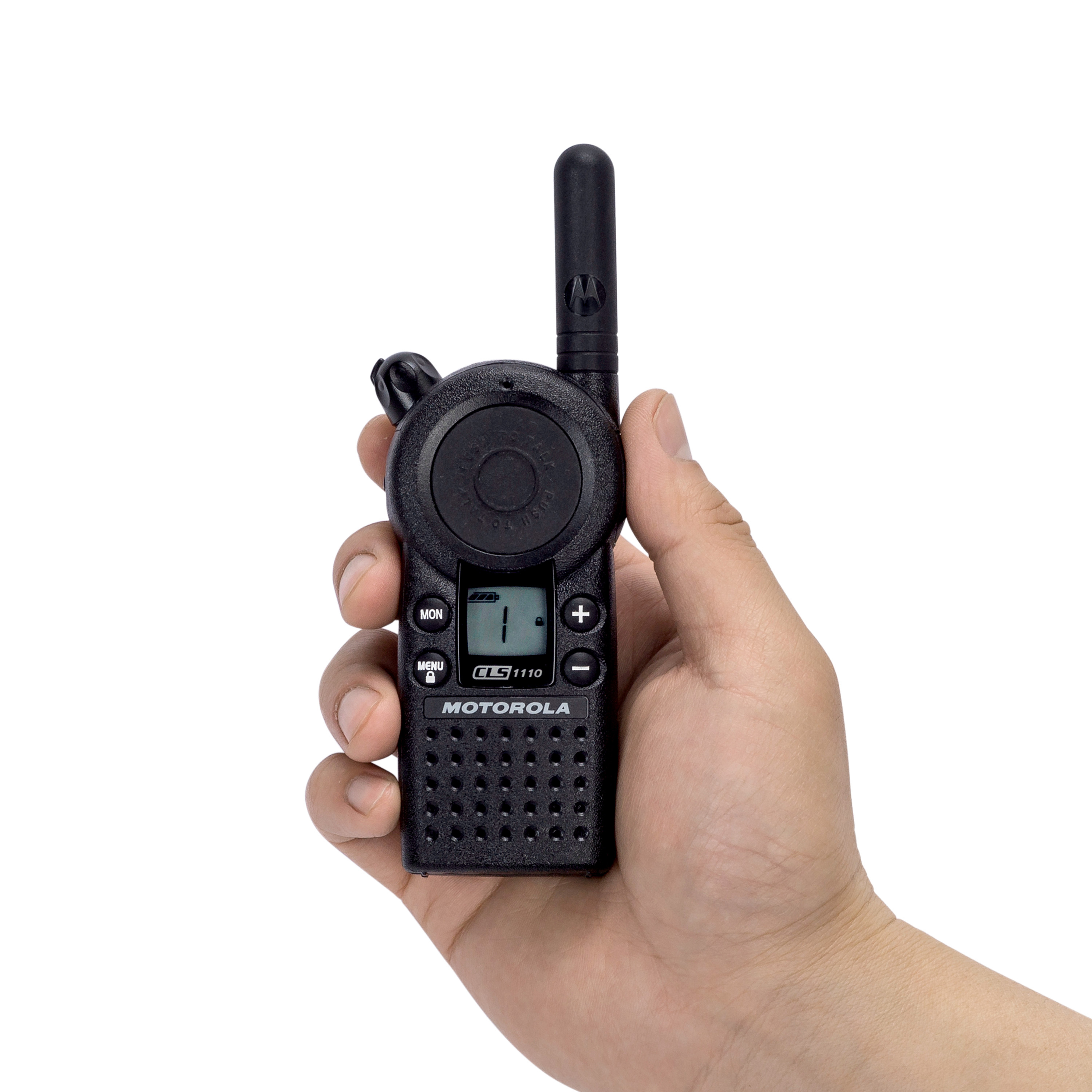
Best for: Mid-size centers up to 200,000 sqft
- Channels: 4
- Power: 1 watt, UHF
- Coverage: Up to 200,000 sqft / 15 floors
The CLS1410 covers more ground than the CLP1080e while staying power-efficient. One watt is all you need for an average-size facility, and there's no sense paying for power you won't use.
It features audible call alerts so staff always know when a call is coming in. Pair it with a JBS447d base station at the front desk, and you've got a centralized hub that works alongside both CLP and CLS series radios.
Honorable Mention: Motorola RMU2040
- Channels: 4 | Power: 2 watts, UHF | Coverage: Up to 250,000 sqft
A reliable step up for slightly larger single-building facilities.
Larger Centers and Multi-Building Facilities
Motorola Curve
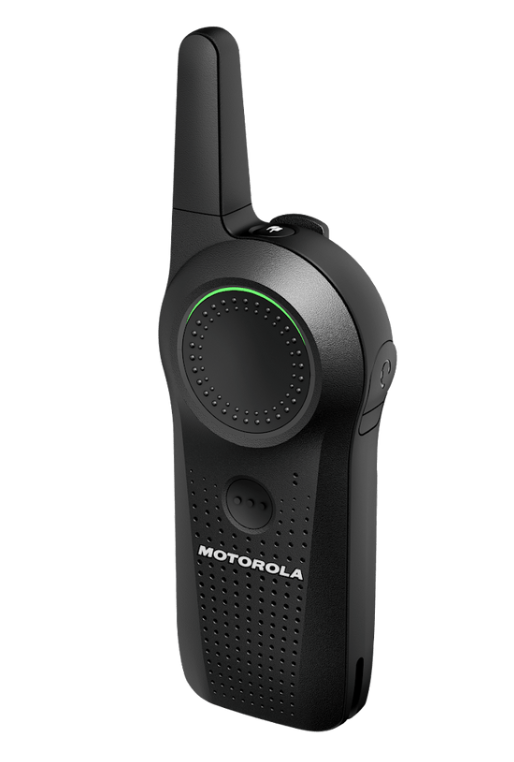
Best for: Larger rehab facilities requiring digital performance and HIPAA compliance
- Channels: 10
- Power: 1 watt digital (equivalent to 4 watts analog)
- Coverage: Up to 300,000 sqft / 20 floors
- Weight: 4.2 oz
The Motorola Curve is the most HIPAA-compliant radio on the market. For rehabilitation centers handling sensitive patient data and conversations, that's not a small thing.
Ten channels give larger teams room to organize communication cleanly across departments.
For privacy, the Curve uses Frequency Hopping Spread Spectrum technology paired with 10,000 privacy codes. Confidential conversations stay confidential. The Page All and Call All Available functions are invaluable during emergencies, allowing you to reach the entire staff instantly. For sensitive one-on-one conversations, the Direct Call feature handles that too.
Battery life tops out at 14 hours on a rechargeable lithium-ion battery—enough for even the longest shift. Like the CLP1080e, it includes an antimicrobial coating to support infection control.
Best for Nationwide or Multi-Location Coverage
Motorola WAVE PTX Series
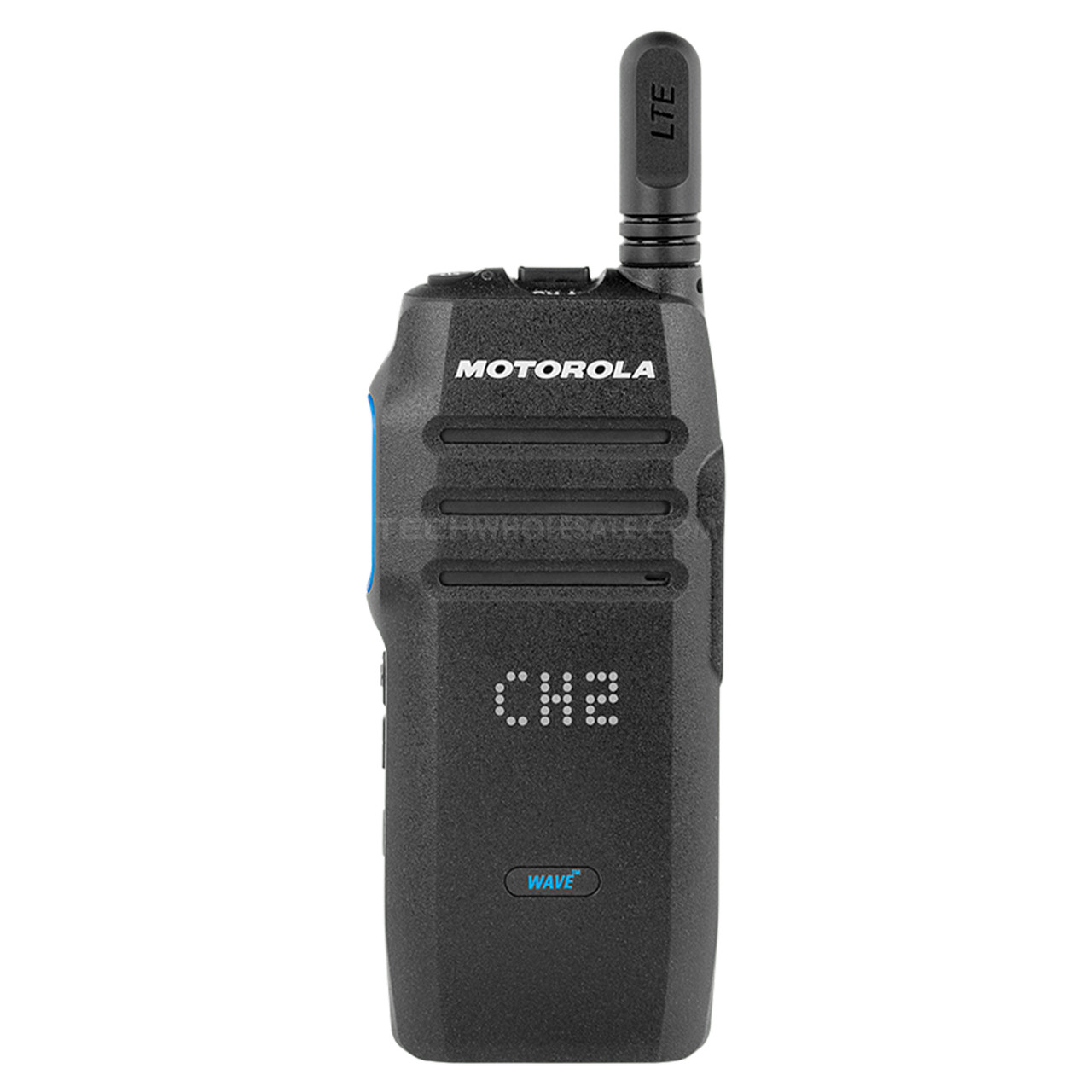
Best for: Organizations operating across multiple buildings, cities, or states
- Coverage: Unlimited via LTE and Wi-Fi
- GPS Tracking: Locate staff in real-time
- Emergency Button: Instant alert capability
- App Integration: Talk to radios directly from your smartphone
Traditional RF radios have range limits. The WAVE PTX series doesn't. It connects over LTE and Wi-Fi, which means coverage extends as far as your network does—across campuses, between buildings in different ZIP codes, or across the country.
Note that this series requires a monthly subscription per device. Lease-to-own payment options are available to manage upfront costs and get your team equipped quickly.
Why Brand Matters
Not all radios are created equal. Motorola and Kenwood consistently lead the market because they build radios that are purpose-designed for demanding environments.
Both brands are tested for five years of field use. They're intuitive to operate, durable enough to survive real-world conditions, and backed by manufacturer warranties ranging from one to three years depending on the model. Most models also eliminate the need for monthly cell phone plans, which keeps ongoing costs predictable.
A cheaper radio from an unknown brand might save you money on day one. By year two, you're replacing it—and losing time and productivity in between.
Ready to Equip Your Team?
Choosing the right radio comes down to three things: your facility's size, your team's structure, and the features that matter most for patient safety and staff efficiency.
For most small-to-mid-size rehab centers, the Motorola CLP1080e or CLS1410 will handle the job cleanly. Larger facilities running across multiple wings or buildings will get more mileage from the Motorola Curve. And for organizations managing communication across multiple locations, the WAVE PTX series removes range limitations entirely.
Request a quote for our best pricing—our team will match you with the right radio for your facility and budget. With over 25 years of industry experience and lifetime tech support included with every purchase, we're here to make sure you get it right.