

Many plow operators rely on cell phones, which means drivers dialing and texting behind the wheel in the worst conditions of the year. Consumer walkie-talkies don’t fare better, with limited range and batteries that die fast in the cold.
Business-grade radios give your crew one-touch, hands-free contact, and their rugged build holds up to freezing temperatures, salt, and long storm shifts, protecting your investment for years.
You’re on the right page to make a smart choice! Since 1997, we’ve served hundreds of snow plow teams across the US. Here’s how to find the radio that fits your crew.
What Is the Best Two-Way Radio for Snow Plows?
Our top recommendation is the Motorola TLK100. Snow plow teams nationwide rely on it for good reason: built-in GPS tracking keeps you informed of every truck's location and it delivers unlimited coverage through LTE. For most operations, it's a clear frontrunner.
That said, radios are not one-size-fits-all. The right choice depends on the size of your crew, how spread out your routes are, and the conditions your team faces night after night. Let's break it down.
What to Look for in a Snow Plow Two-Way Radio
Coverage Range
Matching your radio's power to your operation is critical. Too powerful, and you're overpaying. Too weak, and you're dealing with dead zones at the worst possible time.
For snow plow crews spread across city streets or rural highways, you'll want radios in the 3–4 watt range (UHF analog) or 1 watt digital. These can transmit clearly through obstacles and across larger distances. If your routes include dense building areas or thick concrete structures, consider stepping up by one watt.
For teams operating across multiple locations, cities, or even states, LTE and Wi-Fi-enabled radios — like the Motorola WAVE PTX series — eliminate traditional range limitations entirely.
- UHF radios: Best for urban areas with buildings and dense environments
- VHF radios: Better suited for wide-open rural routes
- LTE/Wi-Fi radios: Ideal for multi-site or multi-city operations
Number of Channels
Channels keep conversations organized. With a multi-truck crew, you don't want every driver broadcasting on the same line at once. Channels let you segment team communication — dispatch on one, drivers on another — and set up private conversations when needed.
Easy breezy. That's concise, direct communication. "Sarah, call Tom on channel two." Sarah and Tom handle their conversation without cluttering the rest of the crew's frequency.
Weatherproof & Durable Build
Snow plows operate in extreme cold, wet, and messy conditions. Your radio needs to match that. Look for IP-rated devices (IP54 or higher, ideally IP67) for water and dust resistance. Military-grade ratings like MIL-STD 810 are a strong indicator of durability — these radios are tested to survive drops, vibration, mud, and sustained use in rough environments.
Long Battery Life
Storm shifts run long. A radio that dies at 3 a.m. is worse than no radio at all. Prioritize devices with 12+ hour battery life, or models that support hot-swappable battery packs so drivers can keep going without missing a beat.
Loud, Clear Audio
Engine noise, howling wind, road traffic — plow drivers are surrounded by interference. Powerful speakers and noise-canceling microphones are non-negotiable. If your team can't hear clearly, the radio is failing at its one job.
Glove-Friendly Design
Big buttons and simple controls might sound like a minor detail. In freezing temperatures with gloves on, they're everything. Radios with intuitive, tactile interfaces reduce fumbling and keep drivers focused on the road.
Emergency Features
When a driver is in trouble and can't speak, standard communication isn't enough. Look for radios with emergency alert buttons, man-down detection, or lone worker settings. These features can be the difference between a close call and a real crisis.
Hands-Free Options
External speaker mics, clip-on mics, or Bluetooth headsets allow drivers to stay in contact without removing their hands from the wheel. For safety during active plowing, hands-free communication isn't a luxury — it's a smart standard.
Why Brand Quality Matters
Cheap, off-brand radios might seem like a bargain until they fail six months in. Motorola and Kenwood are the industry's most trusted names for a reason. Both brands build radios purpose-designed for demanding, real-world use — durable construction, intuitive operation, and no monthly cell phone plan required.
Their radios are tested for five years of field use, and most models come with a manufacturer warranty of 1–3 years depending on the model. That's a return on investment you can count on, season after season.
Our Top Two-Way Radio Picks for Snow Plows
These recommendations come from our own hands-on experience with thousands of radios across industries. Each one has a rock-solid history and a strong track record in the field.
Motorola CP100d-UA — Best for Power & Range
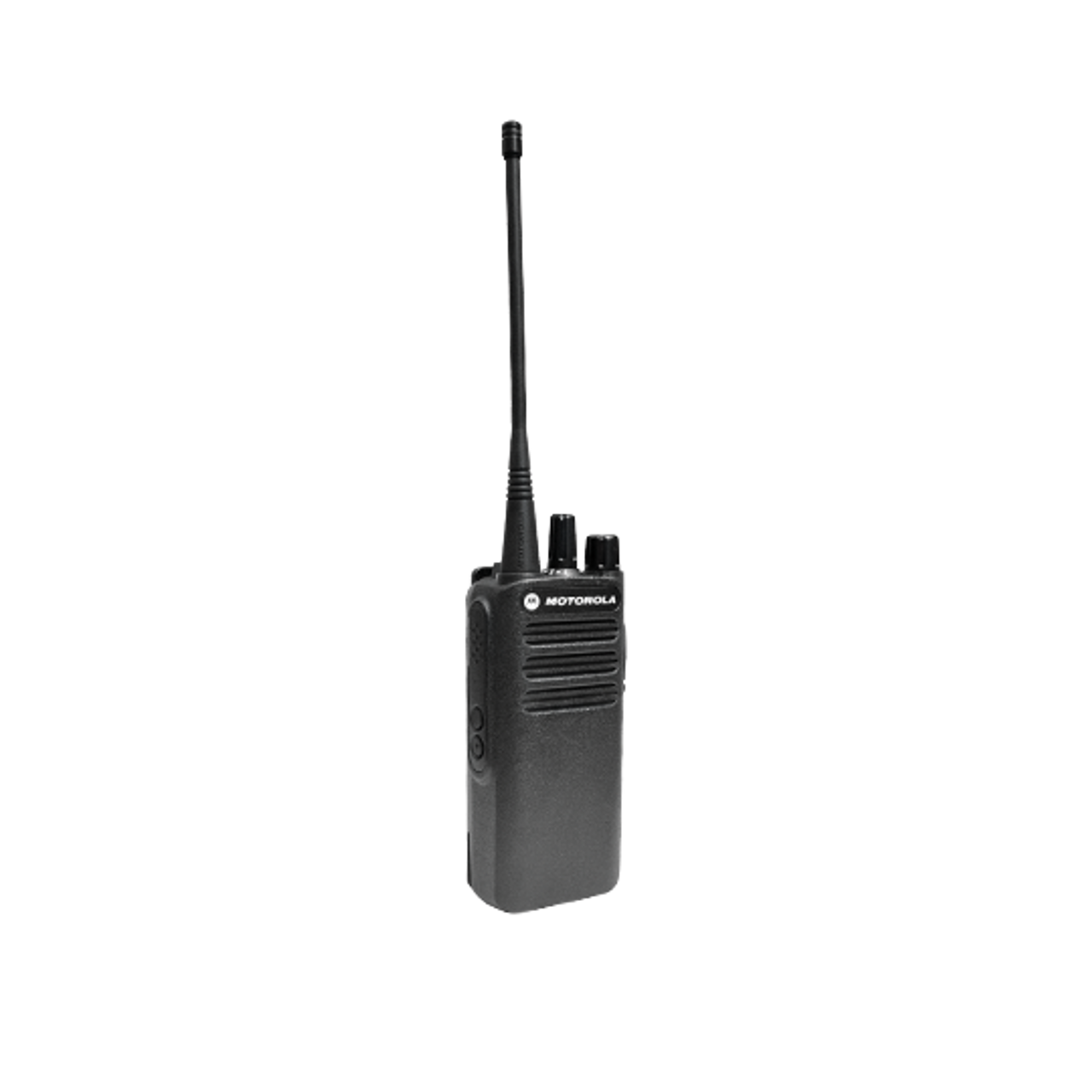
- Channels: 16
- Power: 4 watts, UHF
- Coverage: Up to 400,000 sq ft indoors / 2–3 miles outdoors
- Key Features: IP54 rated, pre-programmed text messages, voice announcements, MIL-STD 810 C–F certified
This is a powerhouse UHF radio built to perform. With 4 watts of output, think of it like a major league pitcher throwing a fastball — that signal is getting where it needs to go. An outdoor range of up to three miles and indoor coverage of up to 30 floors makes it the go-to when distance matters.
The build quality backs it up. A military-grade polycarbonate case over a metal die-cast chassis means this radio can take a serious pounding — submerged in mud, dropped from height, or hit with a firehose. It also covers 89 business radio frequencies with privacy codes, giving you serious flexibility across a large crew.
Bonus: check out the other CP100d models for digital upgrades and display options.
Kenwood NX-P1300NUK — Best for Extended Battery Life

- Channels: 64
- Power: 4 watts, UHF and Digital
- Battery Life: 14 hours
- Key Features: SCAN, VOX, Calling Alert
The Kenwood NX-P1300NUK is purpose-built for long shifts. With 64 channels and a 14-hour battery, this radio is ready for even the most demanding overnight operations. Its digital capability ensures clear audio and reliable coverage, while features like VOX (voice-activated transmission) support hands-free communication for drivers who need both hands on the wheel.
Motorola WAVE PTX Series — Best for Unlimited Coverage
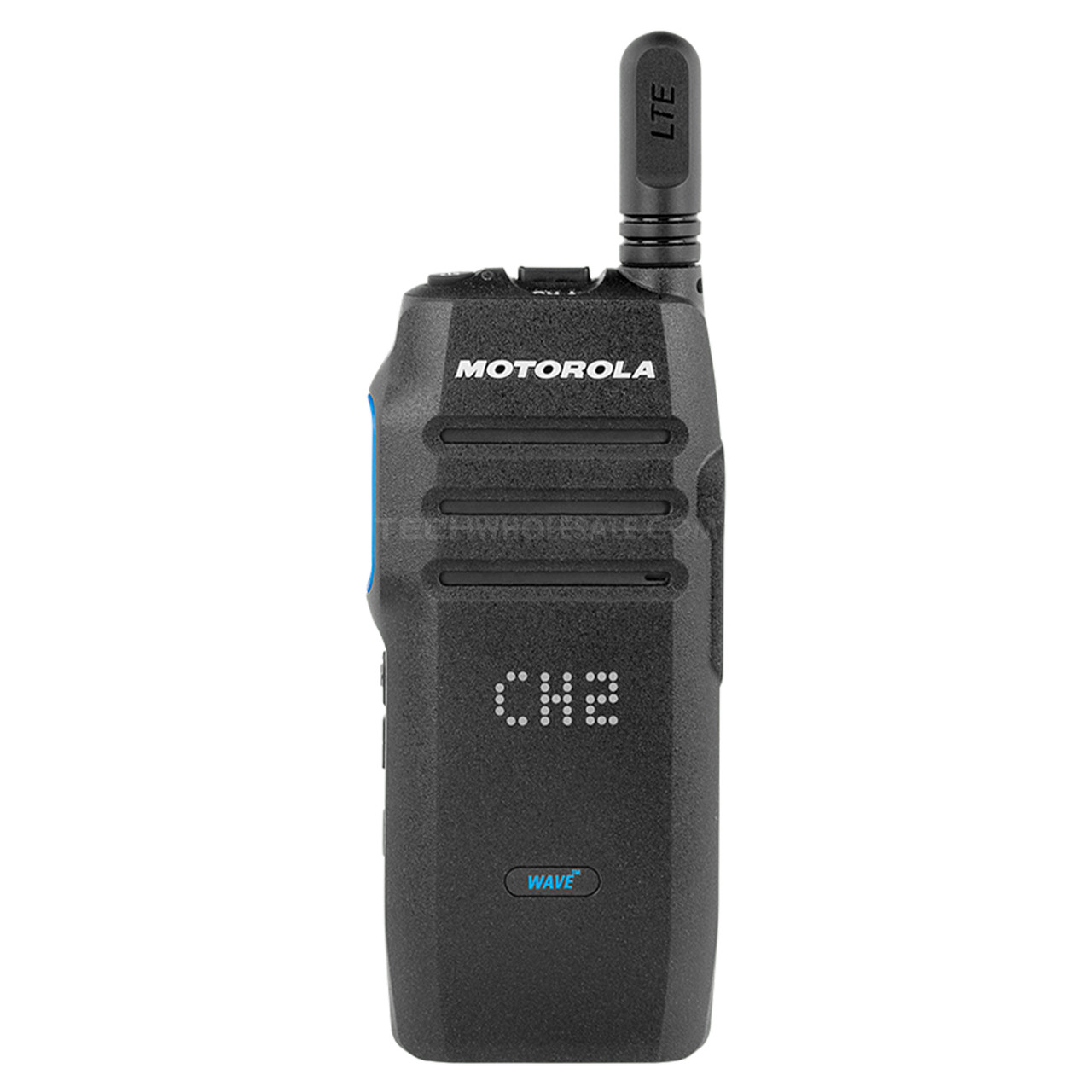
- Coverage: Unlimited via LTE
- Key Features: GPS tracking, emergency button, phone-to-radio communication
- Subscription: Monthly fee per device; lease-to-own options available
For operations spanning multiple cities, counties, or states, the WAVE PTX series removes range from the equation entirely. GPS tracking lets you monitor every truck in real time, the emergency button adds a layer of driver safety, and you can communicate with the radio directly from your phone.
As a failsafe, when cell service or Wi-Fi drops — which can happen during major storms — the radio automatically switches to antenna-to-antenna mode, covering up to 350,000 sq ft. You stay connected no matter what.
Get the Right Radio for Your Team
Snow plow communication isn't something to leave to chance. A reliable radio keeps your crew coordinated, your routes on schedule, and your drivers safe when conditions are at their worst.
Ready to equip your team? Request a quote from Tech Wholesale for our best possible pricing on all models listed above.
Still not sure which radio fits your operation? Our team has over 25 years of experience in the two-way radio industry and is ready to help you find the right match. Reach out anytime — and know that our support doesn't stop at purchase. We offer lifetime tech support to every customer, every step of the way.