

Buy the first radio you see, and you might end up with static, a dead battery mid-shift, and a device that falls apart within a year. Not ideal when you're trying to run a tight operation.
We've sold thousands of radios across a wide range of retail environments. This guide brings all of that experience together so you can make an educated decision and find the radio that fits your shop perfectly.
What to Look for in a Smoke Shop Radio
Radios are not one-size-fits-all. The right two-way radio makes a real difference in a smoke shop.
Coverage and Power
Match the power output of your radio to the size and layout of your building.
- Small shops: 1–2 watts is plenty, covering between 100,000 and 200,000 square feet.
- Larger shops or multiple buildings: Look for 3–4 watts on analog, or 1 watt on digital, which provides equivalent coverage up to 350,000 square feet.
Thick concrete walls or heavy shelving? Go one watt stronger than you think you need. Dead zones are frustrating—and avoidable.
Number of Channels
Channels help divide team conversations and reduce unnecessary chatter. For most smoke shops, three channels covers everything:
- Customer Service – Front-of-house staff handling walk-ins, product questions, and checkout support.
- Inventory & Stockroom – Team members managing restocks, backroom organization, and incoming shipments.
- Management – A private channel for managers to coordinate without disrupting the floor.
Channels also allow for one-on-one conversations. "Sarah, call Tom on channel two." Sarah and Tom can then speak privately without the rest of the team hearing a word. Easy breezy.
Key Features That Matter
Here is what separates a reliable smoke shop radio from one you will regret buying:
- Compact and lightweight design – Staff are on their feet all day. A bulky radio gets in the way. Choose something discreet and easy to clip on.
- Clear audio quality – Music, customer chatter, and display cases create a lot of background noise. Crisp, reliable sound is non-negotiable.
- Long battery life – A shift does not stop for a dead battery. Look for radios that last 8+ hours on a single charge.
- Hands-free options – VOX activation or a wired earpiece keeps staff connected while handling products or checking IDs, without stopping to press buttons.
- Durability – Accidental drops happen. Go for models built to handle daily wear and tear.
- Privacy codes – These prevent interference from nearby businesses operating on the same frequencies.
Brand Reliability
Motorola and Kenwood are the two most trusted names in business two-way radios. Both brands are purpose-built for reliable communication, intuitive to use, and tested for five years of field use. They come with manufacturer warranties ranging from one to three years depending on the model—and crucially, they eliminate the ongoing cost of monthly cell phone plans.
Our Top Two-Way Radio Picks for Smoke Shops
Each recommendation below comes from direct experience working with thousands of radios in real retail environments. These models have a proven track record.
Best for Small Shops
Motorola CLS1110

Channels: 1 | Power: 1 watt UHF | Coverage: Up to 200,000 sq ft
The CLS1110 is a solid, no-fuss option for smaller teams. It operates on a single channel, which means all communication runs through one line—straightforward for a tight-knit crew.
What makes it stand out is the battery. The lithium-ion pack delivers an impressive 18-hour lifespan, so it comfortably outlasts even the longest shifts. It also comes loaded with privacy features: 83 digital and 38 analog private lines, 121 interference eliminator codes, and 56 business-exclusive frequencies. Add in the keypad lockout to prevent unauthorized use, and you have a reliable, secure radio at a competitive price point.
Motorola CLP1010e
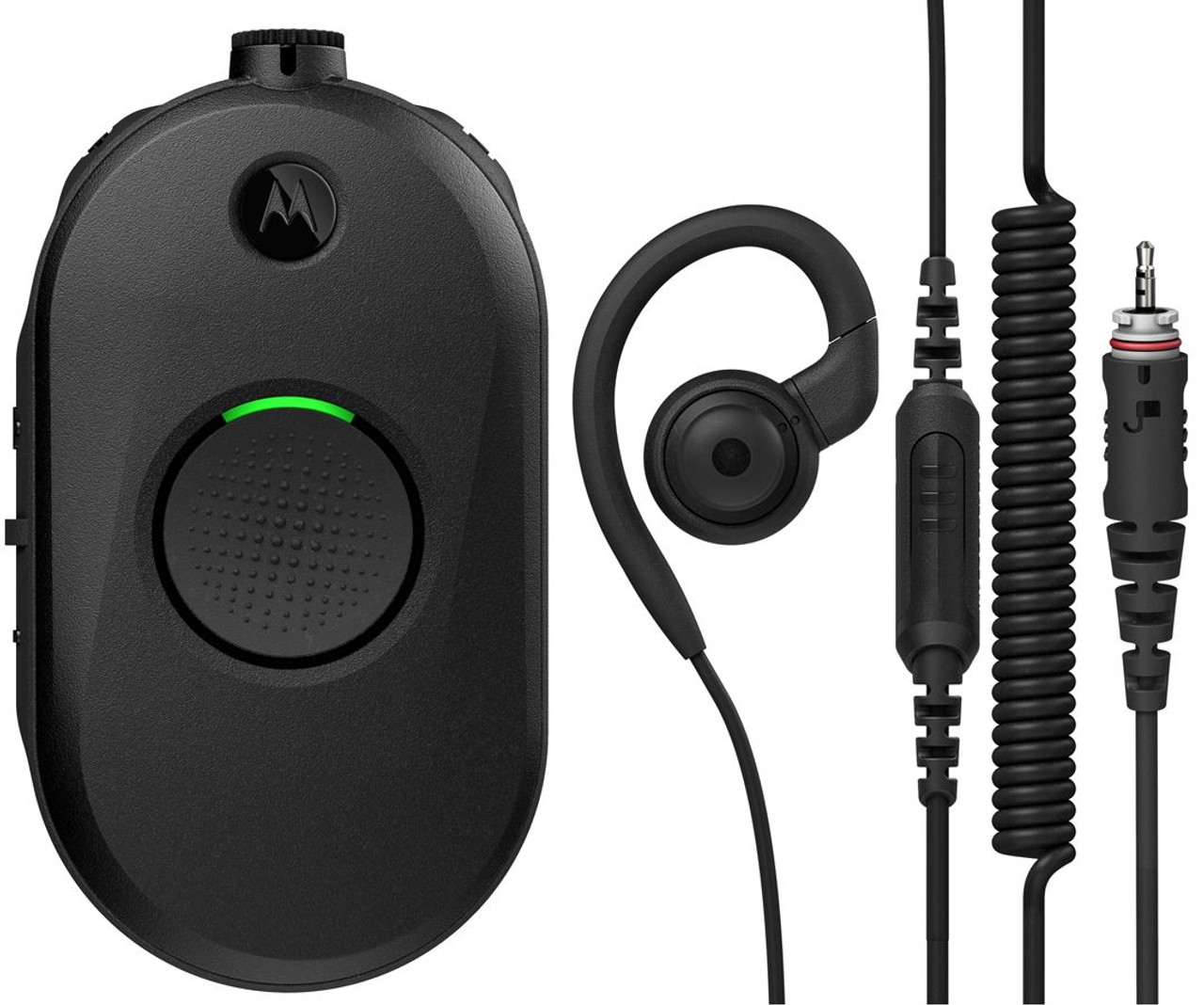
Channels: 1 | Power: 1 watt UHF | Coverage: Up to 100,000 sq ft
If discretion is the priority, the CLP1010e is the pick. Weighing just over two ounces with no external speaker, it is one of the most discreet radios on the market. It comes with a built-in earpiece and belt clip, keeping things hands-free and out of the way.
The CLP1010e covers up to 10 floors indoors and one mile outdoors. Its 12-hour battery life handles a standard shift without issue, and 219 privacy elimination codes protect sensitive conversations. The antimicrobial casing is a thoughtful bonus that helps maintain a cleaner, healthier work environment.
Best for Larger Shops or Multiple Buildings
Motorola Curve
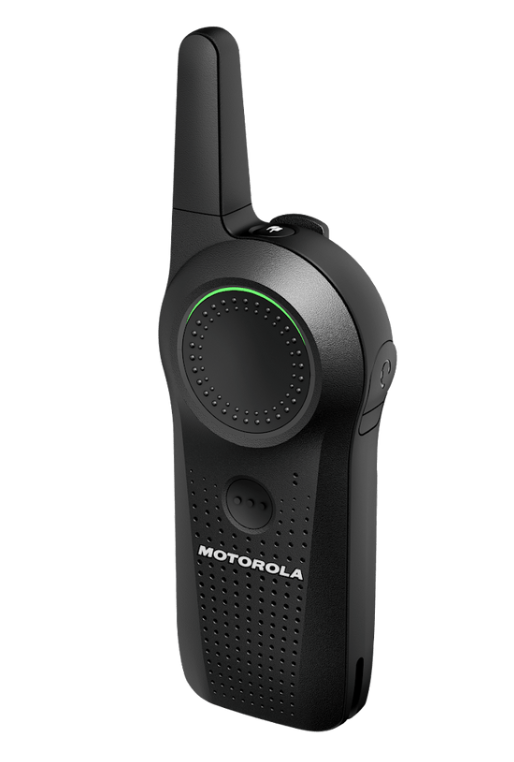
Channels: 10 | Power: 1 watt digital (equivalent to 4 watts analog) | Coverage: Up to 300,000 sq ft
The Motorola Curve is built for bigger operations with larger teams. Ten channels give you plenty of room to organize communication across departments, and the digital band means better audio quality and privacy.
At 4.2 ounces, it is lightweight for a radio at this power level, and it covers up to 20 floors or 300,000 square feet. The Page All and Call All Available functions are particularly useful in emergencies, letting you reach the entire staff in one transmission. For sensitive communication, the Direct Call feature lets you contact a single team member privately.
Security is also strong here. Frequency Hopping Spread Spectrum technology paired with 10,000 privacy codes keeps your channels secure. The 14-hour lithium-ion battery rounds things out, ensuring the Curve stays powered through the longest shifts. Like the CLPe series, it features an antimicrobial coating for a cleaner workplace.
Frequently Asked Questions
How many radios do I need for my shop?
A good rule of thumb is one radio per staff member on the floor during peak hours. Most small shops run well with three to five units. Larger operations with multiple rooms or buildings may need more.
Can I mix different radio models?
You can, as long as they share the same frequency band (UHF or VHF) and compatible channel settings. That said, using the same model across your team keeps things simpler and avoids compatibility issues.
What if my staff are not tech-savvy?
All of the radios recommended here are designed to be intuitive and easy to use. The Motorola CLS and CLP series in particular require minimal setup and virtually no training.
What is the warranty on these radios?
Motorola and Kenwood radios typically come with one to three year manufacturer warranties, depending on the model. Tech Wholesale also includes lifetime tech support with every purchase.
Get the Right Radio for Your Shop
A smoke shop runs smoother when the team communicates clearly. The right radio does not have to be expensive or complicated—it just has to fit your space, your team size, and your day-to-day needs.
For most small shops, the Motorola CLS1110 or Motorola CLP1010e will cover everything you need. If you are running a larger footprint or managing multiple areas, the Motorola Curve is worth the upgrade.
Still unsure which model is right for you? Request a quote from Tech Wholesale for best pricing, or reach out to our support team directly. With over 25 years of experience in the two-way radio industry and lifetime tech support included with every purchase, we are here to help you find the perfect fit—before and after the sale.