
The Best Two-Way Radios for Retail Stores (2026 Guide)
What Are the Best Two-Way Radios for Retail Stores?
The Short Answer
The best two-way radios for retail stores are the Motorola CLS1410, Motorola CLP1080e, and Motorola Curve. Each model solves a different retail challenge: the CLS1410 covers general floor-to-stockroom coordination in small and mid-size stores with audible speaker communication; the CLP1080e delivers discreet, earpiece-only communication and 8-channel department segmentation for customer-facing floors where image matters; and the Motorola Curve provides digital coverage across up to 300,000 sq ft and 10 channels for large-format stores and multi-team operations.
But not every radio holds up on a retail floor. Static, short battery life, bulky designs, and dead zones in the stockroom turn a cheap radio into a daily headache — and a recurring replacement cost.
Every second your staff spends hunting for each other is a sale you may never get back. A customer at the register needs a size that isn't on the shelf. A shopper in aisle 7 is looking for help, and no one's nearby. That's the problem the right radio fleet solves.
We've sold thousands of radios to retail teams across the country, and we've seen what works. Here's everything you need to know to choose a radio that's lightweight, discreet, and delivers reliable coverage throughout your store.
Why Retail Stores Need Purpose-Built Two-Way Radios
Cell phones and consumer walkie-talkies fail on a retail floor for the same reasons: they're slow to reach a teammate, their batteries don't last a full shift, and they pull staff attention away from customers. Push-to-talk radios put a teammate one button-press away — no dialing, no unlocking, no waiting.
Retail operations share a specific set of pain points that drive the right radio choice:
Coverage dead zones. Stockrooms, loading docks, walk-in coolers, fitting rooms, and basement storage are exactly where staff need to reach each other — and exactly where weak radios drop the signal. UHF and digital 900 MHz radios are built to penetrate the concrete, steel shelving, and interior walls that block consumer-grade signals.
Speed-critical service recovery. A price check, a size in the back, or a second cashier at the register are all time-sensitive. A radio that connects instantly keeps the customer at the counter instead of walking out empty-handed.
Multi-department coordination. Front-end cashiers, sales-floor associates, fitting-room staff, stockroom, loss prevention, and management all have different communication priorities. Without dedicated channels, everyone talks over everyone. Most professional retail radios support four to ten discrete channels so teams can segment by role and escalate only when needed.
Loss prevention and staff safety. Discreet, real-time contact lets loss-prevention staff flag suspicious activity without alerting the subject, and lets a lone closer or opener summon help quickly. This is also where radios support an employer's emergency planning obligations (see OSHA considerations below).
Image and comfort. Staff carry these all day in front of customers. A radio that's heavy, loud, or clunky gets left at the counter. The best retail radios are light, discreet, and simple enough to use without training.
What to Look For in a Retail Store Radio
Coverage Matched to Your Square Footage
The most common buying mistake is choosing the wrong power and frequency for the building. For most single-floor stores, a 1–2 watt UHF radio covers 100,000–200,000 sq ft with signal to spare. For large-format or multi-floor stores, a digital 900 MHz radio like the Motorola Curve covers up to 300,000 sq ft and penetrates interior walls more effectively. For stores with thick masonry or complex layouts, plan one tier larger than the floor area alone would suggest.
Channel Capacity
Channels keep team conversations organized. A practical retail layout uses separate channels for the front-end team, sales-floor associates, fitting rooms, loss prevention, and management. Single-channel radios work for the smallest teams; stores with multiple departments should plan for four to eight channels.
Battery Life
A retail shift runs 8 to 12 hours. Radios should carry a minimum 12-hour battery rating under normal use. Motorola and Kenwood commercial-grade radios are rated for 12 to 18 hours and tested to roughly five years of regular field use. For extended hours, multi-unit chargers let you rotate or hot-swap batteries without downtime.
Form Factor and Discretion
Light, compact radios get worn all day; heavy ones get set down. Earpiece-only models keep staff communication invisible and inaudible to customers — useful anywhere the radio chatter would undercut the shopping experience or where conversations about pricing and trade-ins should stay between staff.
Durability Rating
Look for radios that meet MIL-STD-810 standards for shock and vibration and carry at minimum an IP54 ingress protection rating, which indicates resistance to dust and splashing water from any direction — a sensible baseline for a busy retail environment where drops and spills happen.
Recommended Two-Way Radios for Retail Stores
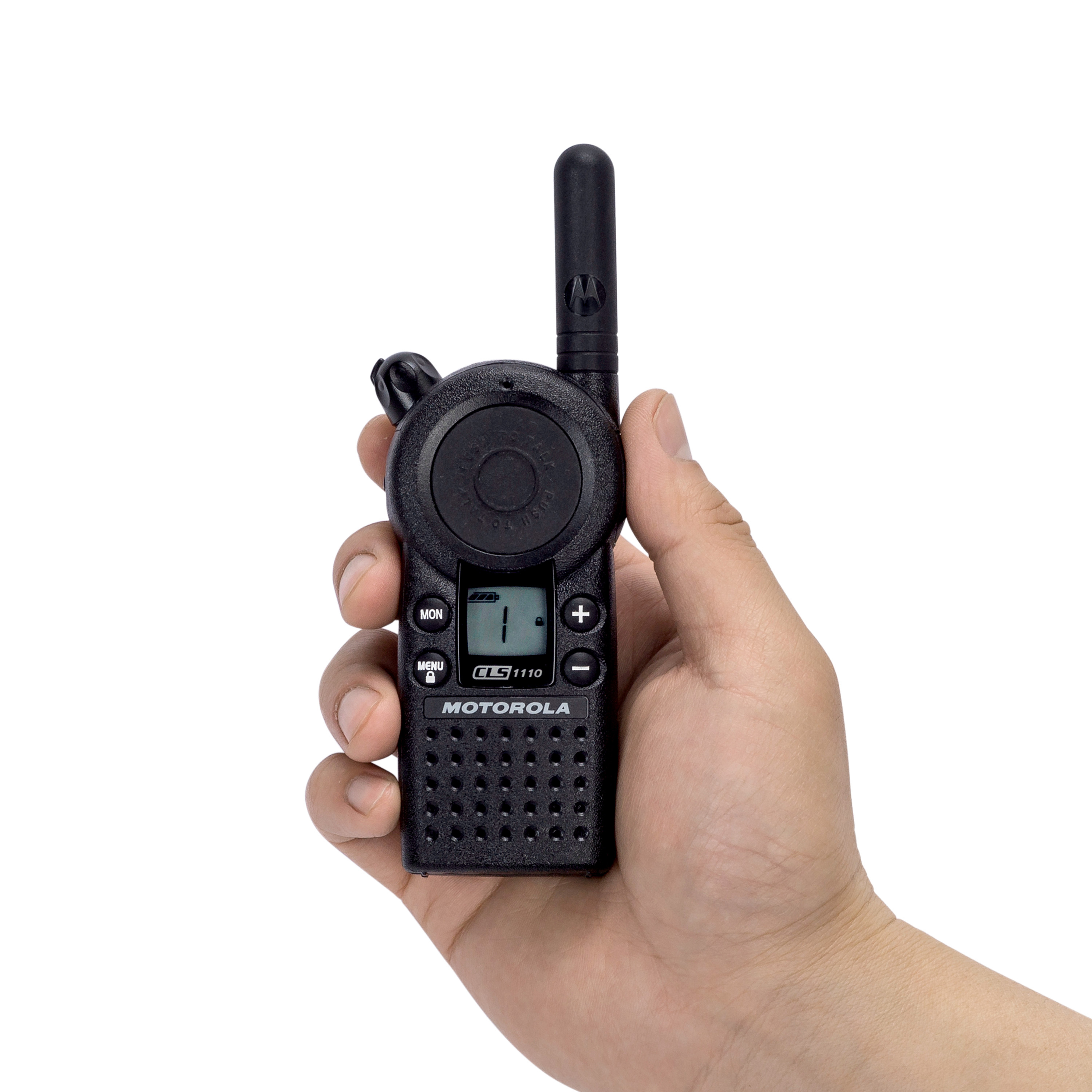
1. Motorola CLS1410 — Best for Small to Mid-Size Stores
| Specification | Detail |
|---|---|
| Frequency | UHF (460–469 MHz) |
| Power | 1 watt |
| Channels | 4 |
| Indoor Coverage | Up to 200,000 sq ft / 15–20 floors |
| Outdoor Range | Up to 1 mile |
| Battery Life | Up to 14 hours |
| Weight | 4.6 oz (with battery) |
| Durability | MIL-SPEC 810 (C–G), IP55 water-resistant |
The CLS1410 has been the retail workhorse for years — CLS stands for Clear, Light, and Simple, which is exactly what a busy floor team needs. Its built-in external speaker makes it practical for stockroom and back-of-house staff who set a radio on a counter rather than wear an earpiece, and its four channels let a store divide departments while keeping a private channel for management.
Why it fits retail specifically
- UHF frequency provides reliable penetration through stockroom walls, walk-in coolers, and concrete partitions.
- VibraCall vibration alerts and three audible call tones let staff receive a message discreetly during a customer interaction.
- VOX hands-free operation (with a compatible accessory) keeps associates' hands on the merchandise, not the radio.
- 4 dedicated channels and 121 interference-eliminator codes support clean role-based segmentation and block chatter from nearby stores.
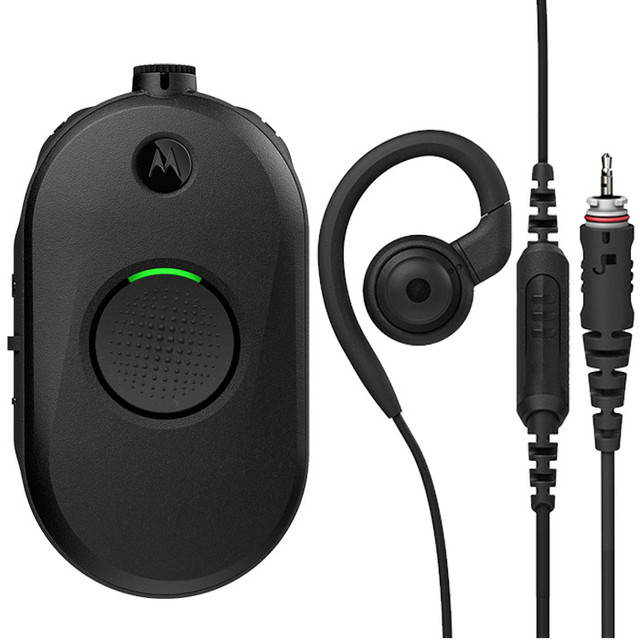
2. Motorola CLP1080e — Best for Discreet, Multi-Department Floors
| Specification | Detail |
|---|---|
| Frequency | UHF (450–470 MHz) |
| Power | 1 watt |
| Channels | 8 |
| Indoor Coverage | Up to 100,000 sq ft / 10 floors (up to 250,000 sq ft / 20 floors with repeater) |
| Outdoor Range | Up to 1 mile |
| Battery Life | Up to 18 hours |
| Weight | 3.35 oz (with battery) |
| Durability | MIL-STD-810H, IP54, antimicrobial housing |
| Includes | Swivel earpiece with in-line PTT mic and belt clip |
The CLP1080e communicates entirely through its included earpiece — there is no external speaker. For stores where a visible radio or audible chatter would undercut the customer experience, this is the right call. Its eight channels let a single-location retailer separate departments cleanly: floor associates on one channel, stockroom on another, management on a third. At 3.35 oz it's the lightest radio on this list, and its antimicrobial polycarbonate housing is a practical detail when radios are shared across shifts.
Why it fits retail specifically
- Earpiece-only communication keeps pricing, stock, and staffing conversations private — nothing broadcasts over a speaker to customers.
- 8 channels support full department segmentation for a mid-size team.
- 18-hour battery comfortably covers a double shift; repeater-capable design doubles coverage when a store grows.
- Up to 219 interference-elimination codes prevent cross-talk from neighboring businesses on shared frequencies.
Limitation to know: the earpiece-only design suits staff who can wear an earpiece throughout a shift. For back-of-house roles that prefer speaker audio, pair it with the CLS1410 or step up to a remote speaker mic.
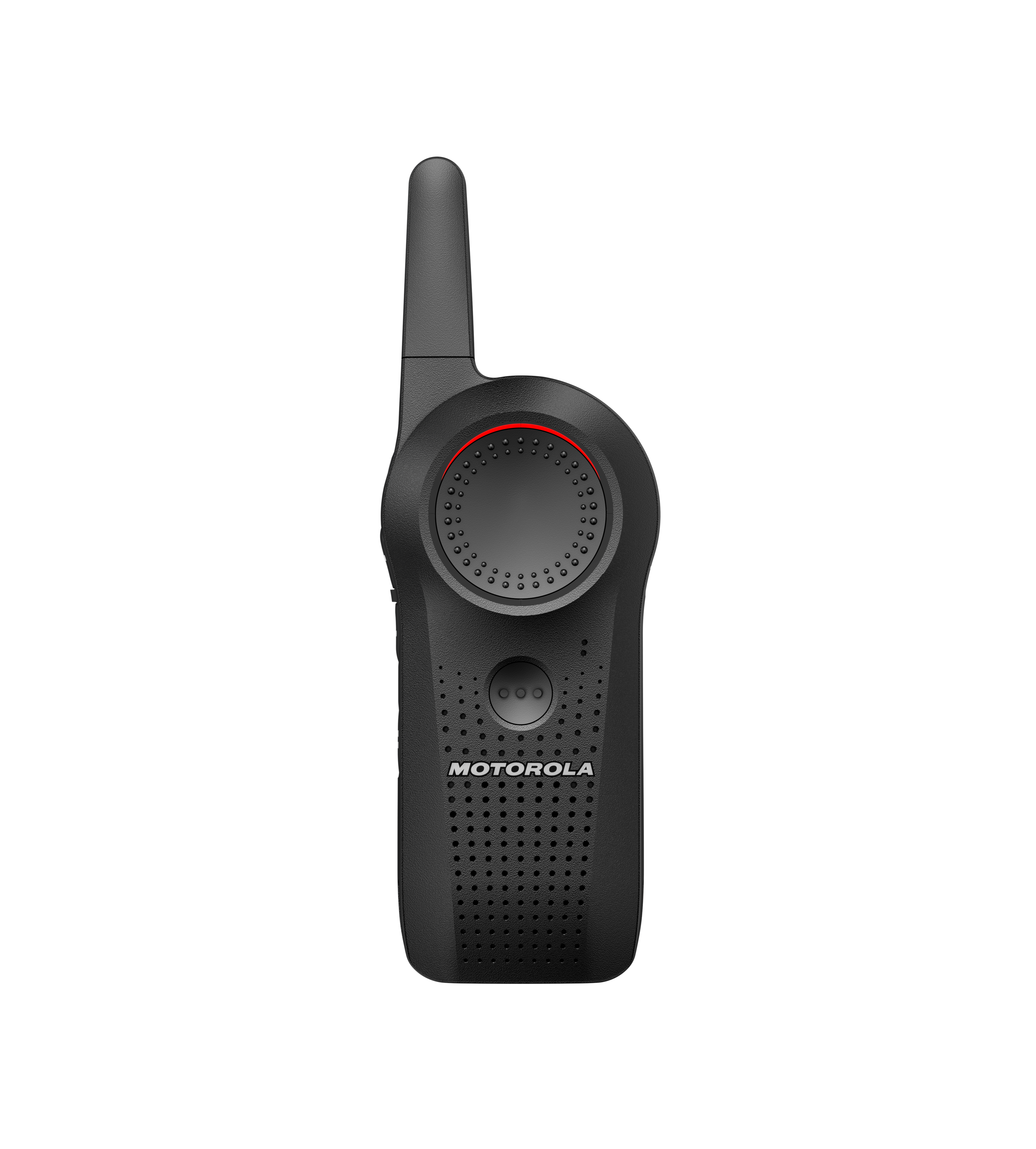
3. Motorola Curve — Best for Large Stores and Multi-Team Operations
| Specification | Detail |
|---|---|
| Frequency | Digital 900 MHz (902–928 MHz) |
| Power | 1 watt digital |
| Channels | 10 |
| Indoor Coverage | Up to 300,000 sq ft / 20 floors |
| Outdoor Range | 1–2 miles |
| Battery Life | Up to 12 hours (4-hour recharge) |
| Weight | 5.11 oz |
| Durability | MIL-STD 810 (C–H), IP5X, antimicrobial housing |
The Motorola Curve is the right choice when a store's square footage, wall construction, or multi-floor layout exceeds what a smaller UHF radio can reliably serve. Its 900 MHz digital signal delivers clean audio across up to 300,000 sq ft, and its 10 channels support full team segmentation including dedicated loss-prevention, dock, and management lines.
Why it fits large retail specifically
- 10 channels cover every department in a big-box or multi-floor store without cross-talk.
- Private Reply lets staff answer one teammate directly without broadcasting to the whole floor — reducing radio noise and ear fatigue across a long shift.
- Call All and Page All Available reach the entire team instantly, which matters during an emergency or evacuation.
- Optional Wi-Fi features and the Curve Portal let managers monitor radio usage and manage devices from a dashboard.
- Interoperable with Motorola's DTR and DLR series, so an existing 900 MHz fleet can expand without compatibility issues.
- Compatible with Motorola call boxes, so a customer-service call button can ping a notification straight to staff radios.
Also Worth Considering
Kenwood ProTalk PKT-300 — 2 watts, 6 channels, UHF (450–470 MHz). A strong alternative to the CLS1410 for stores that prefer Kenwood's build quality or need six dedicated channels with a bit more transmit power.
Motorola CLP1010e — the single-channel version of the CLP1080e. Same earpiece-only form factor, weight, and 18-hour battery, at a lower price for small teams that don't need department segmentation.
Motorola WAVE PTX (TLK Series) — LTE/Wi-Fi radios with effectively unlimited range, GPS location, and an emergency button. The right tool for multi-location retailers coordinating stock and deliveries across cities or states. A per-device subscription applies; lease-to-own options are available.
Retail Radio Comparison
| Feature | Motorola CLS1410 | Motorola CLP1080e | Motorola Curve |
|---|---|---|---|
| Best for | Small to mid-size stores; speaker audio | Discreet, multi-department floors | Large stores & multi-team operations |
| Frequency | UHF (460–469 MHz) | UHF (450–470 MHz) | Digital 900 MHz (902–928 MHz) |
| Power | 1 watt | 1 watt | 1 watt digital |
| Channels | 4 | 8 | 10 |
| Indoor Coverage | Up to 200,000 sq ft | Up to 100,000 sq ft (250,000 with repeater) | Up to 300,000 sq ft / 20 floors |
| Outdoor Range | Up to 1 mile | Up to 1 mile | 1–2 miles |
| Battery Life | Up to 14 hours | Up to 18 hours | Up to 12 hours |
| Weight | 4.6 oz | 3.35 oz | 5.11 oz |
| Audio | External speaker | Earpiece-only | External speaker |
| Durability | MIL-SPEC 810, IP55 | MIL-STD-810H, IP54 | MIL-STD 810, IP5X |
| Antimicrobial Housing | No | Yes | Yes |
| Warranty | 2 years | 2 years | 2 years |
Coverage by Store Type: Matching the Radio to Square Footage
| Store Type | Recommended Radio | Coverage Capacity |
|---|---|---|
| Boutique / convenience / pharmacy (single floor) | Motorola CLS1410 or CLP1080e | 100,000–200,000 sq ft |
| Mid-size store needing discreet, multi-department comms | Motorola CLP1080e | Up to 100,000 sq ft (250,000 with repeater) |
| Big-box / department store / multi-floor | Motorola Curve | Up to 300,000 sq ft / 20 floors |
| Multi-location chain / cross-store coordination | Motorola WAVE PTX (LTE/Wi-Fi) | Unlimited range |
For stores with thick masonry walls or dense steel shelving, drop one tier larger than your square footage alone would suggest. A 4,000 sq ft store packed with metal racking can attenuate signal more than an open floor twice its size.
How Many Radios Does Your Store Need?
A practical starting point is one radio per active staff role on the floor per shift, plus one for each manager:
- Front-End Team — cashiers, customer service, and supervisors handling register issues and guest needs
- Sales-Floor Associates — stocking, customer assistance, price checks, and merchandise pulls
- Fitting Rooms — staff managing try-ons, item counts, and support requests
- Loss Prevention — discreet communication about suspicious activity or incidents
- Store Management — a private channel for managers to coordinate
A typical small store runs well on four to six radios; larger stores with dedicated loss-prevention and dock staff should add one radio per position. Channels can also be used for one-to-one conversations: "Annie, switch to channel two for Luke" keeps a focused exchange off the main channel. Tech Wholesale offers quantity pricing on orders of five or more — request a quote for a specific count.
OSHA and Workplace-Safety Considerations for Retail
Two-way radios are not themselves a regulated safety device, but they directly support several workplace-safety obligations retailers carry:
Emergency Action Plans. Under OSHA's Emergency Action Plan standard (29 CFR 1910.38), employers that maintain an emergency action plan must include a means of reporting emergencies and an employee alarm system. An internal radio network gives staff a reliable, real-time way to report incidents and coordinate an evacuation — the kind of communication these plans depend on.
Workplace-violence prevention. OSHA's guidance on preventing workplace violence, including its recommendations for late-night retail establishments, identifies staff communication devices as a practical control for employees who work alone or during high-risk hours. A radio lets a lone opener or closer summon help immediately.
Occupational noise. In stockroom, dock, or compactor areas where noise can approach OSHA's action level of 85 dB as an 8-hour time-weighted average (29 CFR 1910.95), professional radios with noise-isolating earpieces help staff stay in contact without removing required hearing protection.
Frequently Asked Questions
How much range do I need for a store?
For a single-floor store under roughly 100,000 sq ft, a 1-watt UHF radio like the CLS1410 or CLP1080e provides ample coverage. For large-format stores, multi-floor buildings, or layouts with heavy masonry and dense steel shelving, step up to the digital Motorola Curve, which covers up to 300,000 sq ft and 20 floors. If a store exceeds those dimensions, a repeater extends coverage further.
How long does the battery last on a retail radio?
The radios recommended here are rated for 12 to 18 hours of battery life under a standard 5/5/90 duty cycle: the Curve up to 12 hours, the CLS1410 up to 14 hours, and the CLP1080e up to 18 hours. That comfortably covers a single shift, and most cover a double. For extended hours, a multi-unit charger lets you rotate or hot-swap batteries without downtime.
How durable are these radios, and are they water-resistant?
All three recommended radios meet MIL-STD-810 standards for shock and vibration. The CLS1410 carries an IP55 rating, and the CLP1080e an IP54 rating — both resist dust and splashing water from any direction. The Curve carries an IP5X dust rating and MIL-STD 810 (C–H) certification. None are rated for submersion, which retail environments don't require.
How many channels does a retail store need?
Most stores run well on four channels: front-end, sales floor, stockroom, and management. Stores with dedicated loss prevention, fitting rooms, or a receiving dock benefit from six to ten channels. The CLS1410 offers 4 channels, the CLP1080e 8, and the Curve 10 — so you can match channel count to your department structure.
How many radios should I buy for my team?
Plan one radio per active role per shift, plus one per manager. A four-person floor team typically operates well with four to six radios; larger stores add one per loss-prevention and dock position. Tech Wholesale offers quantity pricing for orders of five or more units — request a quote for your specific headcount.
Can radios connect to a customer-service call button?
Yes. Motorola call boxes let a customer press a button — at a service desk, paint counter, or fitting room — and send a notification directly to staff radios. The Motorola Curve integrates with this setup, so your team responds faster and customers wait less.
Can the radios be programmed to keep our channels private?
Yes. The UHF models use interference-elimination (privacy) codes — 121 on the CLS1410 and up to 219 on the CLP1080e — to block chatter from nearby businesses on shared frequencies. We can program your radios to your channel plan before they ship; just ask when you order. For more on how these codes work, see our privacy codes guide.
Why Buy from TechWholesale.com
Tech Wholesale has been selling professional two-way radios to retail businesses since 1997. We are an authorized dealer for Motorola and Kenwood, which means every radio we sell carries the full manufacturer warranty — typically two years on commercial-grade models — and qualifies for manufacturer service and repair.
What sets us apart
- Lifetime technical support included with every purchase — call or email our team for the life of your radio fleet, not just through the warranty period
- No-pressure consultation — we'll tell you when a less expensive radio is the right answer for your store, rather than push a higher-margin product
- Quantity pricing — request a custom quote for orders of five or more
- Free shipping on qualifying orders and a 30-day return window
- Authorized dealer status — no gray-market inventory, no voided warranties
Not sure which radio fits your store? Use our Find My Radio tool or request a quote. We'll ask a few questions about your floor plan and team size and come back with a specific recommendation — no obligation.
1-888-925-5982 | Service@TechWholesale.com
Related Reading
- Best Two-Way Radios for Restaurants
- Best Two-Way Radios for Hotels
- Privacy Codes – Eliminate Outside Interference
- VOX Hands-Free Operation Explained
- UHF vs VHF – Frequencies Explained
- Find My Radio – Match a Radio to Your Store
- OSHA 29 CFR 1910.38 – Emergency Action Plans
- OSHA – Preventing Workplace Violence
Article by Kristin Wood, a two-way radio consultant @ Tech Wholesale | Authorized Motorola & Kenwood Dealer Since 1997 | Last Updated: June 2026