
The Best Two-Way Radios for Pickleball Courts
Buy the wrong radio and you'll know it fast. Static mid-shift. A dead battery by noon. A staff member on Court 3 waiting for a ref who never shows up because no one heard the call.
Pickleball courts are busy, noisy, and spread across multiple surfaces—sometimes multiple buildings. That kind of environment demands more than a basic walkie-talkie grabbed off a shelf. It demands a radio built for reliability, clarity, and all-day use.
We've sold thousands of two-way radios to facilities just like yours, and we've put all of that experience into this guide.
Our goal is simple: help you make an educated decision and walk away with the right radio for your courts—not just any radio.
What Makes a Great Pickleball Court Radio?
Before jumping into specific models, it helps to know what you're actually looking for. Here are the features that matter most for pickleball court operations:
- Long Battery Life — Staff are on the move all day. Your radios need to keep up without constant trips to the charging dock.
- Clear Audio Quality — Courts get loud. Look for radios with crisp sound and noise-canceling capabilities so nothing gets lost in the background.
- Durability — Drops happen. Weather happens. A rugged, well-built radio protects your investment.
- Hands-Free Options — VOX (voice-activated transmission) or headset compatibility keeps communication flowing without interrupting play.
- Compact and Lightweight — Staff should be able to clip it on and forget it's there.
- Easy to Use — Push-to-talk needs to be fast and intuitive. No one has time to troubleshoot tech mid-shift.
How Many Channels Does Your Court Actually Need?
Channels let you segment team conversations so the right people hear the right information. Without them, every message goes to everyone—which creates noise, confusion, and frustrated staff.
For most pickleball facilities, three dedicated channels will cover your core operations:
- Front Desk & Check-In — Coordinate player arrivals, walk-ins, and court assignments.
- Court Operations — Keep referees, court monitors, and floor staff connected to report no-shows, court readiness, or equipment issues.
- Maintenance & Facility Support — Handle net repairs, lighting problems, cleaning requests, and general upkeep.
Easy breezy. That's concise, direct communication.
Channels can also be used for private conversations. "Ceasar, call Jane on channel two." Jane and Ceaser can have an in-depth conversation without tying up the main channel. It's a simple feature that makes a big operational difference.
Coverage: Match Your Radio to Your Court Size
One of the most common (and costly) mistakes facilities make is buying a radio that doesn't match their footprint.
Too powerful? You're overpaying. Not powerful enough? You get dead zones and dropped messages.
Here's a simple framework:
- Small courts (up to 200,000 sq ft): 1–2 watts of power is sufficient. Compact radios in this range handle typical indoor layouts with ease.
- Larger courts or multiple buildings (up to 350,000 sq ft): You'll need 3–4 watts on analog, or 1 watt digital, which delivers equivalent power to a 4-watt analog radio.
Also factor in your building materials. Thick concrete walls absorb signal. If your facility is heavily built out, bump up your wattage by one level to maintain reliable coverage.
Why Brand Quality Matters
A cheap radio might save you money upfront. Six months later, when you're replacing cracked units and dealing with static on every channel, the math looks different.
Motorola and Kenwood are the two most trusted names in two-way radios—and for good reason. Both brands engineer their radios for durability and field performance, with models tested for five years of regular use. They're intuitive to operate, built to handle wear and tear, and backed by manufacturer warranties of one to three years depending on the model.
There are no monthly cell phone plan costs. No subscriptions. You pay once and stay connected.
REQUEST A QUOTE for our best pricing!
Our Top Two-Way Radio Picks for Pickleball Courts
These recommendations come from hands-on experience working with thousands of radios across a wide range of facilities. Each model below has a proven track record and a reputation that holds up in the field.
Small Courts
Motorola CLS1410
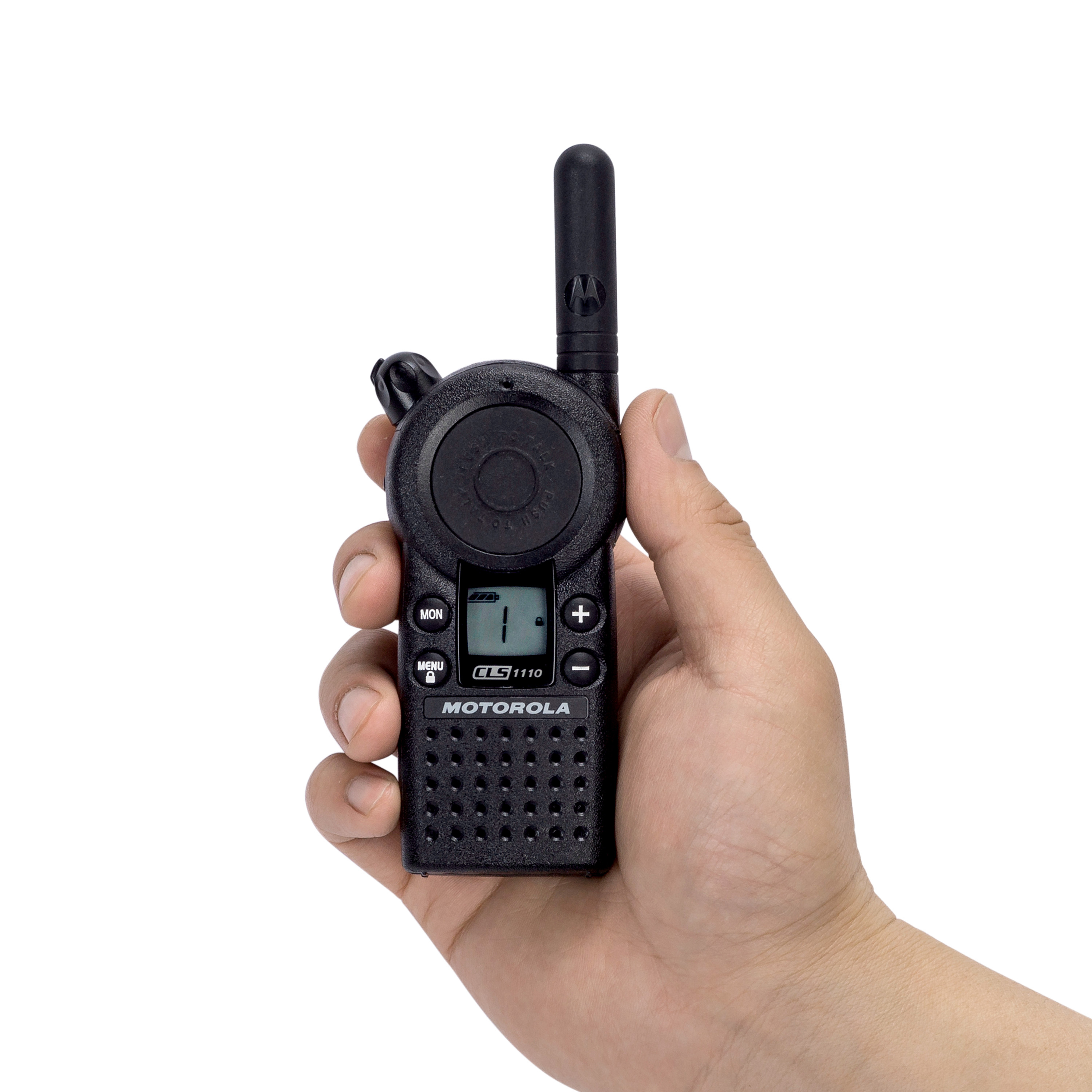
Best for: Small courts needing reliable, easy-to-use coverage
| Spec | Detail |
|---|---|
| Channels | 4 |
| Power | 1 watt (UHF) |
| Coverage | Up to 200,000 sq ft / 15 floors |
The CLS stands for Clear, Light, and Simple—and that's exactly what you get. This UHF radio delivers four channels, giving you enough separation for front desk, court ops, and maintenance, with one left for management.
It features Audible Call Alerts and Vibracall technology for notifications in high-noise environments, and simplified cloning makes setup fast. Outdoor range reaches up to two miles. It's a no-fuss radio that just works.
Kenwood PKT-300
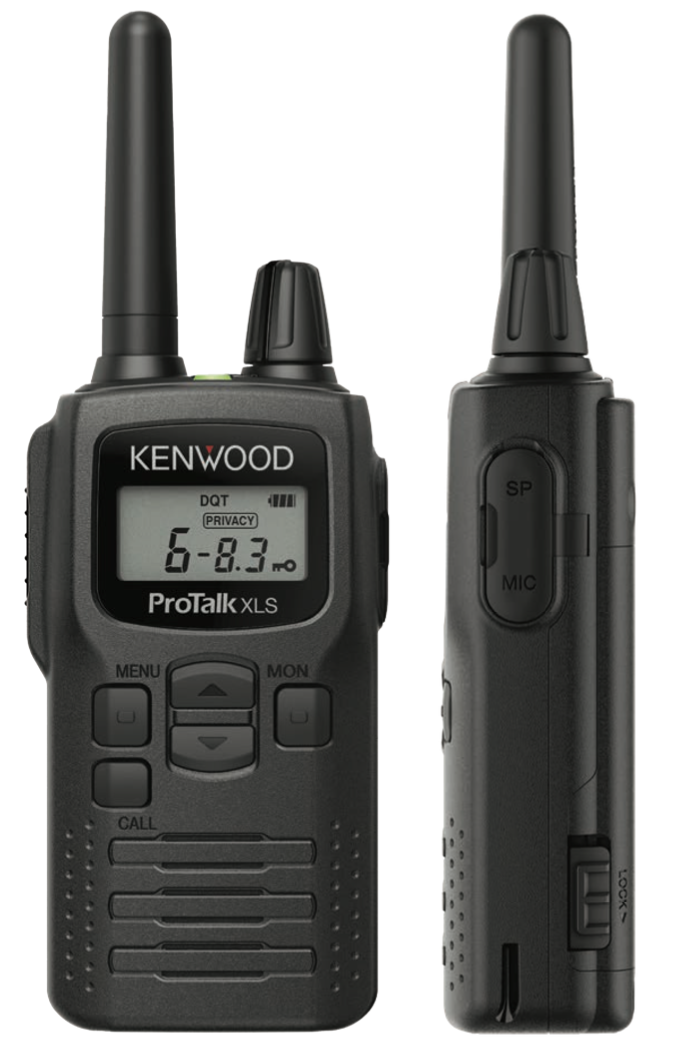
Best for: Courts needing hands-free capability and signal strength through concrete and steel
| Spec | Detail |
|---|---|
| Channels | 6 |
| Power | 2 watts (UHF) |
| Coverage | Up to 275,000 sq ft / 20 floors |
The Kenwood PKT-300 is a step up in both channels and power. Six channels give you more flexibility to segment larger teams, and two watts of output pushes the signal reliably around steel and concrete walls.
VOX hands-free operation is a genuine advantage for floor staff who need both hands free during play. It ships with a standing charging tray, a wall charger, and a belt clip. Compact, rugged, and built to perform under pressure.
Larger Courts & Multi-Building Facilities
Motorola Curve
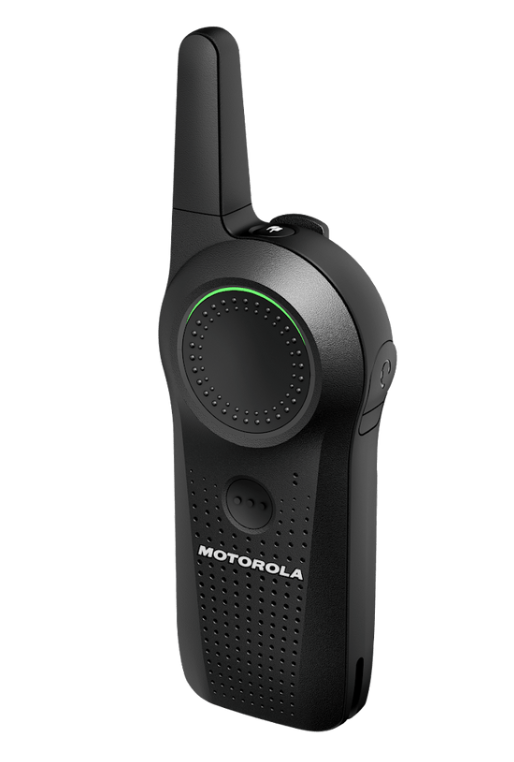
Best for: Large or multi-building facilities that want digital clarity without FCC licensing
| Spec | Detail |
|---|---|
| Channels | 10 |
| Power | 1 watt digital (equivalent to 4 watts analog) |
| Coverage | Up to 300,000 sq ft / 20 floors |
The Motorola Curve runs on digital technology, which means cleaner audio and more efficient signal transmission at lower power. Its 1-watt digital output matches the performance of a 4-watt analog radio—covering up to 300,000 square feet across up to 20 floors.
Ten channels give you room to manage a large, multi-role team without channel crowding. Flexible call options include call-all available and private reply, which adds real operational value during busy periods.
One major advantage: no FCC license required. That eliminates government licensing fees entirely, keeping your ongoing costs low.
Get a Quote for Bulk Purchases
Equipping a full team? Bulk pricing makes a significant difference on per-unit cost. Whether you need five radios or fifty, we'll put together the best possible pricing for your facility.
REQUEST A QUOTE for our best pricing!
Still Not Sure Which Radio Is Right for You?
That's what we're here for. Our team has over 25 years of experience in the two-way radio industry, and we work with pickleball facilities, recreation centers, and sports complexes every day.
Reach out with your court size, team size, and any questions—we'll point you in the right direction. And once you purchase, we're not going anywhere. Every order includes lifetime tech support, so you always have someone to call when you need it.
Clear communication keeps your courts running smoothly. The right radio makes it happen.