

The best shots happen fast, and your team can’t stop to text. Discreet radios with earpieces give lead photographers, second shooters, and assistants instant, silent contact, so nobody misses the moment.
Consider this your shortcut to the right radio! Since 1997, we’ve kept hundreds of photo teams across the country connected. Here’s how to pick the one that works for yours.
What to Look for in a Photography Radio
Before jumping to specific models, it's worth understanding what separates a great photography radio from a mediocre one. These are the features that make a real difference in the field.
Hands-Free Operation
Photographers need both hands on their gear. Look for radios that support voice-activated transmission (VOX) or are compatible with push-to-talk headsets and discreet earpieces. This keeps communication open without interrupting your workflow.
Clear Audio Quality
Live events, fashion shows, and outdoor shoots can get loud. Clear audio — ideally with noise cancellation — prevents miscommunication when it matters most. A garbled message mid-shoot can cost you a critical shot.
All-Day Battery Life
Shoots often run 8 to 12 hours, sometimes longer. A radio that dies at hour four isn't just inconvenient — it breaks down coordination at exactly the wrong time. Prioritize models with long battery life or swappable battery packs.
Durable and Weather-Resistant Build
Gear takes a beating. Sandy beaches, unexpected rain, and tight spaces are all part of the job. Look for radios with at least basic dust and water resistance. IP ratings give you a reliable indicator of how well a radio holds up in tough conditions.
Compact and Lightweight Design
Bulky radios get in the way. A small, clip-on radio that sits quietly on a belt or waistband is ideal when you're moving quickly and managing multiple pieces of equipment at once.
Simple, Intuitive Controls
High-stress shoots leave little room for fumbling with settings. The best radios have straightforward controls that anyone on your team can pick up and use without a tutorial.
Coverage: Match Your Radio to Your Space
Choosing the right power level is one of the most important decisions you'll make. Too little and you'll hit dead zones. Too much and you're overpaying for coverage you don't need.
Small studio or indoor shoot (up to 200,000 sq ft): A 1–2 watt radio is all you need. These are compact, lightweight, and more than capable of keeping a tight team connected across a single building or floor.
Large venue or multi-building setup (up to 350,000 sq ft): Step up to a 3–4 watt analog radio, or a 1-watt digital model. These transmit clearly through thick walls and across longer distances.
Keep in mind that building materials affect coverage. Thick concrete walls can significantly reduce range, so it may be worth going one watt stronger than you think you need.
Multiple locations or unlimited coverage: Radios that run on LTE and Wi-Fi — like the Motorola WAVE PTX series — remove coverage limits entirely. These are ideal for large productions spread across multiple sites.
How Many Channels Do You Need?
Channels let you segment conversations so radio chatter stays clean and relevant. For most photography teams, a single shared channel works well. Everyone stays in the loop, and coordination stays simple.
That said, additional channels are useful for private conversations. Instead of tying up the main channel, you can direct two team members to a secondary one: "Sarah, call Tom on channel two." Clean, direct, and discreet. That kind of targeted communication keeps operations smooth without broadcasting every conversation to the whole crew.
Why Brand Quality Matters
A cheap radio might look fine in the box. After a year of regular use — drops, long days, fluctuating temperatures — the picture often looks very different.
Motorola and Kenwood are the two most trusted names in professional two-way radios. Both brands build radios specifically for reliable, everyday communication with durable construction that holds up over time. Their radios are intuitive to use, cost-effective compared to ongoing cell phone plans, and tested for up to five years of field use. Most models also come with a manufacturer warranty of one to three years, depending on the model.
That's a meaningful return on investment for any photography team that shoots regularly.
Our Top Two-Way Radio Picks for Photography Teams
Each recommendation below comes from hands-on experience working with these models across a wide range of teams and environments. These aren't just popular — they have a proven track record.
Motorola CLP1010e — Best Overall for Photography Teams
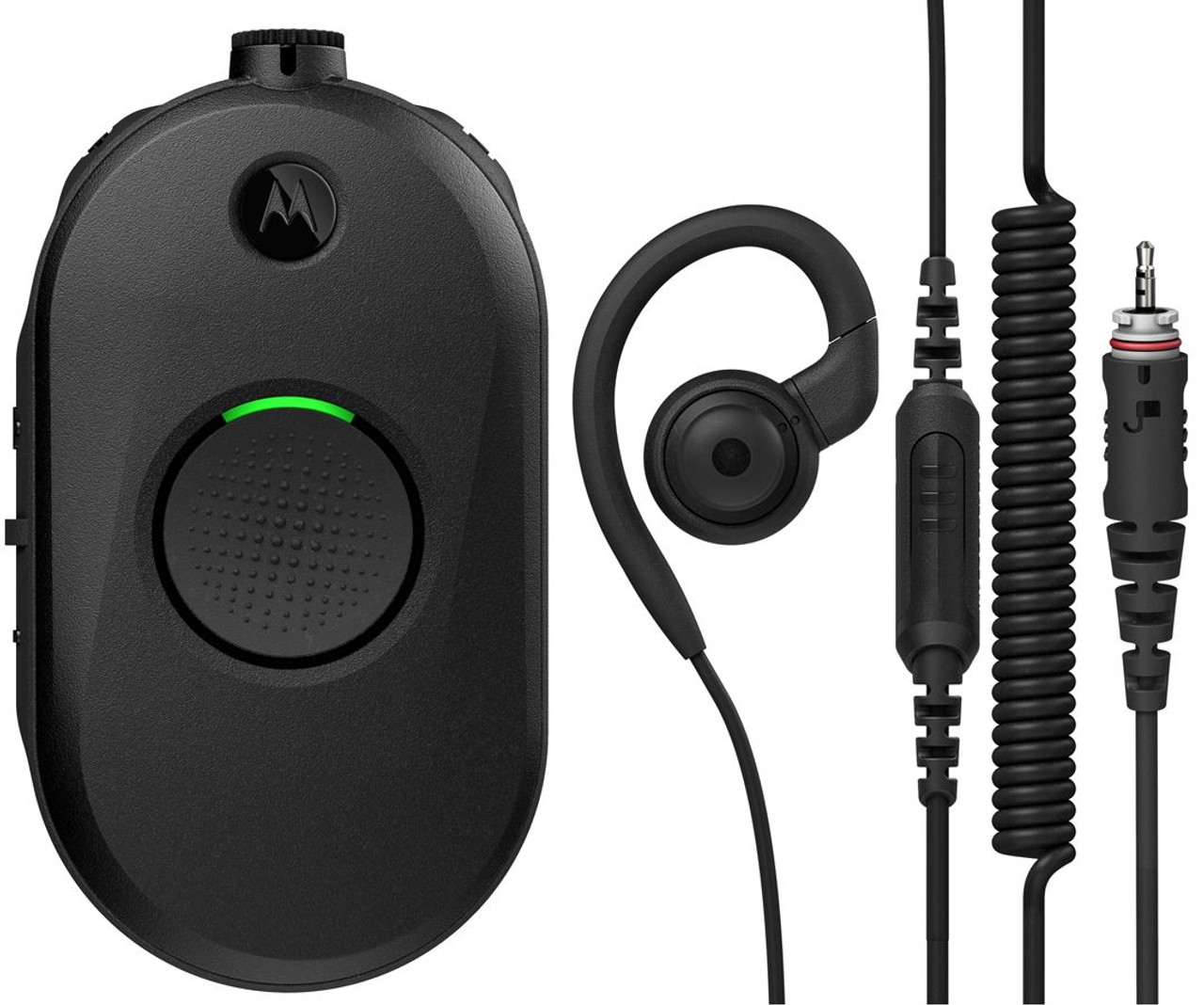
Channels: 1 | Power: 1W UHF | Coverage: Up to 100,000 sq ft
The CLP1010e is the top pick for most photography teams, and it's easy to see why. It's lightweight at just over two ounces, discreet with no external speaker, and includes an earpiece for completely hands-free communication. That combination alone makes it a natural fit for shoots where looking professional matters as much as staying connected.
The radio features 219 privacy codes to keep your conversations secure, a 12-hour rechargeable lithium-ion battery that covers a full shoot day, and antimicrobial casing — a thoughtful detail for shared equipment used by multiple team members. It offers 10 floors of indoor range and up to one mile of outdoor coverage.
If your team shoots primarily in one location and needs something simple, discreet, and reliable, the CLP1010e is hard to beat.
Motorola CLS1110 — Best for Ease of Use and Extended Coverage

Channels: 1 | Power: 1W UHF | Coverage: Up to 200,000 sq ft
The CLS1110 is a step up in coverage, making it a strong choice for teams working in larger studios or venues. It's straightforward to operate, with an easy-to-read display and intuitive controls that require no technical background to master. Battery life is excellent, comfortably handling full-day shoots without needing a recharge.
The CLS1110 is a reliable workhorse — durable, consistent, and built to last. For teams that want simplicity without sacrificing coverage, it delivers.
Where to Buy Two-Way Radios for Photography
Ready to equip your team? Tech Wholesale offers competitive pricing on all the models featured in this guide.
Request a Quote for Our Best Pricing →
Not sure which radio is the right fit? Our support team has over 25 years of experience in the two-way radio industry and can walk you through the decision based on your specific team size, location, and workflow. And once you've purchased, we're not going anywhere — every order comes with lifetime tech support.
Build a Team That's Always in Sync
The right radio doesn't just solve a communication problem — it removes friction from every part of your shoot. Faster coordination, fewer delays, clearer audio, and a team that moves like it's been rehearsed. That's what a quality two-way radio makes possible.
For most photography teams, the Motorola CLP1010e is the place to start. It's discreet, hands-free, and built for professionals. If you need more coverage or a larger setup, the CLS1110 is a natural next step.
Still have questions? Reach out to our team — we'll help you find the right fit.