

Buy the wrong radio for your parks and recreation team, and you'll know about it fast. Static-filled conversations, dead zones across the ball fields, batteries that die mid-shift—it's frustrating, and it costs you time when time matters most.
We've sold thousands of radios to parks and recreation teams across the country. That experience is packed into this guide. We'll walk you through what to look for, what to avoid, and which radios we'd recommend for parks of every size.
What Parks and Recreation Teams Actually Need From a Radio
Not every radio is built for the outdoors. Parks and rec teams face a unique set of challenges: wide open spaces, unpredictable weather, long shifts, and staff spread across multiple zones at once. Here's what to prioritize.
Coverage That Matches Your Park's Size
Matching radio power to your environment is one of the most important decisions you'll make. Too little power and you'll get dead zones. Too much and you're overpaying for range you'll never use.
- Smaller parks: 2 watts of power is sufficient, covering roughly 1–2 miles.
- Larger parks (3–5 miles of coverage): Look for radios in the 3–4 watt range on analog, or 1 watt on digital—both can push signal clearly through walls and across wide distances.
- Multi-site operations: Radios that run on LTE and Wi-Fi, like the Motorola WAVE PTX series, give you unlimited range across locations, cities, or even states.
Channels for Clean, Organized Communication
Channels keep conversations where they belong. For a typical parks and rec department, three dedicated channels cover most scenarios:
- Maintenance and Groundskeeping — For broken equipment, irrigation issues, and cleanup coordination.
- Event Coordination — For concerts, sports leagues, festivals, and community events.
- Security and Emergency — Reserved for urgent situations: lost children, medical incidents, or safety threats.
Easy breezy. That's concise and direct communication. Channels can also be used to set up private conversations: "Sarah, call Tom on channel two." Sarah and Tom can then have an in-depth conversation over the radio without bothering the rest of the staff.
Features That Make a Real Difference
Beyond range and channels, here's what separates a great parks and rec radio from a frustrating one:
- Long battery life — Staff work long outdoor shifts. Radios need to last all day.
- Durability and weather resistance — Drops, dust, rain, and heat are all part of the job.
- Clear audio quality — Crowd noise, wind, and equipment make powerful speakers and noise cancellation essential.
- Emergency/panic button — Instantly alerts the team when a staff member needs urgent help.
- Hands-free (VOX) capability — Lets maintenance and setup crews communicate without stopping what they're doing.
- Repeater compatibility — For very large park systems, a repeater connection can extend range significantly.
- Easy-to-use controls — Staff from different departments and tech backgrounds should be able to pick up and use a radio without any training.
Quality Brands Make a Difference
You need a radio that won't fall apart in a year. Motorola and Kenwood are the most trusted names in the industry—purpose-built for reliable communication, with durable construction that holds up in the field. Both brands are tested for five years of real-world use, come with manufacturer warranties (1–3 years depending on the model), and are designed to eliminate the ongoing cost of monthly cell phone plans.
Our Top Radio Picks for Parks and Recreation Teams
These recommendations come from our own experience working with thousands of radios across parks of every size. Each one has a rock-solid track record.
Best for Smaller Parks
Motorola RMU2080

Key specs:
- Channels: 8
- Power: 2 watts, UHF
- Coverage: Up to 250,000 sq ft indoors / 2 miles outdoors
If you're looking for a tough, powerful UHF radio for a smaller park, the RMU2080 delivers. It runs on a rechargeable lithium-ion battery and covers up to 20 floors or 250,000 square feet indoors—plenty of room for most smaller operations.
At 9 ounces it's heavier than some, but that weight comes with substance: 8 channels, 99 UHF business-exclusive frequencies, and 219 PL/DPL privacy codes. It meets military-grade durability standards (MIL-STD 810), handles dust, shock, vibration, and wind, and includes an antimicrobial coating. It is easy to navigate, even for staff who've never used a radio before.
Motorola Curve
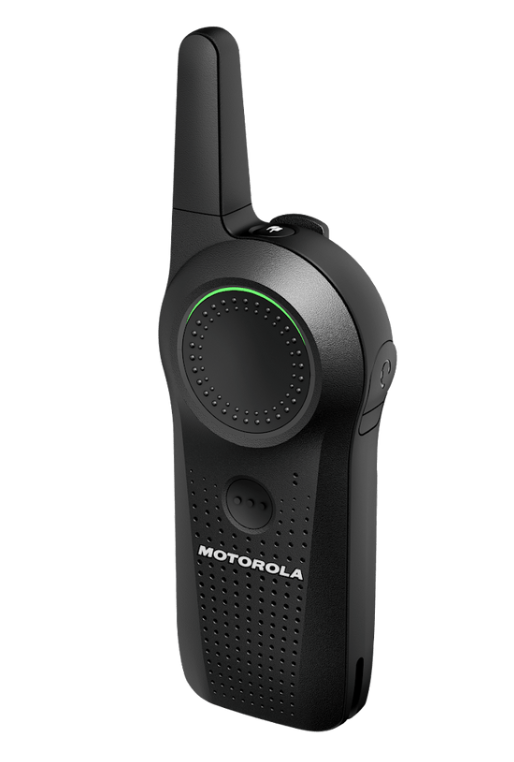
Key specs:
- Channels: 10
- Power: 1 watt digital (equivalent to 4 watts analog)
- Coverage: Up to 300,000 sq ft / 20 floors
The Motorola Curve is the most secure radio on this list—and one of the smartest choices for a larger staff. Ten channels give you plenty of room to segment your team, and because it runs on a digital band you'll get better audio clarity and security.
At just 4.2 ounces, it's light enough to wear comfortably all day. Frequency Hopping Spread Spectrum technology and 10,000 privacy codes keep your communications confidential. The Page All and Call All Available functions are ideal for emergencies, while Direct Call lets you reach just one person for sensitive conversations. Battery life runs up to 14 hours—built for the longest shifts.
Best for Larger Parks
Motorola CP100d-UA
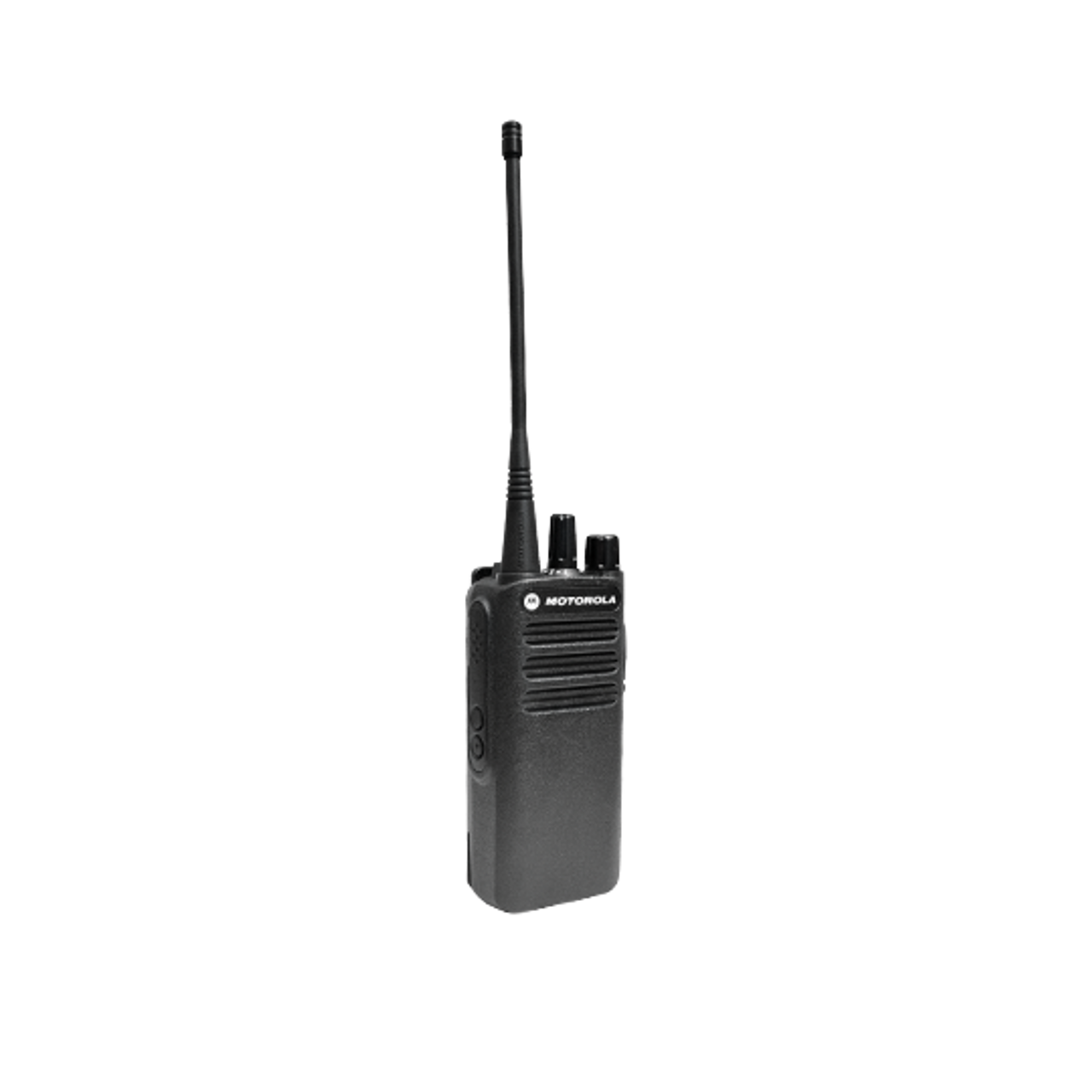
Key specs:
- Channels: 16
- Power: 4 watts, UHF
- Coverage: Up to 350,000 sq ft indoors / 3 miles outdoors
This is the powerhouse of the lineup. Sixteen channels handle even the largest workforces, and 4 watts of power means that signal is getting where it needs to go—through walls, trees, and across open fields. Outdoor range stretches up to three miles; indoor range covers 30 floors or up to 350,000 square feet.
The build quality is exceptional. Military-grade casing with a metal die-cast chassis covered in polycarbonate—this radio can survive being submerged in mud, dropped from scaffolding, or blasted with a firehose. It meets MIL-STD 810 C-F standards across the board. With 89 business radio frequencies and privacy codes, it keeps your communications secure and interference-free.
Motorola Mag One BPR50dx-V

Key specs:
- Channels: 64
- Power: 3 watts, UHF/digital
- Coverage: Up to 370,000 sq ft
- Digital modes with noise cancellation
For parks that need clear audio in noisy environments—events, festivals, crowded facilities—the Mag One BPR50dx stands out. Its rugged build and digital modes provide superior audio clarity and extended coverage, while built-in noise cancellation cuts through ambient sound so every message lands clearly.
Best for Unlimited Coverage (Multi-Site Operations)
Motorola WAVE PTX Series
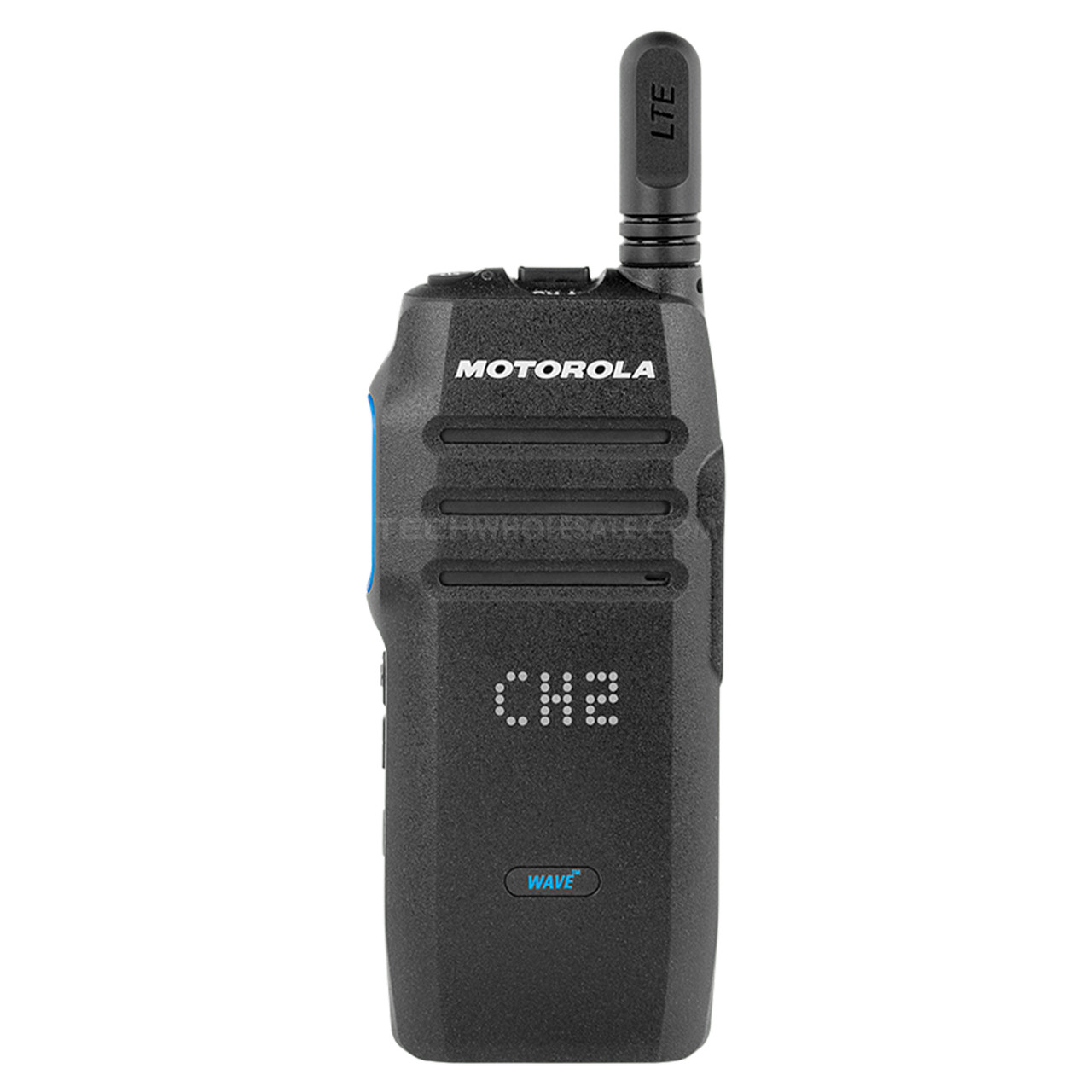
Key specs:
- Coverage: Unlimited via LTE and Wi-Fi
- GPS tracking for locating staff
- Emergency button for staff safety
- Talk to radios from your smartphone
- Failsafe: When Wi-Fi/cell service drops, the radio switches to antenna-to-antenna mode with up to 350,000 sq ft of coverage
- Requires a monthly subscription per device (lease-to-own options available)
For parks and rec departments operating across multiple locations, the Motorola WAVE PTX series eliminates traditional radio range limitations entirely. With LTE and Wi-Fi connectivity, your team can communicate across different parks, facilities, or even cities without any signal drop-off.
GPS tracking lets supervisors locate staff instantly, and the built-in emergency button means help is always one press away. When connectivity goes down, the radio automatically falls back to direct antenna-to-antenna communication—so your team stays connected no matter what.
Monthly subscription fees apply, but lease-to-own options make it accessible without a heavy upfront cost.
Frequently Asked Questions
How many radios does a parks and rec team typically need?
This varies based on the size of your team and how many departments need to communicate. A small park with 10–15 staff members may need a single channel and 10–15 units.
Larger departments with multiple teams (maintenance, events, security) benefit from multiple channels and larger radio fleets. We can help you figure out the right number for your operation.
What's the difference between analog and digital radios?
Analog radios are widely used and easy to program. Digital radios offer cleaner audio, longer range from the same wattage, and better security features.
A 1-watt digital radio typically performs like a 4-watt analog unit—which means more range with less power consumption.
How long do two-way radio batteries typically last?
Most quality radios offer 8–14 hours of battery life per charge. For long outdoor shifts, look for lithium-ion batteries and consider keeping spare batteries on hand during major events.
Can I use these radios during outdoor events with large crowds?
Absolutely. Models with noise cancellation—like the Motorola SL300-U—are specifically designed to maintain clear audio in loud environments. Pairing the right radio with a headset or earpiece can further improve communication quality during concerts, festivals, and large sporting events.
Get the Right Radio for Your Park
Choosing the right radio isn't complicated—once you know what you're looking for. Match the power and range to your park's size, set up channels to keep your teams organized, and invest in a brand that's built to last.
If you're not sure which model fits your operation, our team is ready to help. With over 25 years of experience in the two-way radio industry, we've helped parks and recreation departments of every size find the right solution—and we include lifetime tech support after every purchase.
Request a free quote today and we'll get back to you with the best pricing for your team's needs.