
The Best Two-Way Radios for Music Festivals
We've sold thousands of radios and worked with event teams of all sizes. This guide cuts through the noise (pun intended) and gives you everything you need to choose the right radio for your festival.
Why Cell Phones Fail at Music Festivals
Picture this scenario: it's 20 minutes before the main stage opens, and a security guard at the east entrance spots someone trying to sneak through a side gate. He reaches for his phone. No signal.
Meanwhile, the headlining act is wandering backstage because no one told the escort team which entrance they'd use. The ticketing booth has a scanner down, and the line is spilling onto the street—but no one can get through to operations.
These aren't edge cases. These are the kinds of breakdowns that happen when teams rely on cell service at a packed festival. Two-way radios bypass the cellular network entirely. Press a button, and your message goes through—instantly, every time.
What to Look for in a Music Festival Radio
We don't want you to buy any radio just because you like the name or the price. We want you to make an educated decision and purchase the perfect radio that handles loud environments, delivers reliable coverage, and holds up through a long event day. Here's what to evaluate.
Coverage and Power
Match your radio's wattage to the size of your festival grounds. Getting this wrong means either overpaying for power you don't need or ending up with dead zones at the worst possible moments.
- Small festivals: 1–2 watts covers up to 200,000 sq ft indoors or 1–2 miles outdoors.
- Large festivals or multi-zone sites: 3–4 watts (analog) or 1 watt (digital) covers up to 350,000 sq ft indoors or 3–5 miles outdoors.
- Thick concrete structures or multiple buildings: Add 1 watt to compensate for signal interference.
- Unlimited coverage across multiple locations: Consider LTE/Wi-Fi-enabled radios like the Motorola WAVE PTX series.
Number of Channels
Channels keep department conversations separated so staff aren't talking over each other. For a music festival, we recommend setting up dedicated channels for each of these teams:
- Operations – Overall coordination and schedule management
- Security – Crowd control, lost persons, emergency response
- Medical – First aid and emergency medical teams
- Production – Stage crew, lighting, and sound
- Box Office – Ticketing, will call, entry issues
- Vendor Support – Food, drink, and merchandise coordination
- Volunteers – Volunteer coordinators and team assignments
Easy breezy. That's concise and direct communication. Channels can also be used for private conversations: "Sarah, call Tom on channel two." Sarah and Tom can then have an in-depth conversation over the radio without interrupting the rest of the team.
Key Features for Festival Environments
| Feature | Why It Matters |
|---|---|
| Long battery life | Staff are on-site for 12+ hours—your radios need to last the full day |
| Rugged, weather-resistant build | Outdoor events mean dust, rain, and drops—your radio needs to handle all three |
| Clear audio with noise cancellation | Live music and crowd noise are brutal on communication—noise-cancelling tech is non-negotiable |
| Multiple channel support | Keeps departments separated and reduces cross-chatter |
| Emergency alert button | One-touch emergency alerts for Security and Medical staff |
| Hands-free/VOX capability | Essential for stagehands, medics, and anyone working with both hands |
| Long-range coverage | Festivals span wide areas—your radios need range to match |
Brand Quality Matters
A radio that falls apart after one season is money wasted. Motorola and Kenwood are the gold standard in the two-way radio industry. Both brands are purpose-built for reliable, durable communication—intuitive to use, cost-effective, and tested for five years of field use. They eliminate monthly cell phone plans entirely and come with a manufacturer warranty ranging from one to three years depending on the model.
The Best Two-Way Radios for Music Festivals
Based on years of experience equipping event teams, here are our top picks by festival size.
Small Festivals
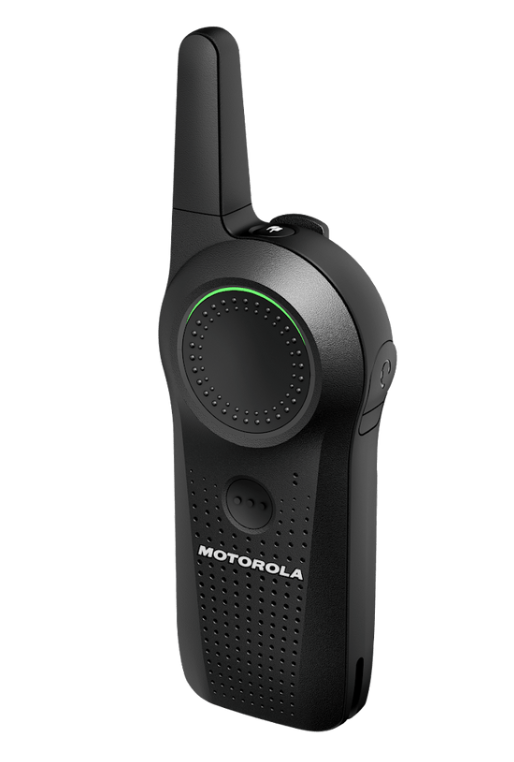
A strong entry-level digital radio that punches above its weight class.
- Channels: 10
- Power: 1 watt digital (equivalent to 4-watt analog)
- Coverage: 300,000 sq ft
- Highlights: Flexible call options including call-all and private reply.

One of the most durable radios on the market—built to take a beating.
- Channels: 8
- Power: 2 watts UHF
- Coverage: 250,000 sq ft / 25 floors
- Highlights: Onscreen display for ease of use, exceptional durability.
Large Music Festivals and Multi-Building Sites

Digital performance built for large-scale coordination.
- Channels: 50
- Power: 1 watt digital (equivalent to 4-watt analog)
- Coverage: 350,000 sq ft
- Highlights: Flexible call options, excellent for multi-department festivals.
Motorola Mag One BPR50dx-U

Our top overall pick for large music festivals. Festivals across the country rely on this radio for its slim profile, durability, and superior audio clarity.
- Channels: 64
- Power: 3 watts UHF/Digital
- Coverage: 370,000 sq ft / 35 floors
- Highlights: Digital modes for extended range, noise cancellation technology, built to handle the loudest environments.
Best for Unlimited Coverage (LTE & Wi-Fi Enabled)
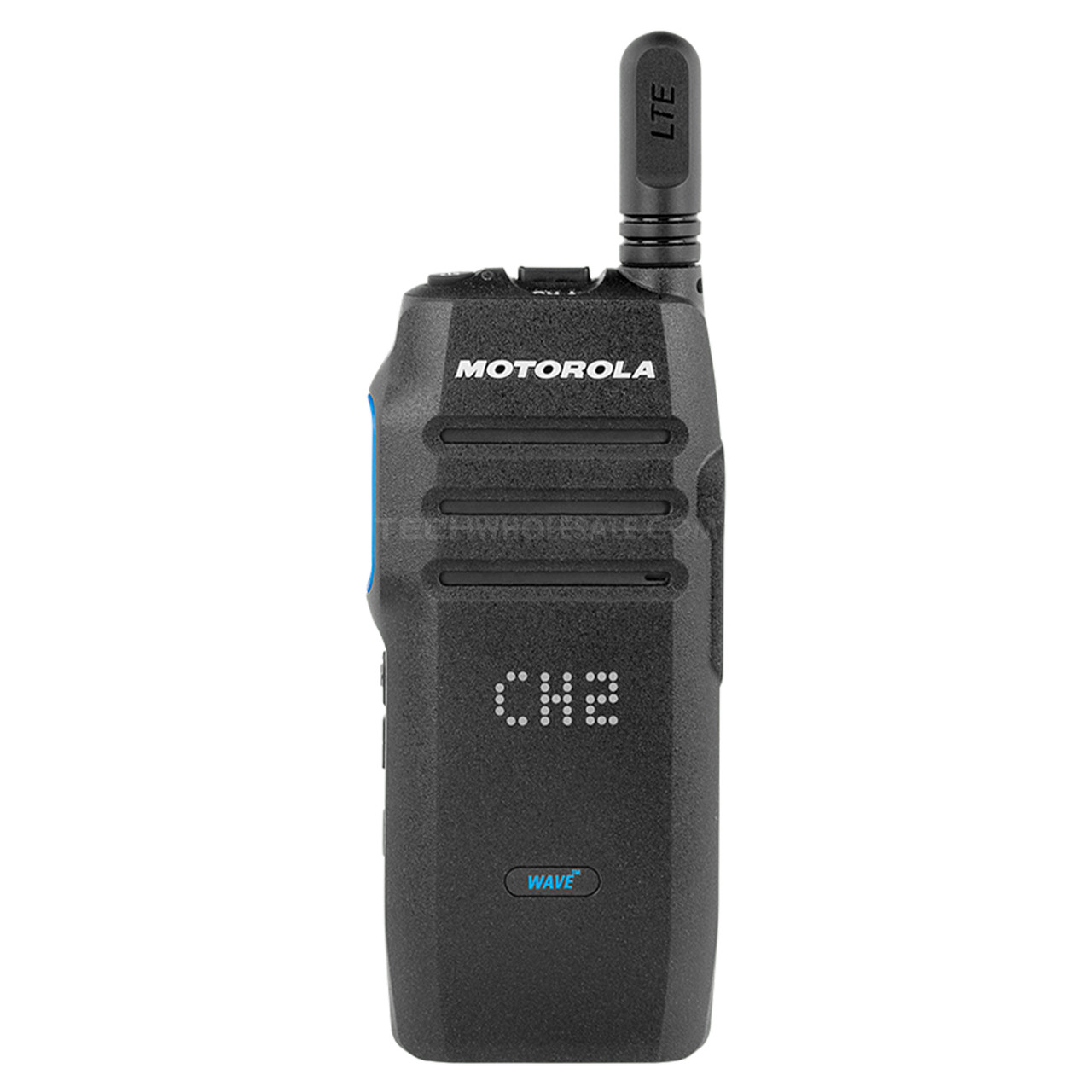
The right choice for large-scale operations spanning multiple locations, cities, or even states.
- Coverage: Unlimited via LTE and Wi-Fi
- Highlights: GPS tracking for locating staff across your entire site, emergency button for instant alerts, and the ability to communicate directly from a smartphone to a radio. As a failsafe, if cell service or Wi-Fi goes down, the radio reverts to antenna-to-antenna communication with up to 350,000 sq ft of coverage.
- Note: Requires a monthly subscription per device. Lease-to-own payment options are available to reduce upfront costs.
Frequently Asked Questions
How many radios do I need for my festival?
A good starting point is one radio per team lead or department head, plus extras for key roles like security patrol, medical staff, and stage managers. The right number depends on your team structure and site layout—reach out and we can help you plan.
Can two-way radios handle outdoor weather conditions?
Yes. The radios we recommend are built to handle the unpredictability of outdoor events—dust, humidity, light rain, and the occasional drop. Look for IP-rated models if you're expecting severe weather.
What happens if cell service goes down during the festival?
That's exactly why you're using two-way radios.
They operate independently of cell towers and Wi-Fi (except the WAVE PTX series, which has an antenna-to-antenna fallback). Your team stays connected regardless of network conditions.
Can staff communicate privately without others hearing?
Yes. Private channel conversations are easy to set up.
A coordinator can direct two team members to a specific channel for a one-on-one conversation, keeping the main channels clear.
Get the Right Radios for Your Festival
Clear, reliable communication is the backbone of a well-run festival. When security, medical, production, and operations can talk to each other instantly, problems get solved before they escalate.
The Motorola BPR50dx-U is our top pick for larger festivals—durable, slim, and loaded with noise-cancellation technology. For smaller events, the Motorola Curve delivers reliable performance without the premium price tag. And if your operations span multiple locations, the Motorola WAVE PTX series offers coverage without limits.
Ready to equip your team? Request a quote for the best possible pricing on bulk orders. Our team has over 25 years of experience in the two-way radio industry, and we include lifetime tech support with every purchase—because we're not going anywhere after the sale.