

The best two-way radios for hotels are business-grade UHF or 900 MHz models, not consumer walkie talkies. They need multiple channels to segment team conversations and eliminate ear fatigue and enough wattage to cover multiple floors.
Which 2-Way Radio Fits Your Hotel?
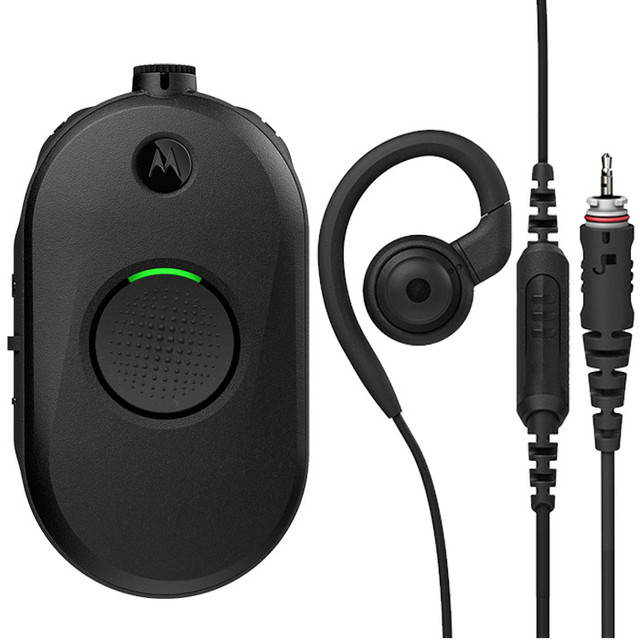
- A small hotel→ Motorola CLP1080e. Earpiece-only, no external speaker, 3.35 oz. Eight channels separate front desk, housekeeping, maintenance, and management.
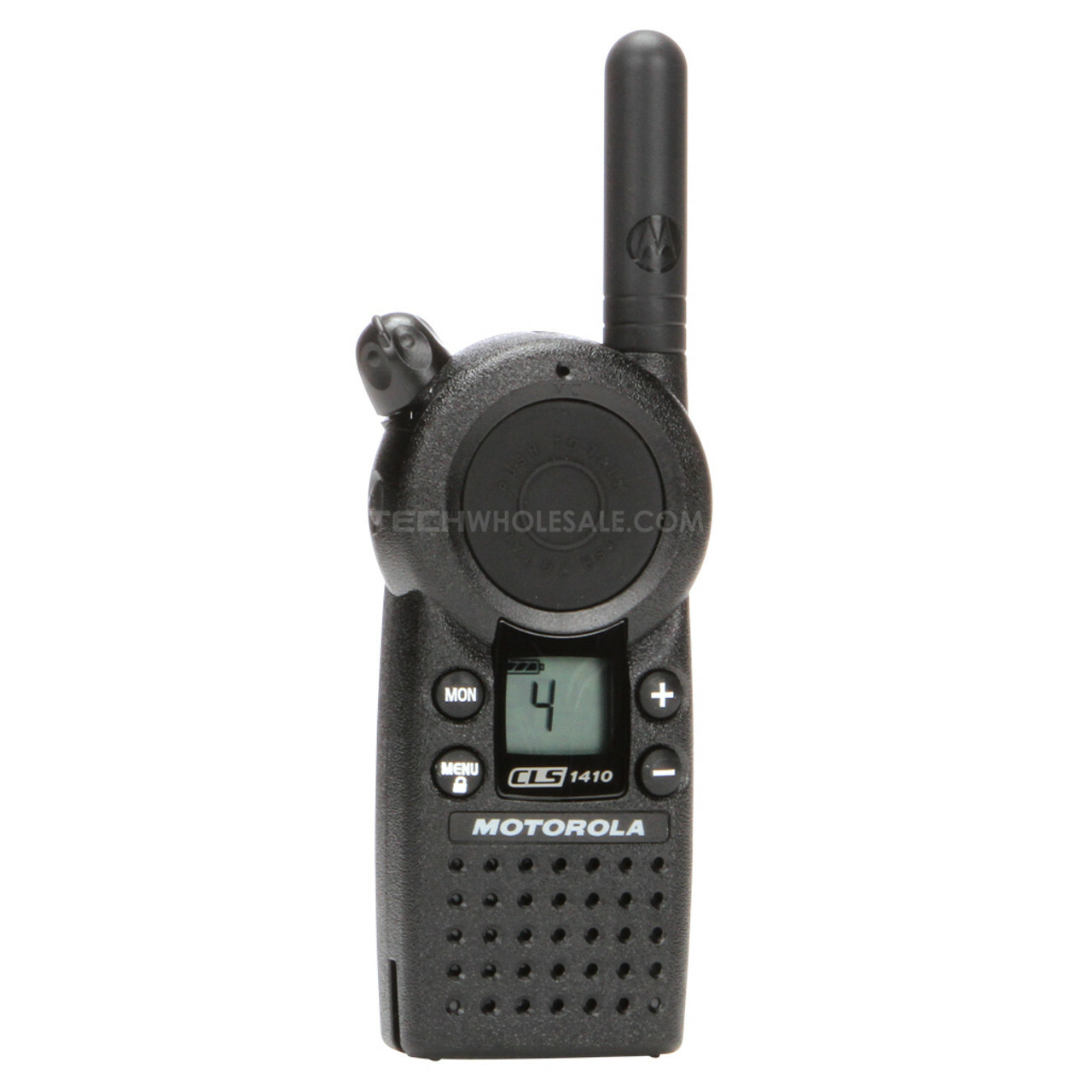
- A mid-size hotel → Motorola CLS1410. A loud built-in speaker and VibraCall silent alerts, 200,000 sq ft and 15 floors, IP55.
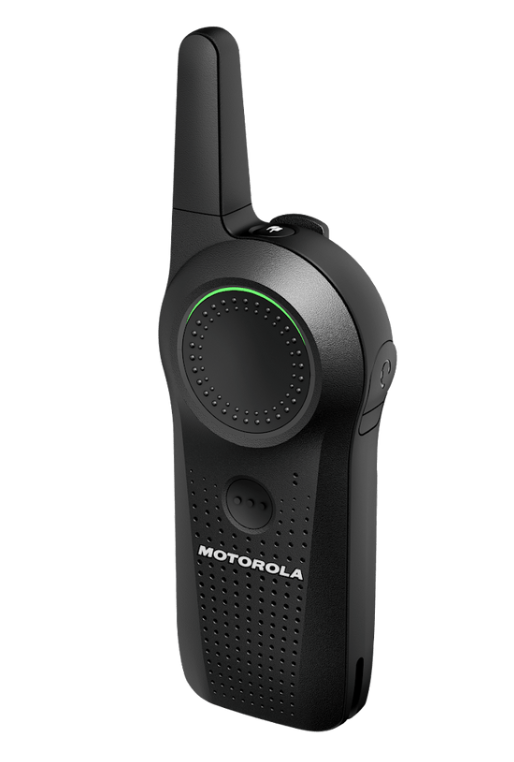
- A large, full-service hotel → Motorola Curve. Digital 900 MHz, 300,000 sq ft and 20 floors, ten channels — built for a signal that has to travel through multiple stories.
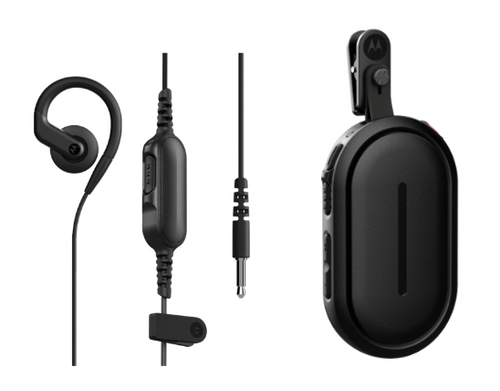
- A large resort or multiple properties → Motorola TLK 25. Wi-Fi and LTE through WAVE PTX, for virtually unlimited coverage. Important for resorts with detached buildings, a golf course, or a second hotel across town.
We've been outfitting hotels with two-way radios since 1997 — everything from 40-room boutique properties to high-rise convention hotels. This guide brings together what we've learned about coverage across floors, stairwells, and back-of-house areas so you can pick the right radio for your property the first time.
Page by Kristin Wood, a two-way radio consultant @ Tech Wholesale | Authorized Motorola & Kenwood Dealer Since 1997 | Last Updated: August 2026
Jump To
Hotel Walkie Talkies - Comparison Chart
| Spec | Motorola CLP1080e | Motorola CLS1410 | Motorola Curve | Motorola TLK 25 |
|---|---|---|---|---|
| Best For | Front desk & guest-facing staff | Mid-size hotels & back-of-house teams | Full-service multi-floor hotels | Resorts & multi-property campuses |
| Channels | 8 | 4 | 10 | Up to 96 (300 contacts) |
| Frequency / Power | UHF 450–470 MHz 1 W |
UHF 460–469 MHz 1 W |
Digital 900 MHz FHSS 1 W Digital |
Wi-Fi & 4G LTE (WAVE PTX Broadband) |
| Indoor Coverage | 100,000 sq ft / 10 floors | 200,000 sq ft / 15 floors | 300,000 sq ft / 20 floors | Unlimited network-wide (Wi-Fi / LTE) |
| Battery Life | 18 hrs | 14 hrs | 11.5 hrs | 12 hrs |
| Audio Options | Earpiece-only (internal antenna) | Speaker + VibraCall alerts | Speaker + Private Reply | Earpiece-only (voice assistant) |
| Durability | MIL-STD-810, IP54 | MIL-STD-810 C–G, IP55 | MIL-STD-810 C–H, IP5X | MIL-STD-810H, IP67 (submersible) |
Recommended Hotel Two-Way Radios
Best Walkie Talkie for Boutique Hotels & Guest-Facing Staff: Motorola CLP1080e
Quick Summary
- Best For: Small hotels, front desk agents, bell captains, and guest-facing staff where complete visual and acoustic discretion is required.
- Key Specifications: 1 Watt UHF (450–470 MHz) | 8 Channels | Up to 100,000 sq ft / 10 floors coverage | Up to 18-hour battery life | 3.35 oz | IP54 rating.
- Primary Advantage: Internal antenna and earpiece-only design (no speaker) keep transmissions inaudible and hardware invisible to hotel guests; includes antimicrobial housing.
- Main Trade-off: Requires staff to wear an earpiece; 10-floor base coverage may require a repeater for properties taller than 8 stories or with sub-basements.
Why It Works For Small Hotels
There is no external speaker, no protruding antenna, no knobs — audio goes to the included earpiece and there's nothing on a belt that reads as equipment. It's the only design that guarantees a guest never hears a transmission or sees a radio, which is important in more confined spaces.
Eight channels is more than a boutique property uses day to day. Five covers the structure — front desk, housekeeping, engineering, security, management — and the rest can be used to have side conversations so a main line isn't clogged.
Pros
- Earpiece-only with an internal antenna
- Earpiece included in the box; on most models it's a separate purchase.
- 18-hour battery, the longest here, covers a double or an overnight without a swap.
- 3.35 oz clips to a waistband or a vest pocket and disappears.
- Glow ring shows channel, transmit, volume, and battery without a screen to read mid-conversation.
- Antimicrobial housing on a radio passed between three shifts a day.
- Analog UHF, so it shares channels with speaker-equipped units for engineering and laundry — one fleet, two form factors.
Cons
- There's no speaker fallback for an engineer with hands in a mechanical room or a laundry attendant across a room from a cart. Those roles need a speaker unit alongside these.
- Some staff won't wear an earpiece through a full shift, and housekeeping in particular often prefers to hear a radio from inside a room.
- 100,000 sq ft and 10 floors is the smallest footprint here — on a property taller than about eight stories, or with a sub-basement laundry, you'll need a repeater.
- IP54 is fine for the lobby and corridors, thinner for pool decks and laundry.
Buy this if your property is small and most of your radio traffic is guest-facing.
Skip it if you're a full-service property with eight-plus stories — that's the CLS1410 or Curve — or if most of your fleet lives in engineering and laundry, where a speaker unit does more.
The common build for a hotel is both: CLP1080e units for front desk, bell, concierge, and management, speaker-equipped units, like the CLS1410, for engineering and laundry. Same analog UHF band, same channels — though the chargers and accessories don't cross over, so plan for two of each.
Best Speaker Radio for Mid-Size Hotels and Back-of-House & Engineering Teams: Motorola CLS1410
- Best For: Hotels with 15 floors or less. Ideal for engineering and maintenance, laundry, receiving, and housekeeping — any role where a radio needs to be heard without being worn.
- Key Specifications: 1 Watt UHF (460–469 MHz) | 4 Channels | Up to 200,000 sq ft / 15 floors coverage | Up to 14-hour battery life (5/5/90 duty cycle) | 4.6 oz | MIL-STD-810 C–G | IP55.
- Primary Advantage: A loud built-in speaker for hands-busy work, VibraCall silent alerts for guest corridors, and water-resistant — all on the same analog UHF band as the CLP1080e, so both form factors run as one fleet.
- Main Trade-off: Four channels, which is one short of the five-lane department structure most full-service hotels run.
Why It Works For Mid-Size Hotels
What makes it a hotel radio rather than a generic back-of-house radio is VibraCall. Back-of-house staff don't stay back of house — an engineer walks a guest corridor to get to a room, a housekeeping supervisor works the floors all shift. VibraCall gives that radio a silent page, so the same unit that's loud in a mechanical room is invisible outside room 812. It's the one feature that lets a speaker radio cross into guest space without becoming a complaint.
It is tested for dust and water at a rating of IP55. Which is great for a hotel because it has more wet environments than most buildings its size: a pool deck, a laundry, a kitchen, a mechanical room with a leaking condensate line, an exterior grounds route in weather.
And it's the practical entry point, one of the most cost effective radios on this page.
Pros
- Loud built-in speaker — audible on a workbench, a cart, or a mechanical room floor with no accessory required.
- VibraCall silent alerts let a back-of-house radio cross a guest corridor without making a sound.
- IP55 — the right unit for pool, laundry, kitchen, and exterior grounds roles.
- MIL-STD-810 C–G tested for drops and vibration, which is what a radio going off a housekeeping cart onto a corridor floor actually experiences.
- 14 hours at a published 5/5/90 duty cycle covers any single shift with margin.
- 4.6 oz with a stub antenna — light enough to forget on a belt through a full shift.
- Least expensive of the four primary models, and the entry point for a small property.
Cons
- Four channels is the real constraint. The five-lane structure most full-service hotels run — front desk, housekeeping, engineering, security, management — doesn't fit, so something has to merge.
- No earpiece in the box. It's a separate purchase, unlike the CLP1080e, and it's the line most properties leave out of the first quote.
- An external stub antenna and a visible speaker grille — this reads as equipment. Fine on an engineer, wrong on a bell captain.
- Analog, so at the edge of coverage it degrades into static rather than cutting out cleanly. A supervisor who hears half a room number thinks they got the message.
Buy this if you're outfitting engineering, laundry, receiving, pool, or housekeeping supervisors — or if you're a small limited-service property where one radio type covers every role.
Skip it if the unit is going to a guest-facing position, where the CLP1080e's earpiece-only design does something this can't, or if the person carrying it needs to monitor more than four lanes.
The common pairing is CLP1080e units for front desk, bell, and concierge and CLS1410 units for engineering, laundry, and receiving — same UHF band, same channels, one radio system. Worth knowing before you order: the chargers and accessories don't cross between the two, so plan for a charging bank of each at the handoff points where they live.
Best Digital Radio for Multi-Floor Full-Service Hotels: Motorola Curve
Quick Summary
- Best For: Full-service hotels, mid-to-high-rise properties, and multi-floor teams needing penetration through poured concrete decks and elevator shafts.
- Key Specifications: 1 Watt Digital 900 MHz (FHSS) | 10 Channels | Up to 300,000 sq ft / 20 floors coverage | Up to 16-hour battery life (with BT110 battery) | Private Reply feature.
- Primary Advantage: 900 MHz Frequency-Hopping Spread Spectrum (FHSS) penetrates 20 vertical floors without static; features one-to-one Private Reply to reduce ear fatigue.
- Main Trade-off: Operates on a digital 900 MHz protocol and cannot interoperate with existing analog UHF radios without starting a second fleet.
Why It Fits A Large Hotel
A 900 MHz digital crosses poured-concrete decks more cleanly than analog UHF does at the same power. On a twelve-story property with a sub-basement laundry, that's the difference between a working fleet and a housekeeper on nine who can't reach the front desk.
The second reason is what digital does at the edge of range. Analog degrades gradually into static — audible but unintelligible. Digital either delivers a clean signal or doesn't. A supervisor who hears nothing knows to move; one who hears half a room number thinks they got the message.
Private Reply is the feature worth naming for a hotel specifically. When fifteen people share a channel through a shift, answering one person directly instead of broadcasting cuts what everyone else has to listen through.
Pros
- 300,000 sq ft and 20 floors
- Digital audio stays intelligible at the edge of coverage instead of dissolving into static
- Ten channels covers a full department structure with room for an all-call or a banquet line
- Private Reply keeps one-to-one answers off the group channel and reduces earpiece fatigue
- Frequency-hopping 900 MHz means consumer FRS radios in the area can't receive or interfere with hotel traffic
- Interoperable with existing Motorola DTR and DLR units if you already run 900 MHz
- Works out of the box — power on and the team is connected
Cons
- Guest-facing staff still need an earpiece accessory and the discipline to wear it, which the CLP1080e solves by design.
- It won't talk to your CLP1080e or any analog UHF radio. Different band and protocol, so this starts a second fleet rather than expanding one.
- 11.5 hours standard won't clear a double or a long overnight comfortably — budget the high-capacity BT110 for those roles which will get you up to 16 hours.
- Highest cost on this page, and a two-story property is paying for vertical coverage it won't use.
Buy this if your building is tall enough that floors are the constraint, or your footprint is past what a 1-watt analog radio serves.
Skip it if you're a boutique or two-story property — the CLP1080e handles that with better discretion for less — or if you need to reach detached buildings or a golf course, which is the TLK 25.
Best Radio for Large Resorts & Multi-Property Campus Coverage: Motorola TLK 25
Quick Summary
- Best For: Sprawling resorts, multi-building campuses, golf courses, and hospitality groups managing multiple properties across a city.
- Key Specifications: Broadband PTT (Wi-Fi 2.4/5 GHz + 4G LTE) | Up to 96 talkgroups (300 contacts) | Nationwide range | 12-hour battery life | 2.5 oz | IP67 submersible.
- Primary Advantage: Uses existing hotel Wi-Fi and LTE networks for unlimited range across detached buildings; includes built-in Fall Alert and Lone Worker safety features.
- Main Trade-off: Operates on the WAVE PTX broadband platform and requires an ongoing monthly per-device service subscription.
Why It Fits Large Resorts
Every other radio here has a range limit. Once a property includes a detached conference center, a second tower, a parking structure across a drive, or a sister hotel in the same city, no amount of wattage closes that — you've left the physics of handheld radio behind. The TLK 25 runs over your existing Wi-Fi and, on the LTE model, nationwide cellular, so coverage follows the network rather than the airwaves.
Because a full-service property already has Wi-Fi in every corridor, ballroom, and guest room, you've paid for that infrastructure. This is the one radio that uses it.
Lone Worker and Fall Alert — the latter using an onboard accelerometer — monitor solo staff and trigger an emergency call automatically. On a property running overnight housekeeping, a single security officer, and night engineering in a mechanical room, that's the feature the fleet gets justified on. And remote configuration through the WAVE PTX Portal means a director of operations can add a device, change a talkgroup, or push an update across three buildings without collecting radios.
It's also earpiece-only with no external speaker, at 2.5 oz and under three-quarters of an inch thick — so it clears the guest-facing discretion bar without a separate model.
Other Hotel Radio Models to Consider
Kenwood ProTalk PKT-300 — Grounds & High-Noise Teams
- Best For: Valet parking, hotel groundskeeping, spa/pool attendants, and back-of-house teams needing extra transmit punch.
- Key Specs: 2 Watts UHF | 6 Channels | Up to 15 floors / 275,000 sq ft | 14-hr battery | 4.87 oz | IP52 rating.
- Why Choose It: Double the transmit power (2W) of standard 1-watt business radios in a lightweight body. Reaches sub-basements and outdoor valet ramps that 1-watt units miss.
- Trade-off: Uses Kenwood 2-pin accessories and chargers; won't cross-dock with Motorola charging banks.
Motorola RMU2040 — Heavy Industrial, Pool Decks & Maintenance
- Best For: Resort groundskeeping, heavy engineering, pool attendants, and outdoor event crews.
- Key Specs: 2 Watts UHF | 4 Channels | Up to 20 floors / 250,000 sq ft | 15-hr battery | 8.6 oz | IP55 rated.
- Why Choose It: Built to handle severe drops and heavy hose spray. 1,500 mW speaker cuts through mechanical room noise.
- Trade-off: Too heavy (8.6 oz) and industrial for guest-facing front desk uniforms.
Motorola Radio Call Boxes — Unstaffed Receiving Docks & Staff Doors
- Best For: Unattended delivery doors, kitchen loading docks, employee side entrances, and self-parking garages.
- Key Specs: Analog UHF (CB200-U) or 900 MHz Digital (CB300-D) | Runs on 3 D-cell batteries | Custom voice alerts.
- Why Choose It: Drivers or vendors press one button to broadcast a custom voice alert (e.g., "Delivery at West Loading Dock") across all staff radios on that channel.
- Trade-off: Fixed wall-mount unit for incoming alerts, not a handheld staff radio.
What to Look for in a Hotel Two-Way Radio
Most hotels buy radios the way they buy light bulbs — grab whatever's cheapest and figure the rest out later. Then housekeeping can't reach the front desk from the fourth-floor stairwell, and suddenly everyone's back to texting on personal phones. The radio that's right for a 40-room boutique is the wrong radio for a 300-room high-rise, and the six things below are where that difference actually lives.
UHF vs. VHF For Indoor Coverage
Short version: for a hotel, you want UHF, and it's not close.
VHF signals travel farther across open ground — they're built for golf courses, farms, and outdoor properties with line of sight. But hotels are the opposite environment: concrete floors, steel framing, elevator shafts, fire doors. VHF struggles to punch through all of that.
UHF (the 450–470 MHz band nearly every business radio uses) has a shorter wavelength that reflects and wraps around walls and moves between floors far better. That's why every radio built for hospitality is UHF.
Read more on the difference between VHF and UHF.
Channels and Department Separation
A channel is a private lane. Put every department on the same one and you get the radio equivalent of the whole staff shouting in one hallway — housekeeping's room-status chatter stampeding over the front desk's guest requests.
Give each working group its own channel: front desk, housekeeping, maintenance/engineering, food & beverage, and a manager-on-duty channel is a clean five-lane setup that covers most properties.
A small hotel rarely needs more than that, which is why an 8-channel radio like the CLP1080e fits so well — five active lanes with room to grow. Larger and full-service properties are where higher channel counts start to matter, especially once you add banquets, valet, security, and a pool or spa.
Battery Life and Shift Length
A hotel radio needs to outlast a shift plus the handoff. An eight-hour shift with a fifteen-minute overlap on either end is really a nine-hour ask, and that's before you count the radio a supervisor forgets to dock.
Most quality business radios are rated 14 to 18 hours on a full charge — a 3–11 supervisor can take the same radio a 7–3 housekeeper carried without a mid-day battery swap. That matters most at small properties, where there's usually one charging bank in a back office and no budget line for spare batteries.
One honest caveat: battery ratings are quoted on a "5/5/90 duty cycle" — 5% talking, 5% listening, 90% idle. A radio that never stops chattering at the front desk won't hit its headline number. Read the rating as a ceiling, not a promise, and if a shift runs long, plan for spare batteries rather than hoping.
Durability and Water Resistance
Hotel radios take a beating most office electronics never see — dropped off housekeeping carts, splashed at the pool deck, hauled through a wet laundry room. The spec that tells you how much they can take is the IP rating.
The first digit after "IP" is dust; the second is water. IP54 is the practical floor for hospitality — sealed against dust and protected from splashing water, which covers a dropped radio and a rainy loading dock. IP55 steps the water protection up to low-pressure jets, worth paying for if you've got pool staff or an engineering team working around hoses. Pair that with a MIL-STD-810 rating (the military durability standard for shock, vibration, and temperature) and you've got a radio that survives real hotel use.
Watch the digits, though. A radio advertised as "IP5X" has been dust-tested but never water-rated — the X means untested, not waterproof. For anywhere near a pool or a mop, insist on a real second digit.
Audio Quality in Noisy Areas
The best radio is useless if the message doesn't land, and hotels are full of environments engineered to swallow it — clattering kitchens, humming laundry rooms, echoing pool decks, loud lobby bars. Two features solve this.
First, form factor by location. Front-of-house staff near guests want an earpiece-only radio (like the CLP1080e) so guests never hear the chatter — the audio only exists in the earpiece. Back-of-house teams in loud spaces want an external speaker they can crank up over the ambient noise, which is where a speaker radio like the CLS1410 earns its place. One property often runs both.
Second, look for a vibrate/silent-alert feature (Motorola calls it VibraCall). A housekeeper crossing a quiet guest corridor can feel an incoming call without a burst of sound waking a guest behind a door. It's a small thing that guests notice by not noticing it.
Charging and Fleet Management
The truth: radios that don't have an obvious home don't get charged. A multi-unit charging bank mounted somewhere every shift passes — back office, break room, behind the front desk — turns docking into a habit instead of a chore. Single-unit chargers scattered around a property are how you end up with three working radios out of a fleet of twelve.
For anything past a handful of radios, ask about fleet features. Programming software lets you clone one radio's settings to the whole fleet in minutes instead of configuring each by hand, so every unit shares the same channels and names. And when you add radios later, matching the model you already own keeps them on the same frequencies.
Solving Coverage Problems in Hotels
Here's the mistake that costs hotels the most money: they buy radios based on the square-footage number on the box. "Up to 250,000 square feet" sounds like plenty for a 90,000-square-foot property — until the first dead zone shows up in the stairwell and everyone assumes the radios are broken. They're not broken.
That coverage number is measured in ideal-conditions. Concrete, steel, elevators, and fire doors eat radio signal. The good news is that every coverage problem in a hotel has a known cause and a known fix, and none of them require throwing out the radios.
Concrete, Elevators, and Stairwells
These three are the usual suspects.
- Concrete and steel don't block a signal so much as weaken it floor by floor. A radio that reaches building-wide on floors one through four might drop to static by floor eight — not because it ran out of range, but because it ran out of penetration. This is exactly why UHF is non-negotiable for hotels: its shorter wavelength slips through and around dense construction far better than VHF, which is why you never spec VHF for a multi-story building.
- Elevators are a moving metal box. Expect spotty-to-nonexistent coverage inside a car. The realistic fix is a repeater. For a small hotel, on a tight budget, the practical answer is: staff wait until the doors open to transmit.
- Stairwells are the sneaky one. They're often the single worst dead zone in the building — enclosed concrete columns with fire doors sealing them off from the floors — and they're exactly where a lone housekeeper or engineer is most likely to need help.
When You Need a Repeater
A repeater is a fixed base station that receives a radio's signal and rebroadcasts it at higher power from a better spot — usually a rooftop or a top-floor mechanical room. Think of it as a relay tower for your building. Instead of two handhelds straining to reach each other through eight floors of concrete, both talk to the repeater, and the repeater does the heavy lifting.
The rule of thumb: if your property is more than a handful of floors, or radios can't reliably reach corner to corner and top to bottom, you've outgrown handheld-to-handheld and it's time for a repeater. A boutique property on two floors almost never needs one. A high-rise almost always does.
One honest note: a repeater is an installed system, not a plug-and-play box. Budget for the unit, an antenna, and professional installation, and factor it in with an FCC license, since the repeater frequency has to be coordinated.
The takeaway: map your dead zones before you map your budget. Walk the property with two radios — one person standing at the front desk, the other in the garage, the stairwells, the far outbuilding — and note where it breaks. That ten-minute walk tells you whether you need a repeater.
Why Avoid Cheap Consumer Radios (Retevis, Baofeng, FRS) in Hotels
This comes up on nearly every hotel call that starts with a budget number, and the question is fair: a six-pack from a marketplace listing costs less than one business-grade radio. What does a property actually give up? We don't carry these brands, so treat what follows as a dealer's view rather than a neutral one. The reasoning isn't about brand loyalty — it's about three things specific to how a hotel uses radios.
There Is No Discreet Option
This is the one that ends it for most properties. Cheap multi-packs are built around a speaker with a stub antenna, and the accessory ecosystem is usually a single proprietary earbud. There's no consumer equivalent of the CLP1080e — no external speaker at all, internal antenna, nothing on a belt that reads as equipment.
In hospitality that isn't a preference. A guest checking in sees the radio and hears the radio, and the impression is that the building is being run in front of them rather than around them. A consumer radio can't structurally avoid that, and no amount of staff discipline fixes a visible antenna.
They Can't Get Between Floors
Most cheap multi-packs are FRS — the license-free consumer band — which is capped by regulation at 2 watts on most channels with fixed antennas by rule. That's a legal ceiling, not a build-quality issue, and it's exactly the wrong constraint for a hotel.
A hotel's hard problem is vertical. Poured-concrete decks, structural steel, and elevator shafts are what a low-power fixed-antenna radio handles worst. A consumer radio that works fine across a lobby drops between floor three and the front desk, and there is no version of it that doesn't.
The Band Is Shared, and Guest Information Is On It
FRS has 22 channels and no exclusivity. In a downtown block or a hotel district, you will hear other properties' traffic and they will hear yours. For a hotel that means room numbers, guest names, arrival and departure times, which rooms are unoccupied, and anything security says about an incident — going out on a band anyone with a $30 radio can monitor. Privacy codes reduce what your radios play; they don't stop anyone from hearing you.
Three Things Worth Checking on Any Brand, Ours Included
- Is the durability rating tested or claimed? MIL-STD-810 and IP ratings mean something when the manufacturer publishes the test range. "Military grade" with no standard named means nothing.
- Does the battery figure disclose a duty cycle? A number without 5/5/90 behind it isn't comparable to one that has it — and on a property running overnight shifts, that's a safety spec rather than a convenience one.
- Who honors the warranty, and for how long? A two-year manufacturer warranty with a domestic repair network is a different asset than a seller-fulfilled replacement policy from a marketplace account.
If Budget Is the Constraint
The honest answer isn't "buy the expensive one." Business-grade starts closer to consumer pricing than most properties expect — the four-channel CLS1410 carries published durability testing, licensed-frequency operation, and a real warranty, and for a two-story property it may be all you need.
The better move is buying fewer good radios rather than more cheap ones. Six business-grade units covering the roles that genuinely need them — front desk, housekeeping supervisor, engineering, security, and a manager — work better than eighteen consumer radios covering everyone, and they still work in the sub-basement at 3am, which is the part that actually matters.
OSHA Compliance & Lone Worker Safety Standards for Hotel Staff
Under the OSHA General Duty Clause (Section 5(a)(1) of the Occupational Safety and Health Act), employers must provide a workplace free of recognized hazards. For hotels, reliable communication is part of meeting that obligation, specifically:
- Giving lone workers — overnight housekeeping and solo security patrol — a dependable way to call for help.
- Maintaining communication during fire-evacuation procedures, in line with NFPA 101 (Life Safety Code) requirements for assembly and residential occupancies.
- Equipping security staff with radios that support emergency alerting.
Radios with dedicated emergency buttons and Lone Worker functionality — the TLK 25 includes both, plus accelerometer-based Fall Alert — directly support these safety goals for staff working alone or in isolated areas.
Frequently Asked Questions About Hotel Radios
How do we handle radios across three shifts a day?
Assign by position, not by person. Front desk one, housekeeping floors two through six, engineering, security, night audit — the radio stays with the role and the channel stays correct regardless of who's on.
Check in and out at a numbered drop charger at handoff. Hospitality turnover and shift rotation make attrition the quiet way a fleet shrinks; a numbered rack makes a missing unit obvious the same day rather than at the next inventory.
What if guests can hear staff radios in the corridors?
The most common complaint we hear from hotel operators, and it's almost always a housekeeping radio outside an occupied room at 8am. Two fixes: earpieces on any radio going onto a guest floor, and turning off audible tone alerts on those units so the vibrate or glow-ring indicator does the work instead. If your team resists earpieces, a vibrate-capable radio is a compromise.
What accessories does a hotel fleet actually need?
Three. Earpieces for every guest-facing role — included with the CLPe models, a separate purchase on the CLS1410 and Curve, and the line most properties leave out of the budget. Multi-unit drop chargers at each handoff point, so a shift docks without anyone plugging in a cable. Spare batteries for overnight roles specifically. Surveillance-style acoustic tube earpieces are the usual hospitality choice — discreet against a uniform and they don't read as equipment.
Do the radios arrive ready to use?
The radios work out of the box on default channels and are ready to hand out. Programming may be necessary if you are experiencing nearby interference by surrounding businesses. It can easily be done by hand.
Can we add radios later or use ones we already own?
Within analog UHF, yes. The CLP1080e, CLS1410, CLS1110, and PKT-300 all share channels when programmed to matching frequencies and privacy codes, including across Motorola and Kenwood. The Curve runs 900 MHz digital and the TLK 25 runs over broadband — neither talks to the analog fleet. Send model numbers of what you have and we'll confirm before you order.
Are there monthly fees?
No, for the CLP1080e, CLS1410, and Curve — no airtime, no contract. The TLK 25 is the exception and requires a per-device WAVE PTX subscription, which is what buys the unlimited range and remote management.
Do hotel two-way radios require an FCC license?
It depends. Business-grade UHF radios technically require an FCC license. This is to secure frequencies to a location. An FCC license is not required to purchase radios. Radios operating on 900 MHz (like the Curve) do not require an FCC license. FCC licensing for business radios.
Why Hotel & Resort Operators Buy from Tech Wholesale
Tech Wholesale has sold professional two-way radios to hotels and hospitality businesses since 1997. We are an authorized dealer for Motorola and Kenwood, so every radio we sell is a genuine device backed by the full manufacturer warranty — typically two years on commercial-grade models — and qualifies for manufacturer service and repair. No gray-market inventory, no voided warranties.
What sets us apart
- Lifetime technical support — call or email our team for the life of your radio fleet, not just the warranty period, for programming, accessories, and expansion.
- Honest, no-pressure consultation — we'll tell you when a less expensive radio is the right answer for your property rather than push a higher-priced model.
- Fast shipping on in-stock models and free shipping on qualifying orders.
- Quick Quotes.
Every hotel is different — a 50-room boutique and a 500-room convention property have different coverage needs, staff counts, and budgets. Use our Find My Radio tool or request a quote. Tell us your property size and team structure and we'll come back with a specific recommendation — no obligation.
1-888-925-5982 | Service@TechWholesale.com
Related Hospitality Safety & Communication Resources
- Man Down / Lone Worker Functionality
- Privacy Codes – Eliminate Outside Interference
- VOX (Hands-Free Operation) Explained
- The difference between VHF and UHF
- Restaurant and Food Service Radios
- Two-Way Radio Rentals for Events & Peak Season
- OSHA – General Duty Clause, Section 5 (osha.gov)
- NFPA 101 Life Safety Code (nfpa.org)
- Motorola TLK 25 Product Page (motorolasolutions.com)