

Many crews rely on cell phones, until they’re deep in the woods where there’s no signal at all. Consumer walkie-talkies don’t reach far enough through hills and timber, and rarely survive rain, mud, sawdust, and drops from equipment.
Business-grade radios built for long range keep your crew connected, and their rugged, weather-sealed build holds up season after season, protecting your investment for years.
You’re in the right spot to compare your options! We’ve helped hundreds of forestry teams nationwide stay connected since 1997. Here’s how to choose the best radio for your team.
What forestry teams actually need from a two-way radio
Picture this scenario: Tree crew Alpha is out near the north ridge, clearing deadfall after a storm. They've been waiting 20 minutes for the load truck—but it's still down at the main trailhead, completely unaware. Meanwhile, Team Bravo has spotted a downed power line and radioed it in, but with no quick response, work has stopped entirely.
These are real, everyday problems in forestry operations. And they're all solved with the right radio. Before jumping into specific models, let's break down the features that separate a great forestry radio from a mediocre one.
Rugged, weatherproof build
Forestry work is physically demanding—radios need to match that. Look for IP67 or IP68 ratings, which means the unit can handle dust, heavy rain, mud, and drops onto hard terrain. Anything less and you're replacing equipment far sooner than you should be.
Long battery life
Crews are in the field all day, often far from any charging point. A minimum of 10–20 hours of battery life per charge is essential. Optional high-capacity batteries are a bonus worth considering for extended shifts.
Extended range with repeater compatibility
Dense forest canopy, hills, and uneven terrain all eat into radio range. Look for UHF/VHF options with repeater compatibility, so your signal stays strong even when crews are separated by significant distance or terrain.
Emergency and lone worker features
Safety isn't optional. Radios with emergency alert buttons, man-down detection, or lone worker alerts give isolated crew members a reliable way to call for help fast.
Hands-free operation
You can't hold a radio and operate a chainsaw at the same time. VOX (voice-activated transmit) functionality or compatible shoulder mics keep communication flowing without interrupting work.
Noise-canceling audio
Chainsaws, wind, and engines create a wall of background noise. Radios with noise-canceling microphones and powerful speakers cut through that noise so messages are received clearly, every time.
Multiple channels
Channels let you segment team conversations and reduce unnecessary chatter. They also allow for private communication—"Sarah, meet Tom on channel two"—without broadcasting to the entire crew.
How much power do you actually need?
Matching radio power to your site size is one of the most important decisions you'll make. Too powerful, and you're overpaying. Not powerful enough, and you'll have dead zones exactly when you need coverage most.
Here's a straightforward breakdown:
- Smaller sites (up to 250,000 sq ft / 1–2 miles): 1–2 watts of power is sufficient for most compact forestry sites or smaller crews operating in a contained area.
- Larger sites (up to 400,000 sq ft / 2–3+ miles): Step up to 3–4 watts on analog (or 1 watt on digital, which equates to roughly 4 watts analog) for clear transmission across larger distances and denser terrain.
- Multiple locations or unlimited coverage: Radios that use LTE and Wi-Fi, like the Motorola WAVE PTX series, remove traditional range limitations entirely and are ideal for operations spanning multiple sites.
Why brand quality matters more than you think
A cheap radio might seem like a smart budget decision—until it fails six months into field use. Motorola and Kenwood are the two brands we consistently recommend, and for good reason. Both are purpose-built for demanding environments, designed with intuitive controls, and tested for five or more years of regular field use.
Critically, both brands offer subscription-free models that eliminate monthly cell phone plan costs. Factor that in over a few years, and the return on investment becomes very clear. Each model also comes with a manufacturer warranty ranging from one to three years, depending on the unit.
Our top two-way radio picks for forestry
These recommendations come directly from our experience selling and supporting thousands of radios across industries. Every model below has a proven track record in demanding, real-world conditions.
Best for smaller forestry sites
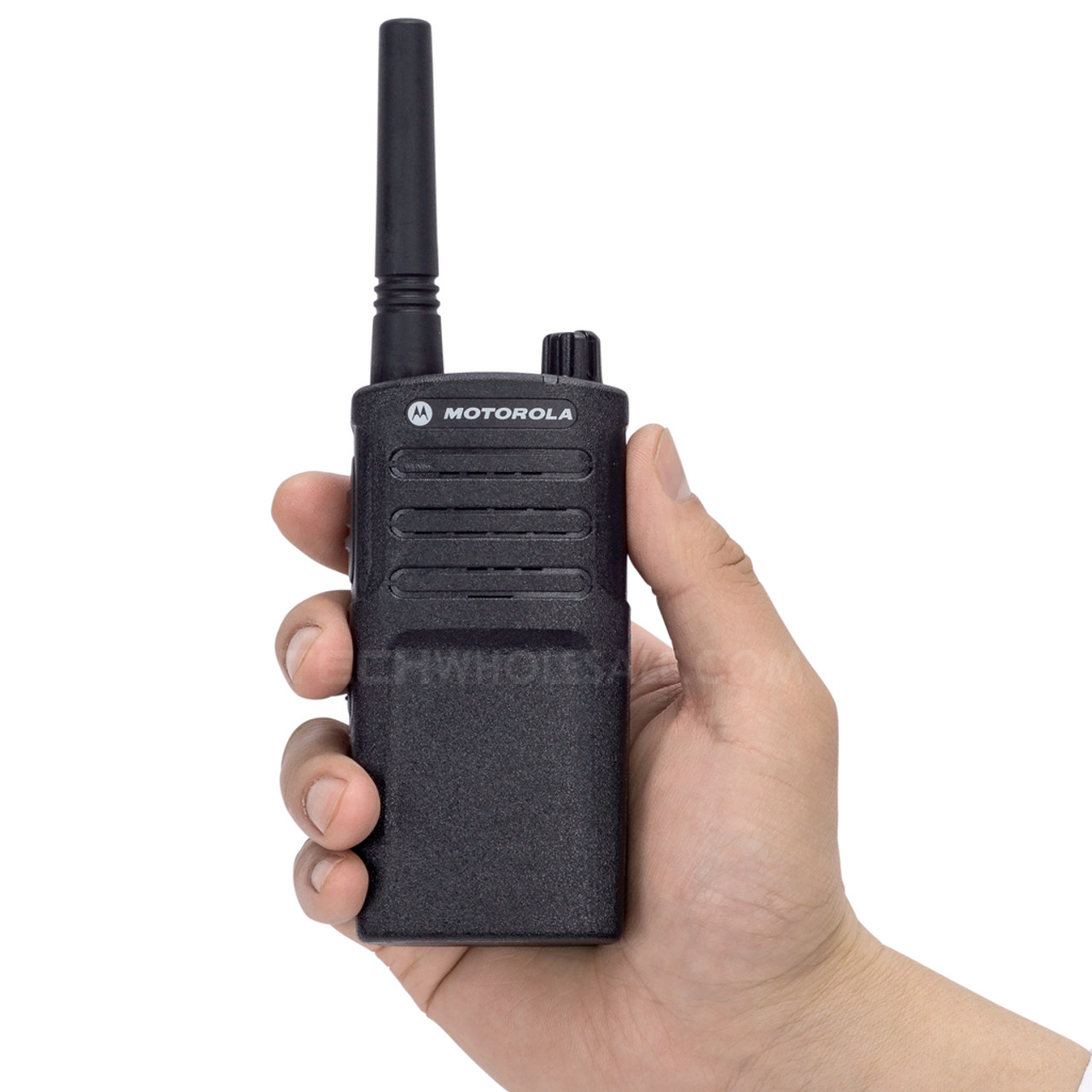
- Channels: 4
- Power: 2 watts, UHF (450–470 MHz)
- Coverage: Up to 250,000 sq ft
A compact, reliable option for smaller crews operating in a defined area. Simple to use, durable, and a great entry point for teams that don't need a large channel count.

- Channels: 8
- Power: 2 watts, UHF
- Coverage: 250,000 sq ft / up to 25 floors
One of the most durable radios in its class. The built-in display makes it easy to navigate channels, and the rugged construction handles the kind of daily punishment that comes with forestry work. A step up from the RMU2040 with more channels and better usability.
Best for larger forestry sites
- Channels: 16
- Power: 4 watts, VHF
- Coverage: 400,000 sq ft indoors / 2–3 miles outdoors
A workhorse for large-scale operations. The IP54 rating offers solid weather resistance, while pre-programmed text messages and voice announcements add communication flexibility for complex crews. This is a strong choice for teams spread across wide terrain.

- Channels: 50
- Power: 1 watt digital (equivalent to ~4 watts analog)
- Coverage: 350,000 sq ft
The DTR700 is a standout because of its flexible call options, including call-all and private reply, make it easy to manage communication across a large, multi-team operation.
Best for unlimited coverage across multiple locations
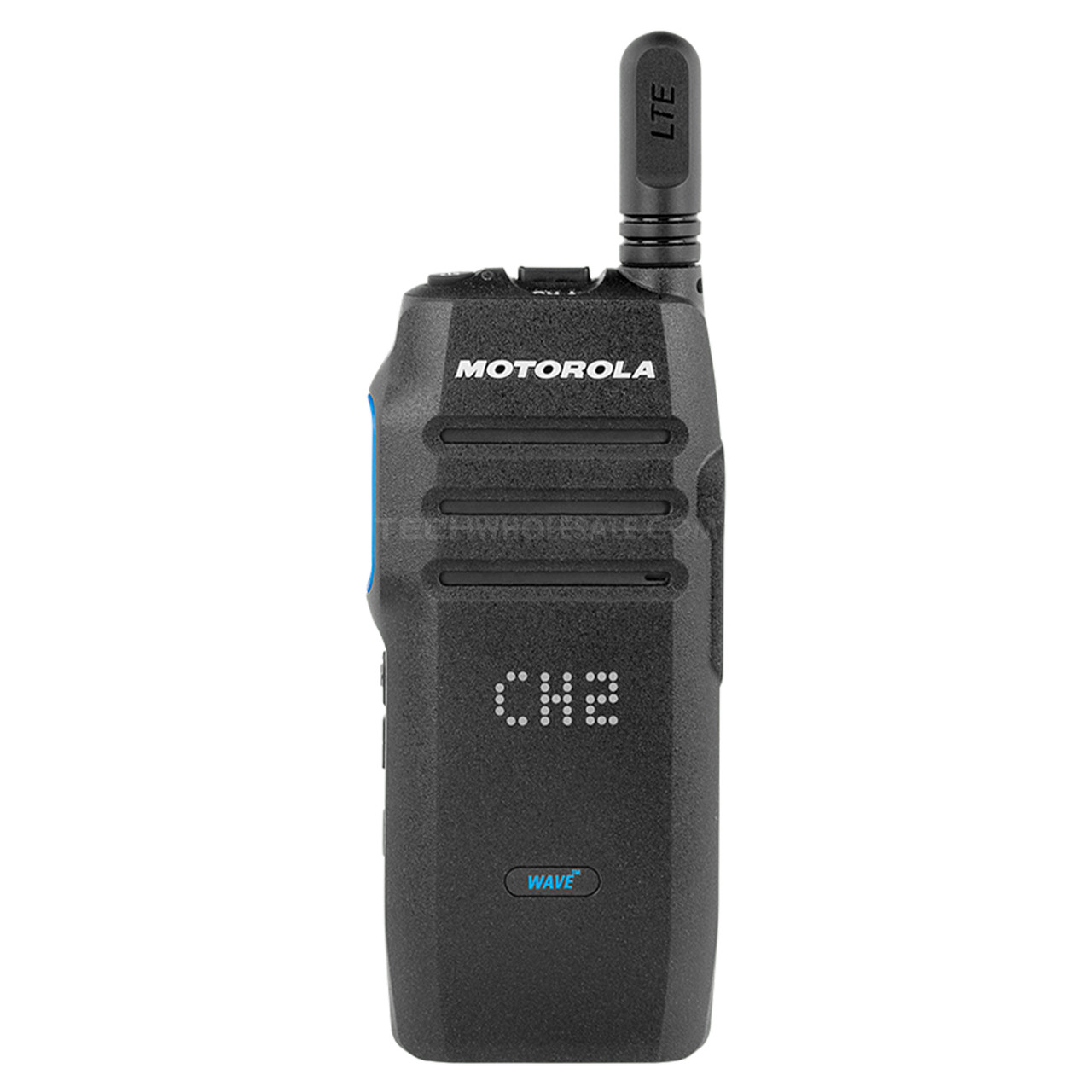
For forestry operations that span multiple sites, regions, or even states, the WAVE PTX series is in a league of its own. Key highlights include:
- Unlimited coverage via LTE and Wi-Fi
- GPS tracking to locate staff in real time
- Emergency button for crew safety
- App integration—talk to radios directly from your phone
- Antenna-to-antenna fallback coverage (350,000 sq ft) if cell/Wi-Fi service goes down
The WAVE PTX does require a monthly per-device subscription, but lease-to-own payment options are available to reduce upfront costs. For large or geographically dispersed teams, it's the most capable solution on the market.
Frequently asked questions
What's the difference between UHF and VHF for forestry use?
UHF (Ultra High Frequency) is generally better for environments with obstacles—like dense forest, hills, or structures—because the signal penetrates more effectively. VHF (Very High Frequency) can cover longer distances in open terrain. For most forestry applications, UHF is the preferred choice.
Can I use these radios with earpieces or shoulder mics?
Yes. Most Motorola and Kenwood models are compatible with a range of accessories, including shoulder mics, earpieces, and speaker-mic combinations. For forestry work where hands-free communication is important, we strongly recommend pairing your radio with a compatible accessory.
What happens if a radio gets dropped or submerged?
Models with IP67 or IP68 ratings are designed for exactly this. IP67 means the radio can withstand temporary submersion in up to 1 meter of water for 30 minutes. IP68 offers even greater protection. For forestry environments, we recommend nothing less than IP67.
Ready to equip your forestry team?
Choosing the right radio comes down to three things: your site size, your team's safety requirements, and how much you want to spend upfront versus over time. Get those three factors right, and you'll have a communication setup that runs reliably for years.
We back every purchase with lifetime tech support and have over 25 years of experience in the two-way radio industry. If you're not sure which model fits your operation, reach out—our team is here to help you make the right call, not just any call.