

The best two-way radio for distilleries are business-grade UHF radios with a rugged build and loud speaker. The right walkie talkie depends on your distillery layout and team size.
Which walkie talkie fits your distillery?
The best two-way radios for most distilleries are the Motorola RMU2040, Motorola Curve, and the Motorola WAVE PTX Series for multi-site operations. However, distilleries with active still rooms or fermentation areas that qualify as Class I hazardous locations under NFPA 70 (the National Electrical Code) require intrinsically safe certified radios in those zones. The right radio depends on your facility's square footage, wall construction, team structure, and whether any areas have been formally classified as hazardous locations.
Tech Wholesale has supplied two-way radios to distilleries, breweries, and food and beverage production facilities since 1997. This guide covers what to look for, which models work best, and what compliance requirements apply to your facility.
Why Distilleries Have Unique Two-Way Radio Requirements
Distilleries are not simply industrial facilities with a retail component. They are multi-zone operations that simultaneously run production, warehousing, logistics, and guest services — often across buildings with thick masonry walls, high ceilings, and significant ambient noise. The communication demands at each zone are different, and the physical environment is more demanding than most.
Production zones are loud and physically hazardous. Boiling mash, pressurized transfer lines, running pumps, clanking bottling equipment, and forklift traffic produce sustained ambient noise levels that make unassisted voice communication unreliable. A radio with a noise-canceling microphone and strong speaker output is not optional — it is the baseline.
Fermentation and still rooms can be classified hazardous locations. The distillation process concentrates ethanol to concentrations as high as 94.8% ABV. Ethanol vapor is flammable, and grain milling produces combustible dust. Under NFPA 70 (the National Electrical Code), Article 500, areas where flammable vapor or combustible dust may be present under normal or abnormal conditions are formally classified as Class I or Class II hazardous locations. In those zones, any electrical device — including a two-way radio — must meet the appropriate intrinsic safety certification. An uncertified radio operated in a classified zone creates ignition risk and potential OSHA liability under 29 CFR 1910.307.
Barrel warehouses present RF penetration challenges. Rickhouses filled with aging barrels — wood, metal hardware, and dense stacking configurations — absorb and reflect radio frequency signals. Distilleries with large rickhouse footprints or multiple warehouse buildings frequently experience dead zones with lower-power or consumer-grade radios.
Tasting rooms require a different communication posture. Guest-facing staff in tasting rooms and on tours need radios that are quiet, discreet, and unobtrusive. A bulky radio with an audible speaker that interrupts a tasting is a guest experience problem. For tasting room staff, compact radios with earpiece capability are the correct choice.
Multi-zone staffing creates coordination complexity. A distillery running concurrent production, bottling, warehousing, and tasting room operations may have five or more distinct teams with no overlap in communication needs. Without dedicated channels for each function, radio traffic from one department floods others — and critical production alerts get buried under tour coordination chatter.
What to Look for in a Distillery Two-Way Radio
Coverage and RF Penetration
Matching radio output to your building size and construction is the most important hardware decision. Thick poured concrete walls common in older distillery buildings absorb UHF signal more aggressively than standard commercial construction. A facility that would normally require a 1-watt radio may need 2 watts when walls are concrete masonry. Digital radios operating at 900 MHz penetrate dense structures more efficiently than UHF analog at comparable wattage, which is why digital is increasingly the preferred technology for large or architecturally dense production facilities.
Intrinsic Safety Certification
If any area of your facility has been formally classified as a hazardous location under NEC Article 500, radios operated in that area must carry the appropriate intrinsic safety certification. This is not a best practice — it is a compliance requirement. Intrinsically safe (IS) certified radios are designed to limit electrical and thermal energy to levels that cannot ignite the surrounding atmosphere. Standard business radios, regardless of how rugged they are, do not qualify. See the Hazardous Location Compliance section below for full detail.
Durability Rating
Distilleries are hard on equipment. Spills, humidity, heat, and drops are routine. Look for radios that meet MIL-STD-810 standards for shock, vibration, and temperature resistance, and carry at minimum an IP54 ingress protection rating. IP54 indicates resistance to dust and water splash from any direction. For areas with direct water spray or wash-down exposure, IP55 is a stronger baseline.
Battery Life
Production shifts at distilleries regularly run 10 to 14 hours, and late-night or overnight distillation runs are common. A radio rated for 10 to 12 hours of standard use should be considered the minimum. For double shifts or extended production runs, multi-unit charging cradles allow hot-swap battery replacement without taking a radio off the floor.
Number of Channels
Each department that communicates independently needs its own channel. A distillery running production, maintenance, bottling, warehousing, and tasting room operations simultaneously needs at least five discrete channels. Radios with fewer than four channels are inadequate for any multi-department distillery operation. Ten or more channels provide room to expand as operations grow.
Audio Performance in Noisy Environments
Look for radios with noise-canceling microphone arrays and a minimum speaker output sufficient to be heard clearly on a bottling floor. VOX (voice-activated transmission) is a practical feature for staff who cannot safely take a hand off a piece of equipment to key a radio. For tasting room staff, earpiece compatibility provides discreet reception without speaker audio disturbing guests.
Emergency Alert Features
Lone workers in barrel warehouses or remote still rooms during off-hours are a genuine safety risk. Radios with dedicated emergency alert buttons or man-down detection provide a safety net for isolated staff. These features are available on select Motorola and Kenwood professional-grade models.
Recommended Two-Way Radios for Distilleries
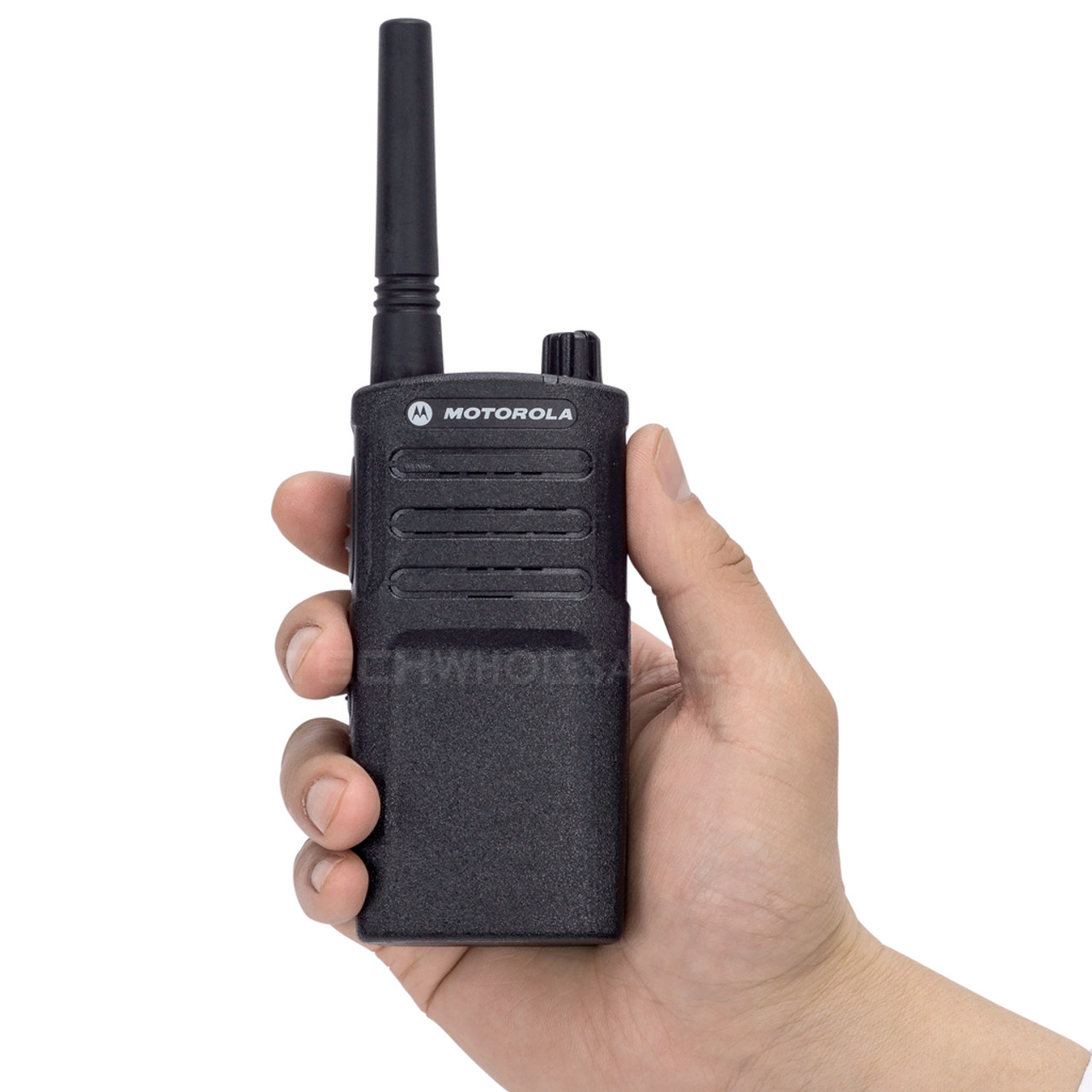
1. Motorola RMU2040 — Best for Small Distilleries (Under 250,000 sq ft)
| Specification | Detail |
|---|---|
| Frequency | UHF (450–470 MHz) |
| Power | 2 watts |
| Channels | 4 |
| Indoor Coverage | Up to 250,000 sq ft / 20 floors |
| Battery Life | ~10 hours (lithium-ion) |
| Durability | MIL-STD-810, IP55 rated |
The RMU2040 is a rugged 2-watt UHF radio built for commercial production environments. Its IP55 rating means it handles water jets and dust ingress — practical for distilleries where hose-down cleaning of production areas is routine. The MIL-STD-810 construction handles drops and the physical wear of a production shift.
Why it fits small distilleries specifically
- 2-watt UHF output provides reliable penetration through typical masonry and wood-frame distillery walls within a single-campus footprint
- IP55 rating — a step above the IP54 minimum — handles direct water spray common in production and bottling areas
- MIL-STD-810 certification confirms resistance to shock, vibration, and temperature extremes tested to military standards
- 219 privacy codes protect against signal bleed from nearby radio users
- Ships with a standing charging tray, wall charger, and belt clip; no additional accessories required to deploy
- VOX (hands-free voice-activated transmission) is built in, which is practical for forklift operators and bottling line staff
Limitation to know: Four channels is sufficient for small operations with up to four departments. A distillery that runs five or more simultaneous department lines should step up to a radio with more channel capacity.
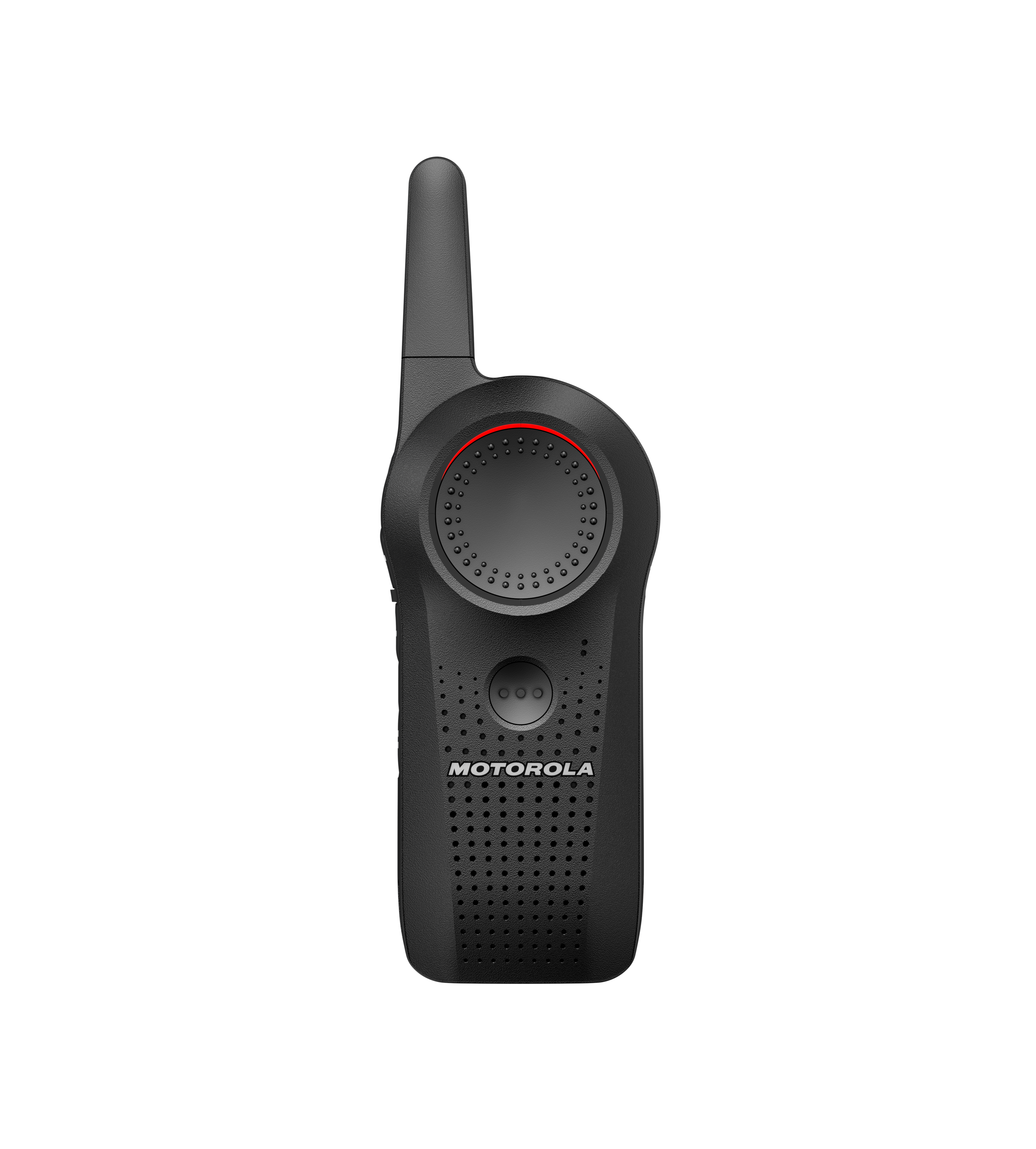
2. Motorola Curve — Best for Mid-to-Large Distilleries (Up to 300,000 sq ft)
| Specification | Detail |
|---|---|
| Frequency | Digital 900 MHz (902–928 MHz) |
| Power | 1 watt digital (equivalent to ~4 watts analog) |
| Channels | 10 |
| Indoor Coverage | Up to 300,000 sq ft / 20 floors |
| Battery Life | ~10–12 hours |
| Durability | MIL-STD-810 compliant, water-resistant |
| Warranty | 2-year manufacturer warranty |
The Motorola Curve operates on a 900 MHz digital signal using frequency hopping spread spectrum (FHSS) technology, which provides two distinct advantages for distillery operations. Its digital signal penetrates dense concrete and steel-frame structures more effectively than UHF analog at comparable wattage.
Why it fits mid-to-large distilleries specifically
- 10 channels support full department segmentation across production, maintenance, bottling, warehouse, tasting room, security, and management
- 900 MHz digital signal provides superior penetration through the thick concrete and wood construction common in historic distillery buildings
- Digital audio processing delivers clearer transmission on a loud production floor compared to analog
- FHSS technology provides inherent signal privacy and resistance to interference from other radio users on the same property
- MIL-STD-810 compliant construction handles the physical demands of a production shift
Limitation to know: The Motorola Curve is not intrinsically safe certified and cannot be operated in formally classified Class I or Class II hazardous locations. For still rooms or grain milling areas that have been classified under NEC Article 500, see the intrinsically safe options in the Hazardous Location Compliance section.
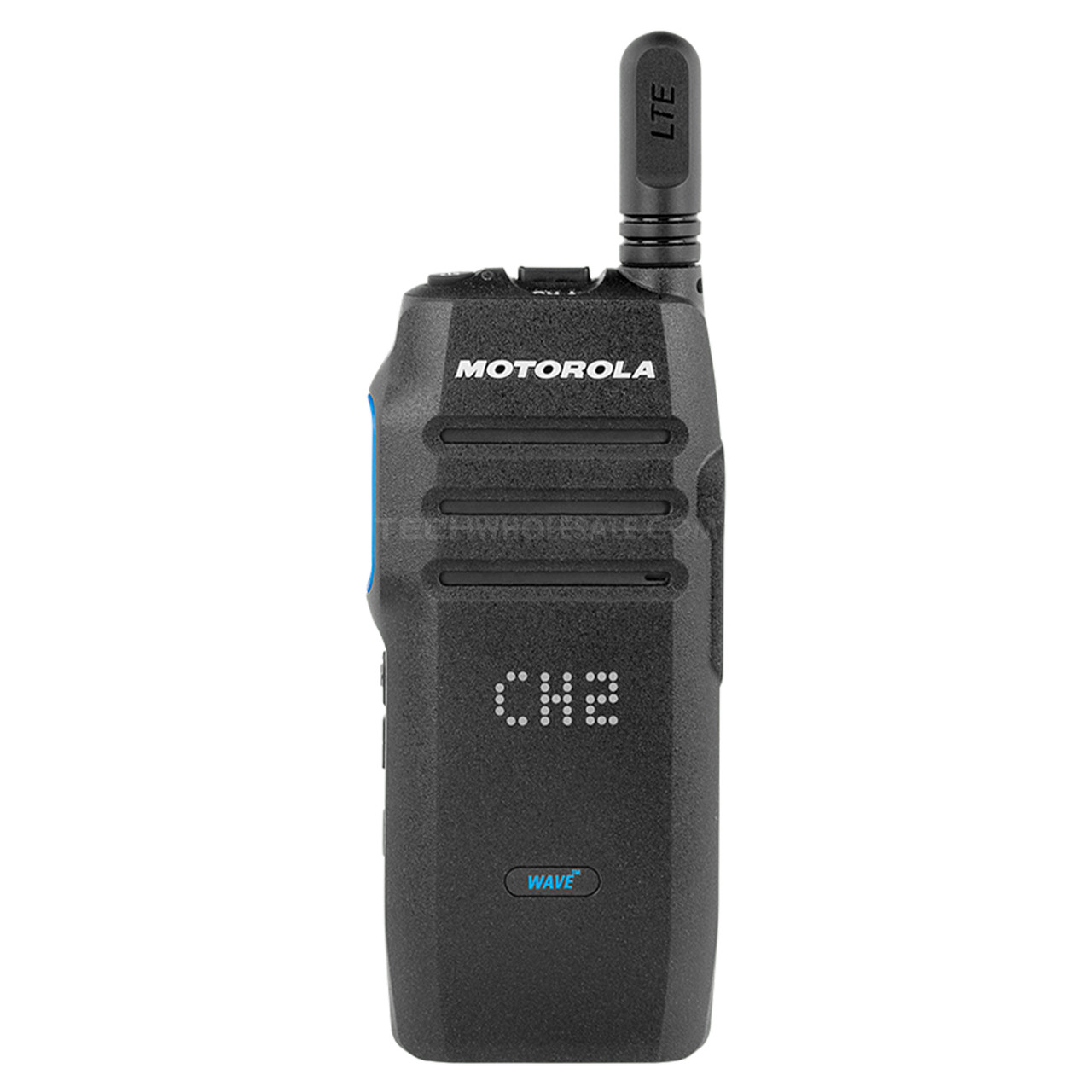
3. Motorola WAVE PTX Series — Best for Multi-Location and Multi-Building Operations
| Specification | Detail |
|---|---|
| Coverage | Unlimited via LTE / Wi-Fi |
| Backup Coverage | Up to 350,000 sq ft antenna-to-antenna when cellular/Wi-Fi is unavailable |
| Extras | GPS tracking, emergency alert button, smartphone app compatibility |
| Pricing Model | Monthly subscription per device; lease-to-own options available |
When a distillery spans multiple buildings, off-site barrel storage, or distribution locations, conventional radio range is no longer the relevant constraint. The WAVE PTX series communicates over LTE and Wi-Fi networks, effectively extending radio coverage to any location with cellular signal. A distillery manager can reach a delivery driver across town on the same push-to-talk system used to coordinate the bottling floor.
Why it fits multi-location operations specifically
- LTE/Wi-Fi operation removes the coverage ceiling entirely for geographically distributed operations
- GPS tracking allows staff location visibility across large rural or campus-style properties
- Emergency button provides a safety layer for lone workers at remote storage or production sites
- If cellular or Wi-Fi signal drops, the radio automatically reverts to antenna-to-antenna mode, providing up to 350,000 sq ft of coverage as a failsafe
- Smartphone app compatibility allows non-radio team members (distribution, sales, management) to join the communication system without a dedicated device
Hazardous Location Compliance for Distillery Radios
This is the compliance dimension of distillery radio selection that is most frequently misunderstood, and the one with the most serious safety consequences if it is ignored.
Why Distilleries Have Classified Hazardous Locations
Under NFPA 70 (the National Electrical Code), Article 500, any area where flammable vapor, gas, or combustible dust is present under normal or abnormal operating conditions must be formally classified as a hazardous location. Distilleries typically have both types:
- Class I (flammable vapor/gas): Active still rooms, areas surrounding fermentation tanks, and spirits transfer lines where ethanol vapor may be present. Still areas where distillate concentrations can reach up to 94.8% ABV represent the highest-risk Class I environments.
- Class II (combustible dust): Grain milling areas and areas where milled grain is handled or stored. Grain dust is combustible, and milling operations release fine particles into the air that meet the threshold for Class II classification.
The extent of each classified location — where it begins and ends spatially — must be determined through a formal hazardous area classification study conducted by a qualified professional. Not every room in a distillery is a classified hazardous location. Tasting rooms, offices, and areas with adequate ventilation that maintain alcohol vapor concentrations below the lower explosive limit may be "not classified" and therefore safe for standard commercial radios.
What the Regulations Require
OSHA 29 CFR 1910.307 requires that electrical equipment used in classified hazardous locations be specifically approved for that classification. This includes two-way radios. Operating an uncertified radio in a formally classified hazardous location creates ignition risk and OSHA liability. In the event of an incident, insurance coverage may also be at issue if uncertified equipment was in use at the time.
The National Electrical Code and NFPA regulate hazardous location classifications and require equipment to be rated for the specific Division and Group present. Compliance certification is issued by testing agencies such as Underwriters Laboratories (UL) and Factory Mutual (FM Approvals). Equipment must carry the certification marking to be used in the classified zone.
Intrinsically Safe Radio Options
For distillery areas formally classified as Class I or Class II hazardous locations, Tech Wholesale offers Kenwood intrinsically safe radios, including:
- Kenwood ProTalk NX-P1300ISNUK — UHF, 2–3 watts, intrinsically safe certified
- Kenwood ProTalk NX-P12ISNVK — VHF, 5 watts, 64 channels, intrinsically safe certified
Important: All accessories used with an intrinsically safe radio — batteries, earpieces, speaker microphones — must carry the same certification as the radio. Aftermarket accessories, even those marketed as "intrinsically safe," will void the radio's certification if they are not part of the approved accessory set for that specific model. Batteries should never be charged within a classified hazardous location.
If you are not certain whether any areas of your facility qualify as classified hazardous locations, consult a licensed electrical engineer or process safety professional. Tech Wholesale can assist with radio selection once the classification is determined.
Suggested Channel Structure for Distillery Teams
For a distillery running concurrent production, bottling, warehousing, and guest services, the following channel structure provides clean role-based segmentation:
| Channel | Assigned Team | Use |
|---|---|---|
| 1 | Production | Still operators, mash tun and fermentation tank coordination, distillation process alerts |
| 2 | Maintenance | Equipment checks, repair dispatch, emergency repair escalation |
| 3 | Bottling & Packaging | Bottling line coordination, labeling, changeovers, quality hold calls |
| 4 | Warehouse & Logistics | Barrel inventory, raw material receiving, finished goods movement, forklift coordination |
| 5 | Guest Services | Tasting room staff, tour guides, retail floor coordination |
| 6 | Management / All-Call | Cross-department announcements, emergency broadcasts, shift change coordination |
Channels can also be used for private bilateral conversations without occupying a department channel: staff can direct a colleague to switch to a less-used channel for a direct exchange and return to the department channel when finished.
Coverage by Facility Size: Matching Radio to Operation
| Facility Type | Recommended Radio | Coverage Capacity |
|---|---|---|
| Small single-building distillery (under 250,000 sq ft) | Motorola RMU2040 | Up to 250,000 sq ft / 20 floors |
| Mid-to-large distillery with dense wall construction | Motorola Curve | Up to 300,000 sq ft / 20 floors |
| Multi-building campus or rural distillery with separate rickhouse buildings | Motorola WAVE PTX | Unlimited (LTE/Wi-Fi); 350,000 sq ft antenna backup |
| Classified hazardous locations (still rooms, grain milling) | Kenwood Intrinsically Safe Series | Varies by model; consult for site-specific recommendation |
For buildings with poured concrete or masonry walls significantly thicker than standard commercial construction, consider stepping up one tier in power or switching to digital technology regardless of raw square footage. Wall composition affects RF penetration more significantly than floor area in many distillery configurations.
Frequently Asked Questions
Do distilleries need intrinsically safe two-way radios?
It depends on whether any areas of your facility have been formally classified as hazardous locations under NFPA 70 (National Electrical Code), Article 500. Still rooms where ethanol vapor concentrations may be present under normal operating conditions, and grain milling areas where combustible dust is generated, are common candidates for Class I and Class II hazardous location classification, respectively. If those areas have been classified, radios operated within them must carry the appropriate intrinsic safety certification. Tasting rooms, offices, warehouses, and adequately ventilated areas that do not meet the threshold for classification can use standard commercial radios. If you are uncertain whether your facility has any classified areas, a licensed electrical engineer or process safety professional can conduct a hazardous area classification study.
How much radio range does a distillery need?
For a single-building distillery under 250,000 sq ft with standard wall construction, a 2-watt UHF radio like the Motorola RMU2040 provides adequate coverage with signal margin to spare. For larger facilities, or those with thick concrete or masonry walls, a digital radio like the Motorola Curve — which provides the equivalent of approximately 4 watts of analog output through its 900 MHz digital signal — covers up to 300,000 sq ft. For multi-building campuses or operations with off-site barrel storage or distribution locations, a cellular-connected radio like the Motorola WAVE PTX removes the coverage ceiling entirely.
How long does the battery last on a distillery radio?
The commercial-grade radios recommended for distilleries carry 10 to 12 hour battery ratings under typical transmission loads. For operations running extended shifts or overnight distillation runs, multi-unit charging cradles allow hot-swap battery replacement without taking a radio offline. Motorola and Kenwood commercial-grade batteries are tested to five or more years of regular field use.
What IP or durability rating should a distillery radio have?
At minimum, look for an IP54 rating, which indicates resistance to dust ingress and water splash from any direction. For areas with regular hose-down cleaning or direct water spray — common in production and bottling environments — IP55 is a better baseline. The Motorola RMU2040 carries an IP55 rating. MIL-STD-810 certification is an additional indicator of resistance to shock, vibration, and temperature extremes that production environments impose.
How many channels does a distillery need?
A distillery running production, maintenance, bottling, warehousing, and guest services simultaneously needs at minimum five dedicated channels to prevent inter-department radio traffic from interfering with operations. A sixth management or all-call channel is practical for shift coordination and emergency broadcasts. Radios with four or fewer channels are undersized for any multi-department operation. The Motorola Curve's 10-channel capacity provides room for current operations and expansion without requiring a radio upgrade.
Can tour guides and tasting room staff use the same radios as production staff?
Yes, as long as the radio operates on a dedicated tasting room channel separate from production. However, form factor matters for guest-facing staff. A compact radio worn discreetly with an earpiece is far less intrusive in a tasting setting than a full-size production radio with an audible speaker. If your operation runs tasting room and tour operations simultaneously with production, it is worth considering a radio that supports earpiece accessories for guest-services staff while production staff use the same radio model with the built-in speaker.
What happens if a radio breaks during production?
All models sold by Tech Wholesale come with the full manufacturer warranty — typically two years for commercial-grade Motorola and Kenwood models. Tech Wholesale also provides lifetime technical support on every purchase. If a radio fails outside the warranty period, our team can help troubleshoot or advise on a replacement. For operations where radio failure during a shift would cause meaningful disruption, maintaining one or two spare units is standard practice in production environments.
Why Buy from TechWholesale.com
Tech Wholesale has been an authorized Motorola and Kenwood dealer since 1997, supplying professional two-way radios to food and beverage production facilities, industrial operations, and hospitality businesses across the country. Every radio we sell carries the full manufacturer warranty and qualifies for manufacturer service and repair. We do not carry gray market inventory.
What sets us apart
- Lifetime technical support included with every purchase — call or email our team for the life of your radio fleet, not just through the warranty period
- Free quotes for large teams— request a custom quote
- Authorized dealer status for Motorola and Kenwood — full manufacturer warranty on every unit
- Free shipping on qualifying orders
- Experienced product guidance — if a less expensive radio fits your application, we will tell you; we do not push higher-margin products when they are not the right fit
If you are unsure which radio fits your distillery's configuration, use our Find My Radio tool or contact us directly. We will ask the right questions — square footage, wall construction, number of departments, whether any areas may be classified hazardous locations — and provide a specific recommendation.
1-888-925-5982 • Service@TechWholesale.com
Related Reading
On TechWholesale.com
- Kenwood Intrinsically Safe Two-Way Radios
- Intrinsically Safe Radios — Full Selection
- UHF vs VHF — Frequencies Explained
- Frequency Hopping Spread Spectrum (FHSS) Explained
- VOX Feature Explained
- Lone Worker / Man Down Functionality
- Privacy Codes — Eliminate Outside Interference
- Two-Way Radio FAQ
External Resources
- Process Safety in Distilleries: Electrical Classification — Bluefield Process Safety
- NFPA 70: National Electrical Code (Article 500 — Hazardous Locations) — NFPA.org
- OSHA 29 CFR 1910.307: Electrical — Hazardous (Classified) Locations — OSHA.gov
- TTB Distilled Spirits Resources — U.S. Alcohol and Tobacco Tax and Trade Bureau
Article by Kristin Wood, a two-way radio consultant @ Tech Wholesale | Authorized Motorola & Kenwood Dealer Since 1997 | Last Updated: May 2026