
The Best Two-Way Radios for Convention Centers
Buy the wrong radio for your convention team, and you'll know about it fast. Static-filled audio, dead zones on the second floor, batteries dying mid-shift—these aren't minor inconveniences. At a convention, poor communication creates real problems that ripple across your entire event.
The registration line stretches around the lobby with no one to direct overflow. A keynote speaker arrives and no one knows where to escort her. A vendor is stuck at the loading dock waiting for someone—anyone—to unlock the door. Everyone needs answers, and they need them now.
We've been selling two-way radios since 1997, and we've worked with thousands of convention teams across the country. This guide cuts through the noise. We'll walk you through what to look for in a convention radio, how to match your choice to your venue size, and which specific models we recommend—from smaller events to large multi-building operations.
We don't want you to buy a radio just because you like the name or the price. We want you to make an educated decision and choose the perfect radio for your team.
What Makes a Great Convention Radio?
Not all radios are built for the demands of a busy convention floor. Here are the features that matter most:
- Clear Audio Quality: Large, crowded venues are loud. Your radios need to cut through background noise with crisp, reliable sound every time.
- Long Battery Life: Staff work long shifts. Radios that last 10–14 hours prevent costly mid-event downtime.
- Multiple Channels: Different departments—security, registration, logistics—need their own channels to stay organized and avoid cross-talk.
- Durability: Drops, bumps, and constant use are part of the job. Look for radios built to handle it.
- Lightweight and Comfortable: Staff are on their feet all day. Compact radios with belt clips or earpieces make a real difference over a 10-hour shift.
- Hands-Free Accessories: Headsets or earpieces with PTT (push-to-talk) or VOX (voice-activated transmission) let staff multitask without fumbling.
- Extended Range: Whether you're covering one massive convention hall or multiple connected buildings, your radios need to keep up.
- Privacy Codes: Reduces interference from other nearby users or events happening in the same venue.
- Emergency Features: An emergency alert button or lone worker mode adds a critical layer of safety for security and medical teams.
Coverage: Matching Radio Power to Your Venue
One of the most common mistakes convention teams make is buying a radio without considering coverage requirements. Too little power means dead zones and dropped conversations. Too much, and you're overpaying for capability you don't need.
Here's a simple breakdown:
- Smaller conventions (up to 250,000 sq ft): 2 watts of power is sufficient. These radios handle multi-floor buildings well and provide reliable coverage throughout.
- Larger conventions or multiple buildings (up to 350,000–400,000 sq ft): Step up to 3–4 watts on analog, or 1 watt on digital, which is equivalent to roughly 4 watts analog. These radios push through thick walls and across longer distances.
- Thick concrete walls or unusually complex layouts: Go one watt stronger than you think you need.
- Unlimited coverage across multiple locations: Consider LTE and Wi-Fi-enabled radios like the Motorola WAVE PTX series, which remove traditional range limitations entirely.
Building materials matter. A glass-and-steel venue behaves very differently from a concrete exhibition hall. When in doubt, go stronger.
How Many Channels Do You Need?
Channels keep your teams organized. Instead of everyone talking over each other on one frequency, each department gets their own lane. Here's a recommended channel structure for convention operations:
- Event Operations – Coordination across departments, managing overall event flow
- Registration & Guest Services – Check-in, badge issues, attendee inquiries
- Security – Entrances, crowd control, incident response
- AV & Tech Support – Speaker coordination, equipment setup, troubleshooting
- Exhibitor Support – Vendor assistance, supplies, special requests
- Logistics & Facilities – Room setup, deliveries, cleaning crews
- VIP & Speaker Escorts – Ensuring key guests are in the right place at the right time
- Medical & First Aid – Health-related concerns and emergencies
Easy breezy. That's concise, direct communication.
Channels also enable private conversations. "Sarah, call Tom on channel two." Sarah and Tom handle their conversation without cluttering up the main channel for everyone else.
Why Brand Quality Matters
A cheap radio that fails mid-convention costs you far more than the money you saved. Motorola and Kenwood are the two most trusted brands in the two-way radio industry—and for good reason. Both are purpose-built for reliable communication, designed with durability in mind, and tested for five years of field use.
Their radios are intuitive enough that staff can pick them up and start using them with minimal training. They eliminate monthly cell phone plan costs, and most models come with a manufacturer warranty of one to three years depending on the model.
Our Top Two-Way Radio Picks for Conventions
These recommendations come from over 25 years of working directly with convention teams. Each model has a proven track record.
For Smaller Conventions

One of the most durable radios on the market—built to last.
- Channels: 8
- Power: 2 watts, UHF
- Coverage: Up to 250,000 sq ft / 25 floors
- Display screen for ease of use; extremely rugged build
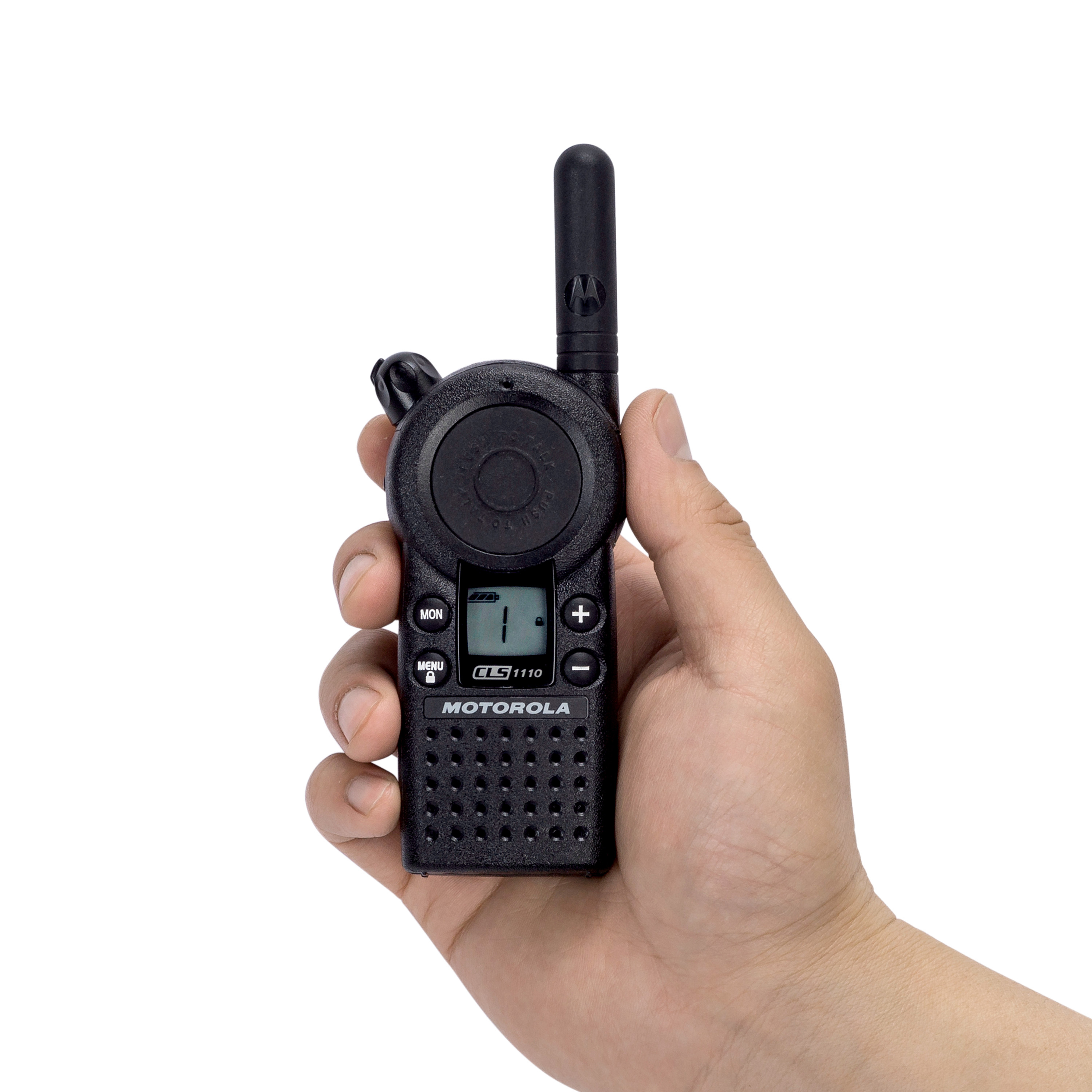
Compact, powerful, and refreshingly easy to use.
- Channels: 4
- Power: 2 watts, UHF
- Coverage: Up to 200,000 sq ft
- Display screen, VOX capability, great battery life
For Larger Conventions or Multiple Buildings

Digital performance with serious range.
- Channels: 50
- Power: 1 watt digital (equivalent to 4 watts analog)
- Coverage: Up to 350,000 sq ft
- Flexible call options, including call-all and private reply
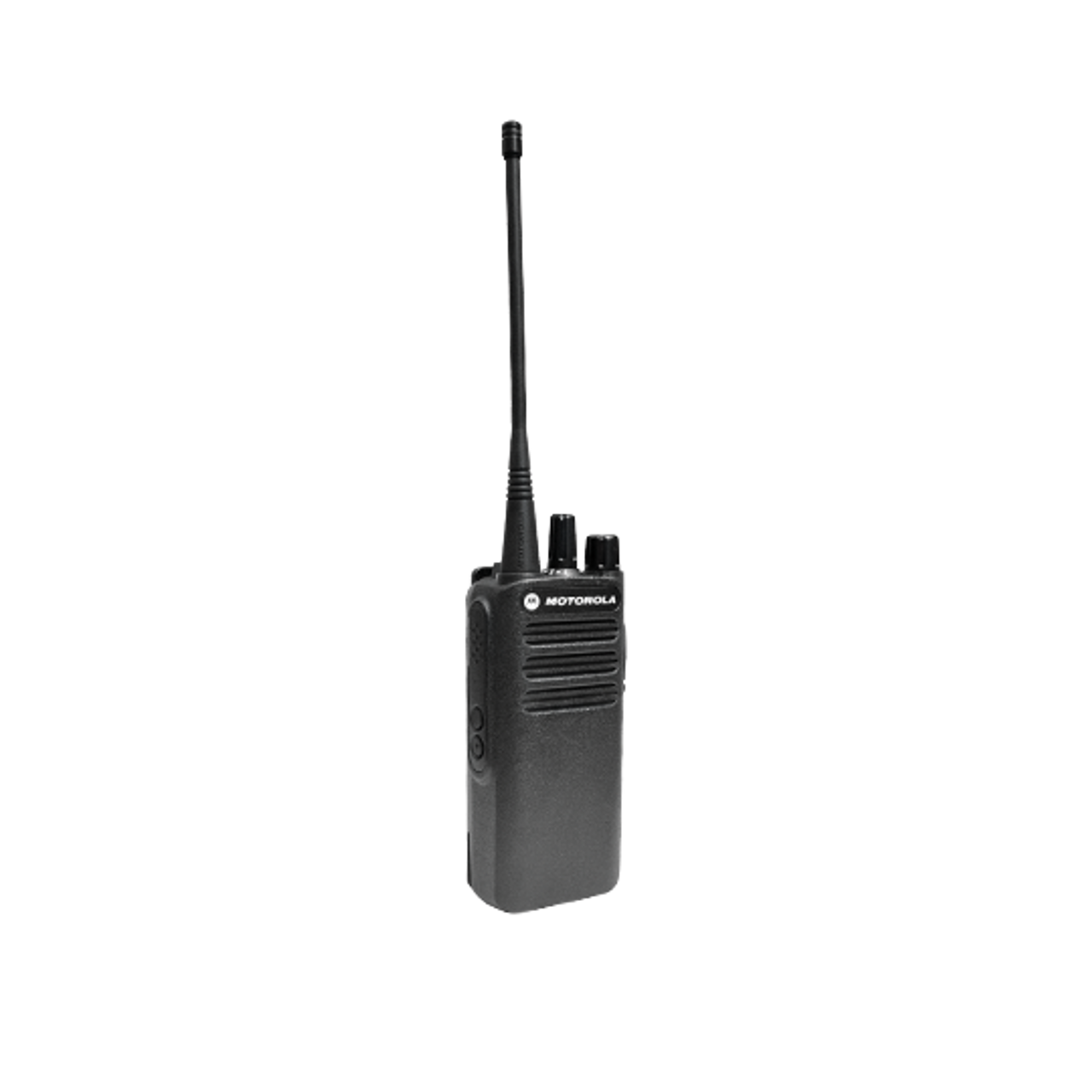
Heavy-duty coverage for the largest venues.
- Channels: 16
- Power: 4 watts, UHF
- Coverage: Up to 400,000 sq ft indoors / 2–3 miles outdoors (in good conditions)
- IP54-rated, pre-programmed text messages, voice announcements
For Unlimited Coverage (LTE & Wi-Fi Enabled)
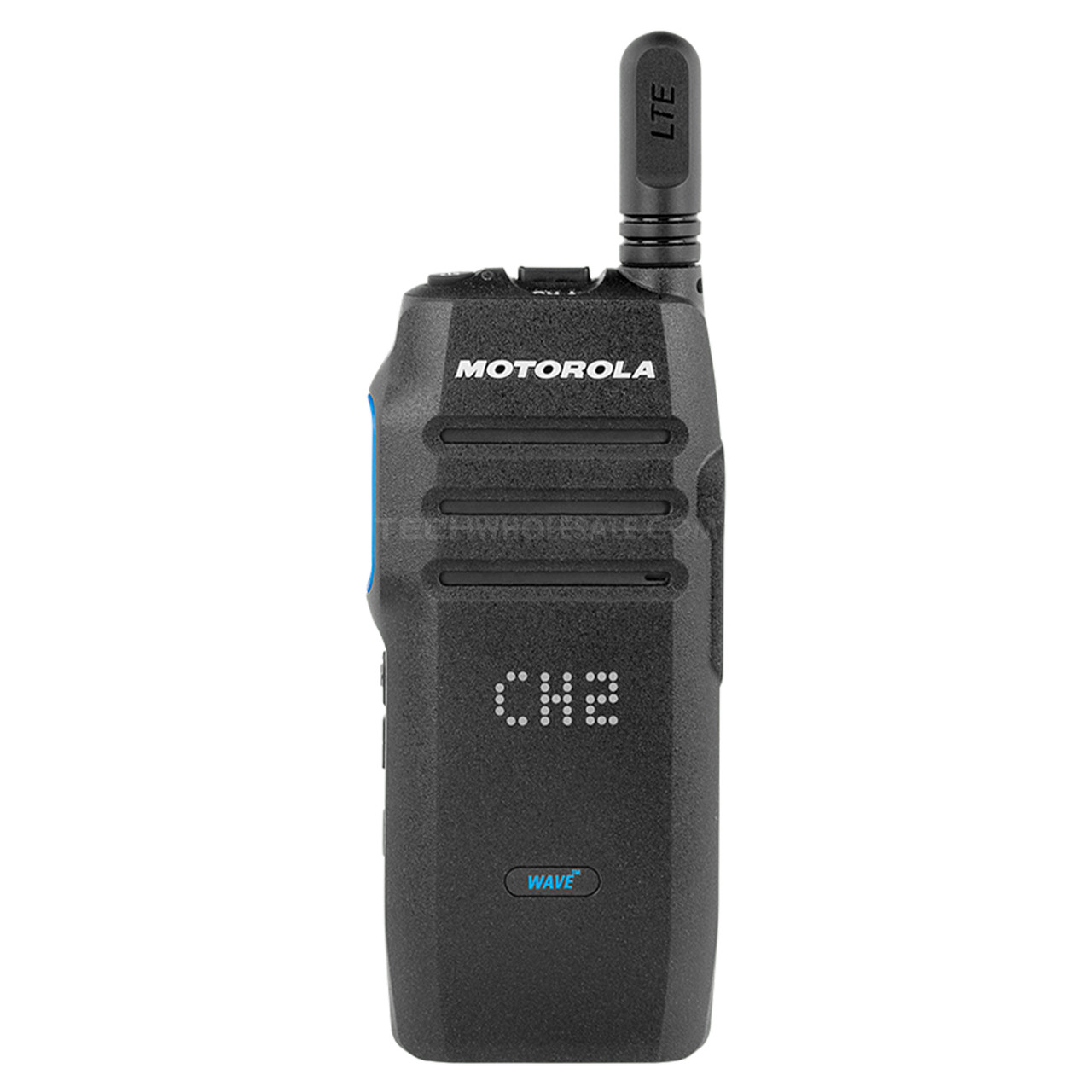
The go-to solution for operations spanning multiple locations, cities, or even states.
- Unlimited coverage through LTE and Wi-Fi
- GPS tracking to locate staff in real time
- Emergency button for staff safety
- Compatible with the WAVE PTX app—talk to your radios from a smartphone
- Requires a monthly subscription per device; lease-to-own options available
- Failsafe built in: when Wi-Fi or cellular service goes down, the radio operates antenna-to-antenna with up to 350,000 sq ft of coverage (except the TLK25 model)
What's the Best Two-Way Radio for Conventions Overall?
If you're looking for a single recommendation, the Motorola TLK25 stands out as the top pick for most convention teams. It's discreet, supports direct calling to individuals or groups, and delivers unlimited range using Wi-Fi and LTE.
That said, radios are not one-size-fits-all. The right choice depends on your venue size, team structure, and coverage needs. Use this guide as your starting point, and factor in the specifics of your event.
Frequently Asked Questions
Will radios work in a loud, crowded convention hall?
Yes. Quality convention radios are built with noise-canceling audio to cut through background noise.
Clear communication is non-negotiable at a busy event—it's one of the key features to look for when choosing a radio.
How long do the batteries last?
Most convention-grade radios support 10–14 hours on a single charge, covering a full event shift without interruption.
How many channels do I need for my convention team?
That depends on your team structure. Most conventions benefit from dedicated channels for security, registration, AV, logistics, and medical staff. Radios with 8–50 channels give you plenty of room to keep departments organized without cross-talk.
Do convention radios support hands-free use?
Yes. Headsets and earpieces with PTT (push-to-talk) or VOX (voice-activated) capabilities allow staff to communicate freely while keeping their hands available—essential for security and logistics teams.
Are there any safety features built in?
Many radios include an emergency alert button, which is especially valuable for security and medical teams. The Motorola TLK25 also offers GPS tracking for real-time staff location monitoring.
Ready to Equip Your Convention Team?
The right radios don't just prevent communication breakdowns—they keep your entire event running smoothly from the first check-in to the final session.
Tech Wholesale has been supplying two-way radios to conventions, event teams, and large venues since 1997. Our team brings over 25 years of hands-on industry experience to every order, and we include lifetime tech support with every purchase.
Request a Quote for Our Best Pricing
Not sure which radio is right for your convention? Reach out to our support team. We'll ask the right questions, walk you through your options, and make sure you get a solution that works—before, during, and long after your event.