
Best Two-Way Radios for Construction Sites
What is the best two-way radio for construction teams?
The Short Answer
Construction crews need two-way radios that can survive dust, drops, concrete environments, loud machinery, and long shifts without losing communication clarity. The best two-way radios for construction are rugged UHF business radios with high audio output, long battery life, and jobsite-ready durability ratings.
For most contractors, general contractors, site supervisors, electricians, HVAC teams, and crane operators, the best options are the Motorola RMU2040 for straightforward onsite communication, the Motorola CP100d-UA for scalable digital performance, and the Motorola BPR50dx-U for high-noise and high-demand construction environments.
If you think all two-way radios are the same, you're about to make a costly mistake on your next job site.
Buying the first radio you find might seem like the easy call. But cheap build quality, constant static, and dead zones across the site? That's a headache nobody needs when a concrete truck is pulling in and no one's cleared the path—or when a site supervisor can't reach the foreman on the other side of a reinforced concrete wall.
Clear, reliable communication keeps projects on schedule and crews safe. The wrong radio does the opposite.
That's why we've put together this guide—drawing from thousands of radios sold and years of hands-on experience—to help you choose a radio that's built for the job.
Why Construction Crews Need Dedicated Business Radios
Cell phones are unreliable on active jobsites. Workers wear gloves, operate heavy equipment, move between steel structures, and often work in areas with poor signal penetration. Delayed communication can create safety risks, slow productivity, and increase downtime.
Construction companies typically need radios that solve these operational problems:
- Clear communication around loud machinery
- Reliable signal inside steel and concrete structures
- Hands-free compatibility with headsets and shoulder mics
- Long battery life for 10- to 14-hour shifts
- Rugged housings that survive drops, dust, vibration, and rain
- Fast coordination between supervisors, subcontractors, operators, and safety personnel
- Multi-channel communication for separating crews or trades
- FCC-compliant business frequencies for reduced interference
UHF radios are generally preferred on construction sites because UHF frequencies penetrate buildings, concrete, and steel structures better than VHF radios.
Best Motorola Radios for Construction
Motorola RMU2040: Best for Small to Mid-Size Construction Sites
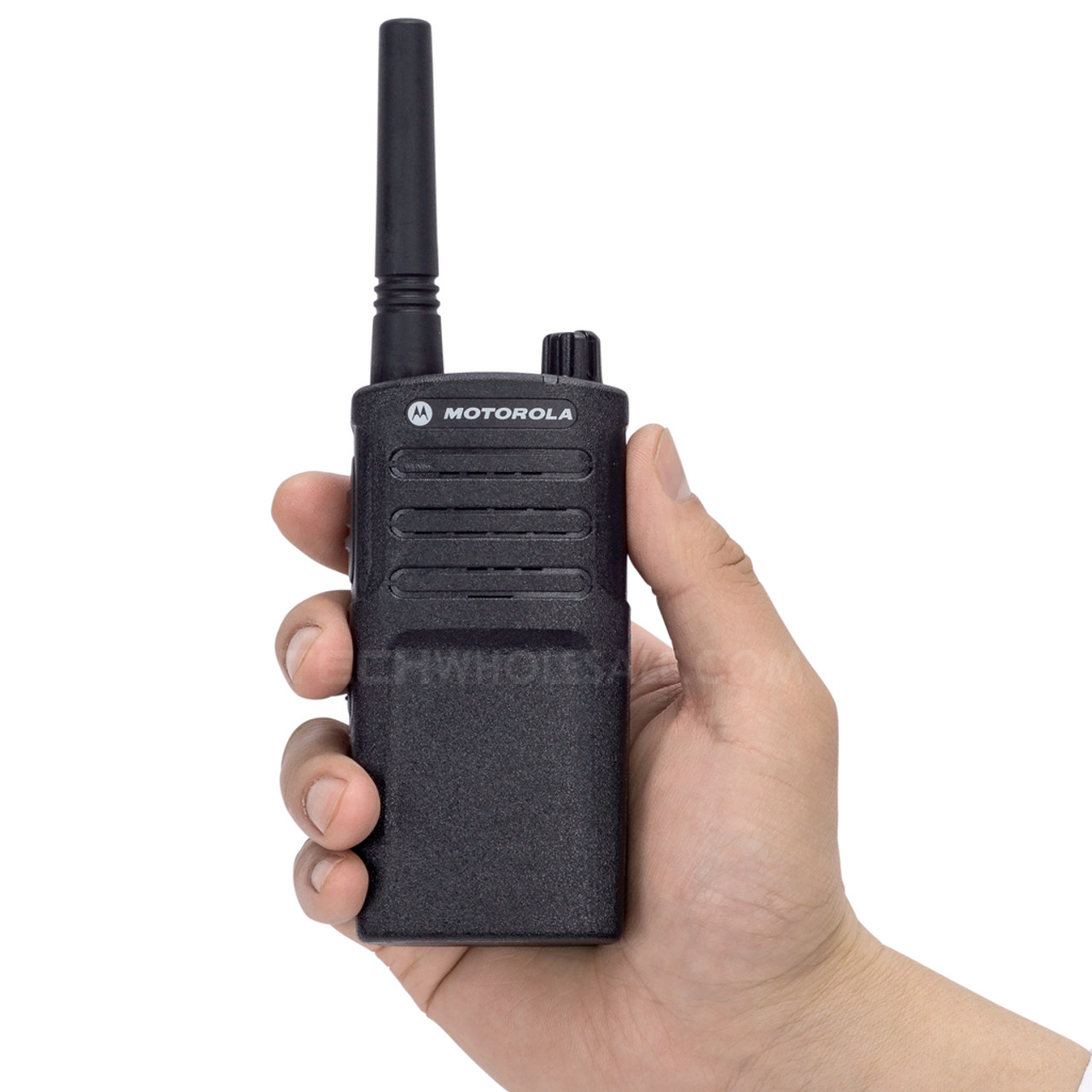
The Motorola RMU2040 is one of the most widely used construction radios for contractors who need dependable communication without the complexity of digital systems.
Why It Works Well on Construction Sites
The RMU2040 is designed specifically for harsh business environments. Its loud audio output helps workers hear transmissions over generators, compressors, saws, and heavy equipment. The compact design clips easily onto safety vests or tool belts.
Key Specifications
- UHF business radio
- 4 channels
- 2 watts transmit power
- Coverage up to approximately 250,000 square feet or 20 floors under optimal conditions
- IP55-rated dust and water resistance
- MIL-STD 810 durability testing
- Voice-activated transmission (VOX)
- Up to 15 hours battery life
- FCC Part 90 business compliant
Best Use Cases
- Residential construction
- Remodeling contractors
- Roofing crews
- Landscaping and outdoor trades
- Small commercial construction projects
- Concrete and framing crews
Operational Advantages
The RMU2040 is ideal when simplicity matters. Workers can operate it with gloves, and supervisors can deploy radios quickly without advanced programming requirements.
Recommended Accessories
Motorola CP100d-UA: Best Digital Radio for Growing Construction Companies
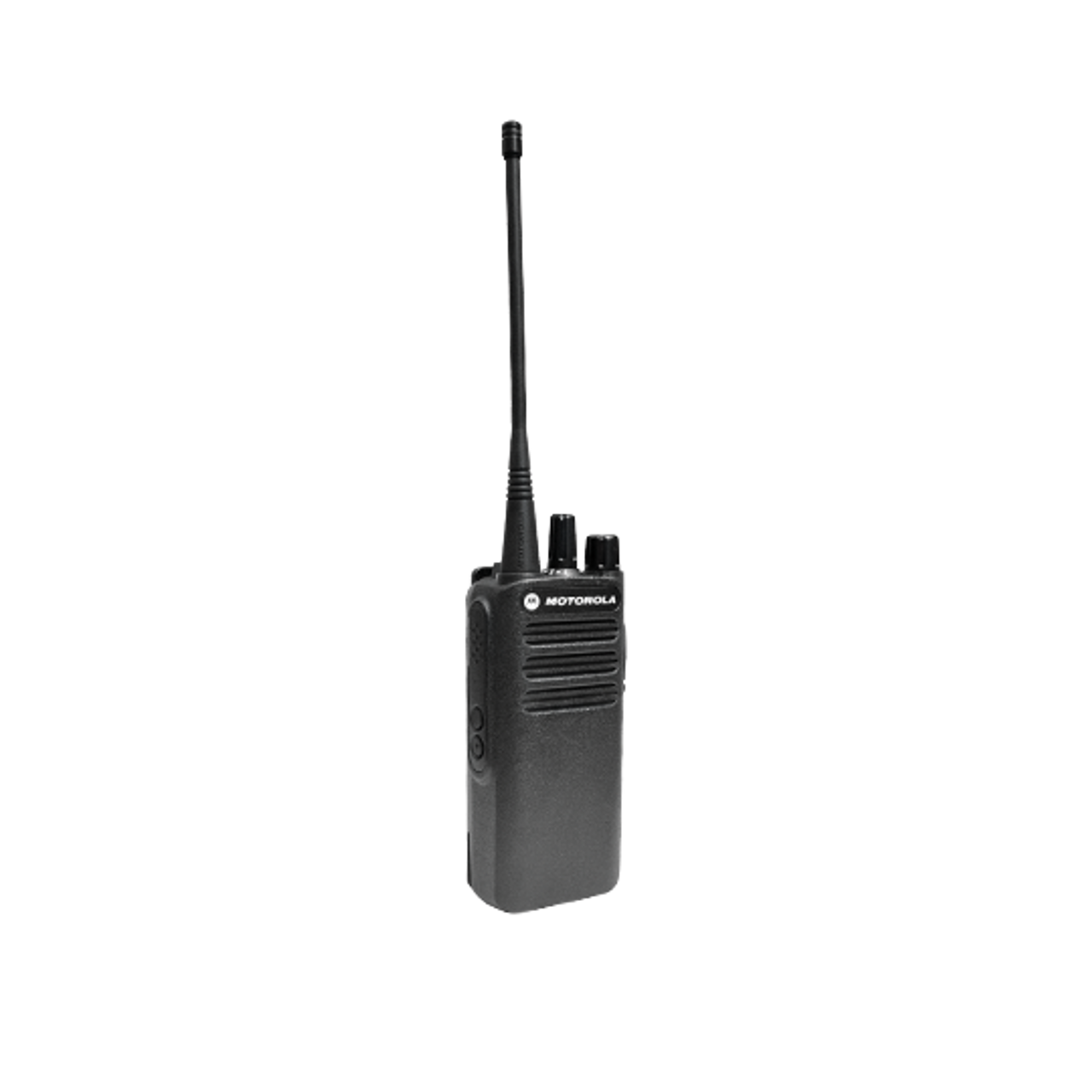
The Motorola CP100d-UA is one of the best construction radios for companies transitioning from analog to digital communication systems.
Unlike entry-level radios, the CP100d supports both analog and digital operation, allowing contractors to upgrade gradually without replacing an entire fleet at once.
Why Construction Companies Choose the CP100d
Digital radios improve audio clarity, reduce background noise, and extend usable battery life. This is especially valuable on large commercial projects with multiple subcontractors and high equipment noise.
Key Specifications
- Analog and digital capable
- UHF operation
- Up to 16 channels
- 4 watts transmit power
- IP54-rated durability
- MIL-STD 810 compliant
- Up to 14.4 hours battery life in digital mode
- Noise suppression technology
- Repeater capable for expanded coverage
Best Use Cases
- Commercial construction
- Multi-floor building projects
- Large subcontractor coordination
- Electrical and mechanical contractors
- Warehousing and industrial construction
- Concrete and steel erection projects
Operational Advantages
The CP100d is particularly effective for companies managing multiple crews across large sites because digital communication reduces missed transmissions and improves voice clarity.
It also supports repeater systems for expanded site coverage when projects exceed standard radio range.
Recommended Accessories
Motorola BPR50dx-U: Best for High-Noise and Large Construction Operations
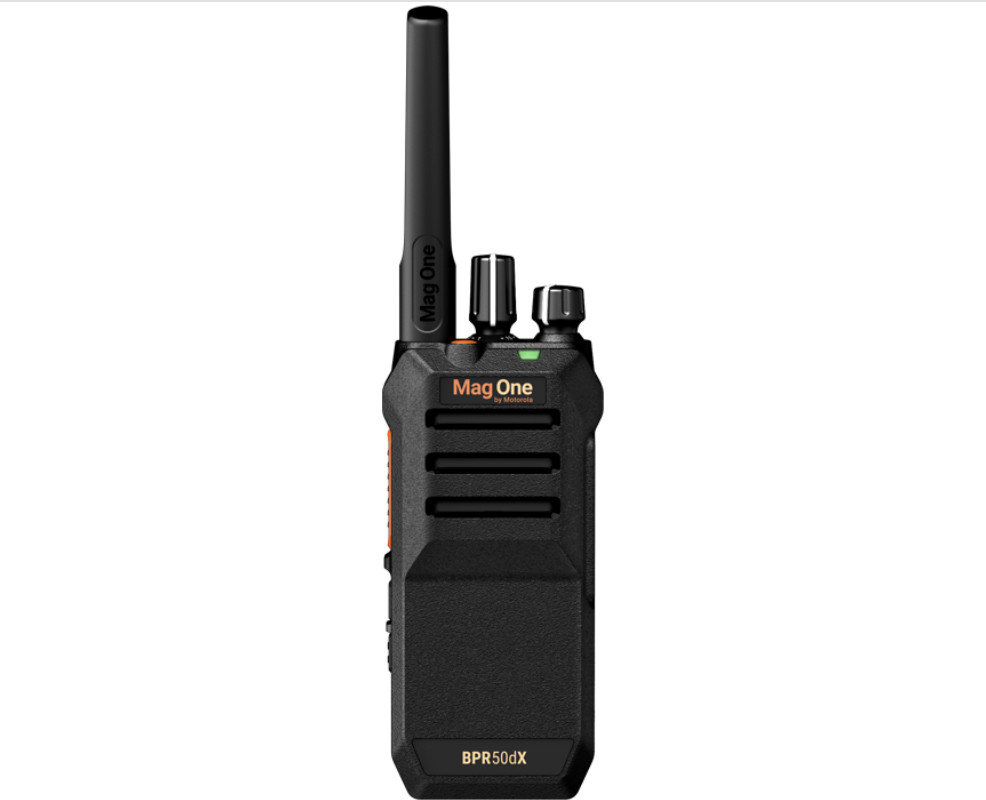
This radio combines modern digital capability with enhanced noise cancellation and louder audio output than many entry-level construction radios.
Why It Excels on Active Jobsites
The BPR50dx-U is engineered for environments with constant background noise, including:
- Heavy equipment
- Cranes
- Demolition sites
- Concrete cutting
- Road construction
- Industrial fabrication
Key Specifications
- Analog and digital operation
- UHF business frequencies
- 64 channels
- IP55 dust and water resistance
- MIL-STD 810 ruggedness
- USB-C charging
- Noise cancellation technology
- Enhanced loud audio output
- Emergency button and Lone Worker features
Best Use Cases
- Large commercial construction
- Highway and infrastructure projects
- Industrial contractors
- Steel fabrication
- Demolition crews
- Utility contractors
Operational Advantages
The dedicated emergency features make the BPR50dx-U valuable for contractors prioritizing worker safety and lone worker communication protocols.
The USB-C charging capability also simplifies fleet management compared to older proprietary charging systems.
Construction Radio Compliance and Safety Standards
FCC Licensing Requirements
Most professional construction radios operate under FCC Part 90 business frequencies and require an FCC business radio license for legal operation in the United States.
Construction companies should avoid consumer-grade FRS radios on commercial jobsites because they:
- Have limited power output
- Experience more interference
- Lack durability
- Offer reduced coverage
FCC Land Mobile Radio Services
OSHA Communication and Jobsite Safety
While OSHA does not mandate specific radio models, effective communication systems are essential for hazard coordination, crane operations, confined spaces, and emergency response procedures on active jobsites.
MIL-STD and IP Ratings Explained
Construction radios should meet:
- MIL-STD 810 testing for shock, vibration, temperature, and impact resistance
- IP54 or IP55 ratings for dust and water resistance
These ratings are important for outdoor construction environments where radios are exposed to rain, debris, and drops.
Frequently Asked Questions About Construction Two-Way Radios
What radio frequency works best for construction sites?
UHF radios are usually best for construction because they penetrate concrete, steel, and indoor structures more effectively than VHF radios.
How far do construction radios work?
Most construction radios provide reliable onsite coverage across:
- 250,000–350,000 square feet
- Multiple floors of a building
- Large outdoor jobsites
Actual range depends on:
- Steel structures
- Terrain
- Interference
- Repeater usage
- Building materials
Do construction radios require an FCC license?
Yes. Most professional Motorola business radios require an FCC Part 90 business license for operation on commercial frequencies.
How long should construction radio batteries last?
Professional construction radios typically provide:
- 10–15 hours in analog mode
- 14–20 hours in digital mode
High-capacity batteries can extend runtime further for double shifts and overtime work.
What durability rating should construction radios have?
Look for:
- IP54 or IP55 minimum
- MIL-STD 810 compliance
These standards indicate resistance to dust, vibration, shock, and water exposure.
Are digital radios better for construction?
Digital radios provide:
- Clearer audio
- Better noise suppression
- Longer battery life
- More efficient channel use
- Improved scalability
Analog radios are still effective for smaller crews and simpler operations.
Can construction workers use radios with gloves?
Yes. Professional Motorola construction radios feature oversized push-to-talk buttons and rugged controls designed for glove operation.
Choosing the Right Construction Radio
Choose the Motorola RMU2040 If:
- You need simple, dependable communication
- Your crew is under 20 users
- You want lower upfront costs
- You operate smaller jobsites
Choose the Motorola CP100d-UA If:
- You are scaling operations
- You need digital capability
- You manage multiple crews
- You may add repeaters later
Choose the Motorola BPR50dx-U If:
- Your environment is extremely noisy
- Worker safety is a major priority
- You need advanced features
- You operate large or industrial jobsites
Why Contractors Buy from Tech Wholesale
Tech Wholesale specializes in professional-grade Motorola two-way radios for construction, industrial, and commercial operations.
Construction companies choose Tech Wholesale because they provide:
- Expert radio system recommendations
- FCC licensing assistance
- Custom radio programming
- Bulk fleet pricing
- Fast shipping
- Genuine Motorola accessories
- Ongoing technical support
- Complete communication system packages
Whether you need radios for a small construction crew or a multi-site commercial operation, Tech Wholesale can help design a reliable communication solution that improves safety, coordination, and productivity.
Related Reading
- FCC Website – Obtain an FCC License
- FCC Licensing - Blog
- Privacy Codes – Eliminate Outside Interference
- Frequency Hopping Spread Spectrum
- Lone Worker / Man Down Functionality
- HIPAA Compliance and Two-Way Radios
- VOX Explained
- UHF vs VHF – Frequencies Explained
- FCC Business Radio Licensing
- OSHA Construction Safety Standards
- Motorola Solutions Commercial Radios
Article by Kristin Wood, a two-way radio consultant @ Tech Wholesale | Authorized Motorola & Kenwood Dealer Since 1997 | Last Updated: May 2026