

The best two-way radios for breweries are UHF business-grade radios with a rugged build. The right radio model depends on your brewery layout and team size.
Which Walkie Talkie Fits Your Brewery?
- A production floor — wet, loud, and running all day → Motorola RMU2040. This is the pick for most breweries. Two watts with a loud speaker that cuts through a canning line, MIL-STD-810 build, and four channels.
- An operation that's outgrown four lines → Kenwood ProTalk PKT-300. Same two watts, six channels standard and expandable to sixteen — so packaging, warehouse, and a taproom each get their own line.
- A large campus, multiple buildings, or thick concrete between them → Motorola Curve. Digital 900 MHz, 300,000 sq ft, and ten channels. It reaches farther indoors per watt than analog UHF.
This guide covers what makes a brewery radio different, which models have a track record in this environment, and how to match radio specs to your facility's layout and team structure.
Why Breweries Have Unique Radio Needs
A brewery is not a single environment — it's several environments stacked together. The same staff who carry radios through a loud, steam-filled brewhouse are also walking into a refrigerated cellar, crossing through a dry packaging hall, and returning calls in a taproom full of customers. Most radio problems in breweries trace back to one root cause: the radio was designed for one of those environments, not all of them.
Heavy concrete and steel construction. Brewery buildings are typically constructed with thick concrete walls, reinforced floors, and large stainless steel tanks. These materials absorb and reflect radio frequency energy in ways that brick or drywall construction does not. A radio that performs reliably in a single-story warehouse may produce dead zones in a tank bay 50 feet away. UHF frequencies (450–470 MHz) penetrate concrete better than VHF, and digital 900 MHz signals penetrate further still at equivalent wattage.
Steam and moisture. Boiling wort, CIP (clean-in-place) cycles, and sanitation processes create sustained high-humidity and steam conditions that can compromise electronics not designed for them. The IP (Ingress Protection) rating on a radio is a direct indicator of whether it will survive this environment. IP54 is the minimum acceptable threshold for splash and particulate resistance; IP55 offers additional protection against low-pressure water jets, which are common during equipment washdown procedures.
CO2 monitoring and safety coordination. Fermentation produces CO2, and CO2 accumulates in low-lying, poorly ventilated areas such as cellar floors and walk-in fermentation rooms. The Brewers Association safety guidelines and OSHA standard 29 CFR 1910.146 (Permit-Required Confined Spaces) both apply to cellar environments where CO2 concentration can reach dangerous levels without warning. Reliable radio communication is a key component of the confined space entry protocols that mitigate this risk — staff entering a confined space should maintain continuous radio contact with a designated attendant.
Loud production environments. Canning lines, bottling equipment, and keg washers operate at ambient noise levels that regularly exceed 85 dB — the threshold at which OSHA 29 CFR 1910.95 requires a hearing conservation program. Consumer-grade radios and their stock speakers cannot reliably overcome this ambient noise. Professional radios with high-output speakers (1,500 mW and above) and noise-canceling microphones are built for exactly this use case.
Staff moving between very different spaces. A taproom requires a different communication style than a production floor. Production staff need durable, loud, hands-free capable radios; taproom staff benefit from something quieter and lower-profile. Channel segmentation — keeping taproom and production on separate channels — prevents cross-chatter and lets each team focus on what's relevant to them.
Long shifts with no charging opportunity. Brewing operations often start before 6 a.m. and run through taproom close. A radio that dies at hour 10 of a 14-hour shift is worse than no radio at all, because it creates a false assumption of coverage. Battery life of 12 hours or more under normal transmission loads is a practical requirement, not a nice-to-have.
What to Look For in a Brewery Radio
IP Rating (Water and Dust Resistance)
The IP (Ingress Protection) rating is a two-digit code defined by IEC standard 60529. The first digit (1–6) indicates dust protection; the second (1–8) indicates water protection. For brewery use, IP54 is the minimum: dust-protected and resistant to water splashing from any direction. IP55 adds protection against low-pressure water jets — relevant for washdown environments. None of the radios recommended on this page are rated for submersion (IPX7 or IPX8), which is not a requirement in typical brewery operations.
MIL-STD-810 Durability
Military Standard 810 (MIL-STD-810) is a U.S. Department of Defense test specification that covers environmental stressors including drop shock, vibration, humidity, altitude, salt fog, and temperature extremes. Radios that meet MIL-STD-810C through G have been tested to survive repeated 4-foot drops onto concrete — which happens in brewery environments. MIL-STD-810 certification is not a self-reported specification; it requires third-party testing.
Battery Life
Brewery and taproom operations regularly run 12–16 hours. Radios should carry a rated battery life of at minimum 12 hours under a standard 5/5/90 duty cycle (5% transmit, 5% receive, 90% standby). For double shifts or continuous production runs, multi-unit charging cradles allow hot-swapping batteries without downtime. The Motorola RMU2040, for example, supports an optional 3,200 mAh ultra-high-capacity battery that extends runtime beyond the standard 12 hours.
UHF Frequency (450–470 MHz)
UHF (Ultra High Frequency) signals penetrate concrete, steel, and masonry more reliably than VHF (Very High Frequency) at comparable power levels. For most brewery buildings, UHF is the correct frequency band. For very large facilities with substantial concrete construction, digital 900 MHz (as used by the Motorola Curve) provides additional penetration and equivalent coverage at lower wattage than analog UHF.
Audio Output and Noise Cancellation
Look for a speaker output of at least 1,000 mW; the Motorola RMU2040 delivers 1,500 mW. Noise-canceling microphone arrays isolate voice from background equipment noise on transmission, so the receiving party hears the speaker clearly even when canning equipment is running nearby.
VOX (Hands-Free Capability)
VOX (voice-activated transmission) allows a radio to transmit automatically when the user speaks, without pressing a push-to-talk button. This is practical for brewers operating tank valves, lifting kegs, or using both hands during packaging operations. VOX works best when paired with a quality headset or earpiece; the included belt clips and ear accessories on most professional radios support this workflow.
Channel Capacity
A single-channel radio works for a team of two. It does not work for a brewery with a brewhouse crew, a cellar team, a packaging line, and a taproom. For most breweries, four channels (Motorola RMU2040) provides adequate segmentation. Facilities with more departments, a dedicated maintenance line, or a separate management channel benefit from six (Kenwood PKT-300) or ten (Motorola Curve) channels.
Antimicrobial Coating
Breweries are food production environments subject to sanitation standards including TTB (Alcohol and Tobacco Tax and Trade Bureau) regulations and, depending on distribution scope, FDA food safety guidelines under 21 CFR Part 117 (Current Good Manufacturing Practice). Radios with antimicrobial coatings — including the Motorola RMU2040 and Motorola Curve — reduce the risk of microbial contamination on frequently handled surfaces. This is not a substitute for standard sanitation protocols but is a relevant product differentiator in food and beverage manufacturing.
How Many Channels Does a Brewery Need?
Channel assignments keep communication clean. Rather than all staff sharing one frequency, each department operates on its own channel and can switch to a shared management channel for emergencies or cross-team coordination. A practical channel structure for most breweries looks like this:
| Channel | Assigned Team | Primary Use |
|---|---|---|
| 1 | Brewhouse | Mash, boil, transfer coordination; hop schedule confirmation |
| 2 | Cellar | Fermentation monitoring, racking, CIP status, CO2 safety checks |
| 3 | Packaging | Canning and bottling line status, keg fill coordination, maintenance calls |
| 4 | Taproom / Service | Keg changes, staff coordination, service flow, guest emergencies |
| 5 | Maintenance | Equipment issues escalated from any department |
| 6 | Management / All-Call | Cross-department announcements, emergencies, shift handoffs |
A four-channel radio like the Motorola RMU2040 covers channels 1–4. A six-channel radio like the Kenwood PKT-300 covers all six. The ten-channel Motorola Curve provides room for facilities with additional departments, delivery coordination, or a dedicated outdoor/event channel.
Recommended Two-Way Radios for Breweries
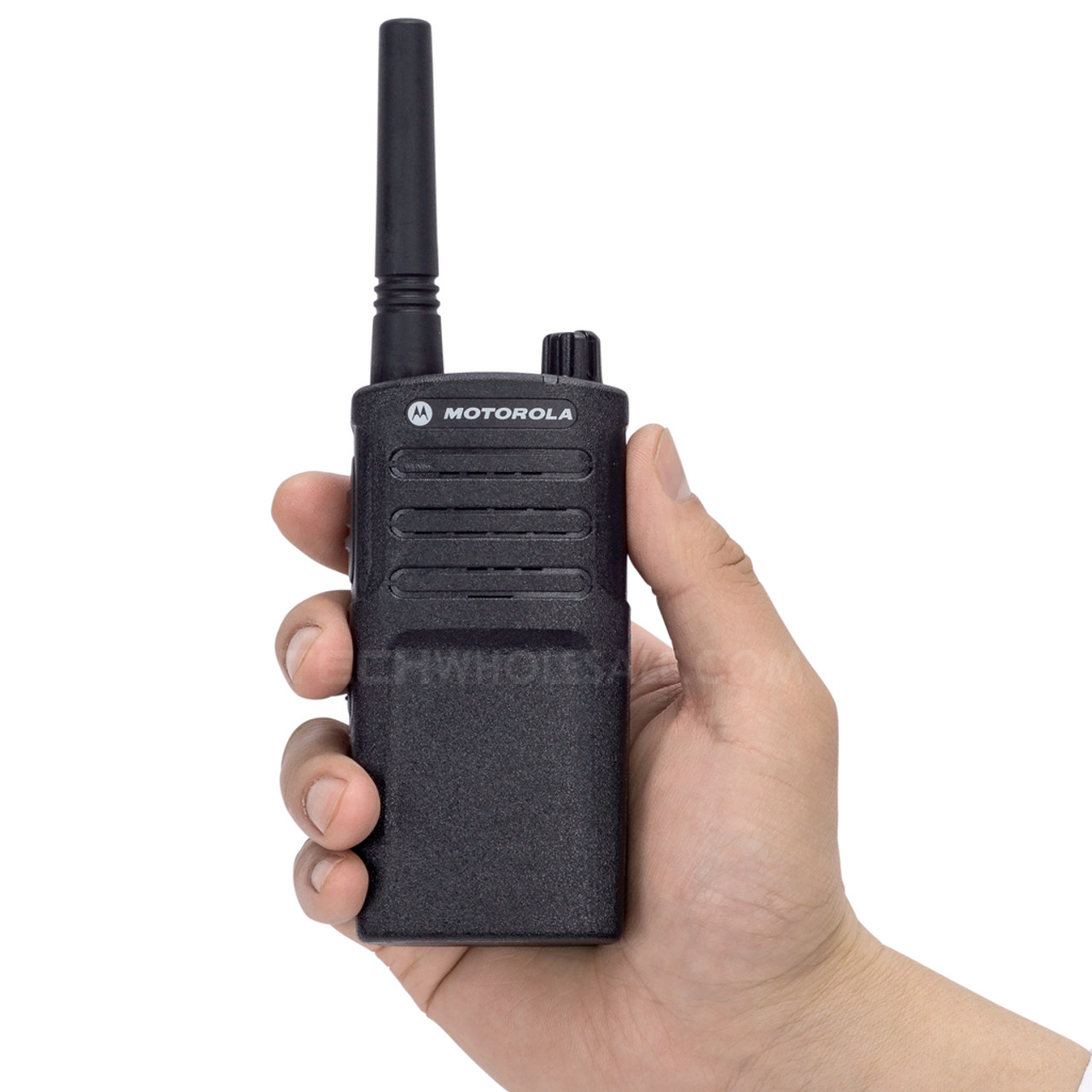
1. Motorola RMU2040 — Best for Small to Mid-Size Breweries
| Specification | Detail |
|---|---|
| Frequency | UHF (450–470 MHz) |
| Power | 2 watts |
| Channels | 4 |
| Indoor Coverage | 250,000 sq ft / 20 floors |
| Battery Life | 12 hours (up to 15 with battery save) |
| IP Rating | IP54/IP55 |
| Durability | MIL-STD-810C, D, E, F, G |
| Speaker Output | 1,500 mW |
| Weight | 8.6 oz. (with standard battery) |
| Antimicrobial Coating | Yes |
| Warranty | 2 years |
The RMU2040 is the most production-appropriate radio in this price range. Its IP55 rating means it withstands low-pressure water jets from any direction — relevant during hose-down and CIP operations that are routine in a brewery. MIL-STD-810G certification covers drop shock onto concrete, temperature extremes, and humidity — all conditions present in a working brewery. The 1,500 mW speaker output exceeds most radios at this wattage level, and the noise-canceling microphone provides clear voice transmission even when packaging equipment is running.
The antimicrobial housing coating is a practical feature in a food production environment, reducing microbial surface load on a device handled by multiple staff members during a shift.
The RMU2040 is also backward-compatible with legacy Motorola RDX series radios, which means breweries upgrading from older fleets can mix old and new units during a transition without reprogramming.
Why it fits breweries specifically
- IP55 rating handles washdown environments, steam, and incidental liquid exposure common in tank bays and packaging areas
- MIL-STD-810G certification covers the drops and temperature swings that occur between a 32°F walk-in cellar and a 100°F+ brewhouse
- 1,500 mW speaker provides audible communication on a loud canning line without requiring earpiece equipment
- VOX hands-free mode keeps transmissions accessible while staff operate tank valves, move kegs, or handle packaging equipment
- Antimicrobial coating is relevant to food-production sanitation standards
- 4 channels support brewhouse, cellar, packaging, and taproom segmentation
- 219 privacy codes (PL/DPL) eliminate interference from other radio users in shared spaces or festival events
- NOAA weather alerts support outdoor event and beer garden coordination
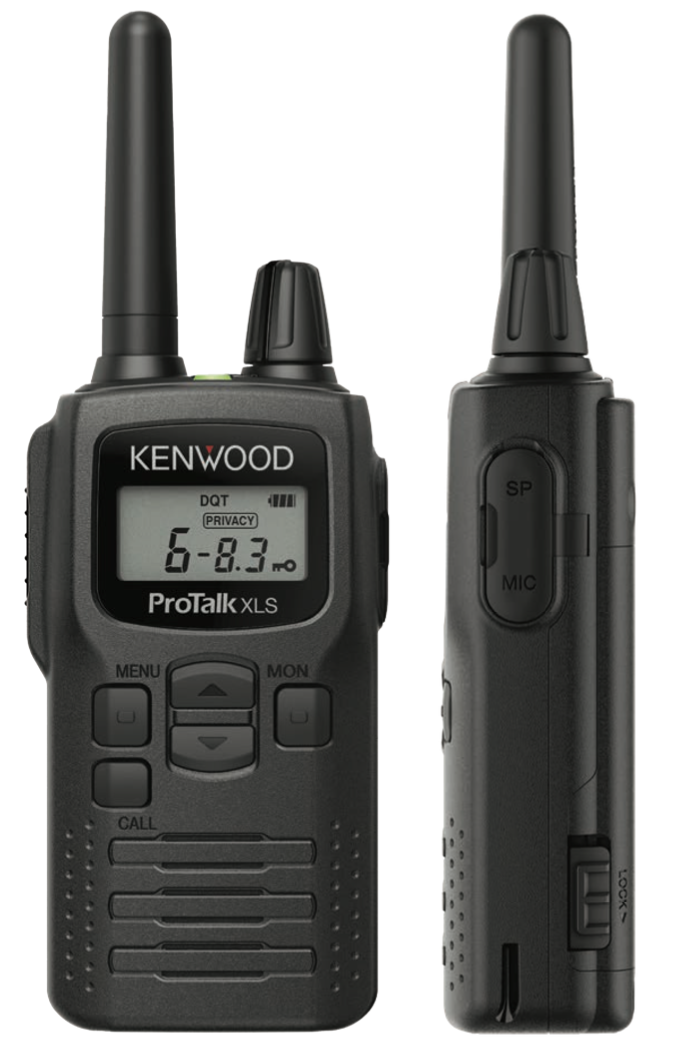
2. Kenwood ProTalk PKT-300 — Best for Mid-Size Breweries That Need More Channels
| Specification | Detail |
|---|---|
| Frequency | UHF (450–470 MHz) |
| Power | 2 watts |
| Channels | 6 |
| Indoor Coverage | 275,000 sq ft / 20 floors |
| Battery Life | ~11–14 hours |
| VOX | Yes |
| Display | Yes (channel and battery indicator) |
| Warranty | 2 years |
The Kenwood PKT-300 delivers the same 2-watt UHF output as the RMU2040 with two additional channels — providing enough capacity for a dedicated maintenance channel and a management all-call line in addition to the four core department channels. Its display screen lets staff confirm channel assignments at a glance, which matters in environments where ambient noise makes voice channel announcement difficult to hear.
Why it fits breweries specifically
- 6 channels cover brewhouse, cellar, packaging, taproom, maintenance, and management/all-call without channel overlap
- Display screen provides channel confirmation without auditory feedback — useful in loud production areas
- 275,000 sq ft indoor coverage handles most mid-size production facility footprints
- VOX hands-free capability matches the operational needs of brewery floor staff
- Kenwood's 2-year commercial warranty and established support network make it viable for business deployments
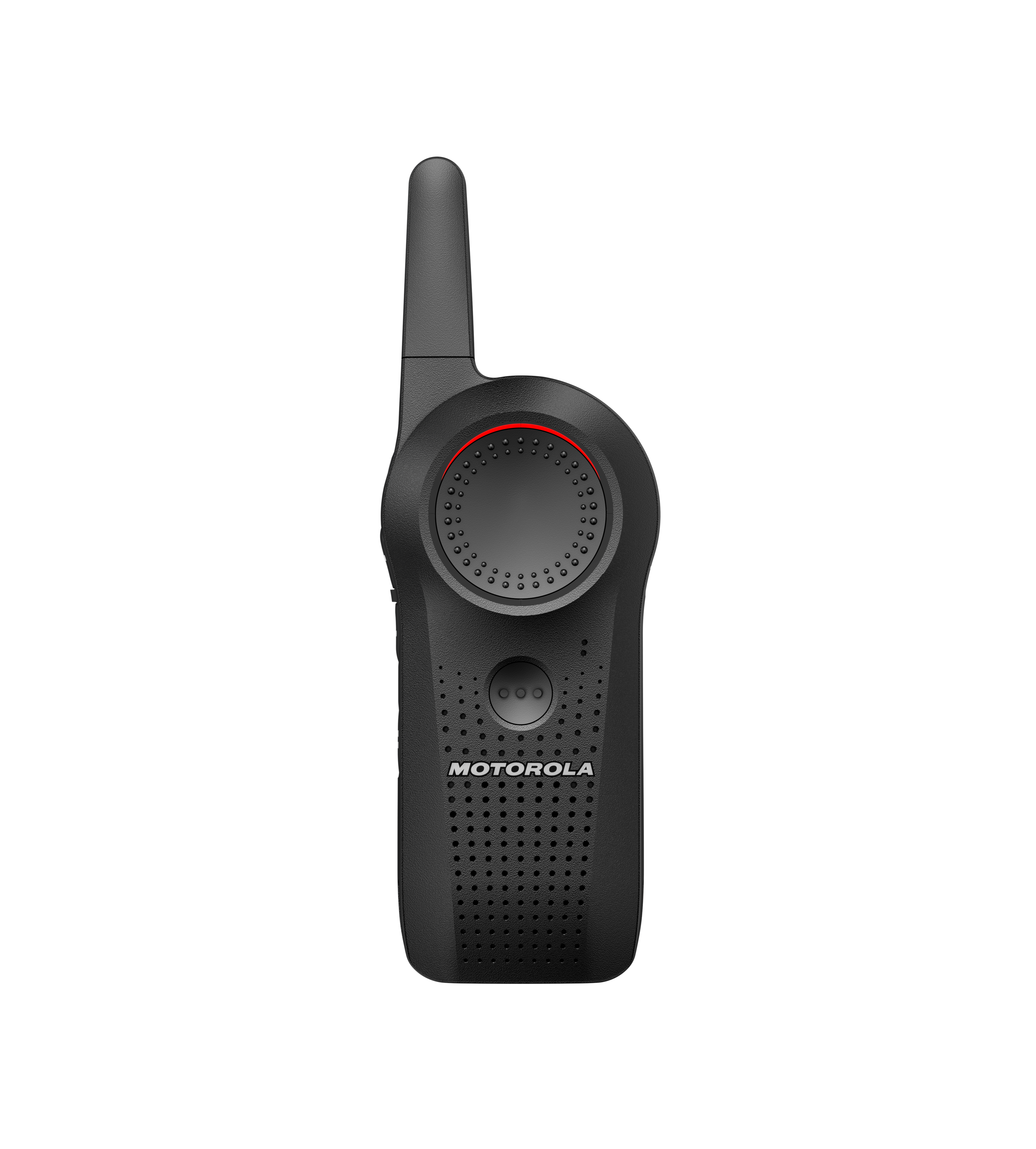
3. Motorola Curve — Best for Large Breweries and Multi-Building Operations
| Specification | Detail |
|---|---|
| Frequency | Digital 900 MHz (902–928 MHz) |
| Power | 1 watt digital (equivalent to ~4 watts analog) |
| Channels | 10 |
| Indoor Coverage | 300,000 sq ft / 20 floors |
| Battery Life | 14 hours |
| Durability | MIL-STD-810 compliant |
| Weight | < 6 oz. |
| Antimicrobial Coating | Yes |
The Motorola Curve operates on the 900 MHz digital frequency band, which provides superior wall penetration compared to UHF analog at equivalent or lower wattage. Its effective output is equivalent to approximately 4 watts of analog power, which means it covers nearly 20% more floor area than the RMU2040 (300,000 sq ft vs. 250,000) and handles buildings with heavy masonry or poured concrete construction more reliably.
Ten channels provide enough capacity for the full department structure above plus additional specialty channels for delivery coordination, outdoor events, or security.
At 4.2 oz., it is noticeably lighter than the RMU2040, which matters for staff wearing it through a full 14-hour shift.
Why it fits large breweries specifically
- 900 MHz digital signal penetrates thick concrete and steel-reinforced brewery construction more reliably than UHF analog
- 10 channels support full department segmentation plus specialty channels for delivery and events
- 14-hour battery life covers the full production-to-close shift without recharging
- Page All and Call All Available functions support facility-wide announcements for shift changes or emergencies
- Antimicrobial coating is relevant to food-production environments
- MIL-STD-810 compliance provides drop resistance appropriate for brewery floor conditions
Also Worth Considering
Motorola RMU2080 — 2 watts, 8 channels, UHF (450–470 MHz), 250,000 sq ft indoor coverage. The direct 8-channel upgrade from the RMU2040 on the same radio platform with the same IP55 and MIL-STD-810 ratings. The right choice when a brewery outgrows four channels but prefers to stay on the Motorola RM platform.
Motorola CP100d — 4 watts, 16–64 channels, UHF/VHF/Digital, up to 400,000 sq ft / 2–3 miles outdoor. The right choice for large production campuses with significant outdoor coverage requirements, including loading dock areas, beer garden coordination, or multi-building distribution.
Motorola WAVE PTX Series — LTE/Wi-Fi enabled, unlimited range, GPS tracking, emergency button. For breweries managing multiple taproom locations, delivery fleets, or staff in different cities, WAVE PTX removes all geographic limitations. Note: requires a monthly subscription per device.
Coverage by Facility Type
| Facility Type | Recommended Radio | Coverage Capacity |
|---|---|---|
| Nano or microbrewery, single floor under 5,000 sq ft | Motorola RMU2040 | 250,000 sq ft / 20 floors |
| Regional brewery, 5,000–20,000 sq ft production floor | Kenwood PKT-300 or Motorola RMU2080 | 275,000 sq ft / 20 floors |
| Large production facility or multi-building campus | Motorola Curve | 300,000+ sq ft / 20 floors |
| Multi-location or delivery fleet | Motorola WAVE PTX | Unlimited (LTE/Wi-Fi) |
For brewery buildings with poured concrete walls or heavily reinforced tank bays, plan for one wattage tier above what square footage alone would suggest. Dense building materials reduce effective radio range, and it is better to have signal overhead than to discover dead zones during an equipment emergency.
OSHA and Safety Compliance Considerations
Noise Exposure (OSHA 29 CFR 1910.95)
OSHA's occupational noise standard requires a Hearing Conservation Program when workers are exposed to 85 dB or higher as an eight-hour time-weighted average (TWA). Canning and bottling operations routinely meet or exceed this threshold. Two-way radios in these environments should be used with earpieces rated for occupational noise environments. The professional earpieces included with or available for the radios listed on this page are designed for this use context. Employers should confirm earpiece NRR (Noise Reduction Rating) against actual measured ambient noise levels.
Confined Space Entry (OSHA 29 CFR 1910.146)
Brewery fermentation vessels, conditioning tanks, and brite tanks are permit-required confined spaces under OSHA 29 CFR 1910.146 when they contain or have the potential to contain a serious safety or health hazard — including CO2 accumulation from active fermentation. The standard requires continuous communication between the entrant and an outside attendant during confined space entry. Two-way radios are an acceptable communication method for this requirement. Radio channel discipline — assigning a dedicated cellar channel that supervisors monitor continuously — supports compliant confined space entry protocols.
FDA Food Safety Modernization Act (FSMA)
Breweries subject to FDA oversight under the Food Safety Modernization Act (21 CFR Part 117) are required to maintain sanitary conditions in their production environment. Radios with antimicrobial coatings reduce the microbial load on shared devices. While no specific radio standard is cited in FDA regulations, antimicrobial-coated equipment is consistent with the spirit of CGMP (Current Good Manufacturing Practice) requirements for food-contact-adjacent surfaces.
Frequently Asked Questions
What is the best two-way radio for a brewery?
For most breweries, the Motorola RMU2040 is the strongest all-around choice: IP55 water resistance, MIL-STD-810 drop and impact certification, 12-hour battery life, 1,500 mW speaker output, and VOX hands-free capability. It handles the physical demands of a production environment — steam, moisture, concrete, and loud equipment — while supporting four-channel team segmentation for brewhouse, cellar, packaging, and taproom. For facilities that need more channels, the Kenwood PKT-300 adds two channels on the same platform. For large facilities with heavy concrete construction or multi-building campuses, the Motorola Curve provides superior signal penetration and 10-channel capacity.
How much range do I need for a brewery radio?
Most brewery buildings, even large production facilities, fall within the 250,000–300,000 sq ft indoor coverage range of a standard 2-watt UHF radio. The more important variable is wall construction: a 2-watt UHF radio will cover a 20,000 sq ft building with standard drywall construction easily, but may produce dead zones in a 5,000 sq ft tank bay with 12-inch reinforced concrete walls. For buildings with heavy concrete or steel construction, step up to a 4-watt analog radio or a digital radio like the Motorola Curve, whose 900 MHz signal penetrates masonry more effectively than UHF analog at comparable power.
How long does the battery last on a brewery radio?
The Motorola RMU2040 provides 12 hours on its standard 2,150 mAh lithium-ion battery, or up to 15 hours with battery save mode enabled. An optional 3,200 mAh ultra-high-capacity battery (PMNN4453) is available for operations with back-to-back shifts or continuous production runs. The Motorola Curve is rated at 14 hours. Battery life ratings are based on a 5/5/90 duty cycle (5% transmit, 5% receive, 90% standby). Heavy-use environments with frequent transmissions will see shorter runtimes. Multi-unit charging cradles allow hot-swapping batteries without taking radios out of service.
Are brewery radios waterproof?
The recommended radios on this page are water-resistant, not waterproof. The Motorola RMU2040 carries an IP55 rating, meaning it withstands low-pressure water jets from any direction — which covers hose-down and CIP-adjacent conditions. The Motorola Curve meets MIL-STD-810 environmental standards. Neither radio is rated for submersion (IPX7 or higher). If a radio is dropped into a cleaning solution tank or accidentally submerged, power it off immediately and allow it to dry fully before resuming use.
How many radios does a brewery need?
A practical starting point is one radio per active team member per shift, with one additional unit per department as a spare. For a small brewery with a four-person production crew and a two-person taproom, six to eight radios covers full operational coverage plus spares. Mid-size facilities with 10–20 staff members typically deploy 12–20 radios. For quantity pricing, request a quote from Tech Wholesale — we provide pricing based on unit count and configuration needs.
Can two-way radios be used for CO2 safety and confined space communication in a brewery?
Yes. OSHA 29 CFR 1910.146 requires continuous communication between workers entering permit-required confined spaces and an outside attendant. Brewery fermentation tanks and conditioning vessels may qualify as permit-required confined spaces due to CO2 accumulation risk. A two-way radio on a dedicated cellar channel, monitored continuously by a designated attendant, satisfies the communication requirement of a compliant confined space entry program. The radio system does not replace CO2 detection equipment, but it is the communication layer that allows an attendant to summon emergency responders if needed.
What is the difference between analog and digital radios for brewery use?
Analog radios (Motorola RMU2040, Kenwood PKT-300) transmit on UHF frequencies between 450–470 MHz and are widely compatible with other analog radios on the same frequency. They are straightforward to deploy and have well-established accessory ecosystems. Digital radios (Motorola Curve) operate on a different frequency band (900 MHz) and provide clearer audio over longer distances, better penetration through dense construction materials, and more efficient use of the radio spectrum. For most breweries, analog UHF is sufficient. For large facilities with heavy concrete construction or multi-building campuses, digital is the better long-term investment.
Can I use radios for both production and taproom staff on the same system?
Yes, and this is the standard deployment model for production breweries with an on-site taproom. Production and taproom staff are assigned to different channels so their communication stays relevant to their roles. A shared management channel allows either group to reach supervisors or escalate cross-department issues. Channel segmentation is the reason professional multi-channel radios are preferable to single-channel consumer walkie-talkies in this environment. The RMU2040's four channels cover brewhouse, cellar, packaging, and taproom cleanly, with no overlap.
Why Buy from TechWholesale.com
Tech Wholesale has been selling professional two-way radios to food and beverage manufacturers, breweries, and hospitality operations since 1997. We are an authorized dealer for Motorola and Kenwood, which means every radio we sell carries the full manufacturer warranty — two years on the commercial-grade models listed on this page — and qualifies for manufacturer service and repair programs.
What sets us apart
- Lifetime technical support included with every purchase — call or email our team for the life of your radio fleet, not just through the warranty period
- Free quotes for large teams — request a custom quote
- No-pressure consultation — our team will tell you when a less expensive radio is the right answer for your facility, not push you toward a higher-margin product
- Free shipping on qualifying orders
- Authorized dealer status — no gray market inventory, no voided warranties
If you're not sure which radio fits your brewery's layout and team structure, use our Find My Radio tool or request a quote. We'll ask a few questions about your facility and come back with a specific recommendation.
1-888-925-5982 Service@TechWholesale.com
Related Reading
From TechWholesale.com
- Privacy Codes – Eliminate Outside Interference
- Frequency Hopping Spread Spectrum (FHSS) Explained
- VOX Explained – Hands-Free Radio Transmission
- UHF vs VHF – Frequencies Explained
- Two-Way Radio FAQ
- Find My Radio Tool
External Resources
- OSHA 29 CFR 1910.95 – Occupational Noise Exposure
- OSHA 29 CFR 1910.146 – Permit-Required Confined Spaces
- Brewers Association – Brewery Safety Resources
- TTB – Alcohol and Tobacco Tax and Trade Bureau Beer Regulations
Article by Kristin Wood, a two-way radio consultant @ Tech Wholesale | Authorized Motorola & Kenwood Dealer Since 1997 | Last Updated: May 2026