

Not all radios are built equally—and choosing the wrong model for your camp can mean poor range, unclear audio, or radios that break down after a season of heavy use.
This guide breaks down exactly what to look for in a camp radio, then highlights the best models on the market so you can make a confident, informed decision.
Effective communication isn't just a convenience at youth camps—it's a safety requirement.
When a counselor needs to report a missing camper, coordinate a weather evacuation, or relay a schedule change across a sprawling campground, every second counts.
Cell phones simply don't cut it. Dead zones, drained batteries, and the impracticality of calling staff one by one can turn minor issues into serious problems.
Two-way radios solve all of this. Instant, group-wide communication at the push of a button. No cell service needed. No monthly plan. Just clear, reliable communication across your entire team.
What to Look for in a Camp Walkie Talkie
Before comparing specific models, it helps to understand what separates a great camp radio from a mediocre one. Youth camps operate in demanding environments—think open fields, dense forests, and buildings with thick walls. The radio you choose needs to handle all of it.
Durability
Camp gear takes a beating. Radios get dropped, rained on, and shoved into backpacks. Look for models that meet military specifications (MIL-SPEC) for dust, moisture, shock, and vibration resistance. A MIL-SPEC rating isn't just a marketing term—it means the radio has been independently tested against standardized conditions and passed.
Range
The size of your campground determines how much power you need. For most youth camps, a radio with a range of 200,000–350,000 square feet will cover the full grounds. Smaller operations can get by with 2 watts of power, while larger camps with multiple buildings or remote areas may need 4-watt models.
Battery Life
Camp days are long. A radio that dies by mid-afternoon is more of a liability than an asset. Look for models with a minimum 12-hour battery life to get through a full day of activity without recharging.
Clear Audio & Interference Prevention
Campgrounds are noisy—kids, music, outdoor events. Radios with advanced noise reduction and privacy codes (PL/DPL) filter out background noise and prevent cross-talk with other radio users in the area. Without these features, your team could spend more time deciphering garbled messages than communicating.
Ease of Use
Staff at youth camps range from seasoned directors to first-year counselors. A radio with a complicated interface slows everyone down. Simple channel switching, intuitive controls, and features like voice activation (VOX) let staff focus on their job rather than fumbling with settings.
The Best Two-Way Radios for Youth Camps
Tech Wholesale is an Authorized Motorola Dealer with over 15 years of experience in the two-way radio industry. The models below represent the best options for camp environments—all built to MIL-SPEC standards, all tested for durability, and all backed by our lifetime tech support.
Motorola RMU2040 — Best for Smaller Camps
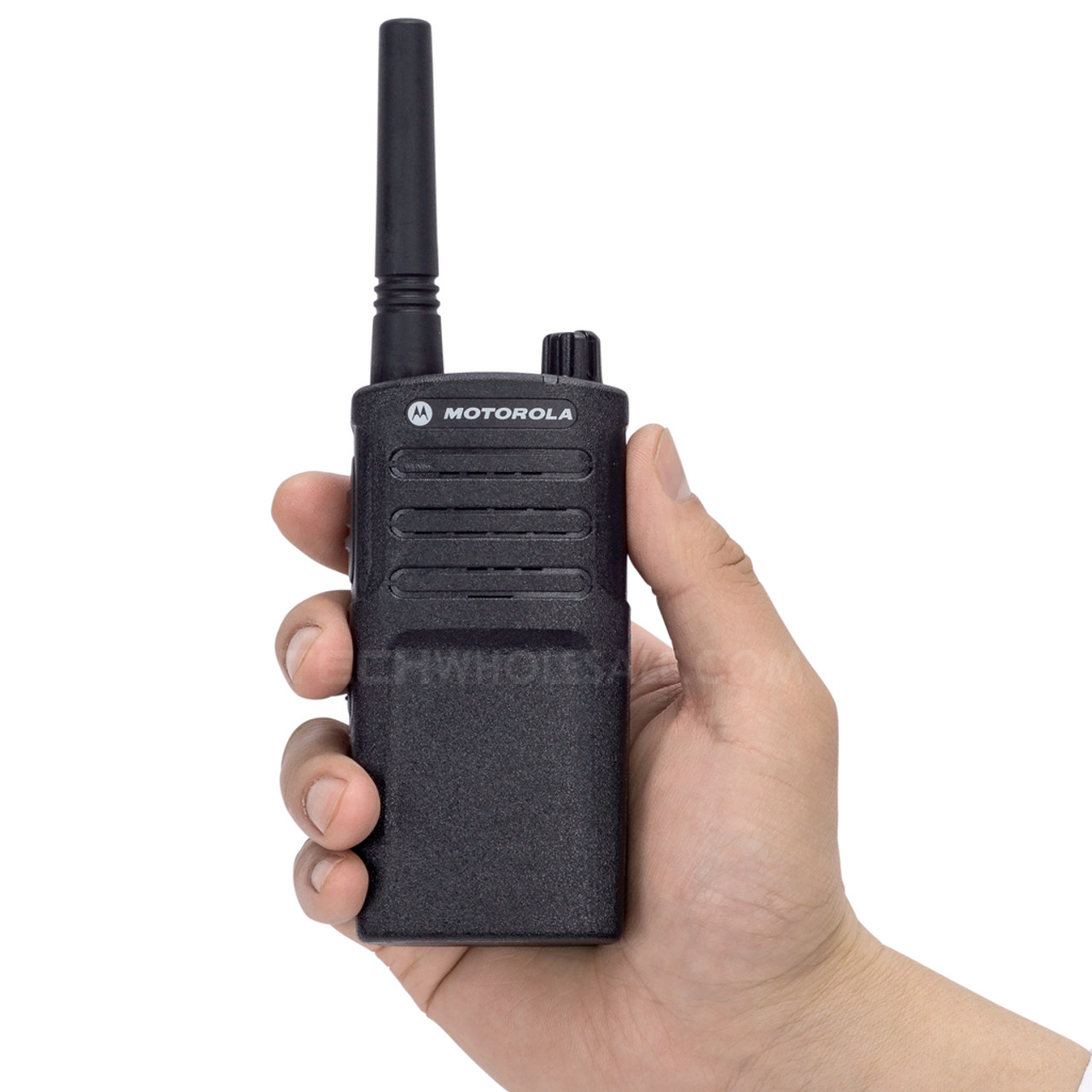
The RMU2040 is a compact, user-friendly radio that punches above its weight. Here's what it brings to the table:
- 4 channels, 2 watts of power
- Outdoor range: 250,000 square feet
- 99 business frequencies with 219 PL/DPL codes for crystal-clear, interference-free communication
- Built-in VOX (voice activation) for hands-free operation
- Easy cloning feature to copy settings across multiple radios quickly
- 12-hour battery life
For camps where staff need to cover a standard campground without venturing too far into remote terrain, the RMU2040 is an excellent fit. It's lightweight, simple to operate, and reliable across a full day of use. The cloning feature is a particularly practical touch—setting up a fleet of radios for a new season takes minutes, not hours.
Motorola CP100d-UA — Best for Larger Camps
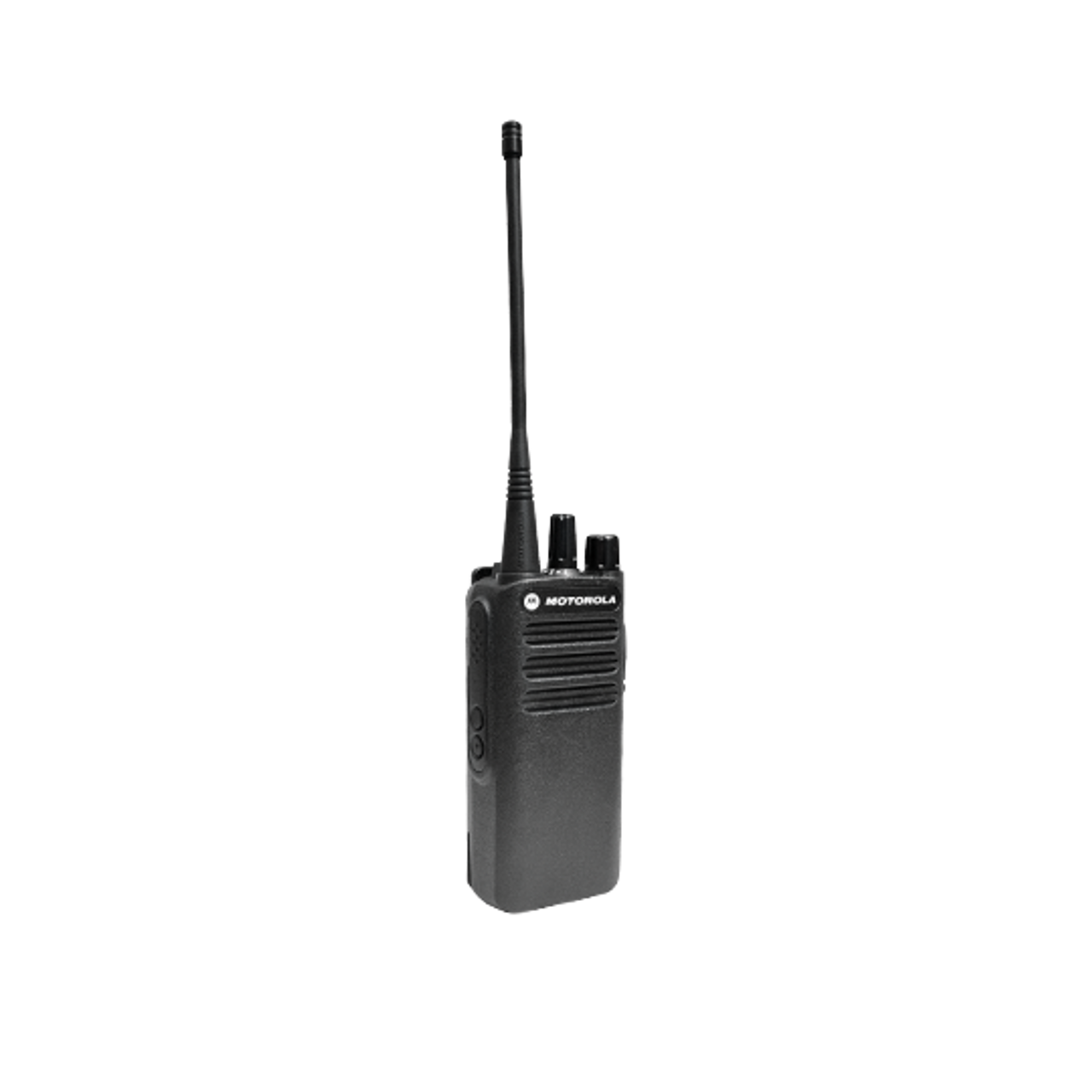
When your camp covers more ground or involves multiple buildings, you need more power. The CP100d-UA delivers exactly that.
Key specs for both models:
- 4 watts of power for extended range across larger properties
- 16 channels
- Advanced noise reduction for clear audio in loud environments
- Business frequencies and privacy codes to eliminate interference
- Rugged polycarbonate housing built for tough daily use
- Repeater compatible — ideal for camps with dead zones or significant terrain obstacles
This model can work with a repeater to extend coverage even further, making them a strong choice for large or remote campgrounds.
Motorola Curve — Best for Advanced Communication Needs
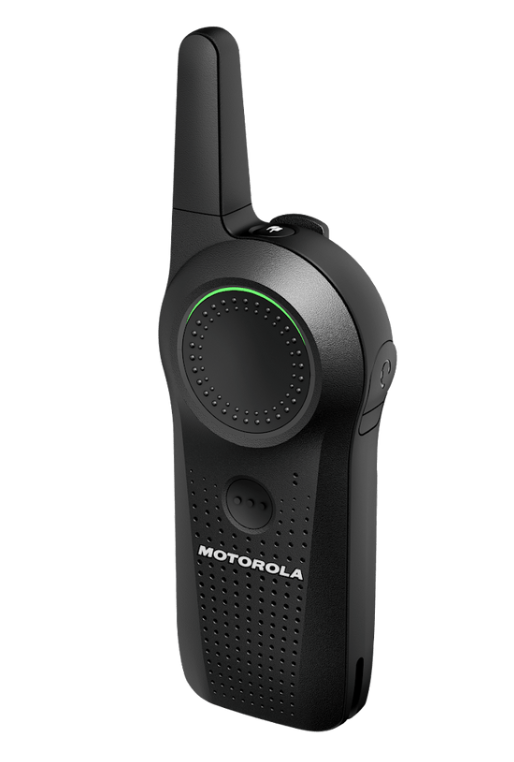
For camps that want the versatility of a smartphone combined with the reliability of a dedicated radio, the Curve is worth serious consideration.
Standout features:
- Individual calling capability — contact a specific staff member directly, without broadcasting to the full team
- Frequency Hopping Spread Spectrum (FHSS) technology for enhanced privacy and signal reliability
- Voice prompt channel selection for effortless operation
- Digital signal quality for clear communication in any environment
The ability to call a single individual is a game-changer in a camp setting. Need to reach the nurse without alerting every counselor on the channel? Done. Want to send a private message to a department head? Easy. The DLR series offers that level of flexibility without requiring a cellular network or a monthly subscription.
Why Two-Way Radios Beat Cell Phones at Camp
It's worth addressing the obvious question: why not just use smartphones?
Remote campgrounds frequently have limited or no cell coverage, making smartphones unreliable when it matters most. Beyond that, calling staff individually during an emergency wastes critical time. Two-way radios allow an instant, one-to-many broadcast—press the button, and every team member hears the message simultaneously.
There are also practical considerations. Radios are more durable than smartphones, far less expensive to replace, and don't require data plans or signal towers. Staff can communicate across the campground without worrying about battery-draining apps, notifications, or the temptation of personal phone use during working hours.
Setting Up Your Camp Radio System
Once you've selected the right radios, a few simple practices will maximize their effectiveness:
- Assign channels by department. Counselors on channel 1, medical staff on channel 2, kitchen and logistics on channel 3. This keeps communication organized and reduces clutter.
- Establish a check-in protocol. Brief morning check-ins on the main channel confirm that every radio is functioning and every team member is reachable.
- Designate a backup channel. If a primary channel experiences interference, every staff member should know which channel to switch to.
- Charge radios overnight. Make battery charging part of the end-of-day routine so every radio starts the morning at full power.
Frequently Asked Questions
How many radios does a camp typically need?
This depends on your staff size and campground layout. A general rule of thumb is one radio per department head or team leader, plus spares for emergencies. We can help you determine the right quantity based on your specific needs—just request a quote.
Can these radios be used across multiple seasons?
Absolutely. All recommended models are built to MIL-SPEC durability standards and are designed for long-term use. With proper maintenance and overnight charging, these radios will serve your camp reliably for years.
What if our campground has dead zones?
The CP100d-UA is repeater-compatible, which means you can extend coverage into areas that would otherwise be out of range. This is particularly useful for camps with dense forest coverage or significant elevation changes.
Ready to Equip Your Camp? Let's Talk.
The right radio system makes a real difference—faster emergency response, smoother activity coordination, and a more connected team from the first morning flag-raising to the last evening campfire.
Tech Wholesale carries the full Motorola lineup and offers bulk pricing for camps equipping full teams. Our staff brings over 15 years of two-way radio expertise, and every purchase includes lifetime tech support—so you're never on your own if questions come up mid-season.
Request a quote today and let us help you build a communication system your camp can count on.