

The Best Two-Way Radios for Wineries
After selling thousands of radios to wineries across the country, we know what works. We don't want you to pick a radio because of the brand name or the price tag.
We want you to make an educated decision and walk away with a radio that is discreet, durable, and delivers clear audio across your entire facility.
Let's break it down.
What to Look for in a Winery Two-Way Radio
The most important tool in your vineyard isn't your barrel, your grape, or your press—it's communication.
Your vineyard manager is waiting on a status update from the grape crusher, and no one's picking up their phone. A pallet of bottles arrives at the bottling line 30 minutes early, and there's no forklift in sight. Meanwhile, the tasting room is overrun with a surprise tour group, and staff are scrambling to restock wine and glassware...
Everyone's doing their part, but no one is connected.
Sound familiar? These are everyday challenges at wineries across the country. A quality two-way radio solves all of them—instantly.
But not every radio is right for every winery. Buy the wrong one, and you'll deal with static, dead zones, and a battery that dies before the afternoon harvest shift ends. That's why we put this guide together.
Before jumping to specific models, it's worth knowing what features actually matter for winery environments. Here's what to prioritize:
- Long Battery Life – Winery teams are on the move all day, especially during harvest season. A radio that lasts 12+ hours per charge is essential.
- Durability – Radios need to handle drops, dust, moisture, and the occasional wine spill without skipping a beat.
- Clear Audio – Whether you're in the echoey barrel room or out in the wind-blown vineyard, crisp audio is non-negotiable.
- Hands-Free Options – Compatible earpieces and headsets allow workers to stay connected while keeping both hands free.
- Long Range – A strong signal needs to reach from the farthest vine row all the way to the tasting room, with no dead zones in between.
- Channel Capacity – Multiple channels help teams divide communication by department, cutting down on cross-talk and confusion.
- Emergency Alert – A one-touch alert button can quickly call for help if there's an accident or safety concern in the field.
Coverage: Match Your Radio to Your Property Size
One of the most common mistakes winery owners make is choosing a radio that doesn't match the scale of their property. Too powerful, and you're overpaying. Too weak, and you'll hit dead zones right where you need coverage most.
Here's a quick reference to match power to property size:
- Small wineries: 1–2 watts of power covers between 100,000 and 200,000 square feet—more than enough for most tasting room operations.
- Larger wineries or multiple buildings: You'll need 3–4 watts on analog (or 1 watt on digital) to transmit reliably through walls and across greater distances, covering up to 350,000 square feet.
- Thick concrete walls or reinforced structures: Consider stepping up by one watt to compensate for signal loss through dense building materials.
- Multiple locations or unlimited coverage: Radios that use LTE and Wi-Fi—like the Motorola WAVE PTX series—eliminate traditional distance limitations entirely.
How Many Channels Do You Need?
Channels segment your team conversations so that not everyone is talking over each other at once. For wineries, we recommend setting up channels like this:
- Vineyard Operations – For crews managing pruning, harvesting, irrigation, and fieldwork.
- Cellar Team – For communication around crushing, fermentation, barrel management, and lab updates.
- Bottling & Packaging – To coordinate deliveries, inventory, and the bottling line.
- Tasting Room & Events – For front-of-house staff managing guest flow, tours, and private events.
- Management/Emergency – A reserved channel for supervisors, key updates, or urgent situations.
Easy breezy. That's concise and direct communication. Channels can also be used to set up private conversations: "Sarah, call Tom on channel two." Sarah and Tom can then have an in-depth conversation over the radio without interrupting the rest of the staff.
Why Brand Matters
A cheap radio will cost you more in the long run. Poor audio, fragile casings, and unreliable range quickly erode any savings you thought you were getting.
Motorola and Kenwood are the two most trusted brands in the industry. Both are purpose-built for reliable, day-in-day-out communication. Their radios are tested for five years of field use, intuitive enough to use without a training session, and backed by manufacturer warranties of one to three years depending on the model. No monthly cell phone plans. No complicated setup. Just clear, durable, subscription-free communication.
Our Top Two-Way Radio Picks for Wineries
These recommendations come from our own experience working with thousands of winery customers. Each model has a rock-solid track record.
Small Wineries
For smaller tasting room layouts, you want something compact, lightweight, and discreet—something that doesn't look out of place in a front-of-house environment while still delivering solid performance.
Motorola CLP1080e
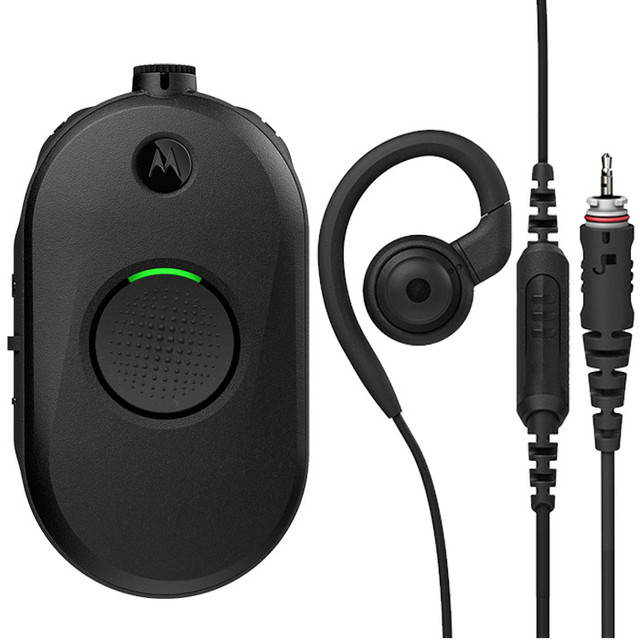
Best for: Tasting rooms and small operations
| Spec | Detail |
|---|---|
| Channels | 8 |
| Power | 1 watt (UHF) |
| Coverage | Up to 100,000 sq ft |
| Standout Feature | Discreet, no external speaker |
The CLP1080e is the smallest and lightest radio on our list, weighing in at just 2.38 ounces. Despite its size, it packs 8 channels—enough to segment a mid-sized staff with room to spare. It performs well both indoors and outdoors, with a 10-floor indoor range and up to one mile of outdoor coverage.
The radio ships with a discreet earpiece and belt holster, making it easy to carry and unobtrusive on a uniform. Battery life clocks in at 12 hours, and the large central push-to-talk (PTT) button makes it simple to operate, even mid-pour. Antimicrobial properties are built into the casing, and the device is repeater-capable if you ever need to extend its range.
Motorola CLS1410
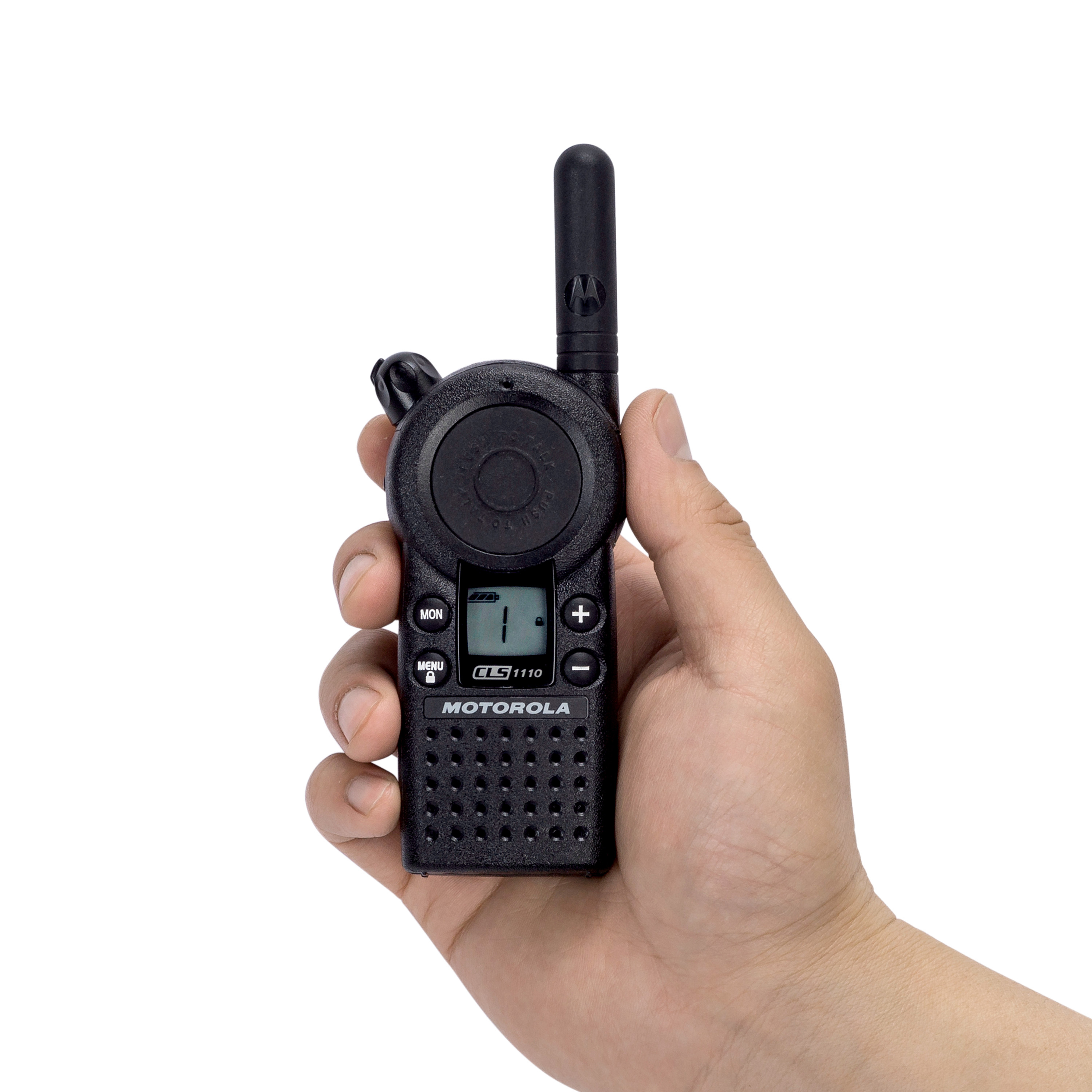
Best for: Versatile small winery use
| Spec | Detail |
|---|---|
| Channels | 4 |
| Power | 1 watt (UHF) |
| Coverage | Up to 200,000 sq ft |
| Standout Feature | Easy setup, long battery life |
The CLS1410 lives up to its name—CLS stands for Clear, Light, and Simple. Four channels give you enough segmentation to keep tasting room staff, cellar crew, and management on separate lines. It reaches up to 15 floors indoors and two miles outdoors, and features both Audible Call Alerts and Vibracall technology for environments where hearing a chime isn't always possible.
Simplified cloning makes setup quick if you're outfitting a larger team.
Honorable Mention: Kenwood PKT300
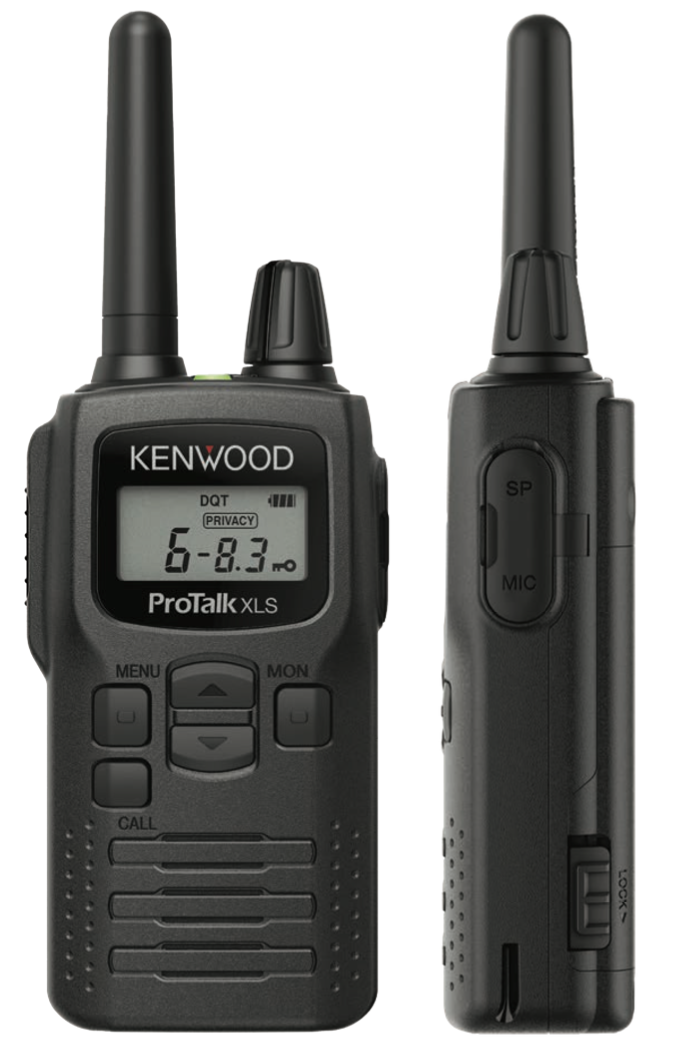
| Spec | Detail |
|---|---|
| Channels | 6 |
| Power | 2 watts (UHF) |
| Coverage | Up to 275,000 sq ft |
| Standout Feature | VOX capability, compact design |
A compact and capable option for smaller wineries that need a bit more coverage range than the CLP series provides. The PKT300 is easy to use and comes with solid battery life—a reliable backup choice worth considering.
Larger Wineries With Vineyards
When your operation spans multiple buildings, a vineyard, and a full tasting room, you need a radio that can keep pace.
Motorola SL300-U

Best for: Large winery and vineyard operations
| Spec | Detail |
|---|---|
| Channels | 2 |
| Power | 3 watts (UHF) |
| Coverage | Up to 300,000 sq ft / 35 floors |
| Standout Feature | Digital modes, noise cancellation |
The SL300-U is ultra-slim but built for serious use. With 2 channels and digital capability, it delivers extended range and enhanced audio quality over analog alternatives. Noise cancellation ensures your cellar team can communicate clearly even in loud equipment-heavy environments. It's the go-to pick for wineries with complex layouts or multi-building facilities.
Honorable Mention: Motorola CP100d-UA
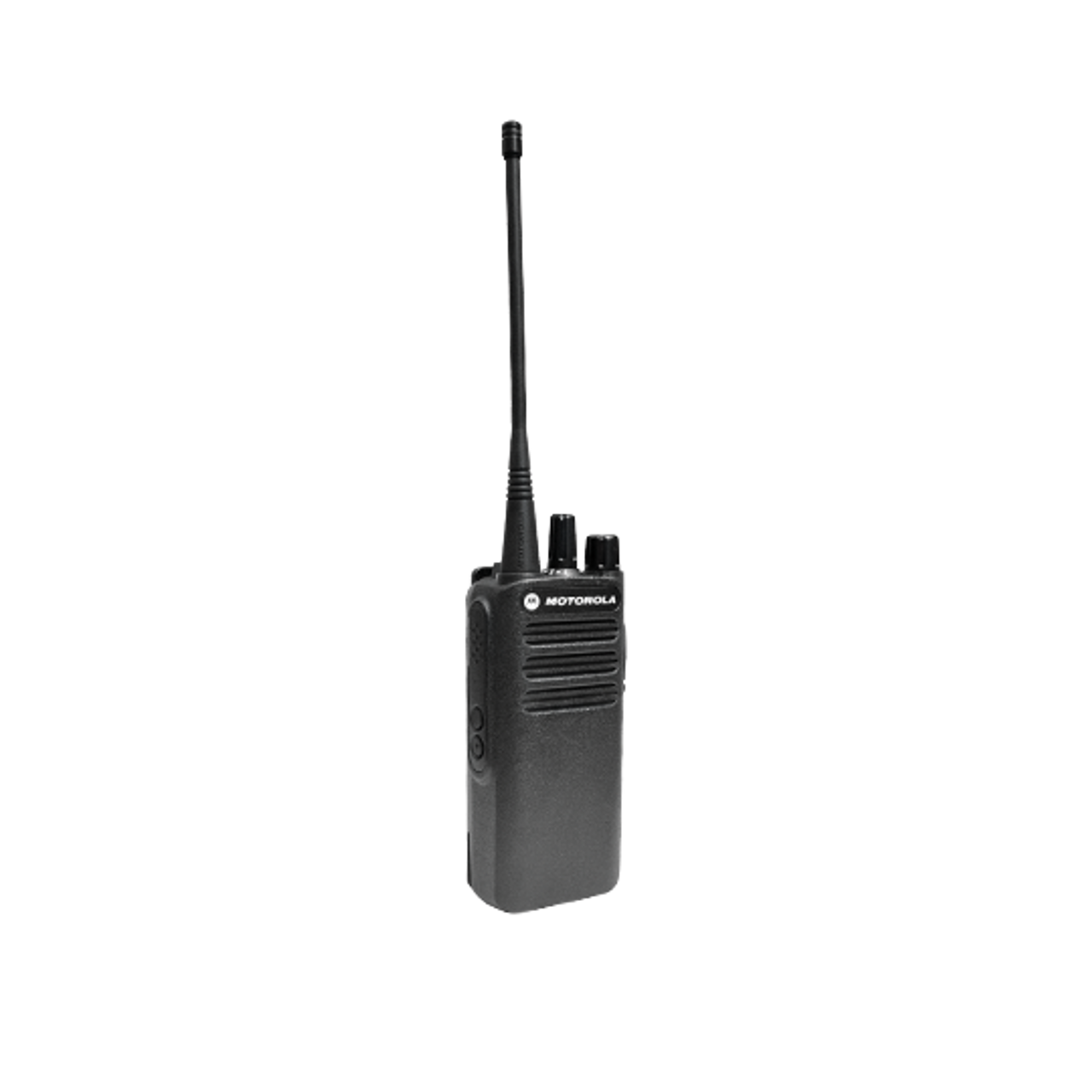
| Spec | Detail |
|---|---|
| Channels | 16 |
| Power | 4 watts (UHF) |
| Coverage | Up to 400,000 sq ft indoors / 2–3 miles outdoors |
| Standout Feature | IP54 rated, pre-programmed text messages, voice announcement |
For expansive vineyard operations, the CP100d-UA offers maximum range and rugged IP54 weather resistance. Pre-programmed text messages and voice announcement features add an extra layer of operational efficiency for larger teams.
Best for Unlimited Coverage: LTE & Wi-Fi Enabled
Motorola WAVE PTX Series
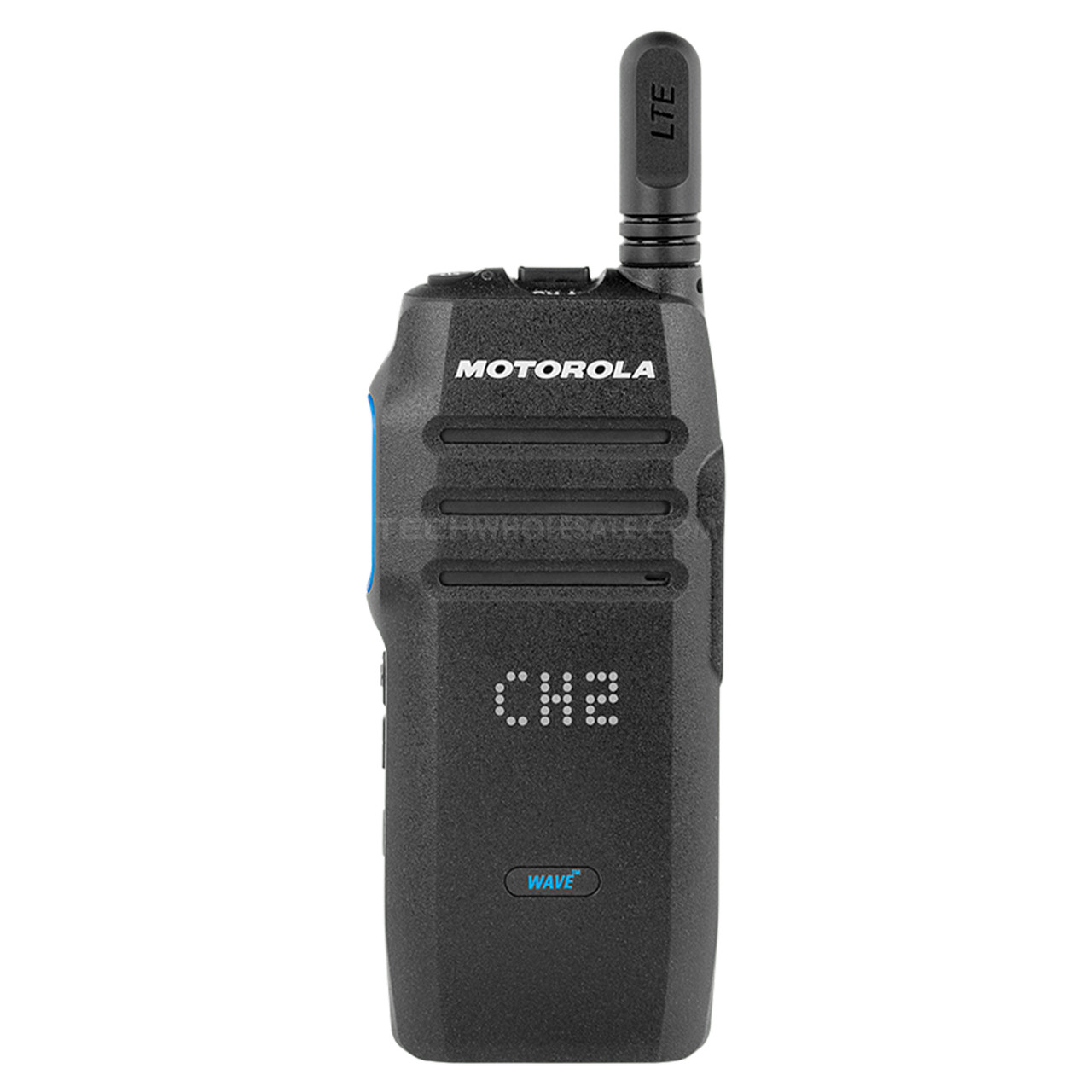
Best for: Multi-location winery groups or estates
| Spec | Detail |
|---|---|
| Coverage | Unlimited (LTE & Wi-Fi) |
| Standout Features | GPS tracking, emergency button, smartphone compatibility |
| Pricing | Monthly subscription per device; lease-to-own options available |
The WAVE PTX series removes all geographic limitations. If your operation spans multiple properties, cities, or even states, this is the solution. GPS tracking lets you locate staff across large properties, and the emergency button adds a layer of safety for outdoor vineyard crews. You can even communicate with WAVE PTX radios directly from your smartphone. A monthly subscription applies per device, but lease-to-own payment options make it easier to get started without a heavy upfront cost.
Making the Right Call
Two-way radios are a straightforward investment with a clear return. Less miscommunication. Fewer delays. A team that's always connected, from the farthest vine row to the front desk.
Here's a quick summary to help guide your decision:
| Winery Size | Recommended Radio |
|---|---|
| Small (under 200,000 sq ft) | Motorola CLP1080e or CLS1410 |
| Mid-size (up to 275,000 sq ft) | Kenwood PKT300 |
| Large with vineyard (up to 400,000 sq ft) | Motorola SL300-UD or CP100d-UA |
| Multi-location / unlimited range | Motorola WAVE PTX Series |
Not sure which model fits your operation? That's exactly why we're here.
Request a quote from Tech Wholesale to get our best possible pricing, and connect with our support team—over 25 years of experience in the two-way radio industry, with lifetime tech support included after your purchase. We'll help you find the right radio, right away.
Frequently Asked Questions
How many radios do I need for my winery?
A good rule of thumb is one radio per active department or operational zone. For a small winery with a tasting room, cellar, and vineyard crew, that might mean six to ten radios. We can help you assess your team structure and recommend the right quantity.
Can radios handle wine spills or outdoor weather?
Durability varies by model. Radios like the Motorola CP100d-UA are IP54 rated for weather and dust resistance, making them a strong choice for outdoor vineyard use. Others, like the CLP1080e, are better suited for indoor tasting room environments.
What's the difference between analog and digital radios?
Digital radios offer better audio clarity, longer range at the same wattage, and the ability to support more advanced features like noise cancellation and text messaging. They generally cost a bit more but are worth the investment for larger or more complex operations.
Is there a monthly cost for most of these radios?
Most of the radios in this guide are subscription-free—buy them once and they're yours. The only exception is the Motorola WAVE PTX series, which requires a monthly subscription per device to access its LTE and Wi-Fi network.