
Two-Way Radios for Synagogues (2026 Buyer's Guide)
What Are the Best Two-Way Radios for Synagogues?
The Short Answer
The best two-way radios for synagogues are the Motorola CLS1410, Motorola Curve, and Motorola SL300-UD. Each model addresses a different facility size and use case: the CLS1410 handles everyday coordination for small to mid-size congregations; the Curve delivers 900 MHz digital coverage and 10-channel capacity for larger campuses and multi-building complexes; and the SL300-UD offers an ultra-thin, discreet profile suited to security staff and clergy who need a radio that disappears in formal dress.
Synagogues operate with a unique combination of demands that most commercial facilities do not share: weekly Shabbat services, high-attendance holiday observances, children's programming, security protocols, and multi-use campus layouts — often running simultaneously. Consumer walkie-talkies fail in this environment. A two-way radio that is too large, too loud, or too complicated undermines both the decorum of the sanctuary and the efficiency of the staff running it.
This guide covers exactly what to look for, which models fit each type of facility, and answers the questions synagogue administrators most commonly ask before purchasing.
Why Synagogues Need Professional Two-Way Radios
Cell phones introduce latency, distraction, and dependency on a cellular signal. A staff member who must unlock their screen, open a contacts app, and wait for a call to connect has already lost several seconds — time that matters during a security incident, a medical event, or a sudden change to the service schedule.
Two-way radios eliminate that latency. A single button press reaches the entire team simultaneously, instantly. There is no dialing, no signal handshake, and no monthly service fee. The hardware cost is a one-time investment; the communication capability is immediate and permanent.
Professional-grade models — as opposed to consumer blister-pack walkie-talkies — are built to survive daily use for five to seven years, carry manufacturer warranties, and operate on frequencies that provide reliable penetration through masonry, concrete, and multi-story structures. For a facility with a high duty cycle — weekly services, daily school programming, special events throughout the year — this durability difference translates directly to total cost of ownership.
Synagogue-Specific Use Cases and Pain Points
Security and Access Control
Security at houses of worship has become an operational priority, not an afterthought. The U.S. Department of Homeland Security's Soft Target Security Planning guide specifically identifies houses of worship as requiring real-time internal communication capability as part of any coordinated security posture. Security personnel at entry points, parking lots, and interior corridors need immediate contact with a central point of command — not a phone call that goes to voicemail.
A dedicated security channel allows perimeter staff to communicate without interfering with greeters or programming teams. Earpiece-equipped radios allow security personnel to receive alerts without drawing attention in the sanctuary.
High-Attendance Holiday Services
Rosh Hashanah, Yom Kippur, and Passover seders routinely draw two to four times a congregation's average weekly attendance. Overflow seating, parking coordination, child check-in lines, and security at multiple entry points all require simultaneous communication across a staff that may include a large number of temporary or seasonal volunteers who have never used the radio system before.
Radios with simple, intuitive controls — a clearly labeled PTT button, a top-mounted channel selector, and a volume knob — reduce training time to minutes. Avoid radios with complex menu systems for volunteer use cases.
Religious School and Children's Programming
Hebrew school and early childhood programs often operate in separate wings or portable buildings removed from the main sanctuary. Staff need reliable coverage across these spaces to manage child check-in and dismissal, coordinate with parents, and respond to medical situations promptly.
Child safety protocols in many congregations require that a child not be released to any adult without confirmation from the original check-in point. A radio link between classroom staff and the main entrance makes this verification fast and auditable.
Facility Operations and Maintenance
Caretakers, A/V technicians, and facilities managers operating across a campus with a sanctuary, social hall, classrooms, kitchen, and parking lot need radios that cover that full footprint without dead zones. A 1-watt UHF radio is adequate for a single building; a campus spanning multiple buildings or more than 200,000 square feet requires 3–4 watts of UHF analog or the equivalent in digital output.
Sanctuary Decorum
Any radio used inside the sanctuary or during services must be operated through an earpiece. An audible transmission during the Amidah or a Torah reading is disruptive. Models like the Motorola CLP1080e and SL300-UD are designed specifically for this use context: earpiece-only or near-silent operation in formal, noise-sensitive environments.
What to Look for in a Synagogue Radio
Power and Coverage
Match power output to your facility's footprint. For a single-building synagogue under 200,000 square feet, 1 watt of UHF power provides adequate coverage. For multi-building campuses or facilities with thick masonry or reinforced concrete construction, plan for 3–4 watts of UHF analog, or a digital radio like the Motorola Curve, which operates on 900 MHz FHSS and covers up to 300,000 square feet indoors. As a rule, building materials matter as much as square footage: a compact stone building can perform like a much larger facility for RF penetration purposes.
Channel Capacity
Most synagogues operate efficiently on three to five dedicated channels:
- Security — Entry points, parking lot, and perimeter monitoring
- Ushers and Greeters — Seating coordination and visitor assistance
- Religious School / Children's Programming — Classroom and check-in coordination
- Clergy and Leadership — Service cues and schedule coordination
- Facilities / A/V — Maintenance, sound, and lighting
For smaller teams, four channels (as in the CLS1410) covers most scenarios. Larger operations with dedicated security and multiple concurrent programs benefit from eight to ten channels.
Form Factor and Discretion
Synagogue environments require a radio that doesn't announce itself. A large, bulky radio on the belt of an usher standing at the sanctuary door changes the atmosphere. Smaller radios in the 3–5 oz. range clip to a waistband or tuck into a jacket pocket. For clergy and executive staff, ultra-thin designs like the SL300-UD (under one inch thick) are appropriate for formal dress contexts.
Battery Life
High holiday services can span eight to twelve hours from setup through post-service programming. Radios should carry a minimum 10-hour battery rating. Multi-unit charging cradles allow hot-swapping depleted batteries on extended days without taking a radio out of service.
Ease of Use for Volunteers
Many synagogue staff members are volunteers who interact with the radio system infrequently. The simpler the control layout, the more reliably volunteers will use radios correctly under pressure. Prioritize radios with a prominent PTT button, a top-mounted channel selector, and minimal additional controls. Avoid models that require menu navigation to change channels or adjust volume.
Recommended Two-Way Radios for Synagogues
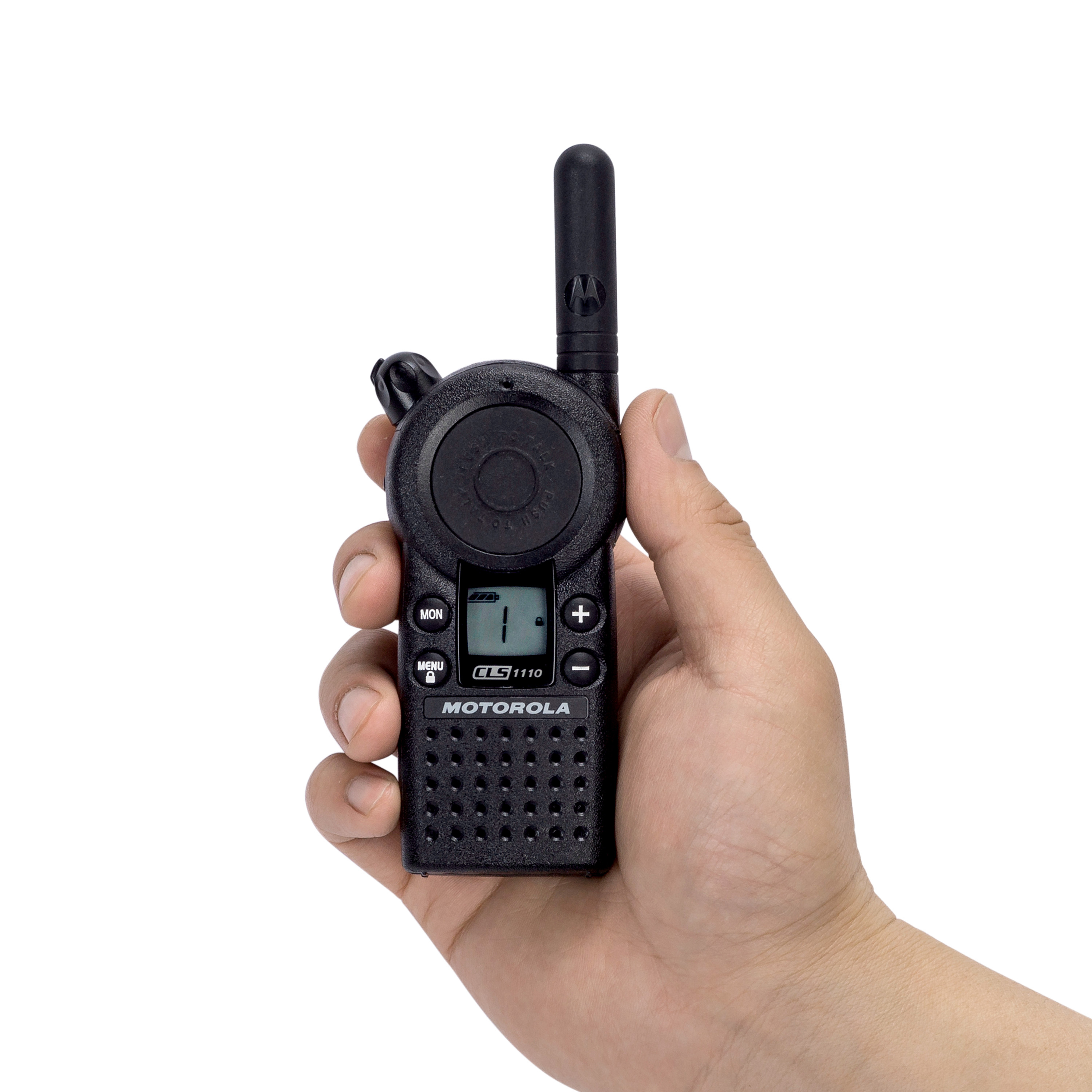
1. Motorola CLS1410 — Best for Small to Mid-Size Synagogues
| Specification | Detail |
|---|---|
| Frequency | UHF (460–469 MHz) |
| Power | 1 watt |
| Channels | 4 |
| Indoor Coverage | 200,000 sq ft / up to 15 floors |
| Battery Life | Up to 18 hours |
| Weight | Under 5 oz. with battery |
The CLS1410 is the most cost-effective professional radio for synagogues that operate within a single primary building. Its four channels map directly onto the core role segments most congregations use: security, ushers, children's programs, and administration. At under 5 oz., it clips to a belt without feeling burdensome over a long Shabbat service or a full day of holiday programming.
The CLS1410's 18-hour battery rating is the longest in its class, making it the correct choice for high holiday service days that begin before morning services and run through afternoon programming. It also supports Vibracall technology, which adds a vibrating alert to incoming transmissions — useful for staff stationed inside the sanctuary who cannot let an audible tone interrupt the service.
Why it fits synagogues specifically
- UHF frequency penetrates masonry sanctuary walls, basement classrooms, and multi-story building layouts
- 4 dedicated channels support clean role segmentation for teams of 5 to 20
- Compatible with surveillance earpieces for sanctuary use
- Simple three-button control layout requires minimal volunteer training
- 18-hour battery life handles full-day holiday observances without recharging
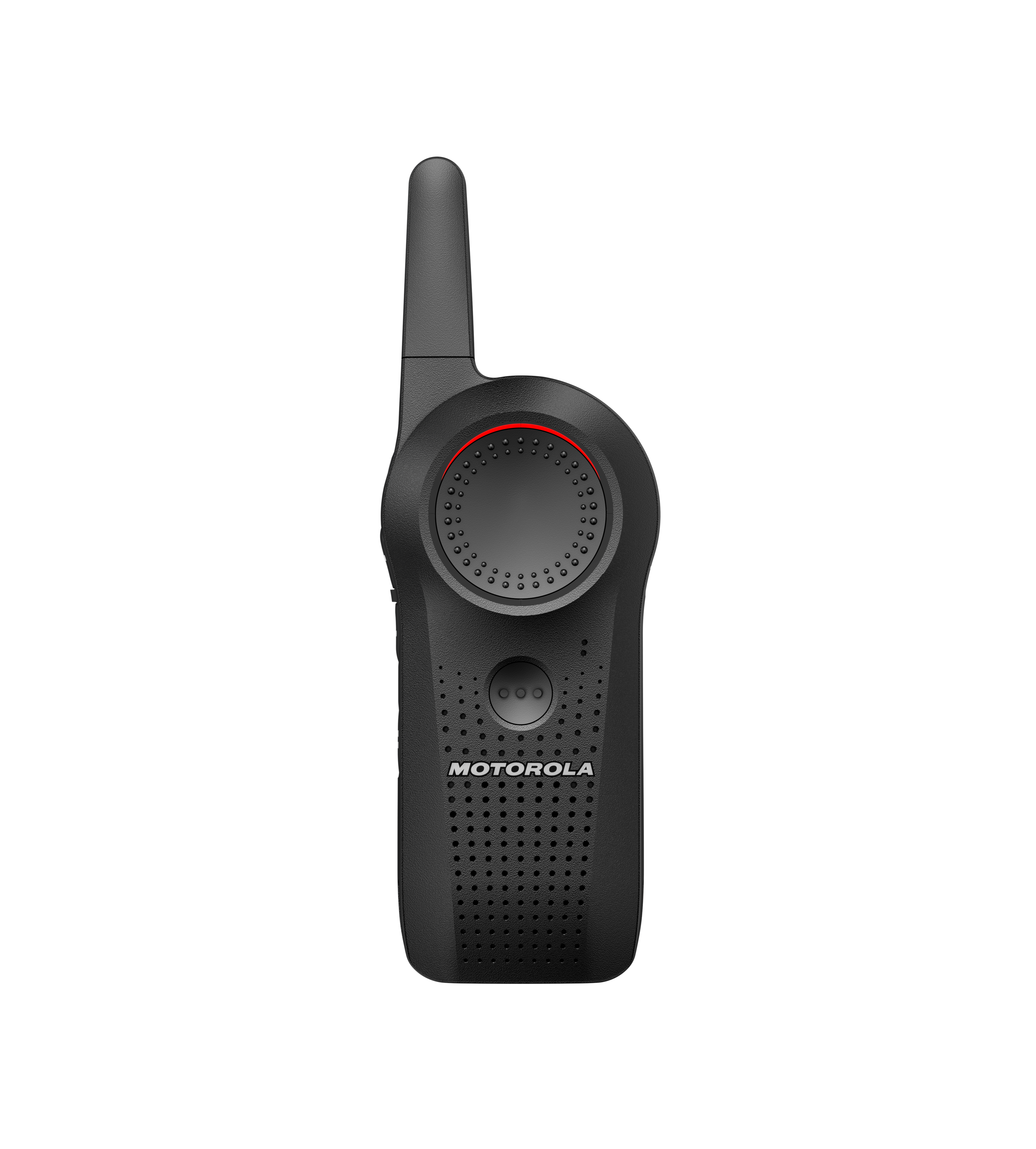
2. Motorola Curve — Best for Large Campuses
| Specification | Detail |
|---|---|
| Frequency | Digital 900 MHz (902–928 MHz) FHSS |
| Power | 1 watt digital (equivalent to ~4 watts analog) |
| Channels | 10 |
| Indoor Coverage | 300,000 sq ft / up to 20 floors |
| Battery Life | Up to 11.5 hours (standard battery) |
| Durability | MIL-STD-810C/D/E/F/G/H certified; IEC 60529 IP5X |
The Motorola Curve is the strongest choice for synagogues with large or complex facilities: multi-building campuses, high-ceiling sanctuaries with stone construction, or sites where staff regularly operate across parking lots and adjacent structures. Its 900 MHz digital signal using Frequency Hopping Spread Spectrum (FHSS) technology penetrates heavy masonry and steel more effectively than UHF analog at comparable output, and covers up to 300,000 square feet indoors without a repeater.
The Curve's 10-channel capacity supports full team segmentation including dedicated channels for security, parking, ushers, clergy, religious school, facilities, and A/V. Its compatibility with Motorola's existing DTR and DLR radio fleets means congregations that already own DTR or DLR units can mix Curve radios into their system without reprogramming.
Why it fits synagogues specifically
- 10 channels support full role segmentation for large, multi-team operations
- 300,000 sq ft / 20-floor coverage handles multi-building campuses and complex layouts
- FHSS digital technology provides encrypted, interference-resistant communication
- MIL-STD-810 certified construction withstands daily use across outdoor and indoor environments
- Compatible with surveillance earpieces for discrete in-sanctuary communication
3. Motorola SL300-UD — Best for Security Staff and Clergy

| Specification | Detail |
|---|---|
| Frequency | UHF (403–470 MHz), analog and digital |
| Power | 3 watts (Range Max technology) |
| Channels | 99 |
| Indoor Coverage | Up to 350,000 sq ft / 35 floors |
| Thickness | Under 1 inch |
| Display | Active View hidden-panel display |
The SL300-UD is built for users who need a radio that is invisible in formal environments. At under one inch thick, it fits inside a jacket pocket or clips to a waistband without any visible profile under dress clothes. Security personnel and clergy who wear suits, dress uniforms, or formal attire during services can carry this radio without it altering their appearance.
Its Range Max technology delivers performance equivalent to a 4-watt radio while operating at 3 watts, providing 350,000 sq ft / 35-floor indoor coverage — the largest footprint of any radio in this guide. The Active View display presents channel information behind the front casing panel rather than on a traditional glass screen, eliminating a common failure point in field use.
The SL300-UD supports both analog and digital operation, making it compatible with existing analog radio fleets while providing the option to migrate to digital as the organization's needs evolve.
Why it fits synagogues specifically
- Under 1 inch thick — disappears under formal dress clothing for clergy and executive staff
- 35-floor / 350,000 sq ft coverage handles the largest synagogue campus layouts
- 99 channels provide maximum flexibility for large, multi-department organizations
- Dual analog/digital mode protects existing radio investment during fleet transitions
- Compatible with surveillance earpieces for sanctuary use
Also Worth Considering
Motorola CLP1080e — 1 watt, 8 channels, UHF (450–470 MHz), 100,000 sq ft / 10-floor coverage. Earpiece-only design with included discreet earpiece and under-4-oz. form factor. A strong choice for ushers and greeting teams who need eight-channel capacity in a discreet, lightweight package. Can be extended to 20-floor coverage with an optional repeater.
Motorola CP100d-UA — 4 watts, 16 channels, UHF (403–480 MHz), IP54-rated. The right choice for facilities and maintenance teams that need maximum UHF power and dust/water resistance for outdoor parking and grounds work. IP54 rating confirms resistance to dust and directional water spray — appropriate for outdoor use in variable weather conditions.
Coverage by Facility Size: Matching Radio to Synagogue
| Facility Type | Recommended Radio | Coverage Capacity |
|---|---|---|
| Single building under 200,000 sq ft | Motorola CLS1410 | 200,000 sq ft / 15 floors |
| Multi-use building or complex up to 300,000 sq ft | Motorola Curve | 300,000 sq ft / 20 floors |
| Large campus or multi-building complex | Motorola SL300-UD or CP100d-UA | 350,000 sq ft / 35 floors |
| Multi-building campus with outdoor areas | Motorola CP100d-UA | 4 watts UHF; repeater-compatible |
For facilities with stone or poured concrete construction, plan conservatively: signal penetration through heavy masonry is significantly reduced compared to standard commercial construction. A 100,000-square-foot stone building may require the same radio power as a 200,000-square-foot steel-frame building. When in doubt, consult with our team about a site walk or coverage test before purchasing.
Frequently Asked Questions
What is the best two-way radio for a synagogue?
For most synagogues, the Motorola CLS1410 is the strongest everyday choice: 4 channels, 200,000 sq ft coverage, 18-hour battery life, and a simple control layout that volunteers can operate without training. For larger campuses, the Motorola Curve is the better fit — it covers 300,000 sq ft and supports 10 channels for full team segmentation. For security staff and clergy who need a radio that disappears under formal dress, the SL300-UD is the correct answer.
How much range do I need for a synagogue?
For a single-building synagogue under 10,000 square feet, 1 watt of UHF provides adequate coverage with room to spare. For multi-floor buildings or facilities with stone or concrete construction, plan for a radio rated at 200,000 sq ft or more, and factor in a 30–50% reduction in effective range for heavy masonry. For multi-building campuses, a 300,000–350,000 sq ft radio or a repeater system is appropriate. If in doubt, contact our team for a site-specific recommendation.
How long does the battery last on a synagogue radio?
The radios recommended on this page carry 10–18-hour battery ratings under normal use. The Motorola CLS1410 has the longest rated battery life at 18 hours — sufficient for the longest high holiday service days. The Motorola Curve delivers up to 11.5 hours on its standard battery, and up to 16 hours with the optional high-capacity battery. For multi-day events or extended programming, multi-unit charging cradles allow battery swaps without taking a radio out of service.
Can radios be used discreetly inside the sanctuary?
Yes, with the right equipment. All of the radios recommended on this page are compatible with surveillance earpieces, which route both audio input and output through a small, flesh-colored earpiece. Staff wearing an earpiece can receive and transmit without any audible sound in the surrounding area. The Motorola CLP1080e is designed specifically for earpiece-only use and includes an earpiece in the box. The SL300-UD's ultra-thin profile and front-casing display also make it the most inconspicuous option for staff in formal dress.
How many radios does a synagogue need?
A practical starting point is one radio per active operational role per shift. For a typical Shabbat service, this usually means: 2–3 security personnel, 2–4 ushers, 1 facilities/A/V contact, and 1 rabbi or program director — a total of 6–10 units. High holiday services with expanded parking coordination and larger volunteer teams may require 15–25 radios. Tech Wholesale offers volume pricing on orders of five or more units; request a quote for fleet pricing.
Are two-way radios suitable for synagogue security teams?
Yes. This is one of the primary use cases for professional radios in houses of worship. The U.S. Department of Homeland Security's resources for soft target security planning identify real-time internal communication as a core component of an effective security posture for religious facilities. Dedicated security channels allow perimeter staff to communicate without interfering with service teams, and earpiece-equipped radios allow security personnel to operate without drawing attention in the sanctuary. For organizations coordinating with law enforcement, a radio system also provides a faster escalation path than a cell phone in a time-critical situation.
What durability rating should I look for in a synagogue radio?
For general synagogue use (indoor ushers, clergy, administrative staff), commercial-grade water resistance and drop protection are sufficient. For security staff and facilities teams that operate outdoors in variable weather, look for radios rated at IP54 or higher (the Motorola CP100d-UA) or MIL-STD-810 certification (the Motorola Curve). IP54 indicates resistance to dust ingress and directional water spray. MIL-STD-810 certification tests for shock, vibration, temperature extremes, humidity, and dust. Consumer walkie-talkies carry no equivalent ratings and typically fail within 12–18 months under commercial use loads.
Can volunteers learn to use these radios quickly?
Yes, provided you choose the right model. The Motorola CLS1410 and Curve are specifically designed for ease of use: a single PTT button, a top-mounted channel knob, and a volume control cover the full range of normal operation. Most volunteers are fully operational after a two-to-five-minute walkthrough. More complex models with display menus (like the CP100d with 16–160 channels) require slightly more onboarding time and are better suited to permanent staff rather than rotating volunteers.
Why Buy from TechWholesale.com
Tech Wholesale has been supplying professional two-way radios to religious organizations, schools, and commercial businesses since 1997. We are an authorized dealer for Motorola and Kenwood, which means every radio we sell carries the full manufacturer warranty — typically two years on commercial-grade models — and qualifies for manufacturer service and repair. Gray market or unauthorized inventory voids the manufacturer warranty; our authorized dealer status ensures yours is always intact.
What sets us apart for houses of worship
- Lifetime technical support included with every purchase — call or email our team for the life of your radio fleet, not just through the warranty period
- Free quotes — request a custom quote
- No-pressure consultation — we will tell you when a less expensive radio is the right answer for your facility
- Free shipping on qualifying orders
- Authorized dealer status — no gray market inventory, no voided warranties
Not sure which radio fits your building? Use our Find My Radio tool, or request a quote. We'll ask a few questions about your facility layout and come back with a specific recommendation — no sales pressure, no obligation.
1-888-925-5982 Service@TechWholesale.com
Related Reading
On TechWholesale.com
- Frequency Hopping Spread Spectrum (FHSS) Explained
- UHF vs. VHF — Frequencies Explained
- VOX (Hands-Free Transmission) Explained
- Privacy Codes — Eliminate Outside Interference
- Two-Way Radios for Churches
- Find My Radio — Radio Selector Tool
External References
Article by Kristin Wood, a two-way radio consultant @ Tech Wholesale | Authorized Motorola & Kenwood Dealer Since 1997 | Last Updated: May 2026