
Managing a busy congregation requires precise coordination.
Weekly services bring a rush of families, children, and visitors to your building. Volunteers are spread across the property directing traffic, welcoming guests, and monitoring entry points.
When a schedule changes or a security situation unfolds, you need instant communication to keep your community safe.
We don't want you to buy any radio just because you like the name or the price. We want you to make an educated decision and purchase the perfect radio that is discreet, easy to use, and gets reliable coverage within your building.
This guide will walk you through exactly what to look for when outfitting your team.
Why Radios Over Smartphones
When you rely on cell phones for team coordination, delays happen. Unlocking a screen, finding a contact, and waiting for the call to connect takes precious time. Two-way radios close the communication gap instantly. A single button press relays your message to the entire team without hesitation.
Smartphones also introduce unwanted interruptions. Text messages, news alerts, and social media notifications can easily pull a volunteer's attention away from their duties. Two-way radios offer a distraction-free alternative focused entirely on operational needs.
Furthermore, professional two-way radios do not require cell service to use and require no monthly subscription. You pay for the hardware once, and your team enjoys clear communication every time they power the devices on.
Power and Range
Matching a radio's power output to your facility size guarantees you won't deal with static or dead zones. Building materials like thick concrete, steel, and brick can obstruct signals. Selecting the proper wattage ensures your transmissions penetrate these barriers effectively.
For small to medium buildings, 1 to 2 watts of power will do the trick. With this power level, you can get from 100,000 to 200,000 square feet of coverage. This is typically plenty of power for a single sanctuary and adjacent classrooms.
Larger facilities or multiple buildings, covering 200,000 to 400,000 square feet, require more powerful radios. Look for devices in the 3-to-4 watt range on analog, or a 3-watt digital equivalent. These higher-powered units transmit clearly through walls, basements, and across expansive parking lots.
Channel Segmentation
Using a single channel for your entire staff quickly leads to disorganized chatter. By assigning specific groups to their own channels, you keep critical communication lines clear and relevant.
Most religious organizations operate efficiently with a simple channel plan:
- Security: Monitoring access doors and responding to safety alerts.
- Greeters and Ushers: Coordinating seating, handing out materials, and assisting visitors.
- Clergy and Leadership: Relaying cues for the service and managing schedule adjustments.
- Children's Programs: Requesting supplies and managing child check-in lines.
You can also use channels to set up private conversations. You can easily say over the main line, "Sam, call Tom on channel two." Sam and Tom can then have an in-depth conversation over the radio without bothering the rest of the staff.
Key Features for Volunteers
Your team consists of individuals with varying levels of technical expertise. The equipment you choose must be easy to use so volunteers can operate it confidently without extensive training. Look for intuitive interface designs featuring a prominent push-to-talk button and easily identifiable volume controls.
Battery life is another critical factor. Weekend services, community events, and holiday observances often demand long hours from your staff. You need power that lasts. Prioritize models rated for at least 10 to 14 hours of continuous use to avoid devices dying halfway through an important event.
Finally, consider the physical build of the device. Radios get dropped, bumped, and knocked off belts. Consumer-grade walkie-talkies rarely survive constant use. You should invest in commercial radios built to military standards for shock, vibration, and dust resistance. These robust units are tested for years of use and will significantly lower your long-term replacement costs.
Top Recommended Models
For Synagogues 100k - 200k Square Feet
If your operations are contained within a single primary building, you need lightweight, efficient devices that are easy for volunteers to carry all day.
Motorola CLS1410
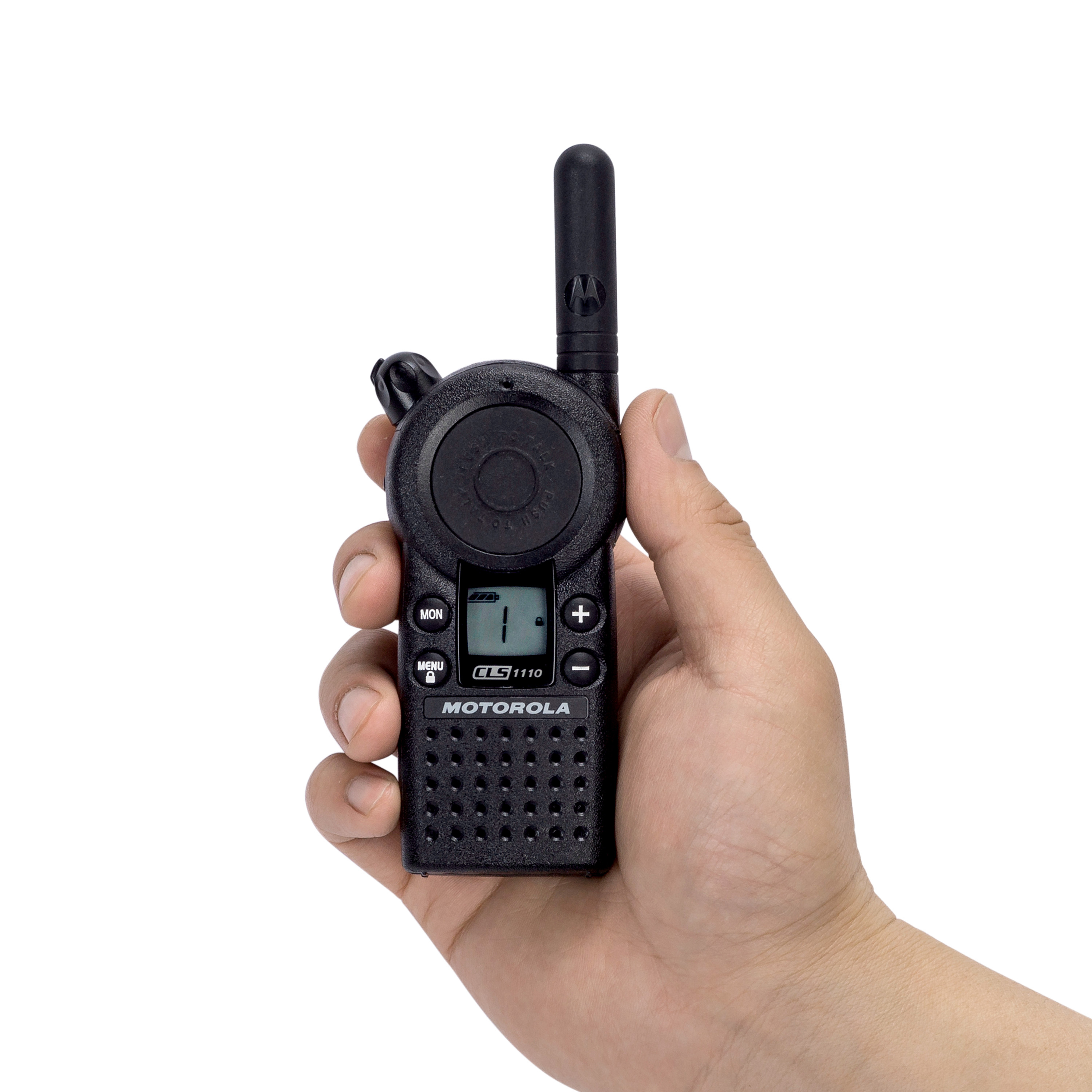
The Motorola CLS1410 is remarkably simple to use and highly cost-effective. It provides 1 watt of power and four channels, making it a perfect fit for segmenting a few key volunteer teams. Weighing less than 5 ounces, it clips easily to a belt without feeling bulky. The battery delivers up to 18 hours of life, ensuring it will last through the longest shifts.
Motorola Curve
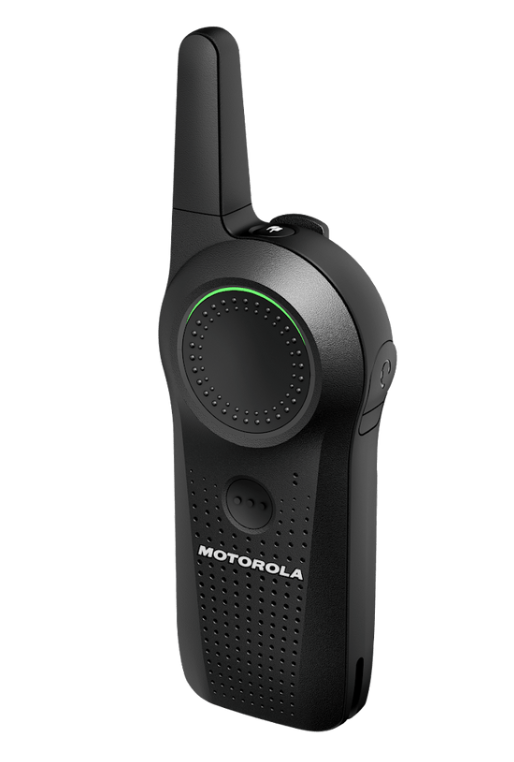
The Motorola Curve brings advanced functionality to a familiar, rugged form factor. Operating on a 900 MHz digital band, it provides up to 300,000 square feet of coverage and does not require an FCC license. The Curve offers 10 channels for team organization. It is an exceptional choice for organizations wanting clear digital audio and a highly intuitive user experience.
For Synagogues 300k - 400k Square Feet (or Multiple Buildings)
Motorola CP100d-UA
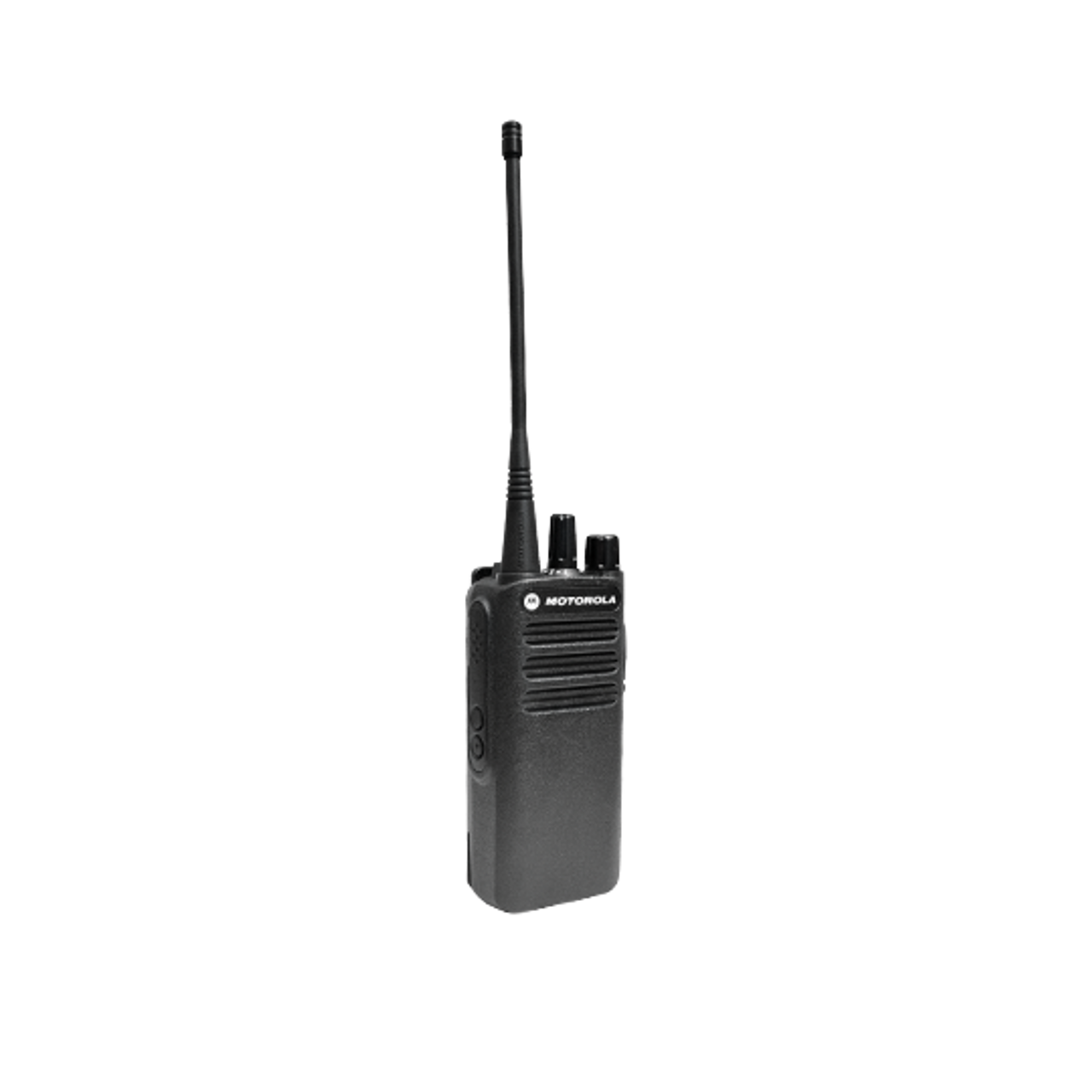
The CP100d-UA is a workhorse built for the toughest conditions. With 4 watts of UHF power, it pushes signals through dense concrete walls and across large outdoor spaces. It is available in display and non-display versions, offering between 16 and 160 channels. The CP100d is IP54 rated for dust and water resistance, meaning it will easily handle the demands of outdoor parking coordination and facility maintenance.
Motorola SL300-UD

The Motorola SL300-UD redefines portability. Measuring under an inch thick, this digital UHF radio can be carried in a pocket or purse without bulging. It uses Range Max technology to deliver communication performance equivalent to a 4-watt radio while operating on 3 watts. It features an innovative Active View display hidden behind the front casing, providing channel information without the fragility of a standard glass screen. It is an excellent choice for leadership and security personnel who require a discreet, ultra-modern device.
Frequently Asked Questions
Do we need an FCC license for our radios?
Many commercial radios operating on UHF or VHF bands require an FCC business license. The licensing process assigns you specific frequencies, preventing interference from nearby businesses. However, if you prefer to avoid the licensing process entirely, you can opt for digital devices like the Motorola Curve, which operate on license-free ISM bands.
A license is not required to purchase radios.
Can we use earpieces with these radios?
Yes. All of the recommended Motorola models are compatible with external audio accessories. Surveillance earpieces are highly recommended for security teams and ushers. They allow your staff to receive sensitive information quietly, maintaining a respectful and reverent atmosphere in the sanctuary.
How long do commercial two-way radios last?
High-quality commercial models are engineered to withstand harsh environments. When properly maintained, devices built to military specifications routinely last five to seven years. Purchasing durable units upfront eliminates the frustration and recurring expense of replacing cheap consumer walkie-talkies every few months.
Secure Your Community Today
Equipping your facility with the right technology is a proactive step toward a safer environment. Two-way radios provide the instant, reliable, and clear communication your staff needs to coordinate services smoothly and respond to emergencies quickly.
By matching the radio's wattage to your square footage and selecting models known for their durability, you set your team up for success. Reach out to our team today to discuss your specific building layout and secure the exact devices your congregation needs to stay connected.