
The Best Two-Way Radios for Schools
If a lockdown happened right now—how quickly could every teacher on campus be reached?
That question keeps a lot of school administrators up at night. And it should. When seconds matter, relying on cell phones, intercoms, or someone running down the hallway simply isn't good enough.
Two-way radios give schools the instant, reliable communication they need—no dead zones, no delays, no dropped calls.
But not all radios are built the same. Buy the wrong one, and you're dealing with static, short battery life, and devices that fall apart within a year.
Buy the right one, and your entire team stays connected from the front office to the far corner of the playground.
We've sold thousands of radios to schools across the country.
This guide pulls together everything we've learned so you can choose the right radio—one with the coverage, features, and durability your campus actually needs.
Why Schools Are Turning to Two-Way Radios
Picture a typical school day. Mrs. Thompson's third graders are waiting to be walked to the library, but no one showed up. The front office is trying to locate the janitor for a hallway spill, but he's nowhere to be found. A student gets sick on the playground—and the nurse has no idea because no one can reach her.
Everyone is doing their job. But without instant communication, things slip through the cracks.
Two-way radios eliminate those gaps. They connect your entire staff—teachers, aides, admin, custodians, security—instantly and reliably. No cell signal required, no app to open, no delay. Just press and talk.
What to Look for in a School Two-Way Radio
Choosing the right radio comes down to more than just price. Here's what matters most for a school environment.
Campus Coverage
Match the radio's power to your building size. Getting this wrong in either direction costs you—overpowered radios mean overpaying, underpowered ones mean dead zones.
- Smaller schools: 1–2 watts of power typically covers 100,000–270,000 square feet. That's more than enough for most single-building campuses.
- Multiple locations or large districts: Radios that use LTE and Wi-Fi—like the Motorola WAVE PTX series—provide unlimited coverage across buildings, cities, or even states. Or powerful 3-4 watt UHF radios for multi-building campuses.
Number of Channels
Channels keep communication organized and reduce unnecessary chatter. For most schools, three dedicated groups work well:
- Admin & Front Office: Student pickups, attendance, announcements, and general operations.
- Teachers & Aides: Classroom support, recess coordination, student transitions, and quick check-ins.
- Custodial & Maintenance: Spills, repairs, and facility needs—handled without interrupting instructional staff.
Channels also allow for private conversations. "Roger, call Lisa on channel two." Simple as that. Those two staff members can then talk freely without cluttering the main channel—reducing noise and ear fatigue for everyone else.
Key Features That Matter in a School Setting
When evaluating any radio for your school, look for:
- Clear audio quality: Staff must be heard even in noisy hallways or on a crowded playground.
- Long battery life: Should last a full school day on a single charge.
- Durability: Built to handle drops, bumps, and constant daily use.
- Emergency alert button: Sends a distress signal instantly if there's a safety concern.
- Compact and lightweight design: Easy to clip onto a belt or carry in a pocket all day.
- Private channels: Protects sensitive conversations and prevents interference.
- Group and one-to-one communication: Reach everyone at once, or just one person quietly.
- Easy-to-use interface: No tech training required—staff should be able to pick it up and go.
Brand Quality
Don't cut corners on brand. A cheap, off-brand radio might save money upfront, but if it falls apart in year one, you've wasted the investment entirely. Motorola and Kenwood are the two most trusted names in the industry—purpose-built for reliable communication, tested for five years of field use, and backed by manufacturer warranties ranging from one to three years depending on the model. They're also cost-effective in the long run, since they eliminate the need for monthly cell phone plans.
Our Top Two-Way Radio Picks for Schools
Based on our experience working with thousands of schools, here are the models we recommend most.
Motorola CLS1410 — Best for Smaller Campuses
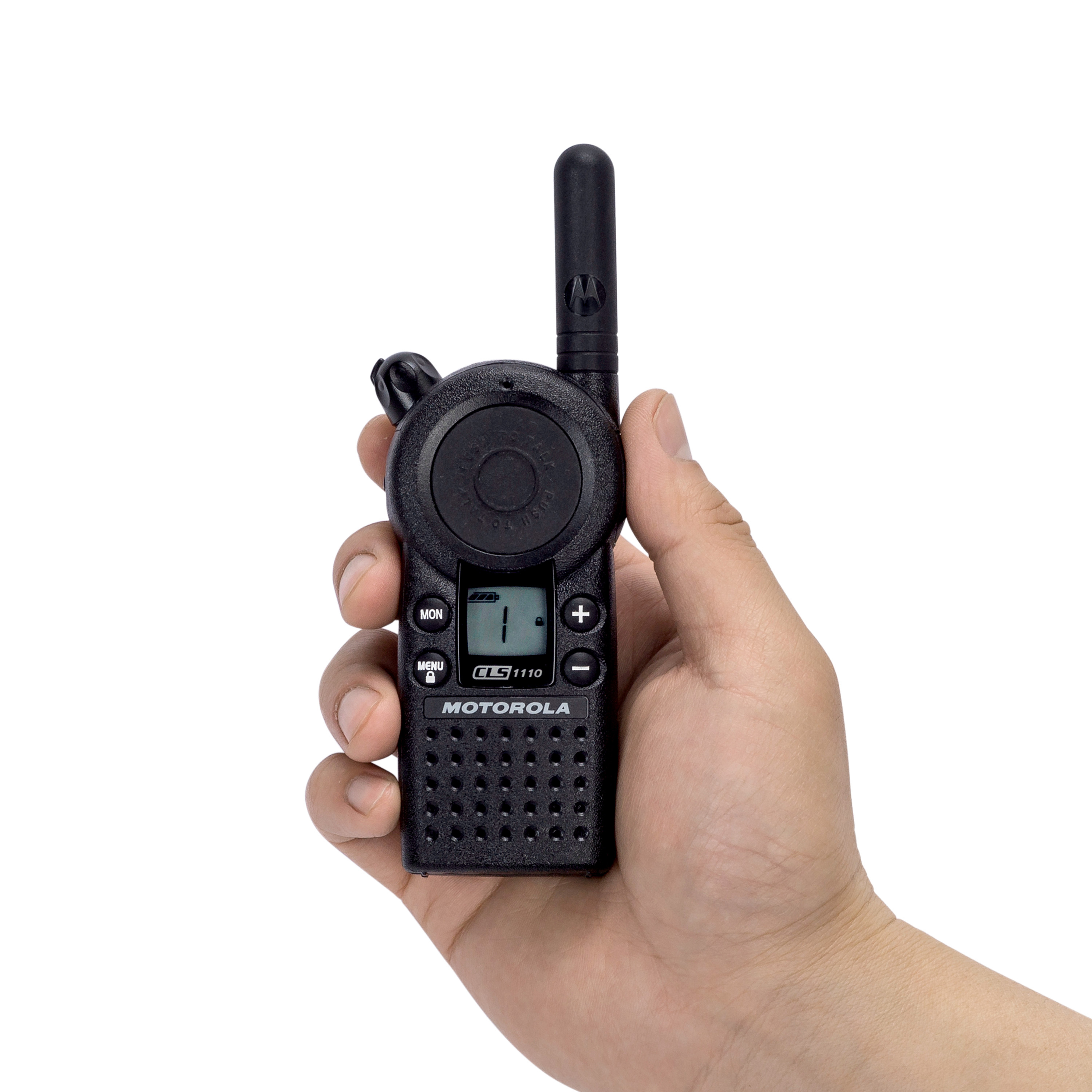
The CLS1410 is a no-fuss radio that does exactly what a school needs. It's easy to operate, reliable, and built to last.
- Channels: 4
- Power: 1 watt, UHF
- Coverage: Up to 200,000 sq ft
- Highlights: Clear display, long battery life, user-friendly interface
A solid pick for smaller schools that need straightforward communication without complexity.
Motorola Curve — Best Overall for Schools
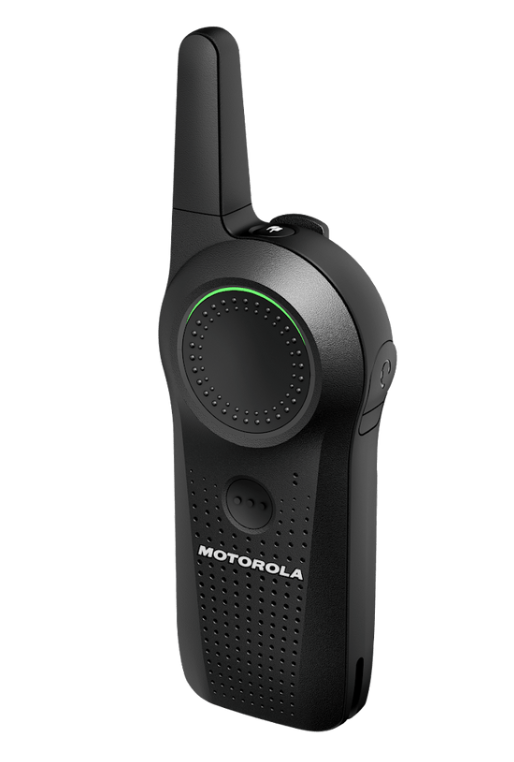
The Curve is our top recommendation for most schools. It uses advanced digital technology that delivers clearer audio and extended range compared to standard analog radios—without requiring an FCC license.
- Channels: 10
- Power: 1 watt digital (equivalent to 4 watts analog)
- Coverage: Up to 300,000 sq ft
- Highlights: Flexible call options including "call-all available" and private reply, no FCC license required
The no-license requirement alone makes this radio a standout for schools. You get premium digital performance without the administrative hassle.
Motorola CP100d-UA - Best for Large Schools with Multiple Buildings
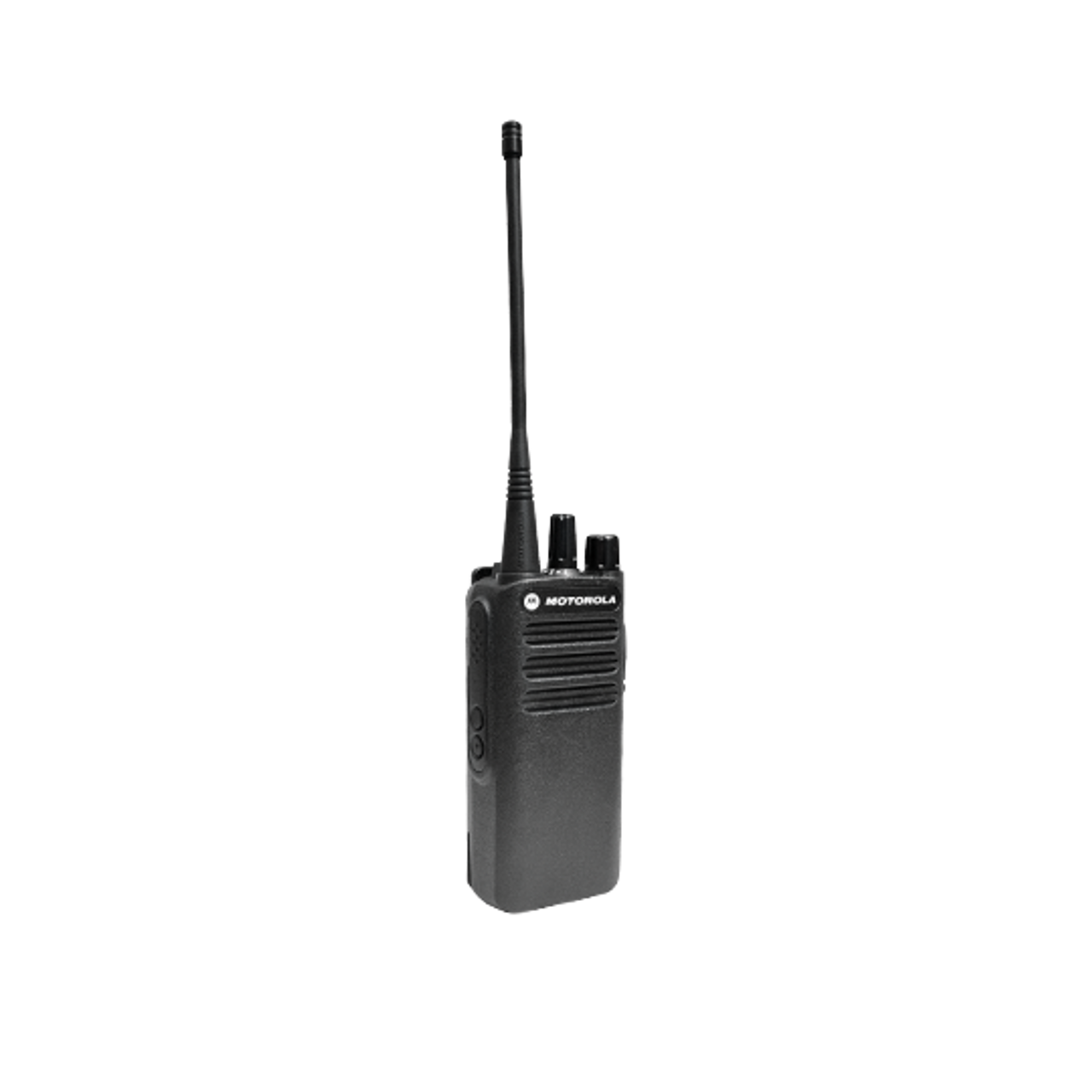
- Channels: 16
- Power: 4 watt UHF
- Coverage: Up to 370,000 sq ft
Motorola WAVE PTX Series — Best for Multi-Location Districts
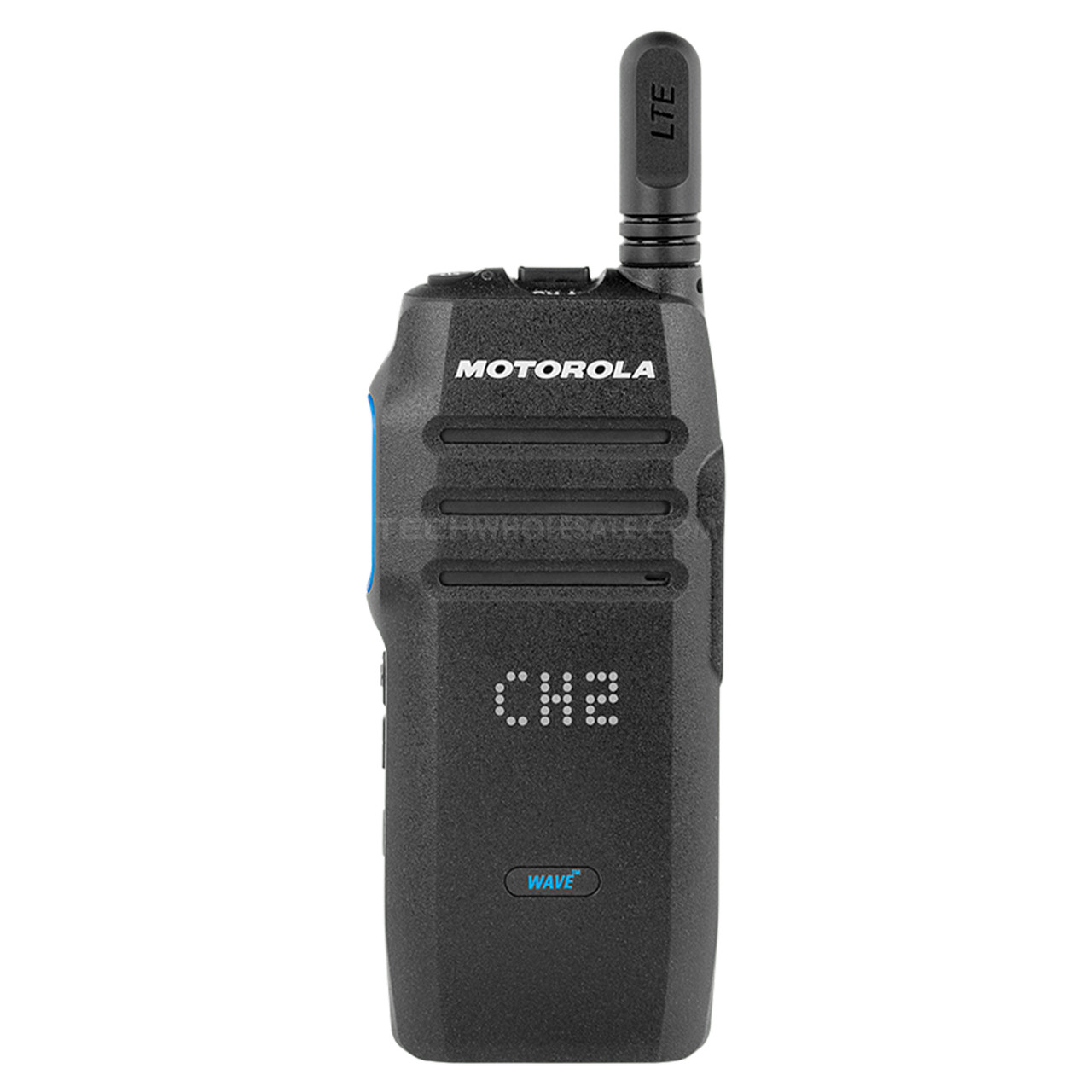
For school districts operating across multiple buildings, campuses, or even different cities, the WAVE PTX series is in a league of its own.
- Coverage: Unlimited, via LTE and Wi-Fi
- GPS tracking: Locate staff in real time
- Emergency button: Staff safety at the push of a button
- Phone integration: Communicate with radios directly from a smartphone
- Failsafe: When Wi-Fi or cell service goes down, the radio falls back to antenna-to-antenna mode, covering up to 350,000 sq ft
The WAVE PTX does require a monthly subscription per device, but lease-to-own payment options are available to keep upfront costs manageable.
Real-world result: In a case study by Motorola, Greater Dayton School implemented the TLK 100 (part of the WAVE PTX family) and reported clearer, more reliable communication across their transport teams—with no coverage drops and significantly improved audio quality compared to their previous system.
Frequently Asked Questions
Do schools need an FCC license to use two-way radios?
It depends on the radio. Most business-band radios require an FCC license, but some models—like the Motorola Curve—operate on frequencies that don't require one.
A license is not required to purchase two-way radios.
How many radios does a school typically need?
A good rule of thumb: one radio per staff member who needs to be reachable during the school day. That typically includes admin staff, teachers (especially those supervising transitions or recess), custodians, security, and the school nurse.
Are two-way radios better than cell phones for schools?
For on-campus communication, yes—by a wide margin.
Radios are instant (no dialing, no waiting), don't rely on cell service, and allow one-to-many communication. They're also more durable and significantly cheaper to operate long-term with no monthly phone plan.
Ready to Equip Your School?
The right two-way radio doesn't just improve communication—it strengthens your school's safety net. From coordinating a routine student pickup to responding to a campus emergency, instant and reliable communication makes every difference.
For most schools, the Motorola Curve is the clear choice. It offers digital-grade performance, no FCC license requirements, and coverage that handles most single-campus environments with ease. Need coverage across multiple locations? The Motorola Cp100d-UA has you covered.
Not sure which model is right for your specific campus? Our team has over 25 years of experience in the two-way radio industry and can walk you through the best option for your needs. Request a quote today for our best possible pricing—and get lifetime tech support included with every purchase.