

Many masonry crews rely on shouting and hand signals until the mixer, the saw, and the wind make that impossible. Consumer walkie-talkies don’t survive long either, between mortar, dust, rain, and drops off the scaffold.
Business-grade radios cut through job site noise, and their rugged, sealed build stands up to masonry work, protecting your investment for years.
Ready to find the right fit? We’ve set up radio systems for hundreds of masonry teams nationwide since 1997. Here’s how to choose the radio that works for yours.
What Makes a Radio Right for Masonry?
Masonry work is demanding. Your radios need to keep up. Here's what matters most when choosing a walkie-talkie for your crew:
- Durability: Dust, vibration, rain, and extreme temperatures are part of the job. Your radio needs to handle all of it without flinching.
- Signal penetration: Masonry sites often involve concrete structures, vehicles, and other obstructions. A radio that loses signal the moment someone steps inside a building is useless.
- Battery life: Long shifts mean your radios need power that lasts all day—not a device that dies by noon.
- Ease of use: Workers wearing gloves shouldn't have to fiddle with complicated controls. Simple channel switching and intuitive operation matter.
- Audio clarity: Job sites are loud. Noise cancellation and strong audio output make the difference between clear communication and constant repetition.
Get these five things right, and your crew stays connected. Miss even one, and you'll feel it in your project timelines.
VHF vs. UHF: Which is Better for Masonry?
This is one of the most important decisions you'll make when selecting radios. The frequency band you choose directly impacts how well your radios perform on-site.
VHF Radios for Masonry
VHF (Very High Frequency) radios perform best in wide-open outdoor spaces with minimal obstructions. If your masonry work takes place entirely in open fields or flat terrain, VHF can offer impressive range.
The problem? Most masonry job sites aren't perfectly open. Buildings, equipment, vehicles, and even dense tree lines can block VHF signals and reduce coverage significantly.
Recommended VHF models:
These are solid options if your team works exclusively in flat, open outdoor environments.
UHF Radios for Masonry
UHF (Ultra High Frequency) radios are the better choice for most masonry teams. Their signals penetrate concrete, wood, and metal—exactly the materials you're working with every day.
Recommended UHF models:
Top Two-Way Radios for Masonry
Motorola RMU2040 — Best Overall for Masonry
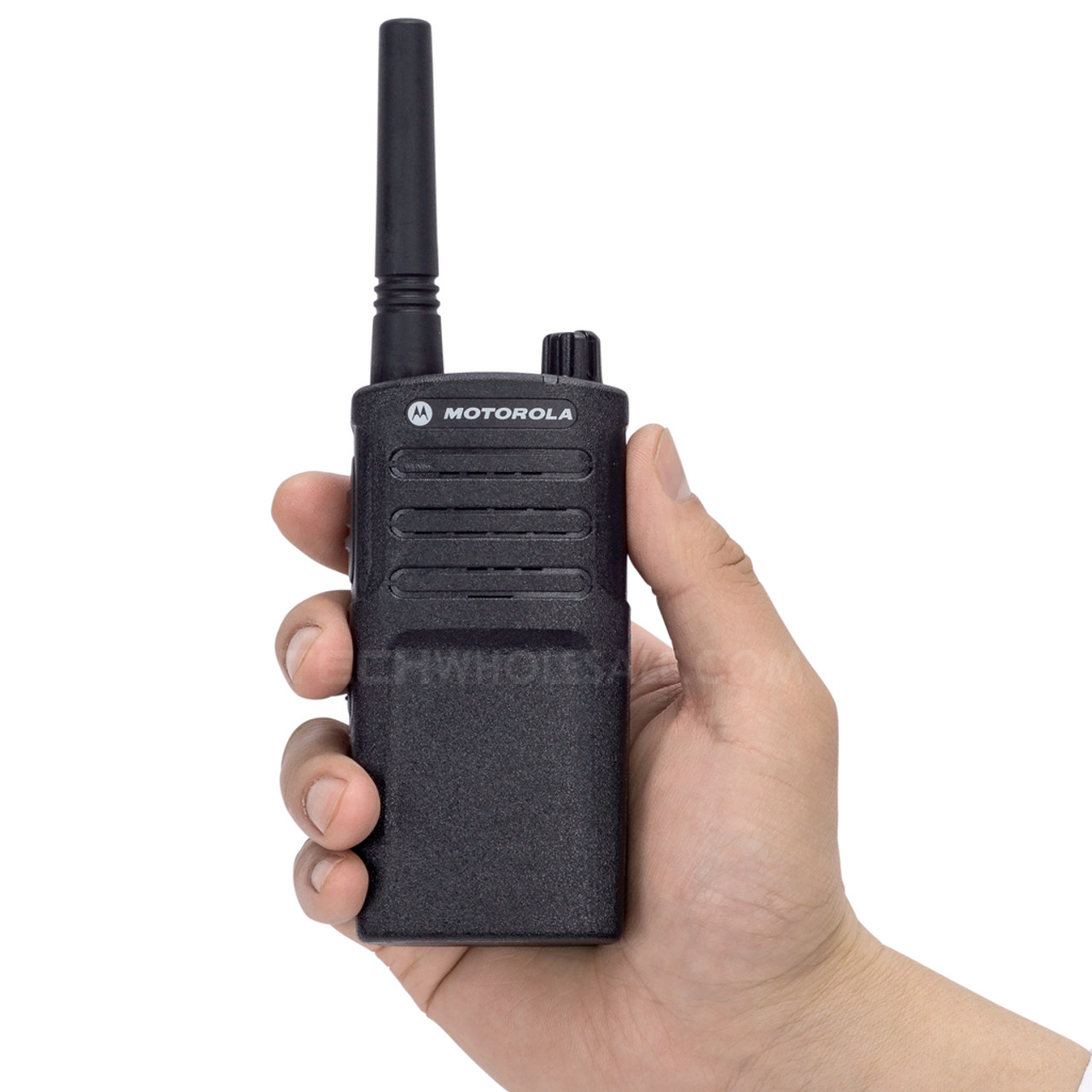
If there's one radio we recommend above all others for masonry work, it's the Motorola RMU2080.
Key features:
- Military-spec durability (MIL-STD 810 C, D, E, F)
- IP54/55 water and dust resistance
- UHF frequency for strong indoor/outdoor signal penetration
- Exclusive business frequencies for secure communication
- NOAA weather radio with emergency alerts
- Compact, lightweight design
Motorola CP100d-UA — Best Budget Option
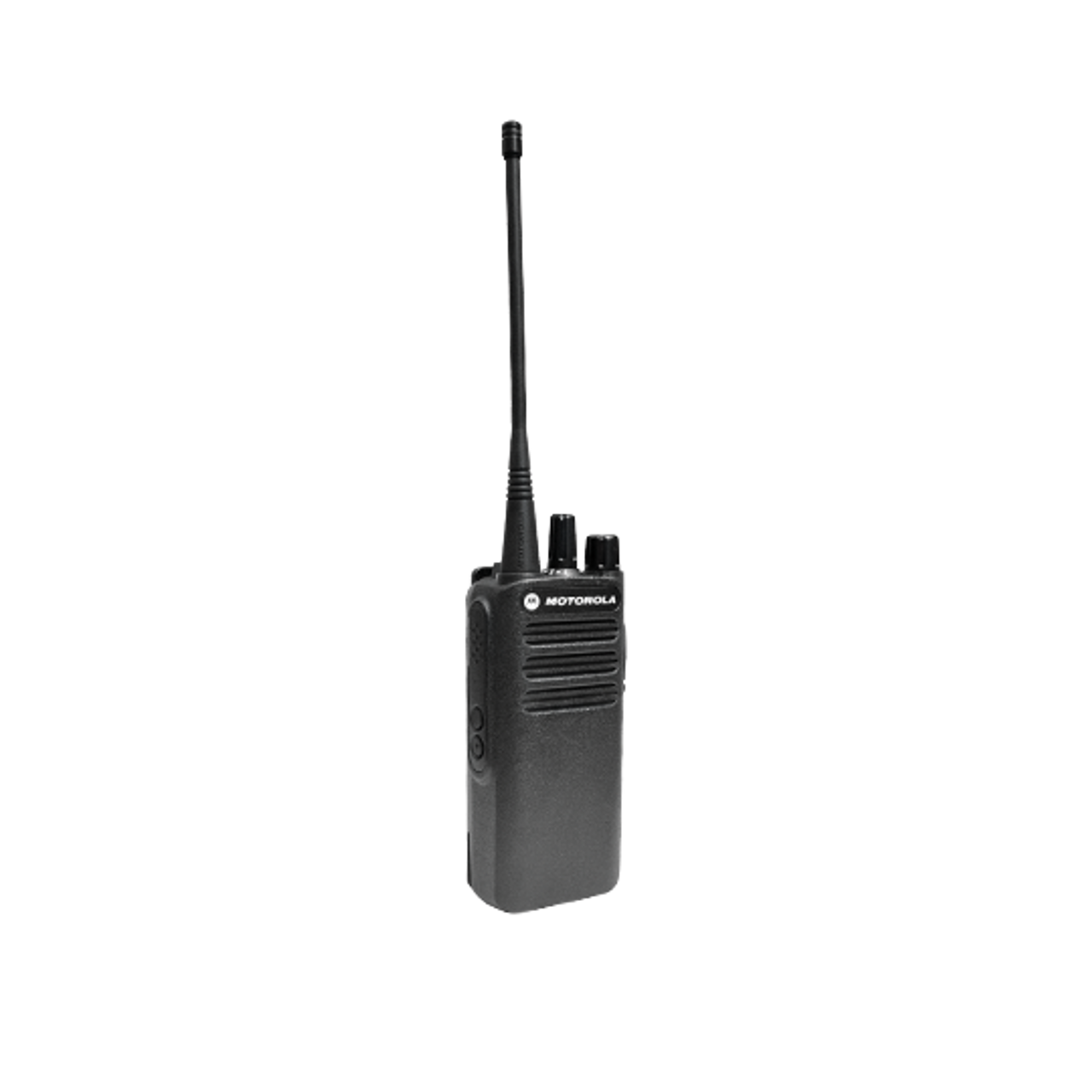
The Motorola CP100d-UA is a reliable, affordable option for the power it packs.
Key features:
- UHF frequency band
- Durable construction
- Simple controls
- Reliable coverage
Frequently Asked Questions
How many radios do I need?
One per worker who needs communication, plus spares.
Are they waterproof?
Most are water-resistant, not fully waterproof.
Build Your Team's Communication on Solid Ground
For most masonry teams, the Motorola RMU2080 is the best overall choice.