

Buy the first radio you see and you might be in for a rude awakening...Static, dead zones, poor battery life, and a build that falls apart after a few months of heavy use.
Not ideal when your team is trying to stay coordinated during a packed lunch rush.
We've sold thousands of radios and worked with cafeteria teams of every size from small school kitchens to multi-building operations and we know exactly what separates a great radio from a frustrating one.
Why Cafeterias Need Reliable Two-Way Radios
Picture a typical lunch rush. The line's out the door, a student at the front is asking if the vegetarian wrap is still available, the register's out of small bills, the fryer just went down, and the manager is across the building handling a delivery.
Staff are running back and forth, shouting over the noise, trying to stay on top of everything and losing time with every missed message.
These are common cafeteria problems, and two-way radios solve them. When your team can communicate instantly and clearly across the building, operations stay smooth even when things get hectic. No more crossed wires. No more wasted trips. Just clean, reliable communication when it matters most.
What to Look for in a Cafeteria Two-Way Radio
Not all walkie talkies are created equal. Here's what to evaluate before making a purchase.
Coverage and Power
Match the radio's power output to your building size. Buying too much power means overspending; too little means dead zones and dropped communication.
- Small cafeterias: 1–2 watts is sufficient, covering up to 200,000 sq ft
- Large cafeterias or multi-building facilities: Look for 3–4 watt analog radios or 1-watt digital models, which can cover up to 350,000 sq ft
Also factor in building materials. Thick concrete walls can eat into your signal, so you may need to step up one watt to compensate.
Number of Channels
Channels let you segment team communication so conversations stay relevant and clutter-free. For a cafeteria, we recommend setting up at least four dedicated groups:
- Kitchen: Cooks, prep staff, and kitchen leads coordinating orders, inventory, and equipment issues
- Front Line: Cashiers and servers checking on food status, requesting change, or calling for backup
- Manager: Supervisors handling scheduling, emergencies, and decisions without interrupting daily operations
- Maintenance: Janitorial and delivery staff managing spills, equipment, and stock without clogging up other channels
Easy breezy. That's concise, direct communication.
Channels also enable private conversations. "Sarah, call Tom on channel two." Sarah and Tom can talk without interrupting the rest of the team.
Build Quality and Durability
Spills happen. Heat happens. Radios get dropped. You need a device that can handle daily wear and tear in a busy kitchen environment without falling apart within a year. Look for water-resistant builds, sturdy construction, and models tested for extended field use.
Audio Quality
Cafeterias are loud fryers, blenders, chatter, clanging trays. A radio with poor audio will cost you in miscommunication. Prioritize models with strong, noise-canceling audio so every message comes through clearly, every time.
Battery Life
Shifts run long. There's no time to stop and recharge mid-service. Look for radios with full-day battery life or quick-swap battery options to keep your team connected from open to close.
Ease of Use
No one has time to fumble through a complicated menu during a busy service. A clear push-to-talk button, straightforward channel switching, and an intuitive layout make a real difference when things get hectic.
Hands-Free Options
Busy hands shouldn't mean missed messages. Voice-activated transmission (VOX) and earpiece compatibility keep communication flowing while staff are cooking, plating, or serving.
Why Brand Matters
Motorola and Kenwood are the gold standard in professional two-way radios and for good reason. Both brands are purpose-built for reliable communication, designed with durability in mind, and tested for up to five years of field use. Their radios are intuitive, affordable, and eliminate the ongoing cost of cell phone plans. Most models also include a manufacturer warranty ranging from one to three years, depending on the model.
When you're investing in communication tools for your team, you want radios that will last not budget options that need replacing after a season.
Our Top Two-Way Radio Picks for Cafeterias
These recommendations come from our own experience working with thousands of these radios. Each one has a proven track record and a reputation built on reliability.
Small Cafeterias
Motorola CLS1410 ⭐ Top Pick
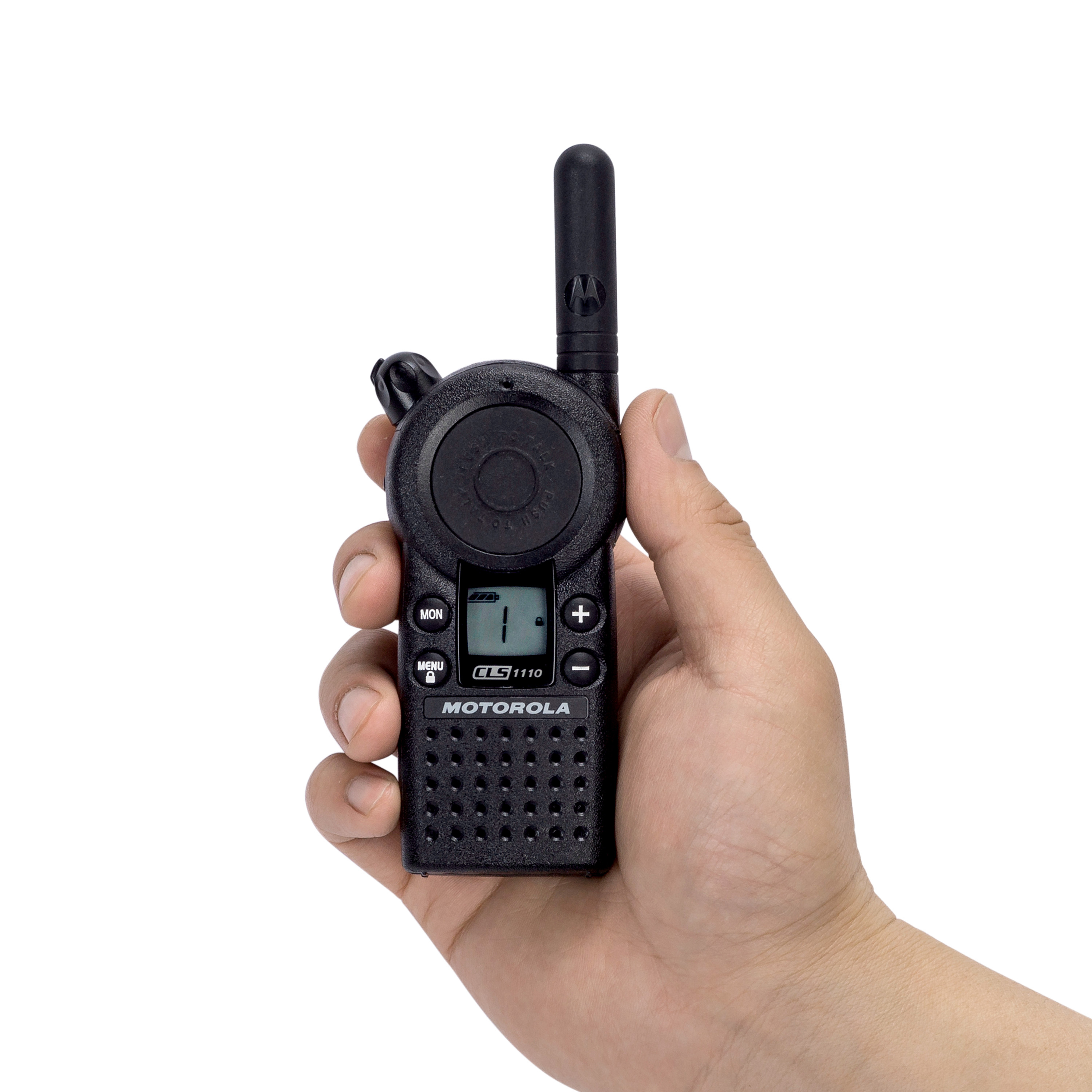
The CLS1410 is our top recommendation for small to mid-sized cafeterias. User-friendly, dependable, and backed by a 15-year track record, it's the most economical professional radio on the market.
| Spec | Detail |
|---|---|
| Channels | 4 |
| Power | 1 watt (UHF) |
| Indoor Coverage | 200,000 sq ft / 15 floors |
Why cafeterias love it:
- External speaker: Staff can place the radio on a kitchen counter and communicate without wearing an earpiece perfect for cooks who need both hands free
- Vibracall alerts: Audible call alerts that won't interrupt staff mid-conversation with guests
- VOX capability: Hands-free voice-activated transmission for busy environments
- UHF frequency: Optimized for spaces with both indoor and outdoor areas
- Four dedicated channels: Enough to segment kitchen, front line, manager, and maintenance teams
The CLS1410 strikes the right balance between simplicity and functionality. Contact us today to receive a custom quote.
Motorola CLP1010e
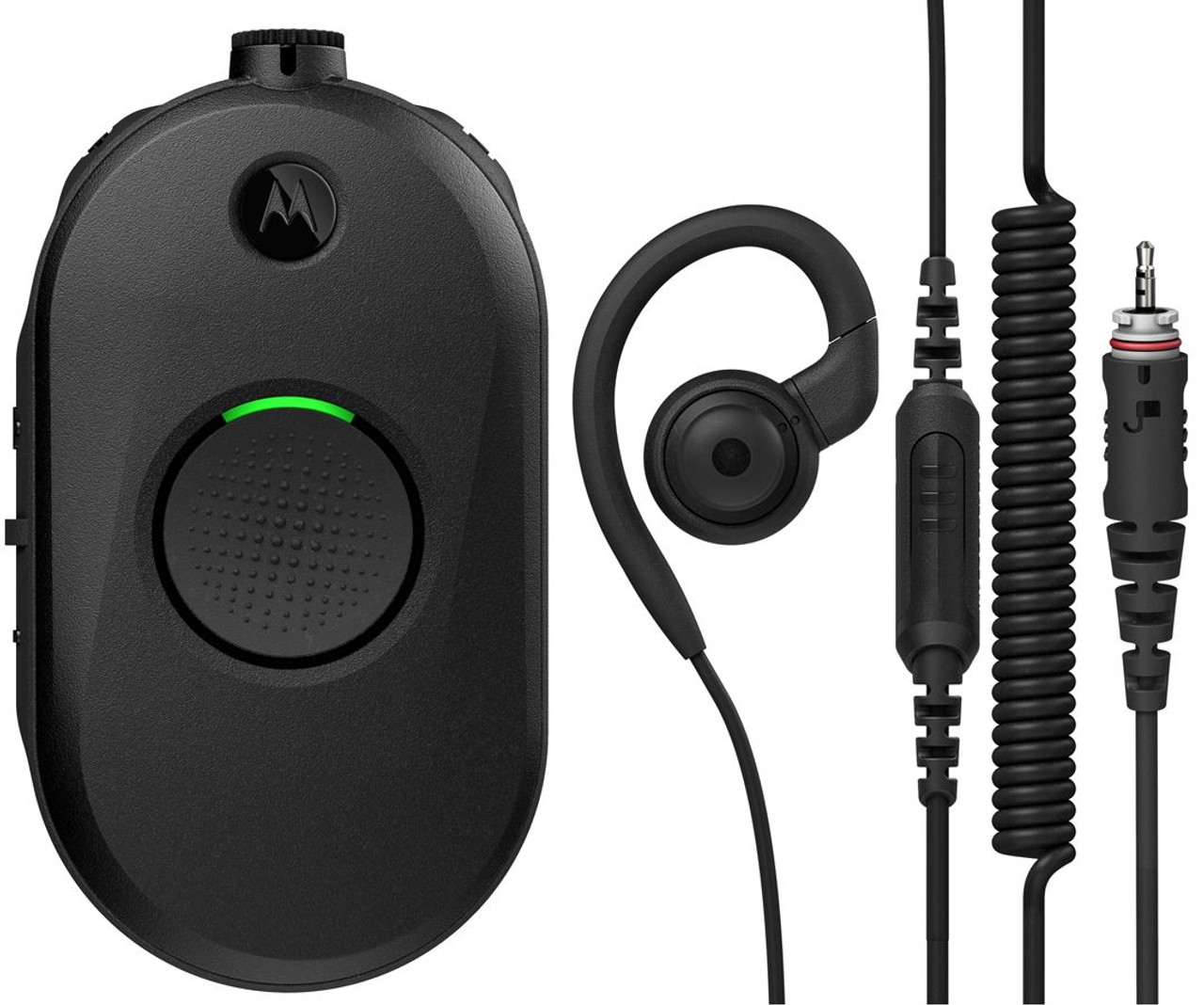
For cafeterias looking for a more discreet option, the CLP1010e is the smallest professional radio on the market. It has no external speaker and must be used with an earpiece (included), which creates a polished, professional look for front-of-house staff.
| Spec | Detail |
|---|---|
| Channels | 1 (up to 8 with CLP1080e) |
| Power | 1 watt (UHF) |
| Indoor Coverage | 100,000 sq ft / 10 floors (up to 20 floors with a repeater) |
Key features:
- Comes with a swivel belt holster and earpiece for discreet communication
- UHF frequency for indoor and outdoor use
- Compact, lightweight design that won't get in the way
Want to learn more about the CLP1010e for your team? Reach out to us today for a free quote.
Honorable Mention: Kenwood PKT300
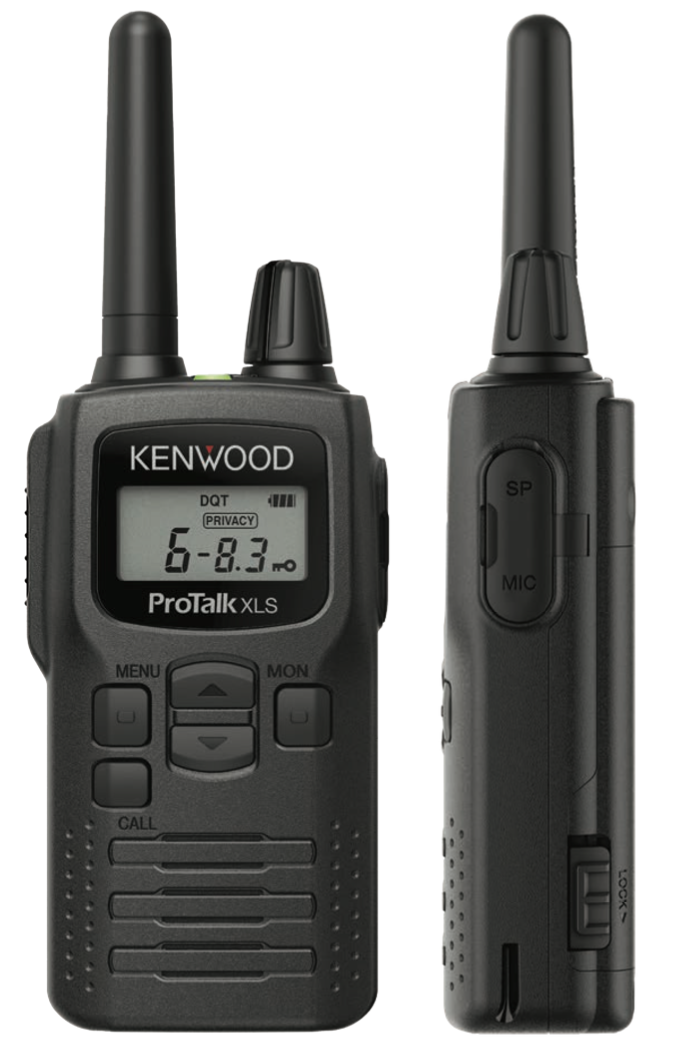
Compact, powerful, and easy to use, the PKT300 is a strong alternative with 6 channels, 2 watts of UHF power, and coverage up to 275,000 sq ft. Great battery life and a straightforward VOX feature make it a solid pick for smaller cafeterias needing a little extra range.
Larger Cafeterias and Multi-Building Facilities
Motorola Curve ⭐ Top Pick
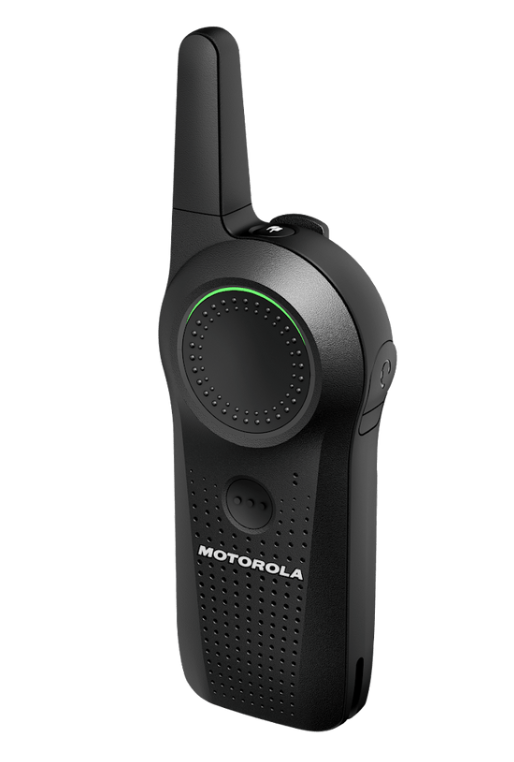
For larger operations, the Motorola Curve brings advanced digital technology into a compact, durable package. Its 900 MHz digital communication delivers crystal-clear audio, and its 1-watt digital output matches the performance of a 4-watt analog radio.
| Spec | Detail |
|---|---|
| Channels | 10 |
| Power | 1 watt digital (equivalent to 4-watt analog) |
| Indoor Coverage | 300,000 sq ft / 20 floors |
Why larger cafeterias love it:
- 10 channels: Easily segment a larger, more complex team across multiple departments
- Digital clarity: Cleaner audio than analog models, even in large, noisy environments
- Durable and compact: Built tough, without the bulk
If you're running a hotel cafeteria, a large institutional kitchen, or a multi-building facility, the Motorola Curve is our go-to recommendation.
Quick Comparison: At a Glance
| Model | Best For | Channels | Coverage | Key Feature |
|---|---|---|---|---|
| Motorola CLS1410 | Small cafeterias | 4 | 200K sq ft | External speaker, VOX |
| Motorola CLP1010e | Discreet front-of-house | 1–8 | 100K sq ft | Smallest professional radio |
| Kenwood PKT300 | Small cafeterias | 6 | 275K sq ft | Compact, great battery |
| Motorola Curve | Large/multi-building | 10 | 300K sq ft | Digital |
Frequently Asked Questions
What is the best two-way radio for cafeterias?
| Model | Best For | Channels | Coverage |
|---|---|---|---|
| Motorola CLS1410 | Small cafeterias | 4 | 200K sq ft |
| Motorola CLP1010e | Discreet front-of-house | 1–8 | 100K sq ft |
| Kenwood PKT300 | Small cafeterias | 6 | 275K sq ft |
| Motorola Curve | Large/multi-building | 10 | 300K sq ft |
How many radios do I need for my cafeteria?
A good rule of thumb is one radio per team lead or department. For a standard cafeteria, that typically means 4–8 radios one for the kitchen lead, front-line supervisor, manager, and maintenance. Larger operations may need more.
What's the difference between UHF and digital radios?
UHF (analog) radios are reliable, cost-effective, and work well in most indoor environments. Digital radios offer cleaner audio, better range efficiency, and more advanced features like private call options. For most small cafeterias, UHF is sufficient. For larger or noisier environments, digital is worth the upgrade.
Can radios be used with earpieces?
Yes. Most professional models are compatible with earpieces, and some like the CLP1010e include one in the box. Earpieces are especially useful for front-of-house staff who want to communicate discreetly without an external speaker.
What happens if a radio breaks?
All models we sell come with a manufacturer warranty (1–3 years depending on the model), and we include lifetime tech support with every purchase. If something goes wrong, we're here to help.
Find the Right Radio for Your Cafeteria
Choosing the right radio doesn't have to be complicated. For small cafeterias, the Motorola CLS1410 is our top pick reliable, easy to use, and built to last. For larger operations, the Motorola Curve delivers digital performance.
We've spent over 25 years helping teams like yours find the right fit. If you're not sure which model suits your cafeteria, our support team is ready to help. Request a quote today for our best pricing, and get lifetime tech support included with every purchase.