
Lane 7's ball return is jammed again. The birthday party on Lane 12 has been waiting 20 minutes for their food. A spill near the arcade entrance still hasn't been cleaned up, and guests keep walking through it.
Every one of those scenarios is fixable with the right radio.
Buy the wrong radio and you'll know about it fast.
Static-filled audio, a dead battery by the dinner rush, a flimsy build that doesn't survive the first drop...
We've sold thousands of two-way radios to businesses just like yours, and we've put everything we've learned into this guide.
Our goal is to help you make an educated decision and walk away with a device that keeps your concessions, lane technicians, front desk, and security team communicating smoothly, shift after shift.
What to Look for in a Bowling Alley Radio
Coverage and Building Size
Matching radio power to your building is one of the most important decisions you'll make. Too much power and you're overpaying. Too little and you'll end up with dead zones right when you need coverage most.
Here's a simple way to think about it:
- Small to mid-sized alleys (up to 200,000 sq ft): 1–2 watts is sufficient
- Larger alleys or multiple buildings (up to 350,000 sq ft): 3–4 watts on analog, or 1 watt on digital
One more factor to keep in mind: building materials. Thick concrete walls absorb signal. If your alley has heavy construction, consider stepping up by one watt to maintain reliable coverage throughout.
Number of Channels
Channels let you segment team conversations so staff only hear what's relevant to their role. Less chatter, faster responses, cleaner communication.
Here's how most bowling alleys divide their channels:
- Front Desk & Guest Services – Lane assignments, shoe rentals, birthday check-ins, general customer needs
- Food & Beverage – Kitchen staff, servers, bar personnel; keeps order coordination off the main channel
- Maintenance – Ball returns, lane malfunctions, spills; for fast fixes without disrupting other teams
- Management Only – Guest complaints, scheduling issues, private decision-making
- Events & Parties – Birthday hosts and event coordinators managing cake, pizza, bumpers, and timing
From our experience, most bowling alleys run best on 1 to 3 channels. Easy breezy that's concise and direct communication.
Channels also allow for private side conversations. "Sarah, call Tom on channel two." Those two can talk through a situation in detail without pulling everyone else into it.
Key Features to Prioritize
| Feature | Why It Matters |
|---|---|
| Long Battery Life | Shifts run long. Radios that die mid-service create gaps in communication at the worst possible times. |
| Durability & Shock Resistance | Slippery floors, fast movement, and busy hands mean drops happen. Your radio needs to handle them. |
| Clear Audio Quality | Between crashing pins, arcade noise, and background music, audio clarity is non-negotiable. |
| Hands-Free / Earpiece Options | Keeps staff mobile and responsive without holding a radio. |
| Emergency Alert Button | One press sends an instant signal to management essential for security and safety situations. |
Brand Matters More Than You Think
Cheap radios from unknown manufacturers might save money upfront. But they typically fail within a year, leaving you spending twice what you would have on a quality unit. Motorola and Kenwood are the two brands we recommend without hesitation. Both are purpose-built for business use, intuitive for staff to operate from day one, and tested for up to five years of field use. They also eliminate monthly cell phone plan costs and come backed by manufacturer warranties ranging from one to three years depending on the model.
Our Top Radio Picks for Bowling Alleys
Small to Mid-Sized Alleys
Motorola CLS1110
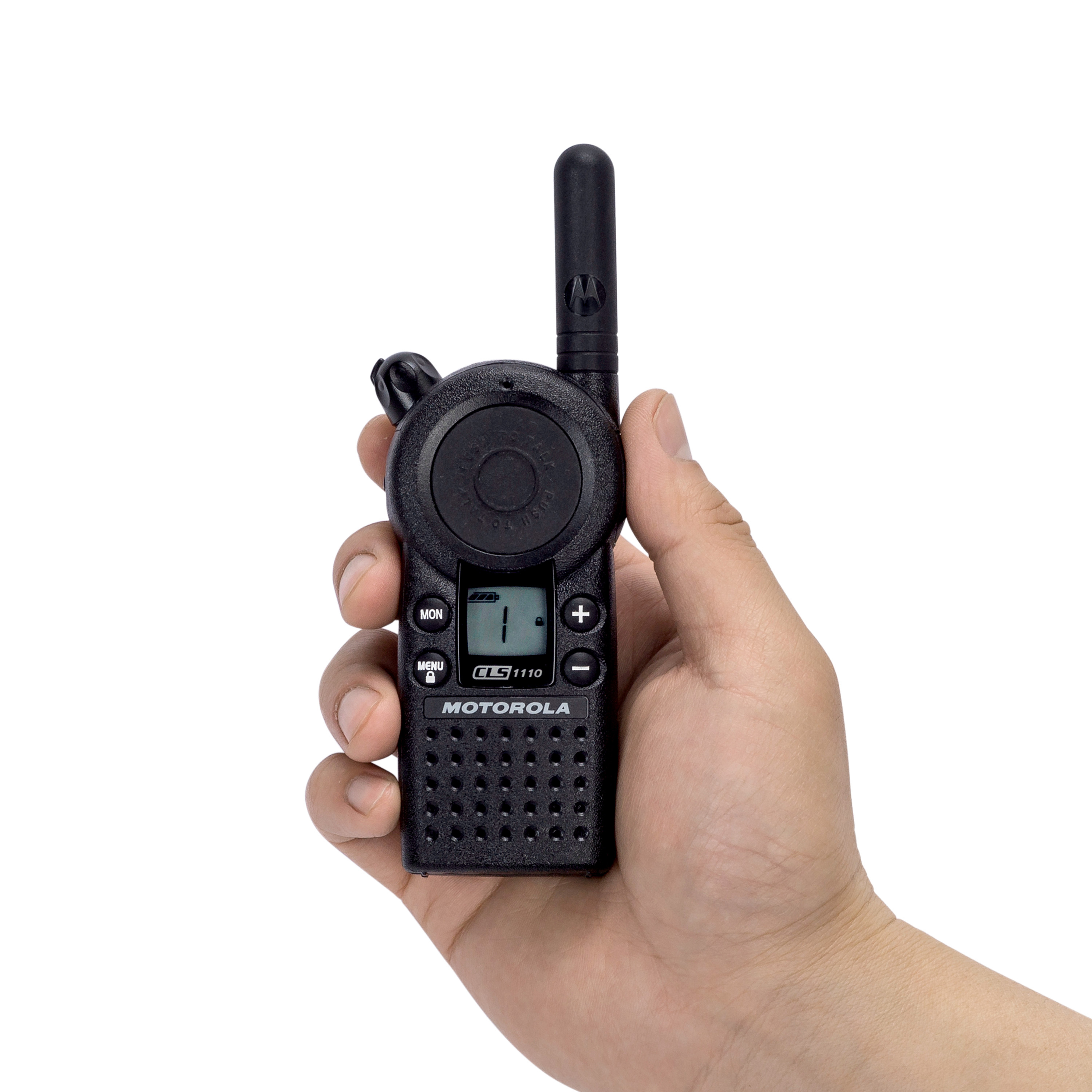
Channels: 1 | Power: 1W UHF | Coverage: Up to 200,000 sq ft
The CLS1110 lives up to its name Clear, Light, and Simple. It's the right fit for smaller alleys where staff don't need to be segmented across multiple channels. As a UHF radio, it performs well both indoors and outside, with reliable signal transmission through standard building materials.
Key features include:
- Vibracall technology and audible call alerts
- Keypad lockout security to keep airwaves secure
- 83 digital and 38 analog private lines, plus 121 interference eliminator codes
- 56 business-exclusive frequencies
- Rechargeable li-ion battery with an average 18-hour life per charge
It shares the same solid build as the CLS1410 but in a simpler, single-channel format a great starting point for smaller operations.
Kenwood PKT300
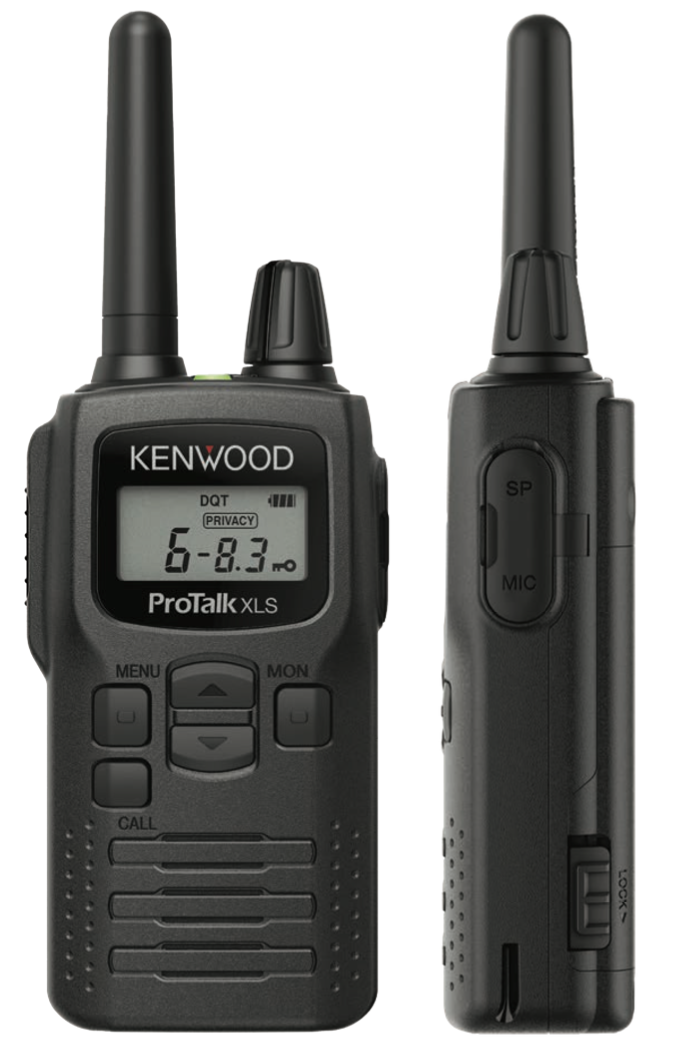
Channels: 6 | Power: 2W UHF | Coverage: Up to 275,000 sq ft
If your team needs to be split across multiple groups, the PKT300 is a strong choice. Six channels give you plenty of room to segment staff effectively, and two watts of power push through concrete and steel without breaking a sweat.
It's compact and built for harsh conditions, with:
- VOX (Voice Activated) hands-free operation
- Outdoor range of up to two miles
- Indoor coverage of up to 20 floors
- A standing charging tray, wall charger, and belt clip included
This is one of the most durable radios in its class, and the hands-free functionality is a genuine advantage for staff moving quickly through the floor.
Larger Alleys and Multi-Building Facilities
Motorola Curve
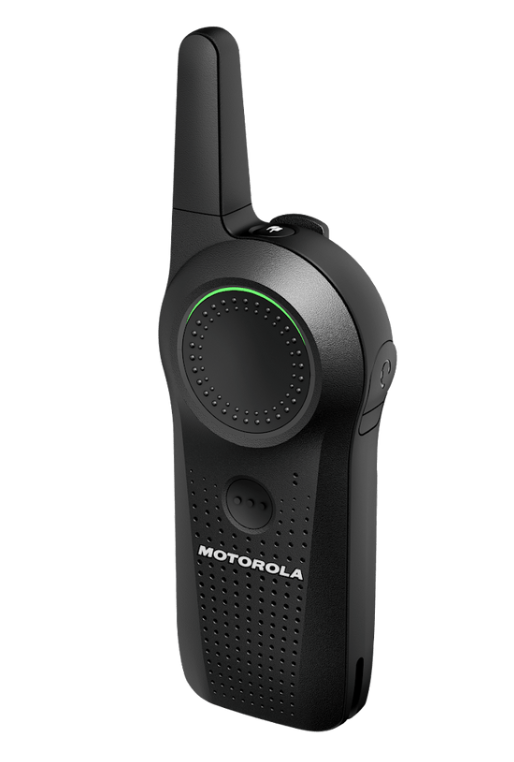
Channels: 10 | Power: 1W Digital (equivalent to 4W analog) | Coverage: Up to 300,000 sq ft
The Curve is built for larger, more complex operations. It runs on 900 MHz digital communication, which delivers noticeably cleaner audio than analog alternatives and that clarity makes a real difference when you're shouting over a packed Friday night.
Standout advantages include:
- No FCC licensing required, which means no government fees to operate
- 10 channels for larger staff segmentation
- Flexible call options including "call-all available" and private reply
- Compact and durable form factor
For large chain locations or multi-building entertainment complexes, the Curve is our top recommendation.
Honorable Mention: Motorola RMU2040
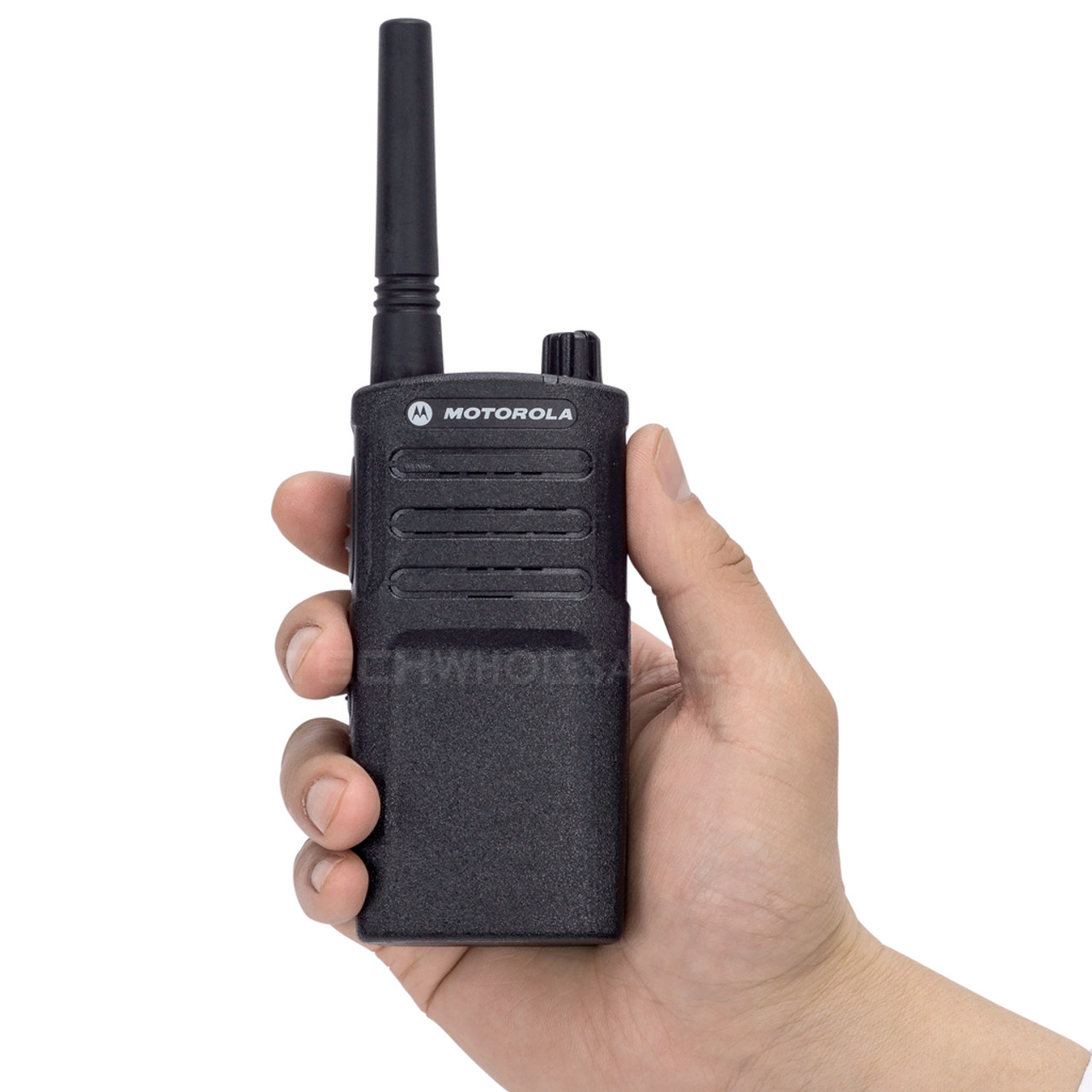
Channels: 4 | Power: 2W UHF | Coverage: 250,000 sq ft
A reliable, no-frills option for larger alleys that don't need digital capabilities. Four channels cover most team structures, and UHF frequency ensures solid penetration through walls and floors.
Frequently Asked Questions
What is the best two-way radio for bowling alleys?
The Motorola CLS1110 and Motorola CLP1010e are the top picks for most bowling alleys. They're easy to use, built to last, and deliver loud, clear audio even in noisy environments.
That said, not all alleys are the same a compact 10-lane facility has very different needs than a multi-level entertainment complex. The right radio depends on your building size, team structure, and how many channels you need.
Do bowling alleys need an FCC license for two-way radios?
It depends on the radio. Many business-band UHF radios like those in the Motorola CLS and Kenwood PKT series technically require an FCC license to operate legally. However, some newer digital radios like the Motorola Curve operate on 900 MHz and do not require licensing, saving you both time and ongoing costs.
How many radios does a typical bowling alley need?
The right number depends on your team size and how many departments need to stay in contact. A good rule of thumb is to have at least one radio per department lead, plus spares for managers on duty and security. Most small-to-mid alleys find that 6 to 15 units covers their needs well.
What's the difference between UHF and digital radios?
UHF (Ultra High Frequency) radios operate on analog signals and are well-suited for indoor environments with walls and obstructions. Digital radios convert voice into data, resulting in clearer audio and slightly longer range on lower power. For most bowling alleys, UHF analog performs reliably but if audio clarity is a top priority, digital is worth the upgrade.
Can staff use earpieces with these radios?
Yes. Most business-grade radios from Motorola and Kenwood support earpiece and headset accessories. These are especially useful for front desk staff, security, and anyone working in high-noise areas.
What warranty comes with these radios?
Motorola and Kenwood both include manufacturer warranties. Depending on the model, coverage ranges from one to three years. Our team also offers lifetime technical support after purchase, so you'll always have someone to call if an issue comes up.
Get the Right Radio for Your Alley
Picking the right radio isn't complicated once you know what to look for. Match the power to your building size, set up channels that mirror your team structure, and choose a brand with a proven track record.
If you're equipping a full team and need bulk pricing, request a quote and we'll get you our best possible pricing. And if you're still not sure which model fits your alley best, reach out to our support team directly. With over 25 years of experience in the two-way radio industry and lifetime tech support included with every purchase we're here to help you get it right the first time.