
The Best Two-Way Radios for Bars and Nightclubs (2026 Guide)
What Are the Best Two-Way Radios for Bars?
The Short Answer
The best two-way radios for bars are the Motorola CLS1410, Motorola CLP1010e, and Motorola Curve. Each model solves a different venue challenge: the CLS1410 handles general back-of-house coordination at small to mid-size bars; the CLP1010e delivers discreet, earpiece-only communication for upscale cocktail lounges; and the Motorola Curve provides digital-grade penetration and 10-channel capacity for large bars, hotel bars, and multi-building venues.
But not all radios are built for a loud bar environment. Poor audio quality, short battery life, bulky designs, and dead zones can make a cheap radio more trouble than it's worth.
That's why we've put together this guide—to help you make an educated decision and find the radio that actually fits your team's needs.
We've sold thousands of radios to bars and nightclubs, and we've seen what works. Here's everything you need to know.
Why Bars and Nightclubs Need Purpose-Built Two-Way Radios
Consumer walkie-talkies and cell phones fail in bar environments for the same reasons: they can't cut through ambient noise, their batteries die mid-shift, and they slow staff down rather than speeding them up.
Professional two-way radios solve each of these problems with features purpose-built for high-traffic, high-noise commercial environments.
Bars face a specific set of pain points that no other industry shares in quite the same combination:
Extreme ambient noise. Music, crowds, and bar equipment regularly push ambient noise above 85 dB — the OSHA threshold at which sustained hearing protection is recommended (29 CFR 1910.95). In that environment, standard speakers and microphones produce unintelligible transmission. Professional radios compensate with high-gain speakers and noise-canceling microphone arrays that isolate voice from background sound.
Speed-critical coordination. A bartender who can't hear a restock alert loses two to four minutes per incident. Across a full Friday shift, that compounds into significant revenue loss and guest dissatisfaction. Push-to-talk (PTT) radios eliminate the latency of dialing, unlocking, and texting a smartphone.
Multi-role team segmentation. Bartenders, barbacks, servers, floor managers, and security personnel all have different communication priorities. Without dedicated channels, everyone talks over everyone. Most professional bar radios support four to ten discrete channels, allowing teams to segment by role and escalate only when necessary.
Security response time. Whether it's an altercation, a medical situation, or a capacity issue at the door, security staff require immediate, reliable contact with management. The National Fire Protection Association (NFPA 101: Life Safety Code) and most local fire marshal requirements for assembly occupancies implicitly depend on real-time internal communication for emergency evacuation coordination. A professional radio system supports this obligation; a consumer walkie-talkie typically does not.
Spills and physical wear. Bar environments are wet, fast-moving, and hard on equipment. Radios lacking at minimum an IP54 or IP55 water-resistance rating are a replacement cost waiting to happen.
What to Look for in a Bar or Nightclub Radio
Audio Performance in High-Noise Environments
Look for radios with dedicated noise-canceling microphones and a minimum speaker output of 500 mW. VOX (voice-activated transmission) is a useful secondary feature for staff who need both hands free during a rush.
Battery Life
A full nightlife operation runs 8 to 14 hours from open prep to close. Radios should support a minimum 10-hour battery life under typical transmission loads. Motorola and Kenwood professional-grade models are rated for 10 to 12 hours and are tested to five years of regular field use.
Form Factor and Weight
Bar staff move constantly. Radios over 7 oz. become burdensome over a full shift. The smallest professional bar radios — like the Motorola CLPe series — weigh under 3 oz. with battery, small enough to clip to a waistband and forget.
Channel Capacity
Most bars operate effectively on four dedicated channels (bartenders, servers, barbacks, management). Venues with security teams or multi-floor layouts benefit from six to ten channels. Avoid single-channel radios for any team larger than three people.
FCC Licensing Status
UHF radios operating in the 450–470 MHz band technically require an FCC business radio license (FCC Form 601). License fees are currently $75-$600 for a 10-year term. A license is not required to purchase radios.
Digital radios operating in the 900 MHz ISM band — like the Motorola Curve — are license-free under FCC rules. License-free operation eliminates the administrative burden and ongoing cost.
Durability Rating
Look for radios that meet MIL-STD-810 standards for shock resistance and carry at minimum an IP54 ingress protection rating, which indicates resistance to dust and splash water from any direction — a baseline minimum for a bar environment.
Recommended Two-Way Radios for Bars
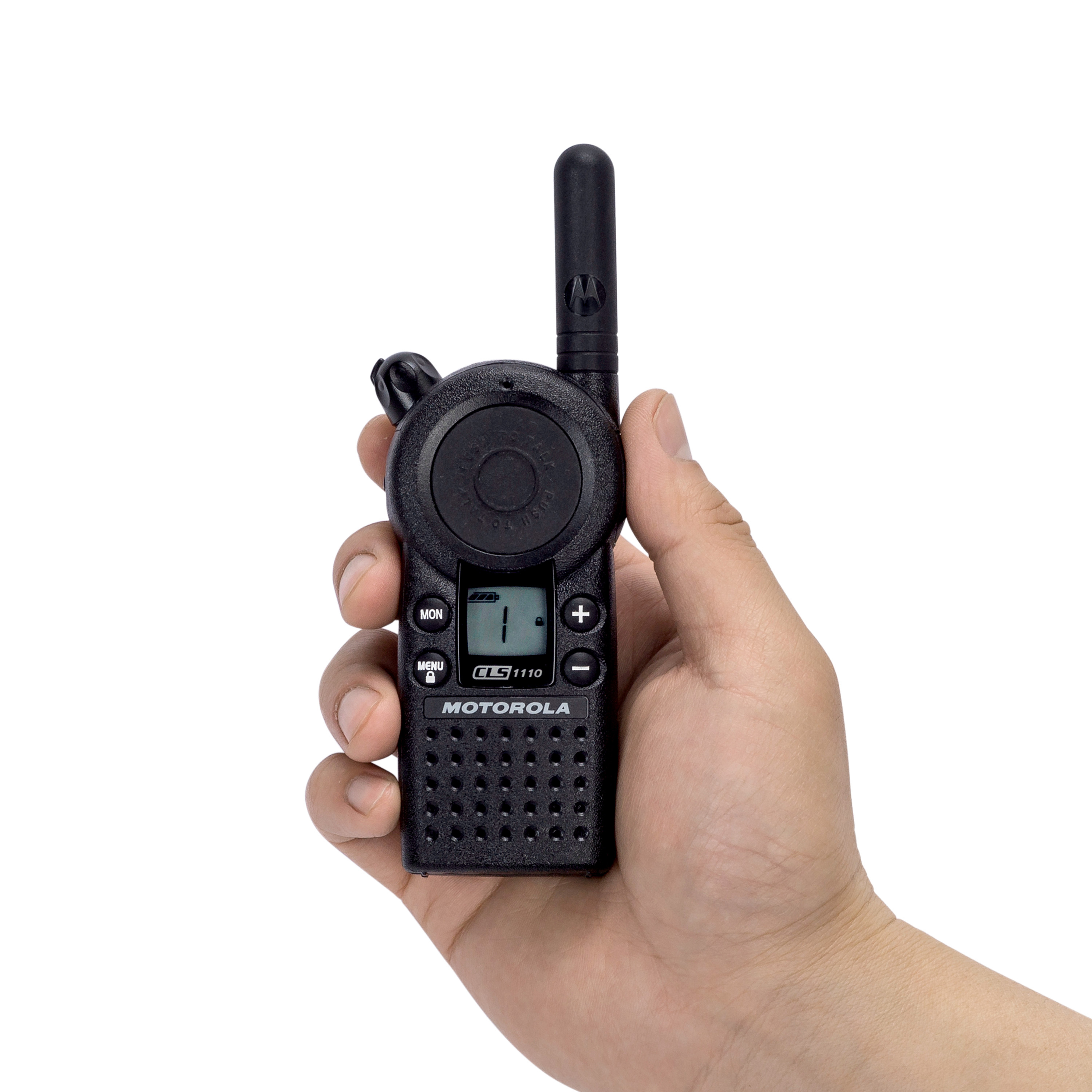
1. Motorola CLS1410 — Best for Small to Mid-Size Bars
| Specification | Detail |
|---|---|
| Frequency | UHF (460–469 MHz) |
| Power | 1 watt |
| Channels | 4 |
| Indoor Coverage | 200,000 sq ft / up to 15 floors |
| Battery Life | ~10 hours |
| FCC License | Yes. But not required to purchase radios. |
| Durability | Commercial-grade, water-resistant |
The CLS1410 has been the bar industry's workhorse radio for over fifteen years. Its built-in external speaker — a feature absent from the earpiece-only CLPe series — makes it practical for back-of-house staff like dishwashers and barbacks who need to set a radio on a counter rather than wear an earpiece throughout service.
Why it fits bars specifically
- UHF frequency provides reliable penetration through commercial kitchen walls, walk-in coolers, and concrete partitions.
- Audible Call Alerts with Vibracall technology ensure staff receive messages without interrupting a guest interaction.
- VOX (hands-free voice-activated transmission) keeps bartenders' hands on the bar, not the radio.
- 4 dedicated channels support clean role-based segmentation for teams of 4 to 20.
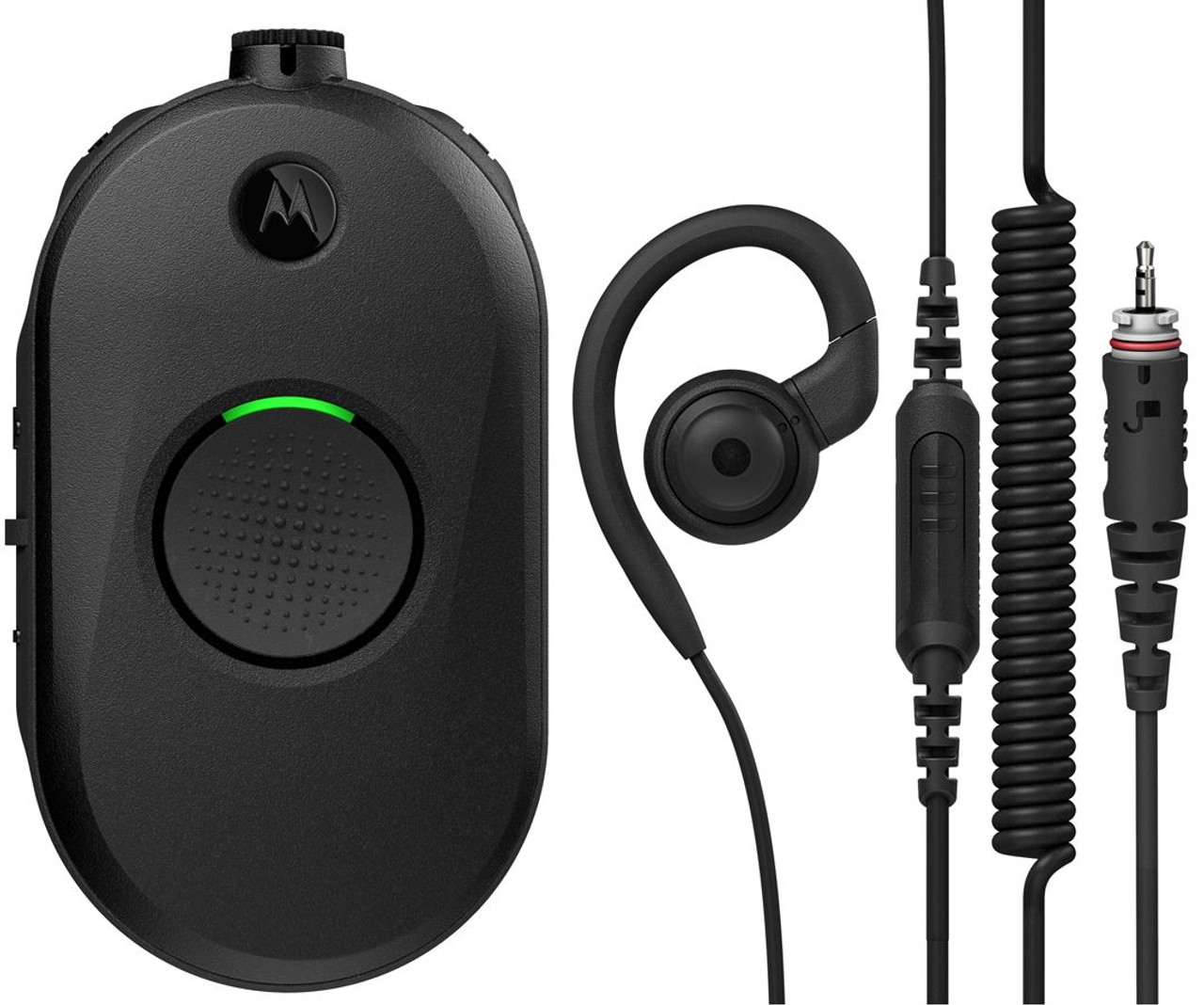
2. Motorola CLP1010e — Best for Upscale Bars and Cocktail Lounges
| Specification | Detail |
|---|---|
| Frequency | UHF (450–470 MHz) |
| Power | 1 watt |
| Channels | 1 (upgrade to CLP1080e for 8 channels) |
| Indoor Coverage | 100,000 sq ft / up to 10 floors (up to 20 floors with optional repeater) |
| Battery Life | ~10 hours |
| FCC License | Required (Part 90) |
| Form Factor | Under 3 oz., smallest professional radio on market |
| Includes | Swivel belt holster and discreet earpiece |
The CLP1010e operates entirely through its included earpiece — there is no external speaker. For upscale venues where a visible radio or audible transmission would disrupt the guest experience, this is the correct choice. Staff communicate privately; guests see nothing unusual.
Why it fits upscale bars specifically
- Smallest form factor of any professional radio on the market — clips invisibly to a waistband
- Earpiece-only communication preserves ambient bar atmosphere
- Included swivel holster and earpiece mean no additional accessories to source at launch
- UHF frequency maintains reliable signal through multi-room venue layouts
Limitation to know: Single-channel configuration on the base model limits its utility for teams requiring multi-role segmentation. For teams of five or more with distinct roles, start with the CLP1080e.
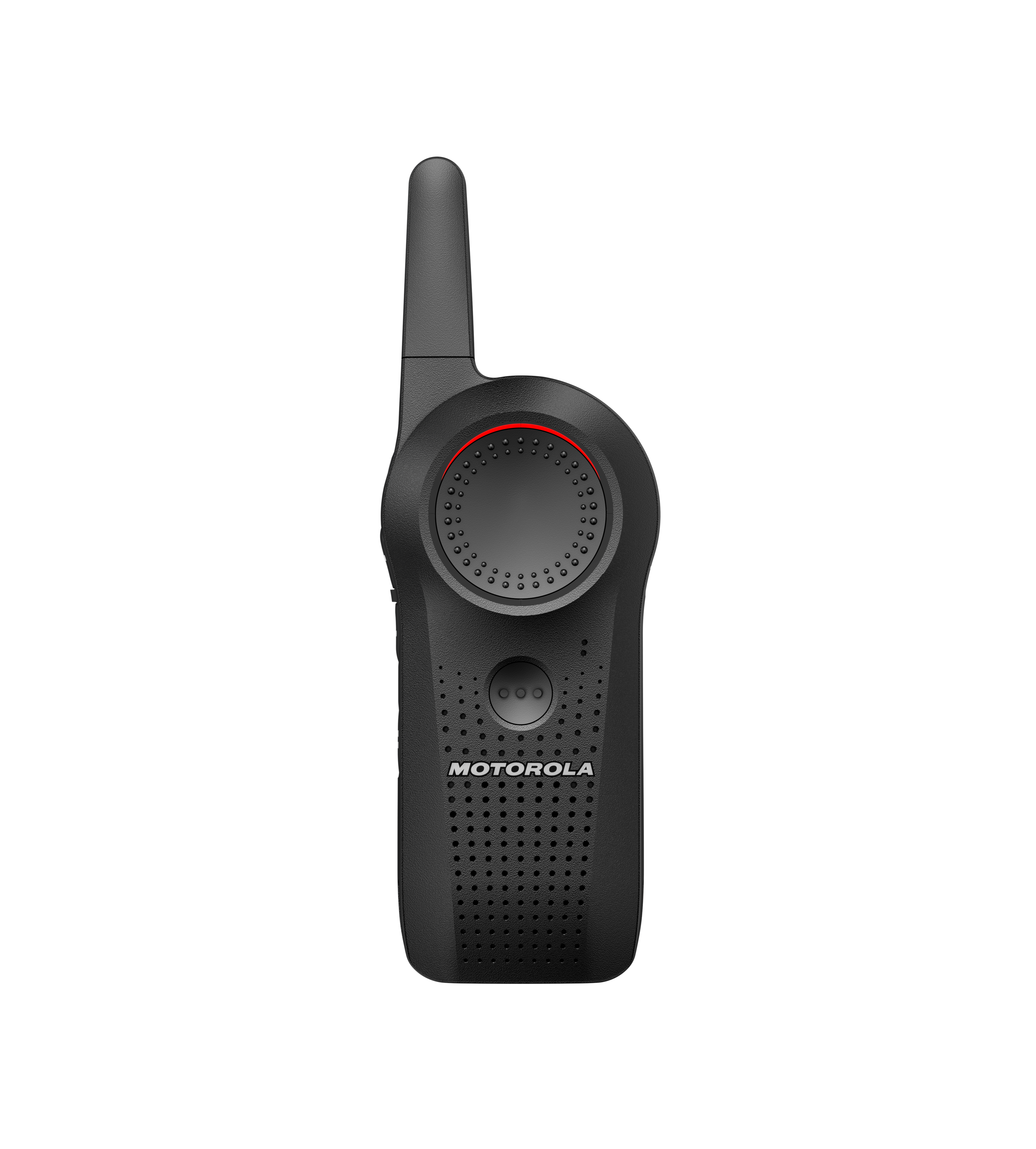
3. Motorola Curve — Best for Large Bars and Multi-Building Venues
| Specification | Detail |
|---|---|
| Frequency | Digital 900 MHz (902–928 MHz) |
| Power | 1 watt digital (equivalent to ~4 watts analog) |
| Channels | 10 |
| Indoor Coverage | 300,000 sq ft / up to 20 floors |
| Battery Life | ~10–12 hours |
| FCC License | Not required (FCC Part 15, license-free) |
| Durability | MIL-STD-810 compliant, water-resistant |
| MSRP | $352.00 / Sale: $299.00 at TechWholesale.com |
The Motorola Curve is the right choice when a venue's square footage, wall construction, or multi-floor layout exceeds what UHF analog radios can reliably serve. Its 900 MHz digital signal penetrates concrete and steel-reinforced walls more effectively than UHF analog at comparable wattage. The equivalent analog output of approximately 4 watts means it covers nearly three times the floor area of the CLS1410, with cleaner audio and less signal interference in crowded radio-frequency environments.
Why it fits large venues specifically
- License-free operation removes FCC compliance overhead — no forms, no renewal cycle, no fees
- 10 channels support full team segmentation including dedicated security, outdoor staff, and management lines
- Digital technology provides clearer audio in RF-dense environments where multiple radios and Bluetooth devices compete for bandwidth
- MIL-STD-810 compliant construction handles the physical demands of a high-volume nightclub
Also Worth Considering
Kenwood ProTalk PKT-300 — 2 watts, 6 channels, UHF (450–470 MHz), indoor coverage up to 275,000 sq ft. A strong alternative to the CLS1410 for venues that prefer Kenwood's build quality or need six dedicated channels.
Motorola RMU2040 — 2 watts, 4 channels, UHF (450–470 MHz), indoor coverage up to 250,000 sq ft. Compact, rugged, and well-suited to venues that need UHF power without the added cost of the Curve.
Motorola SL300-U — 3 watts, dual analog/digital mode, UHF (403–470 MHz). The premium option for venues requiring maximum signal strength and the versatility of analog/digital dual-mode operation.
Coverage by Venue Type: Matching Radio to Square Footage
| Venue Type | Recommended Radio | Coverage Capacity |
|---|---|---|
| Neighborhood bar / single floor under 5,000 sq ft | Motorola CLP1010e or CLS1410 | 100,000–200,000 sq ft |
| Sports bar / gastropub / multi-room | Motorola CLS1410 or Kenwood PKT-300 | Up to 275,000 sq ft |
| Large nightclub / hotel bar / multi-floor | Motorola Curve | Up to 300,000 sq ft / 20 floors |
| Multi-building venue / outdoor festival | Motorola WAVE PTX (LTE/Wi-Fi) | Unlimited range |
For venues with thick masonry walls, drop one tier larger than your square footage would suggest. A 4,000 sq ft venue with poured concrete walls may perform more like a 10,000 sq ft venue for RF penetration purposes.
FCC Licensing and Compliance: What Bar Owners Need to Know
Do bars need an FCC license to use two-way radios?
Most professional UHF radios — including the Motorola CLS1410, CLP1010e, and RMU2040 — operate in the 450–470 MHz band and technically require an FCC license. This is a business radio service license, not a ham radio license, and does not require any technical examination.
Application: FCC Form 601 (Universal Licensing System, wireless.fcc.gov)
Current fee: $75-$600 for a 10-year license term
Processing time: Typically 1–3 business days for routine applications
License requirement: Per-location or per-fleet, depending on frequency coordination
A license is not required to purchase radios.
The Motorola Curve operates on the 900 MHz ISM band under FCC Part 15 and requires no license. This is a meaningful operational advantage for small bar operators who want to avoid the licensing process entirely.
Tech Wholesale's team can walk you through the licensing process for any licensed radio in our catalog at no charge.
OSHA Noise Considerations
Under OSHA Standard 29 CFR 1910.95, employers must implement a hearing conservation program when workers are exposed to 85 dB or above as an eight-hour time-weighted average. Many bar environments — particularly those with live music or DJ operations — exceed this threshold. Two-way radio earpieces used in these environments should comply with OSHA hearing protection guidelines; most professional earpieces distributed with radios like the CLP1010e are designed for this use context.
Frequently Asked Questions
What is the best two-way radio for a bar?
For most bars, the Motorola CLS1410 is the strongest all-around choice: four channels, 200,000 sq ft indoor coverage, hands-free VOX capability, and a 15-year track record in commercial hospitality environments. For upscale venues prioritizing discretion, the Motorola CLP1010e is the correct choice. For large or multi-floor venues, the Motorola Curve provides superior coverage and eliminates FCC licensing costs.
How much range do I need for a bar?
For a single-floor bar under 10,000 sq ft, a 1-watt UHF radio provides adequate coverage with signal to spare. For multi-floor venues or buildings with heavy masonry construction, plan for 2 watts UHF or upgrade to a digital radio like the Motorola Curve, which delivers the equivalent of approximately 4 watts analog through its 900 MHz digital signal.
How long does the battery last on a bar radio?
Professional radios recommended for bar use carry 10 to 12 hour battery ratings under normal transmission loads. Motorola and Kenwood commercial-grade batteries are tested to five years of regular field use. For double shifts or back-to-back event nights, multi-unit charging cradles allow hot-swapping batteries without downtime.
Do I need an FCC license to use a two-way radio in my bar?
It depends on the radio. Most UHF professional radios (450–470 MHz) require an FCC business radio license — a one-time application costing approximately $75-$600 for a 10-year term. Radios operating in the 900 MHz ISM band, such as the Motorola Curve, are license-free under FCC Part 15 rules. Tech Wholesale can identify which category any radio in our catalog falls under and assist with licensing guidance.
Can two-way radios handle the noise level inside a nightclub?
Yes, when you choose professional-grade models. Radios like the Motorola CLS1410 and CLP1010e are designed for commercial high-noise environments and include noise-canceling microphone technology. The earpiece design of the CLPe series further isolates incoming audio from ambient noise, ensuring clear reception even at high decibel levels. Consumer-grade radios typically cannot match this performance.
Are bar radios water-resistant?
The radios recommended on this page carry water-resistance ratings suitable for bar environments (splash and spill exposure). The Motorola CLS1410 and CLP1010e are rated for water resistance consistent with commercial use. The Motorola Curve meets MIL-STD-810 standards for environmental resistance. None of the radios listed are rated for submersion (IPX7 or higher), which is not a requirement in standard bar environments.
How many two-way radios does a bar need?
A practical starting point is one radio per key operational role per shift: one per bartender, one per barback lead, one per floor supervisor, and one for management. A typical four-person bar team operates well with four to six radios. Larger venues with dedicated security staff should add one radio per security position. Tech Wholesale offers quantity pricing for orders of five or more units.
Can radios be used for security and emergency coordination at bars?
Yes. This is one of the primary use cases for professional radios in nightclub environments. Dedicated channel assignments allow security to communicate internally without cluttering service channels, and to escalate directly to management when needed. For venues subject to local fire marshal occupancy requirements or NFPA 101 Life Safety Code compliance obligations, an internal radio communication system supports the real-time coordination that emergency evacuation procedures depend on.
Why Buy from TechWholesale.com
Tech Wholesale has been selling professional two-way radios to bars, nightclubs, and hospitality businesses since 1997. We are an authorized dealer for Motorola and Kenwood, which means every radio we sell carries the full manufacturer warranty — typically two years on commercial-grade models — and qualifies for manufacturer service and repair.
What sets us apart
- Lifetime technical support included with every purchase — call or email our team for the life of your radio fleet, not just through the warranty period
- Volume pricing for bulkradios — request a custom quote
- No-pressure consultation — our team will tell you when a less expensive radio is the right answer for your venue, not push you toward a higher margin product
- FCC licensing guidance at no charge for any licensed radio purchase
- Free shipping on qualifying orders
- Authorized dealer status — no gray market inventory, no voided warranties
If you're not sure which radio fits your bar, use our Find My Radio tool or request a quote. We'll ask a few questions about your venue and come back with a specific recommendation — no sales pressure, no obligation.
1-888-925-5982 Service@TechWholesale.com
Article by Kristin Wood, a two-way radio consultant @ Tech Wholesale | Authorized Motorola & Kenwood Dealer Since 1997 | Last Updated: May 2026