
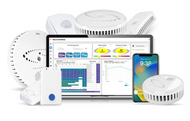
Vape Detection 101: How HALO Smart Sensors Work
School administrators and facility managers face a growing challenge: vaping is happening in spaces where it's nearly impossible to monitor without compromising privacy. Bathrooms, locker rooms, and break rooms are all common hotspots—but they're also areas where cameras simply can't go.
That's the core tension with vape detection. You need visibility into air quality without creating a surveillance state. And for years, there wasn't a clean solution.
HALO Smart Sensors solve this problem by analyzing the air rather than recording the people in it. No cameras. No audio. Just intelligent, continuous monitoring that alerts the right people the moment something is detected. This guide breaks down how the technology actually works, what it detects, and why more schools, workplaces, and facilities are adopting it.
Why Traditional Monitoring Falls Short
Security cameras are effective in hallways and parking lots. In private or semi-private spaces, they're not an option—and they shouldn't be. This creates a blind spot that's easy to exploit.
Manual checks help, but they're reactive. By the time a staff member investigates a report of vaping, the evidence is gone and the opportunity to intervene has passed.
The problem calls for a different kind of detection—one that works continuously, operates in sensitive spaces, and doesn't require a human to be present. That's exactly what sensor-based technology provides.
How HALO Smart Sensors Detect Vapor Without Cameras
HALO Smart Sensors are wall- or ceiling-mounted devices that continuously sample the surrounding air. Instead of capturing images, they analyze what's in the environment at a chemical level.
The sensor array monitors a wide range of air quality indicators, including:
- Volatile organic compounds (VOCs): Released during vaping, these compounds create a detectable chemical fingerprint.
- Particulate matter: Vapor aerosols increase fine particle concentration in the air—measurable even in small quantities.
- CO2 levels: Elevated CO2 can indicate occupancy, which provides useful context for other readings.
- Humidity and temperature: Environmental baselines that help the sensor distinguish between normal air fluctuations and genuine detection events.
Rather than relying on any single data point, HALO's algorithm evaluates these readings together. This multi-variable approach significantly reduces false positives—a critical feature in high-traffic environments like schools and office buildings.
The Science Behind Chemical Signature Recognition
Nicotine and THC vapor have distinct chemical profiles. When someone vapes in a space equipped with a HALO sensor, the device detects the specific combination of VOCs and particulates associated with that activity.
Think of it as a chemical fingerprint. Burning food in a microwave produces a different profile than vaping. Hair spray produces another. HALO's sensor technology is trained to differentiate between these signatures so it can respond accurately.
The HALO 3C model—HALO's most advanced sensor—extends this detection capability beyond vaping. It can also identify:
- Aggression and elevated sound levels (without recording audio)
- Gunshot detection
- Smoke and other airborne threats
This multi-threat awareness makes it a genuinely comprehensive safety device rather than a single-purpose tool.
Real-Time Alerts and System Integration
Detection is only useful if the right people are notified quickly. HALO sensors trigger immediate alerts when a detection event occurs, pushing notifications directly to administrators, security teams, or facility managers.
These alerts can be delivered through:
- Email or SMS notifications
- Dashboard monitoring software
- Integration with existing security platforms via HALO's open API
That last point matters more than it might seem. Many facilities already have security infrastructure in place—access control systems, surveillance platforms, building management software. HALO integrates into these ecosystems rather than requiring a parallel system to be built from scratch. One device feeds into your existing security setup, giving you a unified view of what's happening across your facility.
For schools, this means a vape detection alert can automatically trigger a lockout of a bathroom, notify a specific staff member, or generate an incident log—all without any manual steps.
Key Benefits of Sensor-Based Vape Detection
The advantages of choosing sensor technology over camera-based monitoring go beyond privacy compliance.
Privacy protection by design. HALO sensors are purpose-built for spaces where cameras aren't appropriate. Restrooms, changing rooms, and similar areas can be monitored for air quality violations without any visual or audio recording. This makes HALO compliant with privacy standards and appropriate for sensitive environments.
Continuous, passive monitoring. Unlike manual inspections, HALO operates around the clock. It doesn't require a staff member to be present or for someone to file a complaint. The moment a detection threshold is crossed, the system responds.
Reduced false positives. Multi-variable air analysis means the sensor isn't triggered by perfume, cleaning products, or steam from a hot shower. The system is calibrated to identify the specific chemical signatures associated with vaping—not just any change in air composition.
Actionable data over time. Beyond real-time alerts, HALO generates historical air quality data. Facility managers can identify patterns—specific times, locations, or conditions that correlate with detection events—and use that information to make smarter decisions about staffing, scheduling, and intervention.
All-in-one functionality. Air quality monitoring, vape and THC detection, aggression detection, and gunshot recognition all come from a single device. That simplifies installation, reduces hardware costs, and gives facility managers one fewer system to manage.
What Facilities Are Using HALO?
HALO Smart Sensors are deployed across a wide range of environments, including K-12 schools, universities, healthcare facilities, housing authorities, and commercial buildings.
The results speak for themselves. Zachary Silva, Secretary-Treasurer for Holy Family Catholic Regional Division, put it plainly: "Halo has resulted in safer spaces for our students. The cost of this investment is far outweighed by the safety benefits it brings to our schools."
At Clayton Valley Charter High School, the technology went beyond vaping: "CVCHS was able to make the campus safer by preventing a physical fight, while also getting students to help overcome their challenges all with one powerful device. There are no other products out there that offer what HALO does—a complete solution for vape detection and security." — Sunny Shergill, Special Projects Manager.
These outcomes reflect something important: HALO isn't just a vape detector. It's a safety infrastructure upgrade.
Frequently Asked Questions
Can HALO sensors be used in bathrooms and locker rooms?
Yes. Because HALO doesn't use cameras or audio recording, it's designed specifically for privacy-sensitive areas. It detects changes in air chemistry, not visual activity.
Will the sensor trigger false alarms from cleaning products or perfume?
HALO's multi-variable detection algorithm evaluates several air quality indicators together, not a single chemical in isolation. This approach significantly reduces false positives from common airborne substances.
How does HALO integrate with existing security systems?
HALO includes an open API that allows it to connect with building management systems, access control platforms, and security dashboards. It's designed to enhance your existing infrastructure, not replace it.
Does HALO detect both nicotine and THC vapor?
Yes. HALO Smart Sensors identify the chemical signatures associated with both nicotine-based e-cigarettes and THC products.
What happens when the sensor detects vaping?
A real-time alert is sent to designated administrators or security personnel. Depending on your system configuration, it can also trigger automated responses such as notifications, access control changes, or incident logging.
Build Safer Spaces Without Sacrificing Privacy
Vaping in schools and workplaces is a real problem—and it's one that traditional monitoring can't fully address. Camera-free, sensor-based detection fills that gap without creating new privacy concerns or requiring significant changes to existing infrastructure.
HALO Smart Sensors offer a practical, proven solution: continuous air quality monitoring, immediate alerts, seamless system integration, and detection capabilities that go well beyond vaping alone.
If you're responsible for a facility where vaping is a concern and cameras aren't an option, sensor technology is the most effective tool available. Request a free quote today.
Related Reading
- Smart Sensors: Vape, Threat & Air Quality Detection
- Vape Sensors for Workplaces: Cut Costs, Boost Productivity
Learn how the HALO Smart Sensor is helping: